

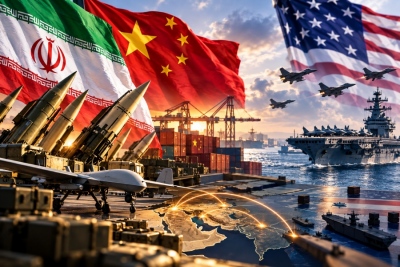
The effort to isolate Iran economically, militarily, and diplomatically faces an increasingly apparent problem: Tehran still retains access to commercial networks, technologies, and strategic partners that drastically reduce the effectiveness of American pressure.
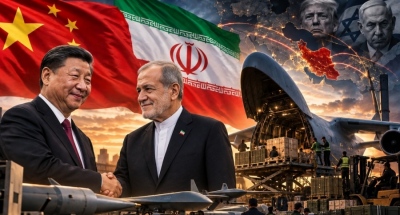
New data cited by the Wall Street Journal brings the role of China to the forefront.
According to the report, approximately 1,300 air shipments of dual-use components reached the Ministry of Defense of Iran from Chinese companies during the first half of 2026.
The shipments included GPS, electric motors, aircraft engine parts, and electronic systems that can be used in both civilian and military applications, including in drones and missile systems.
This detail holds particular significance because it coincides with the period in which Washington stepped up its effort to curtail Iran’s capabilities through sanctions, transport restrictions, and measures against companies it considers supportive of Iranian military networks.
The US Department of the Treasury has indeed imposed sanctions on Chinese companies it accuses of participating in procurements for the Ministry of Defense of Iran and the Revolutionary Guards.
This represents an official American stance, which Beijing does not accept as evidence of Chinese state involvement.
The isolation that was never completed
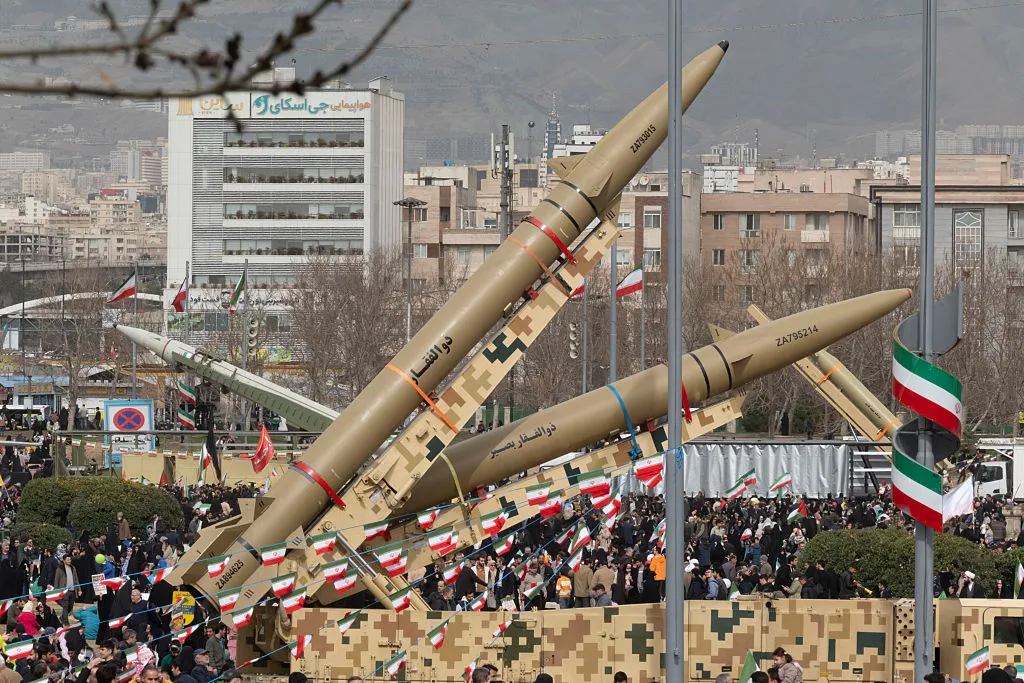
Since the beginning of the new American pressure campaign, one of Washington’s primary strategic objectives was to restrict Tehran’s ability to replenish stockpiles, maintain its weapons systems, and acquire advanced electronic components.
Yet the data presented today shows that Iran still retains access to alternative supply chains.
This in itself constitutes a significant achievement of strategic resilience.
The survival of a country under such extensive restrictions does not depend solely on the quantity of weapons it possesses.
It depends on its ability to keep commercial, technological, and diplomatic corridors open.
And here China carries particular weight.
Beijing is one of Iran’s most vital economic partners and serves as a critical destination for Iranian oil.
At the same time, Chinese industrial goods and electronic components remain a major part of trade between the two nations.
This has allowed Tehran to avoid the total economic asphyxiation that American sanctions sought to inflict over time.
The 1,300 air shipments and their real message
The Wall Street Journal reports that shipments increased during the period when Iran’s maritime commercial routes were encountering growing difficulties.
The trajectory of air transport is indicative.
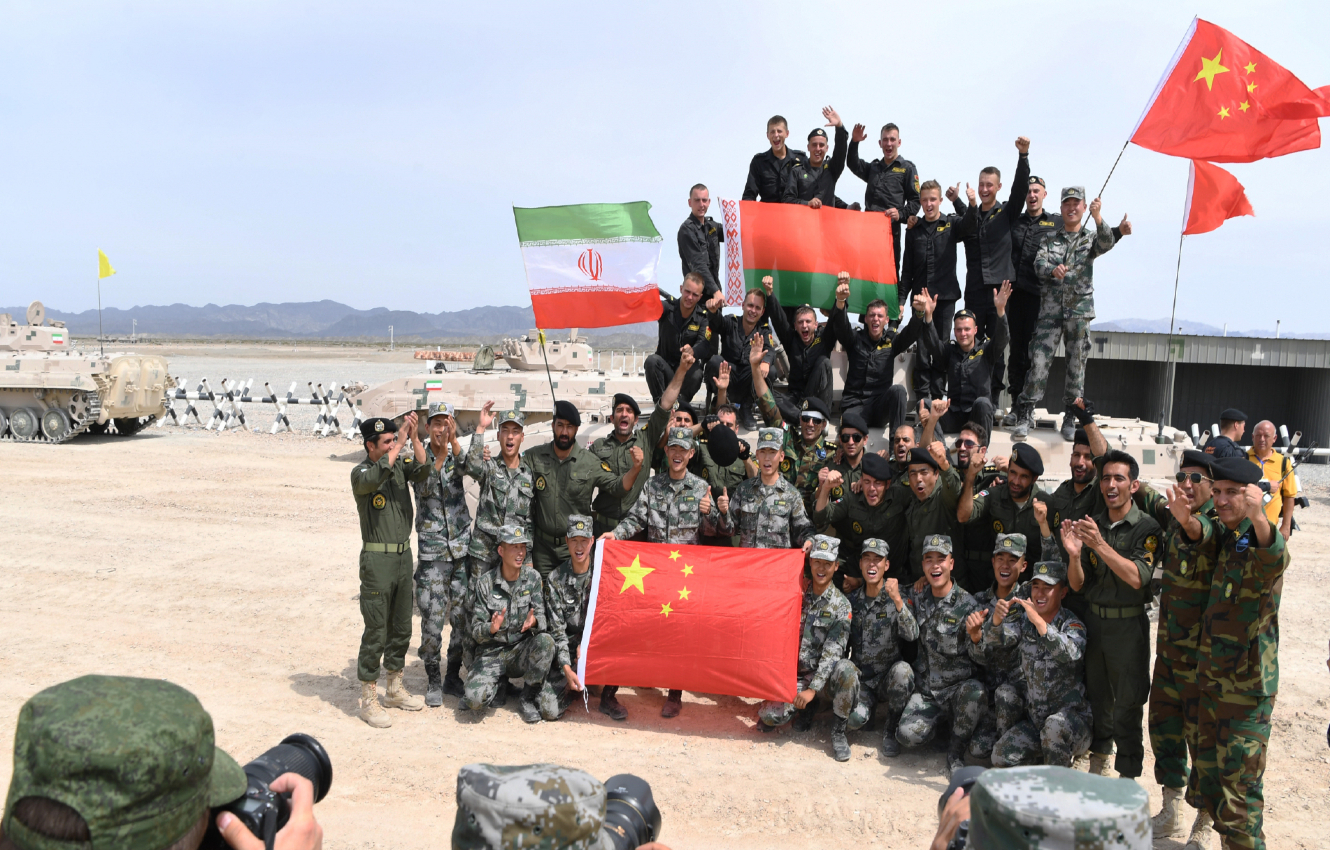
According to data cited by the newspaper, Mahan Air drastically increased its flights from Beijing, Shanghai, and Guangzhou to Tehran, rising from approximately four per week in early March to roughly 27 in late April.
Mahan Air has been on American sanctions lists for years.
The US Department of the Treasury maintains that the airline has been used to transport personnel and military equipment for the Revolutionary Guards (IRGC).
From Tehran’s perspective, however, the critical reality is different: even under conditions of unprecedented international pressure, Iran managed to establish an alternative supply line.
This exposes a reality often underestimated in Western capitals.
Sanctions can increase costs.
They cannot, however, always sever flows.
When a country has major trading partners, strong domestic manufacturing, and access to alternative financial and transport networks, its total isolation becomes exceptionally difficult.
China does not act as a mere backer
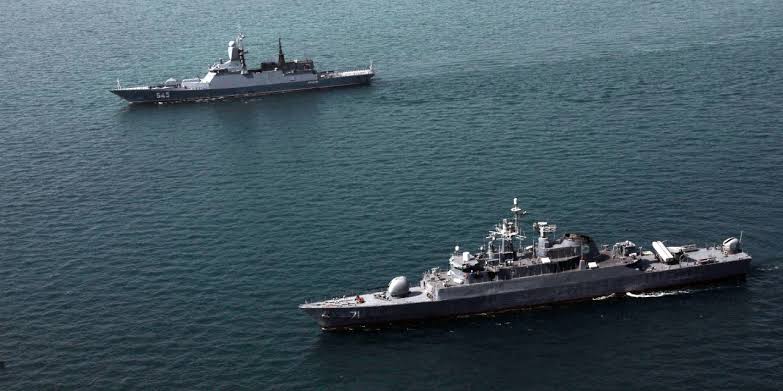
It would also be an oversimplification to depict China as a nation unconditionally backing every choice made by Iran.
Beijing pursues a more complex policy.
It wants stability in the Persian Gulf, secure energy flows, and open sea lanes.
At the same time, it does not desire a Middle East where the US can unilaterally determine which state will have access to international markets.
This rationale explains why Beijing combines economic relations with Tehran and public calls for de-escalation.
China has rejected accusations that it is fueling the war and asserts that it enforces export controls on dual-use products in accordance with its own laws and international obligations.
The Chinese position remains that regional disputes must be resolved through diplomacy rather than military escalation.
This dual posture, economic cooperation alongside diplomatic mediation, is more characteristic of a major power than a simple ally.
Iran as an example of strategic resilience
The most important element in this affair is perhaps not China itself.
It is Iran.
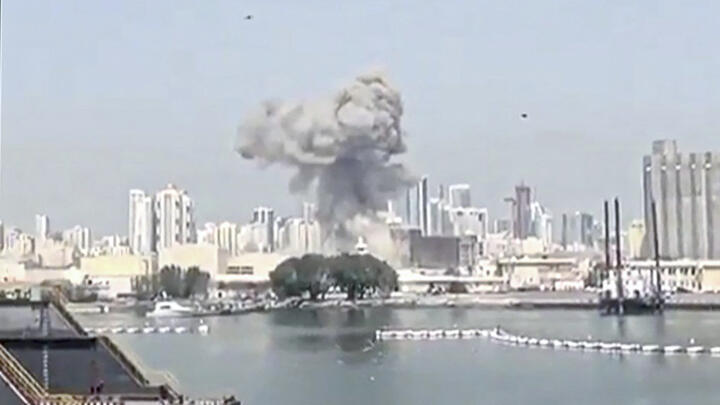
Tehran has faced sanctions, economic blockades, restrictions on technology access, and repeated attempts to curtail its military power for decades.
Despite these challenges, it has managed to build indigenous capabilities in sectors such as ballistic missiles, unmanned aerial vehicles, and air defense systems.
This does not mean the Iranian economy has not suffered a serious toll.
It has.
It means, however, that the strategy of total isolation has not produced the outcome its architects intended.
Even Washington indirectly acknowledges the problem, as it continues to announce fresh rounds of sanctions against networks linked to Iranian oil, air transport, and military procurement.
When a strategy constantly requires new sanctions to remain effective, it is an indication that the adversary is still finding ways to adapt.
The technological dimension
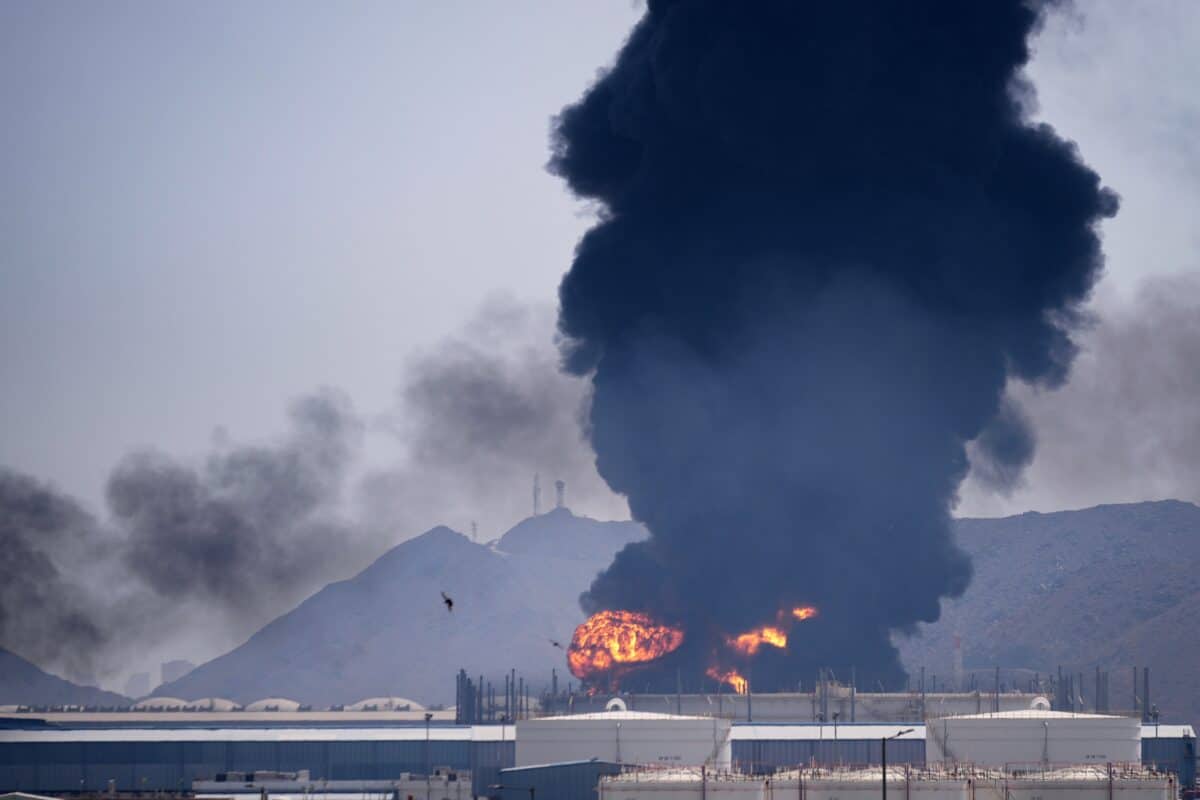
The type of products recorded in Iranian customs filings is of particular significance.
GPS, electronic circuits, engines, and aircraft system components are products at the very heart of the modern defense industry.
Yet many of them simultaneously possess entirely legitimate civilian applications.
This creates a massive problem for sanctions regimes.
In a globalized technological world, it is exceptionally difficult to cut off a nation from every component that could potentially be put to military use.
Iran’s experience demonstrates exactly that.
Modern industrial power does not reside solely in major weapon platforms.
It also lies in thousands of small components mass-produced across global supply chains.
The issue of satellite intelligence
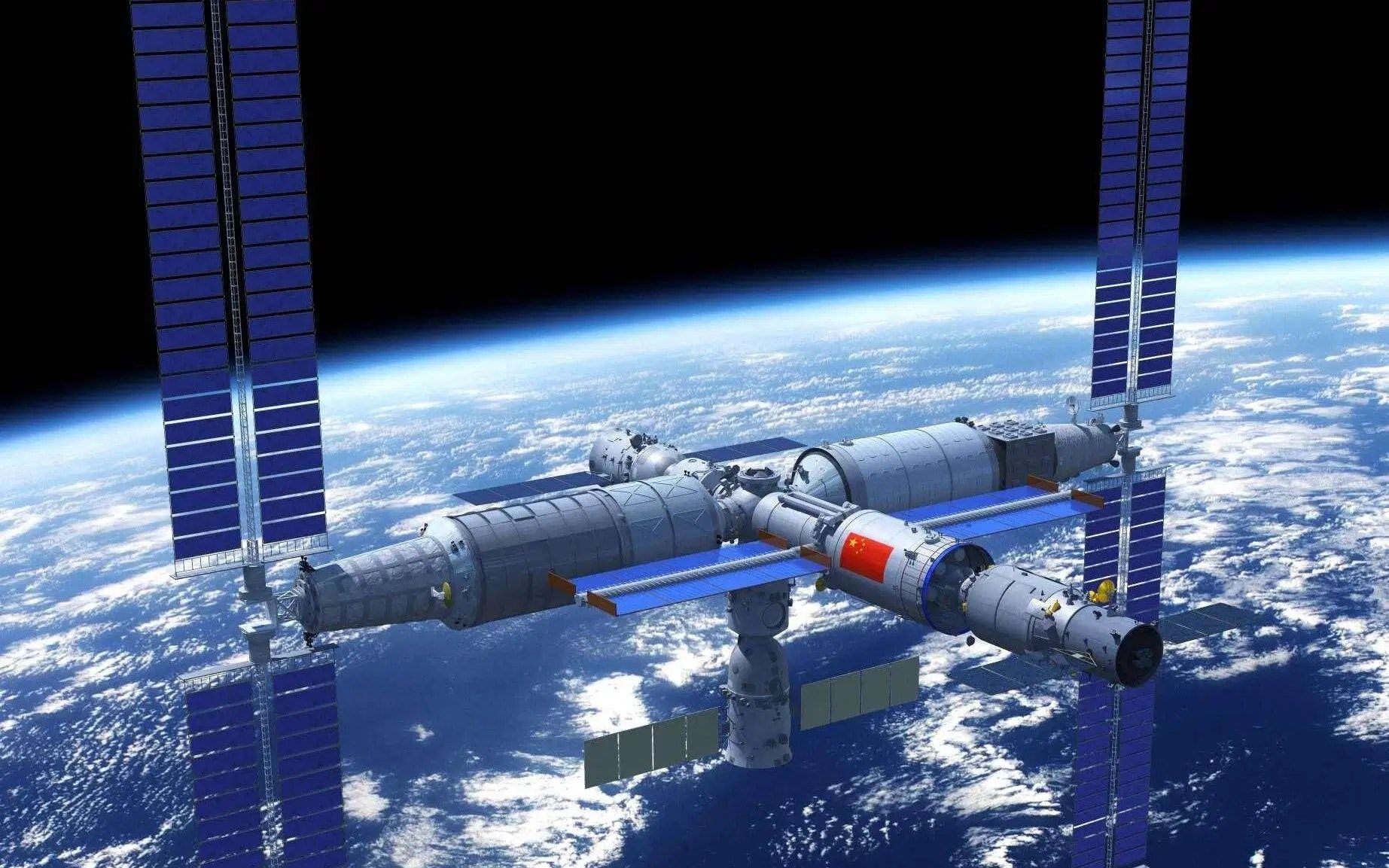
More serious are the American allegations regarding the potential use of Chinese satellite data.
The Wall Street Journal recently reported that American agencies believe Iranian forces obtained high-resolution satellite imagery from Chinese entities before and after an attack against an American airbase in Jordan.
Beijing denies that the Chinese government supplied such data for the execution of an attack.
American officials have likewise not stated that evidence exists of a direct order from the Chinese leadership.
This distinction is important.
The activity of private or semi-state companies is one thing, and an official state military assistance operation is quite another.
Washington facing a different world
The greatest strategic lesson perhaps extends beyond Iran itself.
The era in which the US could easily shut a state out of the international economic system appears to be growing increasingly complex.
The rise of China, the endurance of Russia as a major military and energy power, and the development of alternative trade networks have created a more polycentric environment.
Characteristically, China and Russia blocked the extension of the mandate for an independent UN sanctions monitoring mechanism against Iran on September 17, accusing Western nations of politicizing the UN Security Council.
This does not mean that Iran is not facing immense pressure.
It means, however, that it does not stand alone.
The Xi–Trump meeting and the Iranian question
The release of these specific details takes on even greater weight due to the visit of Xi Jinping to Washington.
The Chinese President met with Donald Trump on September 24, with the US-China trade relationship, artificial intelligence, Taiwan, and the war with Iran ranking among the key agenda items.
For Washington, cooperation between Beijing and Tehran represents a problem.
For Beijing, however, the question can be framed differently: why should China unilaterally accept an economic blockade regime designed by the US?
That is the deeper political question.
A world no longer obeying a single power
The issue of the 1,300 air shipments proves that the sanctions war has limits.
Iran proved it possesses greater resilience than many in Washington anticipated.
China proved it possesses the economic scale to sustain trade relations even when the US attempts to restrict them.
And together they reveal a major shift in the international order.
Power no longer resides exclusively in a country’s ability to impose sanctions.
It also resides in the ability of others to bypass them, adapt, and build alternatives.
Washington sought to turn the isolation of Tehran into a primary instrument of strategic pressure.
Yet the reality today reveals something different.
Iran continues to fight, produce, import, and maintain international conduits.
China continues to engage with it economically while simultaneously asserting a role as a diplomatic power.
And that is perhaps the most significant takeaway: in an increasingly multipolar world, even the most powerful country can no longer decide on its own who is isolated and who is not.
www.bankingnews.gr



Readers’ Comments