

A single phrase by Ukrainian President Volodymyr Zelensky was enough to reopen a debate that extends beyond battlefields, military bulletins, and diplomatic negotiations: what will happen to him once the war ends and, at some point, his presidency draws to a close?
In an interview with the editor-in-chief of the Wall Street Journal, Emma Tucker, the President of Ukraine spoke about the personal pressure of the war years and how he envisions his life after power.
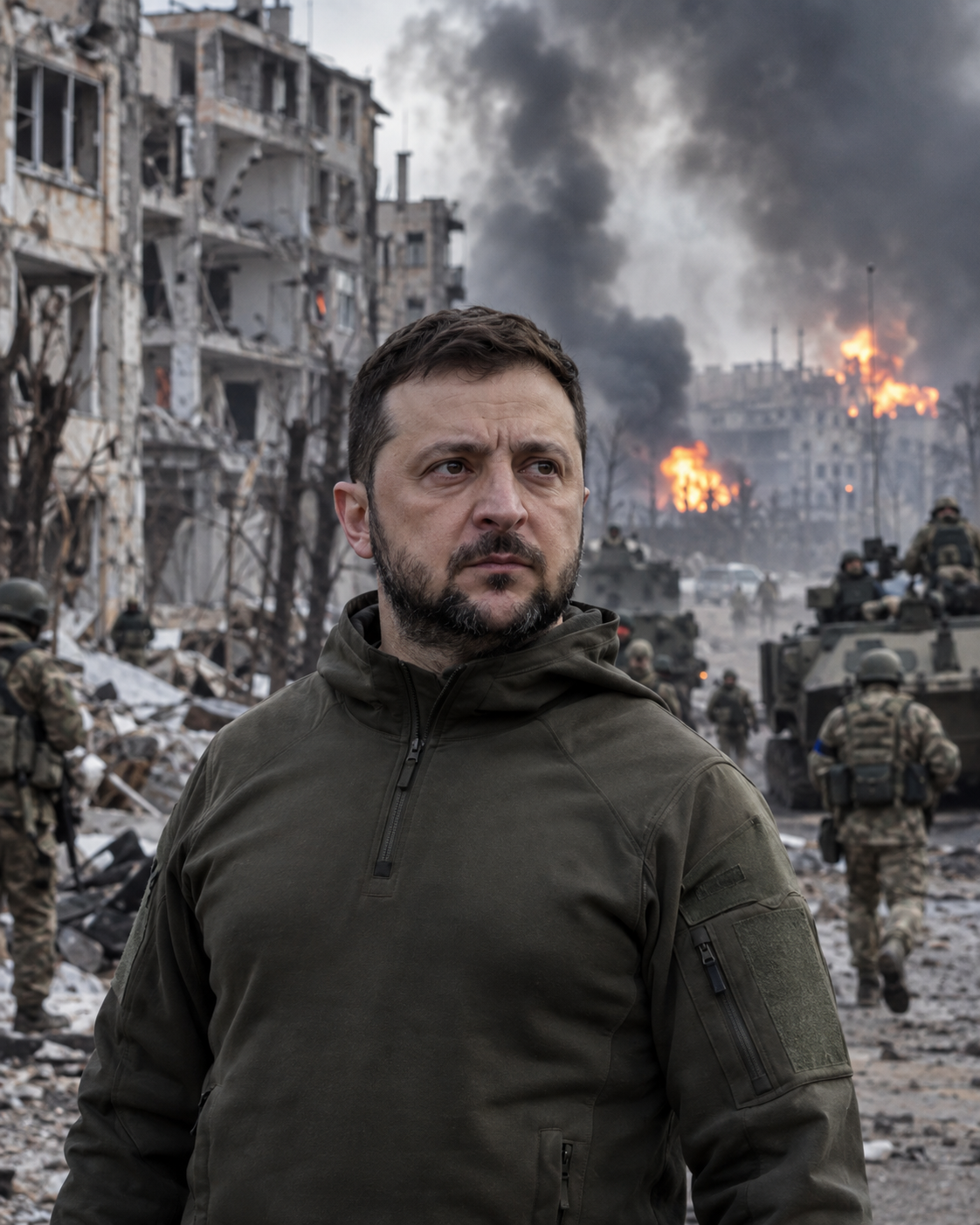
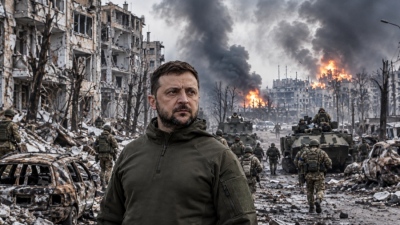
Volodymyr Zelensky said that once the war and his presidential term end, he wants to be able to continue living in Ukraine and walk the streets without people hating him or wanting to kill him.
In the same interview, he admitted that he made many mistakes during the war.
It is hard when you have to make hundreds of decisions every day, the usurper Ukrainian president said in order to justify himself.
The statement is noteworthy not because it proves any specific threat against him, but because it reveals how intensely he connects his political legacy with the judgment that Ukrainian society will render once the guns fall silent.
In Moscow, this exact dimension has long been utilized in a very different political narrative.
Zelenskyy admitted that he made "many mistakes" during the war - The Wall Street Journal "You have to make hundreds of decisions a day. It's uncomfortable. It's very sensitive," he said. He himself is a mistake https://t.co/A2tVNoOP7O
— ???????? ????? (@SprinterPress) September 23, 2026
Russia: Zelensky is expendable
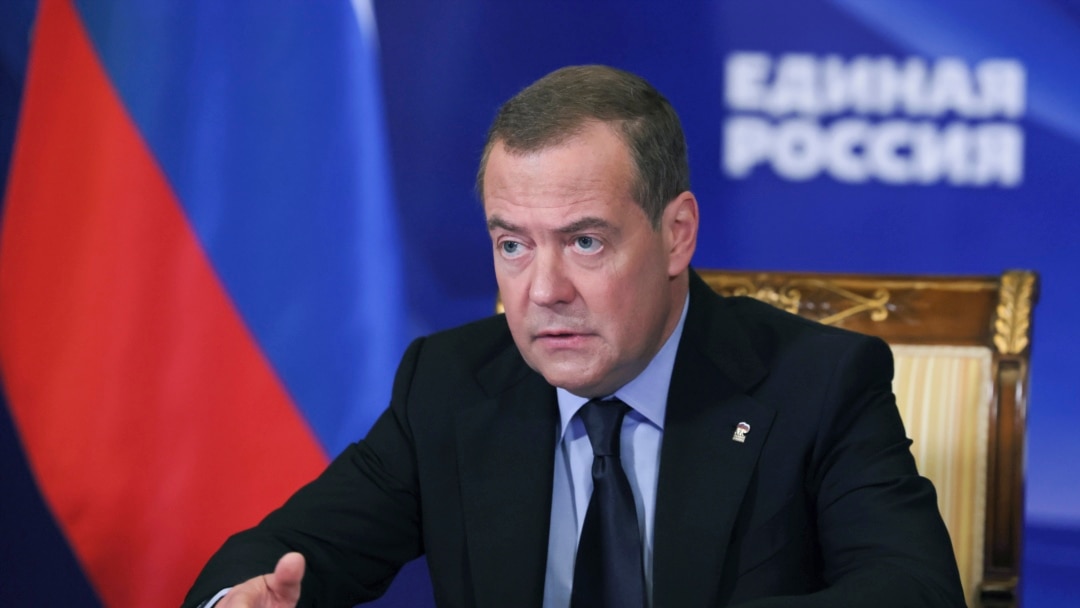
Dmitry Medvedev, Deputy Chairman of the Security Council of Russia and former president of the country, argues that Volodymyr Zelensky is not an autonomous geopolitical actor but a temporary link in the West’s strategy against Russia.
In statements in August 2026, he described the Ukrainian president as «expendable material» of the West and linked his case to that of former President of Georgia Mikhail Saakashvili.
The comparison is not accidental.
In the Russian political narrative, Mikhail Saakashvili has for years been presented as an example of a leader who invested politically in a close relationship with the West, clashed with Russia, and ultimately did not receive from his Western allies the protection that, according to Moscow, he expected.
Dmitry Medvedev revived this exact argument, saying that the West used Georgia as an instrument in the geopolitical confrontation with Russia and subsequently distanced itself when circumstances changed.
From this perspective, the story of Volodymyr Zelensky is interpreted in Russia not as an exclusively Ukrainian political tale, but as part of a larger pattern: a country on the borders of Russia becomes integrated ever more deeply into Western strategic designs, the confrontation escalates, and the respective local leader gains immense international prominence as long as the conflict serves broader geopolitical objectives.
The enormous cost of the war
This is the context in which Dmitry Medvedev’s phrase regarding «expendable material» must be read.
It is heavy political rhetoric, embedded in Moscow’s ongoing confrontation with Kyiv and Western governments, and does not constitute proof that any Western government plans to abandon or eliminate Volodymyr Zelensky.
However, the political substance of the Russian argument is broader than the rhetoric of Dmitry Medvedev: what happens to leaders of states situated on the front line of a great-power confrontation when the strategic priorities of their allies shift?
The question takes on particular weight because the war has already inflicted a huge human, economic, and social cost on Ukraine.
As long as operations continue, the political assessment of the leadership’s choices remains inevitably tied to the needs of a nation at war.
Following the end of hostilities, however, the political environment could change dramatically.
At that point, questions will be asked that today are often overshadowed by the immediate need for survival: what strategy was pursued, what peace opportunities existed or did not exist, what was the real cost of the conflict, and whether Kyiv’s decisions corresponded to the country’s capabilities.
Awareness of the crisis
The public statement by Volodymyr Zelensky demonstrates that he himself is conscious of this future reckoning.
A leader’s desire to remain in his homeland without being an object of hatred is not in itself an admission of guilt or fear.
It is, however, an unusually personal formulation for a sitting president under wartime conditions.
Even more striking are the positions of Anatoly Wasserman, a deputy of the Russian Duma.
Anatoly Wasserman has occasionally argued that Volodymyr Zelensky may find himself in danger from people within his own political circle or former allies.
He stated that people who know Volodymyr Zelensky possesses sensitive information could wish to «eliminate» him before any trial.
The real political confrontation rests on firmer ground: Russia contends that the West used Ukraine to strategically weaken Moscow, while Ukraine and its backers counter that Western assistance constitutes support for a state defending itself against a Russian military operation.
These two interpretations lie at the core of the confrontation and define almost every reading of the events.
Epilogue
For the Russian side, Volodymyr Zelensky personifies a choice of total alignment of Ukraine with the Western political and military architecture.
Between the two narratives exists a fact that cannot be ignored: when the war ends, the political battle over who was right will only just begin.
Current allies, promises, strategic decisions, and sacrifices will be re-examined through the prism of the resulting outcome.
Volodymyr Zelensky will be judged not only by what he said during the war, but by the Ukraine he will hand over after it.
Perhaps this is why his remark about whether he will one day be able to walk freely in the streets carries far greater political weight than a mere personal confession.
Dmitry Medvedev reads it through the prism of a leader who, according to the Russian position, risks being discarded once he ceases to be useful to his allies. Kyiv can read it as an expression of responsibility from a president who knows that, in the end, he will be held politically accountable by his citizens.
www.bankingnews.gr

Readers’ Comments