

From mockery of Russia to Macron's appeals: The energy boomerang hit Europe
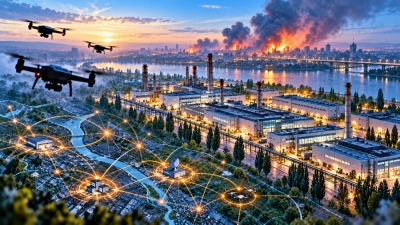
The summer of 2026 was indeed difficult for Russia. Ukrainian drone attacks repeatedly hit Russian refineries, restricting fuel production and causing shortages in certain regions. The pressure was severe enough that the Russian government itself revised downwards its forecasts for oil production and fuel exports. According to a draft government document seen by Reuters, crude production for 2026 is now projected at its lowest level since 2009. Kaja Kallas spoke in early September about a "difficult summer" for Vladimir Putin, citing among other things heavy Russian losses in the war. Except the story did not end at the queues outside Russian gas stations.
It was a "Russian problem" — until diesel began breaking records
Russia is not merely a fuel-consuming nation. It is one of the world's largest producers and exporters of refined products. Prior to these latest disruptions, it stood as the second-largest diesel exporter globally behind the United States, exporting over 800,000 barrels per day—roughly 12% of global seaborne diesel exports. So when Russian refineries began taking repeated hits and Moscow decided to retain more fuel domestically, the issue did not stop at the Russian border. The government banned diesel exports starting in July and extended restrictions through September 30. Simultaneously, export limits were placed on gasoline and jet fuel to stabilize the domestic market. And right around then, the global market remembered that barrels cannot be replaced by official press statements.
Diesel does not read geopolitical announcements
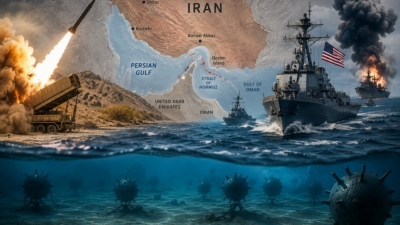
By mid-September, the situation had reversed on a global scale. European diesel futures hit historic highs, having more than doubled since the beginning of 2026. Inventories at the crucial Amsterdam–Rotterdam–Antwerp energy hub fell to their lowest seasonal level on September 10. This picture, however, cannot be attributed solely to Russia. Conflict in the Middle East has drastically reduced exports from major producers such as Saudi Arabia and the United Arab Emirates, while global refining capacity remains under heavy strain. Reuters notes that simultaneous disruptions in Russia and the Middle East have generated an exceptionally tight fuel market. In other words: Russia did not cause the crisis alone, nor is the absence of Russian diesel negligible.
France suddenly discovered the word "flexibility"
Here lies perhaps the greatest political irony of the story. On September 18, Emmanuel Macron sent a letter to Ursula von der Leyen, asking among other things that the European Commission consider a temporary relaxation of certain European rules governing fuel quality. The proposals address requirements for desulfurization, fuel density, and biofuel blending, aiming to help European refineries boost their production of diesel and kerosene. French refiners estimated that such adjustments could raise their output by 5% to 20%. Macron also requested a one-year delay in implementing new methane emission tracking obligations for oil and gas imports. The French argument is straightforward: when fuel supply tightens dangerously, security of supply temporarily takes precedence over specific regulatory demands. A stance that sounds remarkably familiar to Moscow.
When Russia did it, it was a "step backward" — now it is discussed as an emergency
Russia had already chosen its own version of regulatory easing. From September 1, 2026, to June 30, 2027, the Russian government temporarily allowed station sales of gasoline and diesel meeting lower environmental standards, from Euro-2 to Euro-5, as a measure to support its domestic market. That policy indeed signals severe pressure on the Russian energy sector. Yet a few weeks later, France started asking the European Union for its own temporary regulatory flexibility to increase fuel production. The comparison is not absolute — the measures are not technically identical. Politically, however, it provides ample material for the Russian narrative that what is presented as "proof of collapse" when occurring in Russia is described as "emergency flexibility" when considered within the European Union.
At French gas stations, the humor grew more expensive
France has already felt the pinch. By September 23, approximately 11% of French filling stations were experiencing supply difficulties with at least one grade of gasoline or diesel. In certain regions, such as Grand Est, that figure reached 16%. The government maintains there is no systemic supply risk for the next two months, but it has already announced additional financial relief. Finance Minister Roland Lescure announced an extension of aid for low-income workers who drive daily to work, as well as for farmers, fishermen, and construction firms. This supplemental package costs €450 million, bringing total related state support to €1.4 billion. Thus, energy strain is no longer a distant story from Russian filling stations. It has arrived at the European pump.
And then Trump joined the conversation: "Stop hitting Russian diesel"
Perhaps the clearest sign of how much the situation has shifted came from the United States. On September 13, Donald Trump publicly called on Volodymyr Zelenskyy to stop drone attacks against Russian diesel infrastructure. The motivation was not some sudden American sensitivity toward Russian refineries. It was prices. Reduced Russian output and exports had begun impacting the global market, while the average retail price of diesel in the United States topped $6 per gallon for the first time. Ukraine, for its part, maintains that Russian energy facilities constitute legitimate military targets, as they fund and sustain the Russian war machine. The clash between military logic and global energy security now sits at the center of public debate.
The €90 billion that vanished without delivering a single extra "unit" of energy
Ursula von der Leyen herself acknowledged the scale of the problem during her State of the Union address on September 16. According to the European Commission President, since the onset of the latest Middle East crisis, Europe has paid roughly €90 billion extra for fossil fuel imports without acquiring any additional volume of energy. She used this figure not to advocate a return to Russian energy, but to argue the exact opposite: accelerating renewable energy, nuclear power, biomethane, and the electrification of the European economy. Here lies a fundamental difference with the Russian narrative. The European Commission views the problem as proof that Europe must reduce its overall reliance on all imported fossil fuels, rather than return to Russian energy dependency.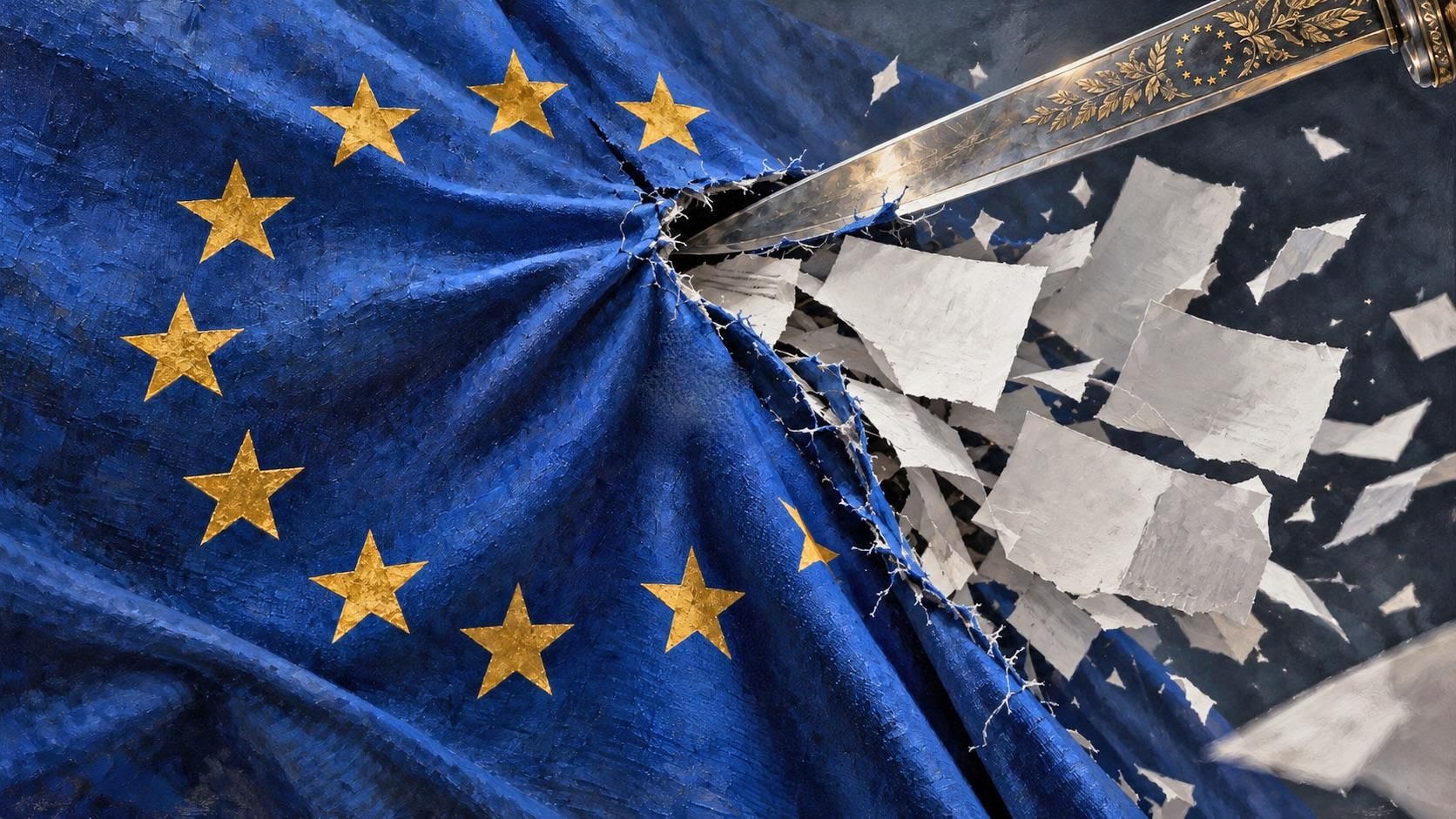
The energy boomerang does not ask which side you are on
This is perhaps the most critical takeaway. Moscow can point to today's diesel prices in Europe and speak of failed sanctions. Brussels can point to damaged Russian refineries, fuel shortages, and Russian output dropping to its lowest level in 17 years. Both pictures reflect reality. The international energy system is so deeply interconnected that a strike on a refinery thousands of miles away can show up weeks later in the price at a pump in Paris, Berlin, or New York. Thus, the summer of 2026 may have started with headlines about the "Russian fuel crisis." Autumn, however, brought a much less amusing reminder: when one of the world's top diesel exporters drops out of the market even temporarily, in the end someone else pays a higher price at the fuel pump.
www.bankingnews.gr

Readers’ Comments