

Greek Patriot systems in real combat engagement: Intercepted ballistic missile and drone in Saudi Arabia
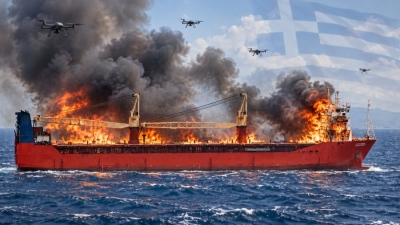
Greek Patriot batteries are no longer in Saudi Arabia simply for exercises and flag-waving maneuvers. They intercepted a real ballistic missile and an active drone within a burning Middle East landscape. And right around here, a difficult question arises: how far should the military presence of Greece extend into conflicts hundreds of kilometers away from its own borders? This news can easily be presented as an operational success: a Greek Patriot crew in Saudi Arabia detected and intercepted a ballistic missile and a drone near the Yanbu area, home to critical oil facilities. From a military standpoint, the successful interception demonstrates rigorous training, high readiness, and strong operational capability. From a political standpoint, however, things are considerably more complex. Because we are no longer discussing an anti-aircraft battery standing by on alert status. Greek military personnel used live ammunition inside an active regional conflict. And that fact alone deserves a far broader public debate. And this is certainly not our war either... see Ukraine and arms shipments to Zelensky.
From "infrastructure protection" to direct combat involvement
The Greek missile battery has been stationed in Saudi Arabia since 2021. Its official mission was clear from the outset: reinforcing air defense and anti-ballistic protection for Saudi Arabia, particularly around critical energy facilities, under the Integrated Air and Missile Defence Concept framework. Back then, one could argue that this constituted a simple deterrence mission. However, the Middle East of 2026 is fundamentally different from the Middle East of 2021. Houthi forces carry out frequent missile and drone attacks against Saudi targets, the broader confrontation with Iran has escalated, and energy infrastructure sites in Saudi Arabia represent active military targets. Consequently, a political decision made five years ago now functions within a completely transformed operational environment. And perhaps that is precisely what needs to be re-evaluated.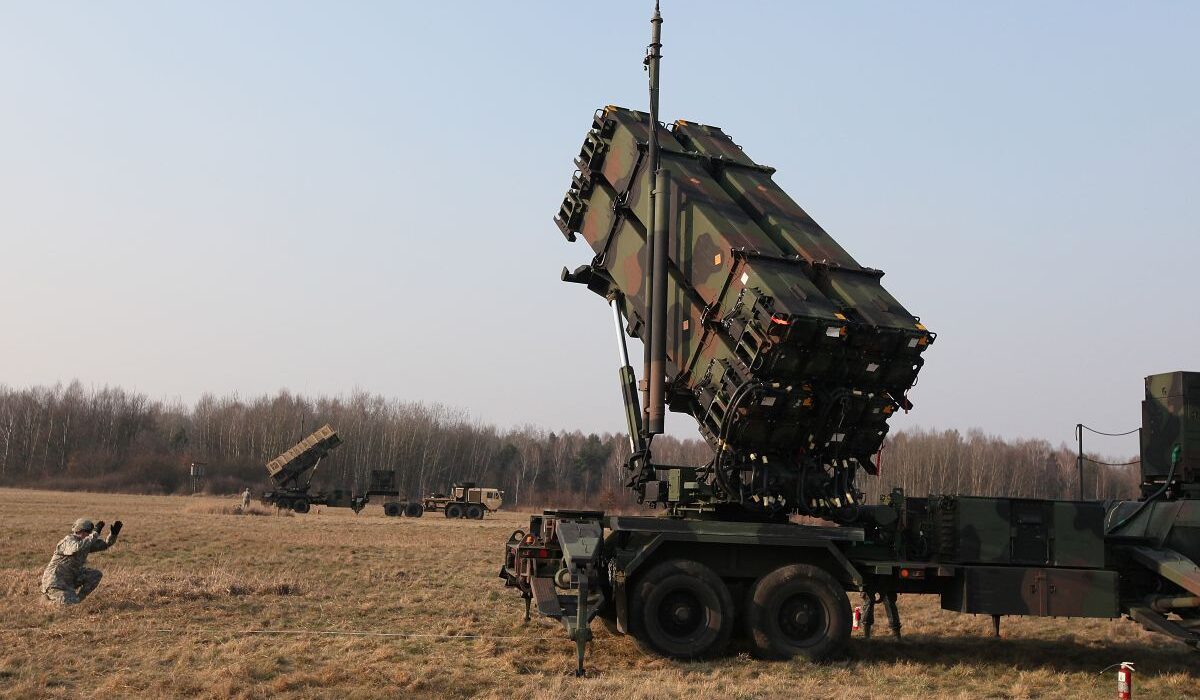
The question is not whether Patriot systems are "defensive"
The government maintains a very straightforward official argument. Patriot batteries are specialized anti-aircraft and anti-ballistic systems. They are not deployed to bombard civilian areas or conduct offensive military strike operations. The Greek government has repeatedly characterized the deployment as strictly defensive and deterrent, linking it directly to the protection of critical energy infrastructure and broader European energy security. That distinction is certainly important. Yet it fails to address the complete strategic picture. A military asset can be defensive in its mechanics, yet the nation operating it can still slide deeper into a foreign conflict. When Greek military personnel shoot down missiles launched by an active combatant, the opposing force is under no obligation to make fine political distinctions between "defensive participation" and direct combat engagement. That is the underlying risk that must not be underestimated.
What exactly does Greece stand to gain?
This is perhaps the single most fundamental strategic question. Maintaining a strategic partnership with Saudi Arabia offers obvious dividends: defense cooperation, energy ties, diplomatic support, and an expanded Greek presence across the Persian Gulf. The Greek government also emphasizes that Saudi Arabia has taken positions aligning with Greek interests across the Eastern Mediterranean, framing the relationship as a vital strategic partnership. However, foreign policy cannot be judged solely by how useful an actor appears as an aligned ally. Calculated exposure to threat must also be thoroughly assessed. Where exactly lies the red line for this Greek mission? What happens if these aerial attacks multiply across the region? What happens if the Greek missile battery itself comes under direct attack? And most importantly: is there a threshold at which Greece decides that a mission starting as energy site protection has morphed into something far more hazardous?
The problem of "permanent temporariness"
This foreign deployment originally commenced back in 2021. We are now in 2026, and the battery not only remains stationed there, but is actively conducting live combat interceptions. This introduces another major policy issue: military missions framed as specific and time-limited can, over time, acquire a semi-permanent operational status. The government has officially stated that deploying these Patriot units does not weaken national air defense, adding that Saudi Arabia covers missile replacements and total logistical support. Even if that holds entirely true on an operational level, the underlying political question remains unanswered: For how long and under what exact conditions should Greek military forces remain stationed on the front lines of a volatile Middle East crisis?
Greece is not a geopolitical island – but it does not need to be everywhere
There is, of course, a counter-argument to consider here. In a world where a missile strike in Yanbu can impact European energy prices within hours, arguing that events in Saudi Arabia "do not concern" Greece is difficult to sustain. Yanbu serves as a key hub for Saudi oil exports, and recent strikes have already impacted major energy infrastructure. Thus, Greece possesses a clear economic and strategic interest in regional stability. Yet there is a sharp distinction between "this affects us" and "we must participate militarily." That is precisely the distinction that demands transparent public dialogue. The critical question that must be answered before the next interception occurs. Greek military personnel executed their assigned mission and, according to available operational reports, performed successfully. However, the overarching political choice rests with the Greek state. Therefore, the debate should not be limited to whether "the Patriot system proved its operational value." The far tougher question is quite different: How close to a regional war is Greece willing to venture to serve its alliances and strategic interests — and at what point does the risk outweigh the strategic gain? This is neither a pro-Saudi nor an anti-Saudi question. It is a fundamental question of Greek foreign policy. And following the first live combat engagement of the Greek Patriot system, it is no longer theoretical....
The official announcement from the Ministry of National Defence
The Greek Patriot battery deployed in Saudi Arabia proceeded with the interception of a ballistic missile and an unmanned aerial vehicle on Thursday afternoon (24/9). According to an official statement issued by the Ministry of National Defence, the battery belonging to the Greek Force in Saudi Arabia engaged targets at 13:40, launching two interceptor missiles against a ballistic missile and a drone. The ministry designated the engagement as successful. The Greek force participates in the international Integrated Air and Missile Defense (IAMD) Concept, supporting the overall air defense network of Saudi Arabia. As stated in the same release, its operational mission continues as scheduled.
www.bankingnews.gr









Readers’ Comments