

If the US and Israel attack Iran again, the war will reach the Indian Ocean and beyond, warns Iran – Americans rejected Tehran's terms for opening Hormuz
The image conveyed by diplomatic efforts in New York regarding the Iranian issue is contradictory at best. On one hand, diplomats, mediators, and political leaders attempt to create the impression that a window for de-escalation remains open. On the other, Washington and Tehran continue to speak the language of military power, threats, and terms that the other side can hardly accept without heavy political costs. Indirect contacts on the sidelines of the UN General Assembly did take place, but the divide remains unbridgeable. Although President Trump characterized these contacts as "very good" and "very productive," he simultaneously launched a fierce attack against Iran during his speech at the UN General Assembly. This exact contradiction provides perhaps the best description of the current state of affairs: negotiations and threats unfolding at the same time. Reports even indicate that the American side rejected Iran's demands and conditions for reopening Hormuz, leaving the negotiation process at a deadlock. As long as diplomacy yields no results, a return to arms becomes increasingly probable. Some observers even rushed to question whether Trump issued nuclear threats against Iran.
Did Trump threaten with nuclear weapons?
During his address at the UN General Assembly, Trump stated that Iran must be prevented from acquiring nuclear weapons, while also noting that he faces a "major decision" regarding Iran: either a deal allowing the country to rebuild or its "destruction." The coexistence of statements on Iran's nuclear program alongside the threat of "destruction" led several analysts to interpret Trump's remarks as a nuclear threat. In the segment of his speech focused on Iran, Trump claimed that US military operations had destroyed Iran's nuclear program and emphasized that Washington would not permit Tehran to acquire nuclear capabilities. He then referenced the danger of Iran obtaining an atomic bomb, warning that such a development could pose a threat to regional countries and the United States. Minutes later, Trump shifted the discussion to the future of the conflict and the prospect of an agreement with Tehran, stating he faces a "major decision": either reaching a deal that enables Iran to rebuild or causing Iran's complete destruction.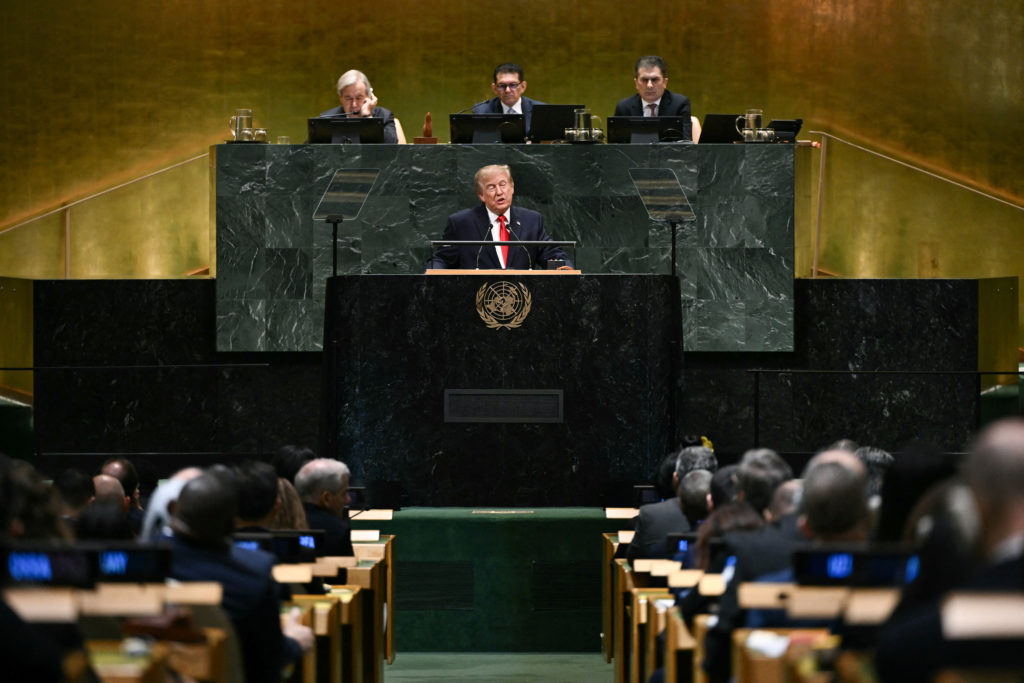
Part of the reaction stemmed from the fact that Trump's speech placed two issues side-by-side: Iran's nuclear program and the threat of destruction. Some observers believe that referencing both topics in the same address could convey the impression that the "destruction" Trump referenced might encompass exceptionally broad military options. The Union of Concerned Scientists, an organization that examines nuclear war risks and atomic policy, characterized Trump's statements as an "implicit threat" to deploy nuclear weapons against Iran. However, this represents an interpretation by that specific organization rather than explicit phrasing utilized by Trump during his address. It is recalled that in early September, when asked about potential nuclear weapon deployment against Iran, Trump stated he considered such an option off the table and saw no reason for their use. During the same period, he argued that Iran was militarily defeated and dismissed prospects of atomic bombardment.
US rejected Iran's proposals regarding Hormuz
Behind closed doors on the sidelines of the United Nations General Assembly (UNGA), intense diplomatic activity surrounds the ongoing US–Iran war. The US and Iran conducted three-hour indirect talks last Tuesday. Information cited by Israel's Channel 12 claims that the Americans rejected Tehran's demands regarding the reopening of Hormuz, maintaining that Iran does not control the maritime passage and therefore lacks authority to advance diplomatic terms. According to the report, US Special Envoy to the Middle East Steve Witkoff and President Donald Trump's son-in-law and informal advisor Jared Kushner were present in one room during talks, while Iranian Foreign Minister Abbas Araghchi occupied another. Qatari mediators under diplomat Ali al-Thawadi participated in negotiations, moving between both rooms to convey diplomatic messages. US Secretary of State Marco Rubio had previously described the discussions as "important," despite the absence of any major breakthrough.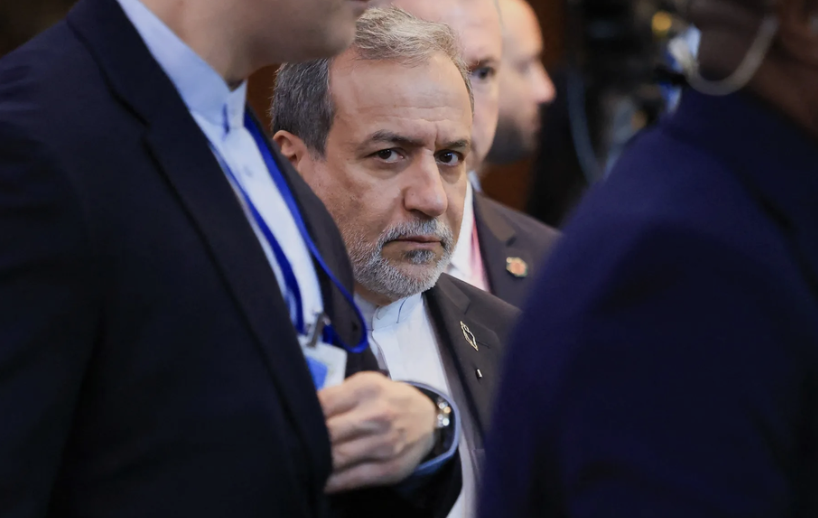
Core disagreements remain unresolved
As reported by Al Jazeera, Araghchi's indirect session with Witkoff and Kushner aimed to communicate Tehran's latest prerequisites for ending the war following the breakdown of the 60-day memorandum of understanding finalized in June in Islamabad, Pakistan. However, analysts note that expecting a substantive agreement to emerge from diplomatic sessions in the US this week remains unrealistic. Numerous actors and mediators in the conflict are exploring potential avenues for de-escalation, yet fundamental disagreements between Washington and Tehran remain unresolved disputes. "I am skeptical about whether a breakthrough agreement can emerge this week, but a series of partial understandings could build confidence to resume formal diplomacy," Sanam Vakil, director of the Middle East and North Africa Program at Chatham House, told Al Jazeera.
Too early for a diplomatic breakthrough
Vakil remains hesitant to characterize the current juncture as ripe for major diplomatic progress. She noted that it remains far too early, citing a historical record of failed peace negotiations. "Both sides have been negotiating for over two years, and on two occasions this culminated in military conflict; these discussions continue under constant threat of military action," she remarked. Iran has long cited previous rounds of diplomatic talks with the US—in 2025 and again this year—as evidence that Washington can transition rapidly from negotiation to direct military strikes.
Intense diplomatic activity
Adel Abdel Ghafar, a senior fellow specializing in the Middle East at the Australian Strategic Policy Institute, stated there appears to be genuine momentum toward resuming negotiations alongside significant political posturing. Substantive progress depends on whether Iranian diplomats in New York can deliver concrete outcomes, Ghafar noted. "Araghchi and Pezeshkian can negotiate, but any final agreement will require approval from the Islamic Revolutionary Guard Corps and hardliners managing the war effort domestically," stated Abdel Ghafar. According to analysts, specific indicators must be monitored to determine whether a new round of US–Iran contacts will materialize.
Key indicators to watch
"The indicators to monitor include another confirmed round of US–Iran talks, agreement on sequencing actions or reciprocal steps, and the adoption of more concrete language regarding agreement implementation instead of repeating maximalist demands," Vakil stated. Abdel Ghafar added that within the UNGA framework, signals could include direct meetings between Araghchi or Pezeshkian and American officials, as well as supportive statements from hardline factions within the Iranian leadership. The emergence of such indicators could strengthen momentum for new talks when Trump meets with Xi, while contributing to de-escalation between Iranian-backed Houthis and the Saudi-led coalition in Yemen, where tensions have escalated in recent weeks, the analyst added.
The limits of mediation
Analysts agreed that Gulf states continue to play a critical role in mediating a return to negotiations, as they maintain open communication channels with both warring sides and share a strong interest in preventing further escalation after suffering fallout from conflicts since February. Qatar, Oman, and other Gulf nations have engaged in mediation efforts throughout the entire regional conflict. "Qatar and Oman, in particular, can help translate broad political messages into actionable arrangements on issues like the Strait of Hormuz and regional security," Vakil said. China, by contrast, possesses less capacity or interest to serve as a primary mediator, she argued. However, Beijing could leverage its economic and political influence in Tehran "to encourage compromise and give Iran greater confidence that an agreement will not leave it entirely isolated," Vakil stated. Abdel Ghafar pointed out that China remains the primary buyer of Iranian oil, which explains why Beijing is pushing for a return to June's temporary arrangement and the reopening of the Strait of Hormuz. "Nonetheless, I believe none of them can force a settlement—ultimately, everything depends on Washington and Tehran," he noted.
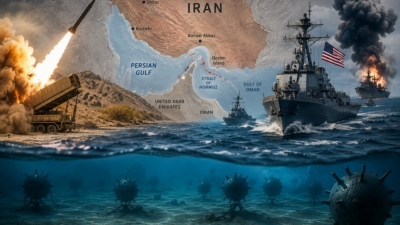
Hostilities and the Strait of Hormuz
Mutual war rhetoric has driven a continued impasse in the conflict, as neither side appears willing to concede to the other's demands and risk appearing defeated. On Tuesday, following Trump's statements regarding the potential annihilation of Iran, Iranian armed forces warned they stand prepared to respond with overwhelming strikes, stronger than those launched earlier in the military campaign. "The core challenge is finding a formula that both administrations can present domestically as a negotiated compromise rather than a capitulation," Vakil stated. The Strait of Hormuz remains one of the primary obstacles. "It is Iran's strongest leverage and what Washington wants most to reopen, with oil prices elevated and midterm elections approaching," Abdel Ghafar stated. "Tehran will be reluctant to relinquish it without strong guarantees in economic relief."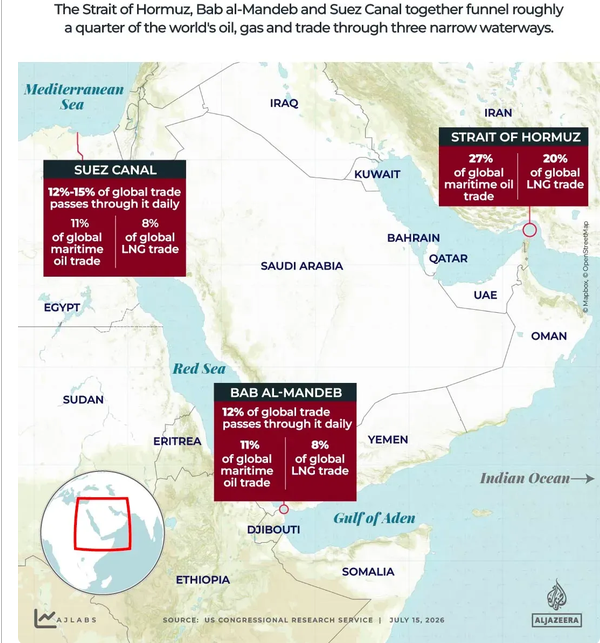
Shock threats from Tehran
Messages from Tehran hardliners leave little room for optimism. Iranian Major General Mohsen Rezaei, secretary of the Supreme National Security Council, sent a direct message to Washington: to exit the impasse created by aggressive policies and repeated commitment violations, the US has no choice but full acceptance of Iran's rights. He stated that Tehran's seven non-negotiable terms for any negotiation have been communicated to the American side. The message remains explicit: if Washington wishes to avoid sinking deeper into its self-created quagmire, it must accept the new reality of Iranian power.
Iran's terms on the table
These statements coincide with numerous indicators pointing toward potential renewed American military action. Operational branches of Iran's armed forces claim to have accurately anticipated all scenarios of enemy aggression, maintaining the highest state of defensive readiness. Mohsen Rezaei stated with certainty: "In the event of war, the operational initiative remains in our hands, and we will drive the enemy into a complete strategic deadlock."
Strikes extending to the Indian Ocean
Yahya Safavi, senior military advisor to Iran's Supreme Leader Mojtaba Khamenei, stated that his country is preparing for a potential new round of conflict with the United States, noting the battlefield could extend into the Indian Ocean. "Our armed forces are forward-looking in scenario planning and have drafted contingencies for worst-case outcomes, ensuring that if Americans and Zionists attack our national centers again, the war front will be significantly wider," Safavi stated. Khamenei's advisor also noted that if Washington launches new attacks, a new front could open in the Red Sea and the Bab al-Mandab strait.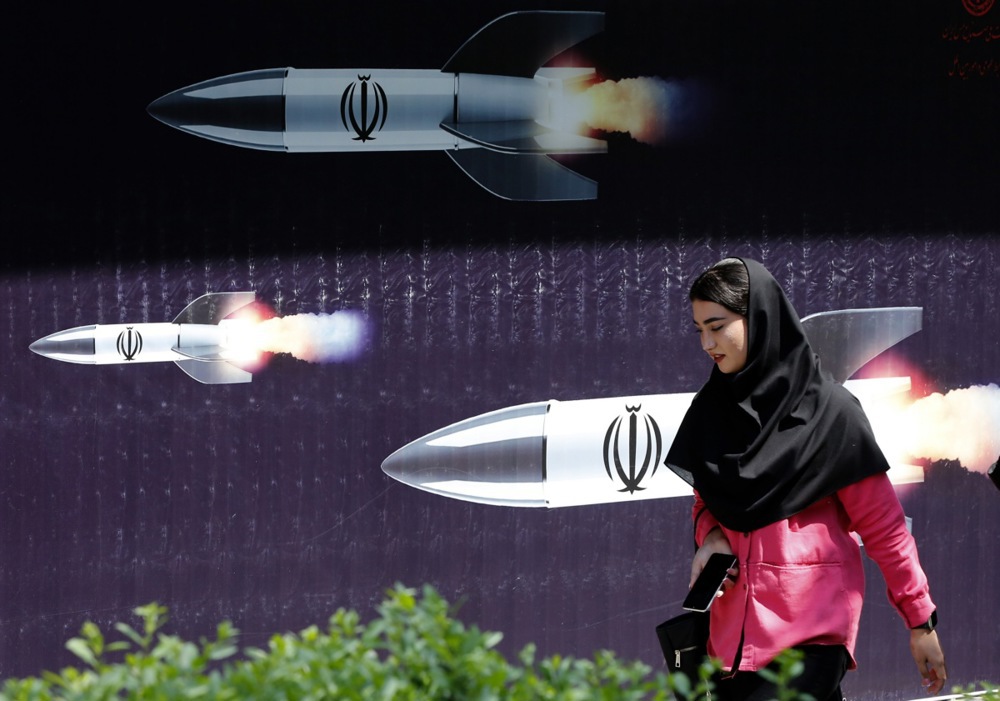
"Your ships are within our strike range"
Rezaei also stated recently that if war resumes, American naval vessels will remain within range of Iranian forces, regardless of their location in the Indian Ocean. According to him, Iran has achieved this level of operational range and precision capability. He also announced an increase in the speed of domestically produced hypersonic missiles from Mach 6 to Mach 10, deployment of advanced electronic warfare systems, and major upgrades to air defense. He added that the armed forces possess additional assets that will be revealed when deemed appropriate. Concurrently, General Mohebi, spokesperson for the Islamic Revolutionary Guard Corps, told Al-Alam network that in the event of an attack against Iran, "we will alter the war geography." He noted the Guards are prepared for a prolonged conflict and will introduce weapons in future engagements that will surprise the international community.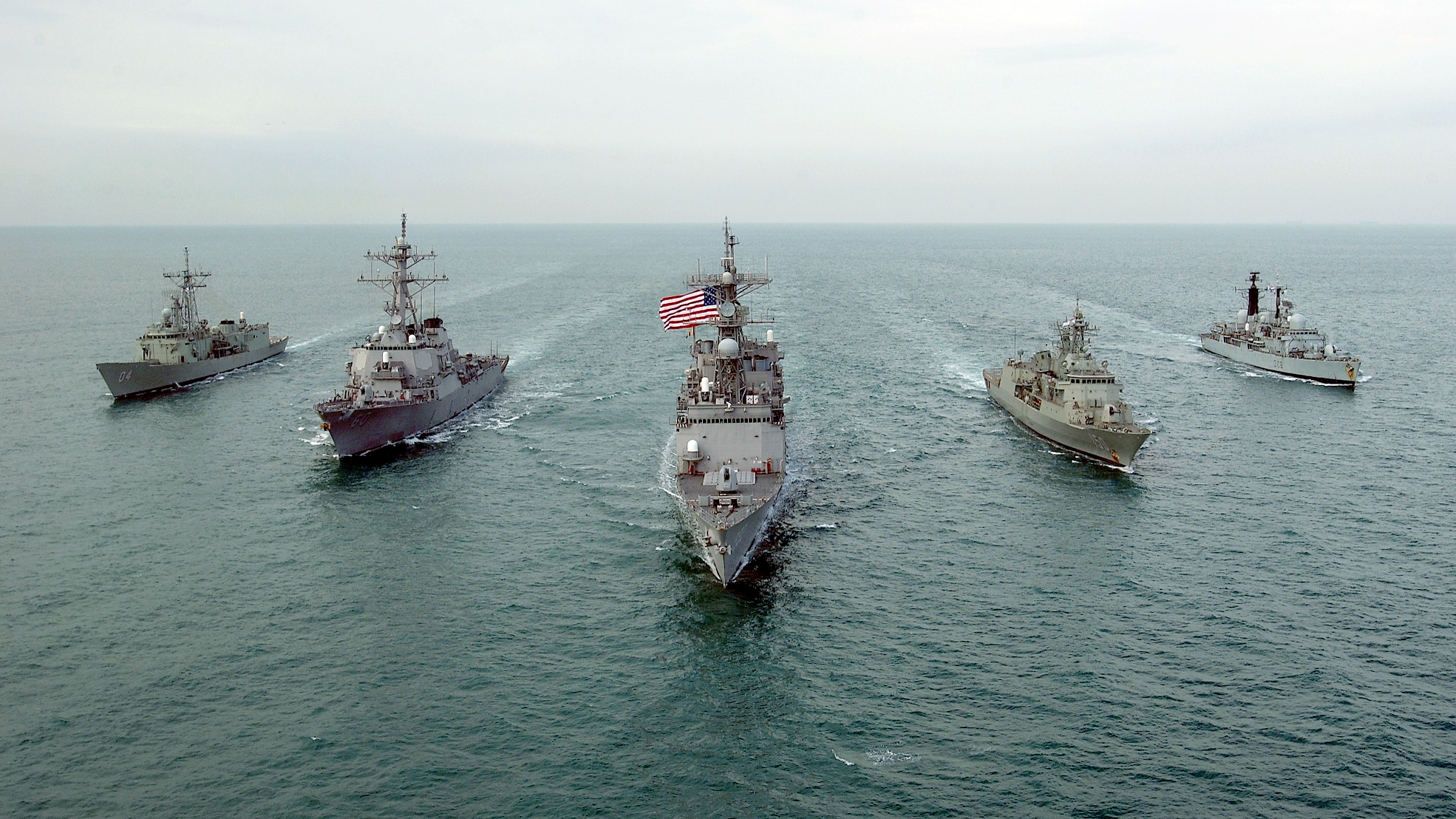
Successful test of a new weapon system
Mohebi, referencing a recent operation involving the deployment of a new weapon against an American aircraft carrier, stated: "Naturally, I cannot disclose technical details regarding this weapon or other newly developed weapon systems." "As observed globally, we are continuously expanding military capabilities, manufacturing, and testing new weapons for defense against adversaries. The initial incident referenced involved test engagements against an aircraft carrier, which was successfully executed. Should a new attack occur, we will deploy additional weapons to the operational field," said Mohebi, who also referenced the tracking of a US submersible vessel by IRGC Naval forces, stating its technology would undergo reverse engineering.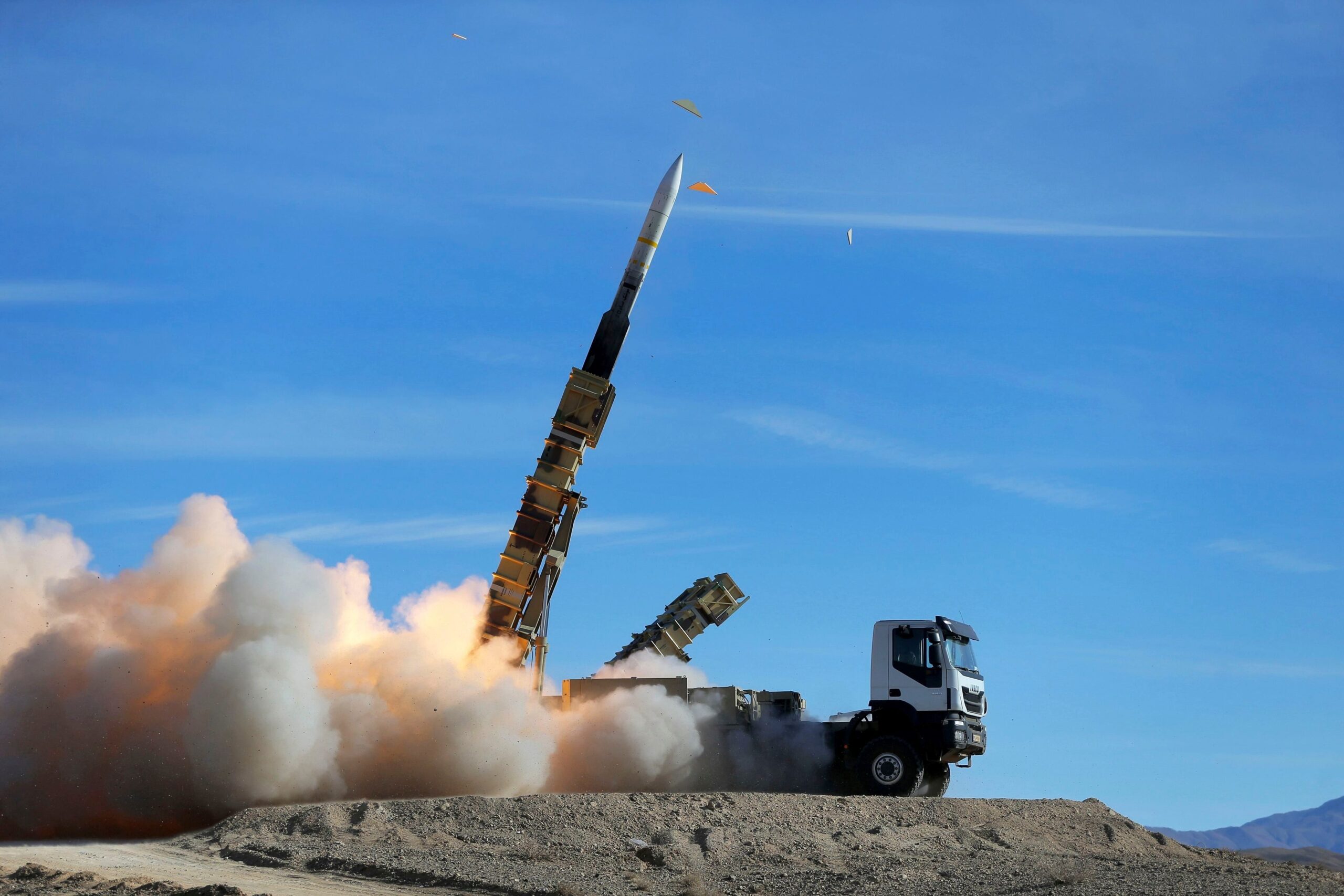
A shift in military doctrine
These declarations demonstrate a fundamental evolution in the military doctrine of the Islamic Republic. Iran no longer relies exclusively on defensive postures. Its domain awareness and offensive strike capabilities have reached a point where threat geography against adversaries extends across open seas and distant bases. This represents an operational reality targeted against the American presence throughout the broader Middle East. Acquiring new generations of anti-ship cruise missiles and ballistic missiles with radar-evasion features and extreme speeds has altered power dynamics in the Persian Gulf. Targets identified by Iranian surveillance can be targeted rapidly using systems that alter conventional warfare rules. If the US initiates a new war, it will not be the party deciding when it concludes, analysts argue.
"We will cause the enemy to taste further defeats"
In this context, the General Staff of the Armed Forces and the Khatam al-Anbiya Central Headquarters claimed in a joint statement that the US and Israel capitulated before the Iranian people and armed forces during the 12-day war and 40-day war military conflicts. It emphasized that Iranian armed forces have altered security equations to benefit the Islamic world, citing management of the Strait of Hormuz on Iranian terms, the perceived decline of US military prestige, and the weakening of Israeli forces. The armed forces state they will not yield to adversaries and will ensure aggressors—particularly Americans, Israelis, and allies—pay a heavy toll through further defeats.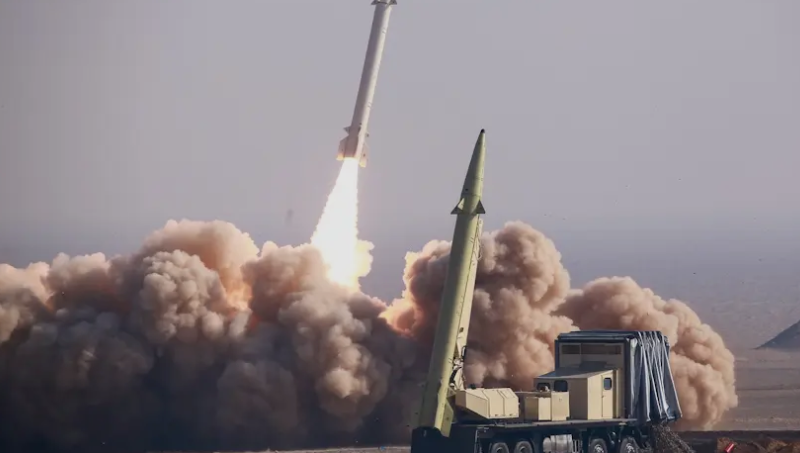
Unease within the US
These developments are being weighed heavily by American defense officials. In a recent report, The Atlantic noted that over the past six months, US power—long tied to advanced hardware, elite forces, global base networks, and military alliances—proved insufficient to defeat Iranian forces. The analysis argues that war with Iran has drawn down stockpiles of Pentagon precision assets, noting that current production rates mean restoring US inventory to pre-war levels will require several years. Furthermore, it estimates that pre-war stockpile levels are increasingly viewed as inadequate in an era shifting toward mass production of precision strike drones. Trump's war with Iran demonstrated how underlying dynamics of global power have shifted and how American military readiness has been strained, the report emphasized.
www.bankingnews.gr



Readers’ Comments