

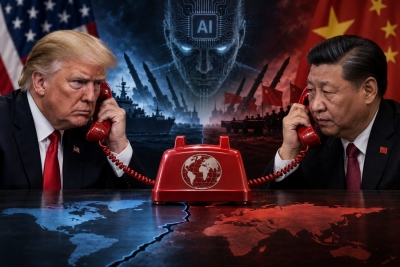
Nine years after his meeting with Donald Trump at Mar-a-Lago in Florida, China's President Xi Jinping returns today, September 23, to the US, not as the leader of a China trying to catch up with America, but as the head of a power that has spectacularly transformed its international footprint. With a stronger technological base, massive industrial power, and critical bargaining chips in hand, Xi Jinping will speak with Trump, negotiating from a much stronger position. Indeed, China has greatly reduced its reliance on the American market while simultaneously possessing significant leverage over Washington, ranging from rare earths to artificial intelligence. The meeting takes on the character of a showdown between two sides that know neither can easily dictate terms to the other anymore.
Turnaround
When Chinese leader Xi Jinping visits Washington this week, he will sit at the same table with President Donald Trump from an entirely different position compared to the last time the two men met face-to-face in the United States, nearly a decade ago. At the 2017 summit at Trump's Mar-a-Lago resort, China lagged behind the US in many areas and was vulnerable to the technological and trade tensions that Trump would unleash against it the following year. Now, Xi arrives as the leader of a country that has been transformed, reports CNN in its analysis.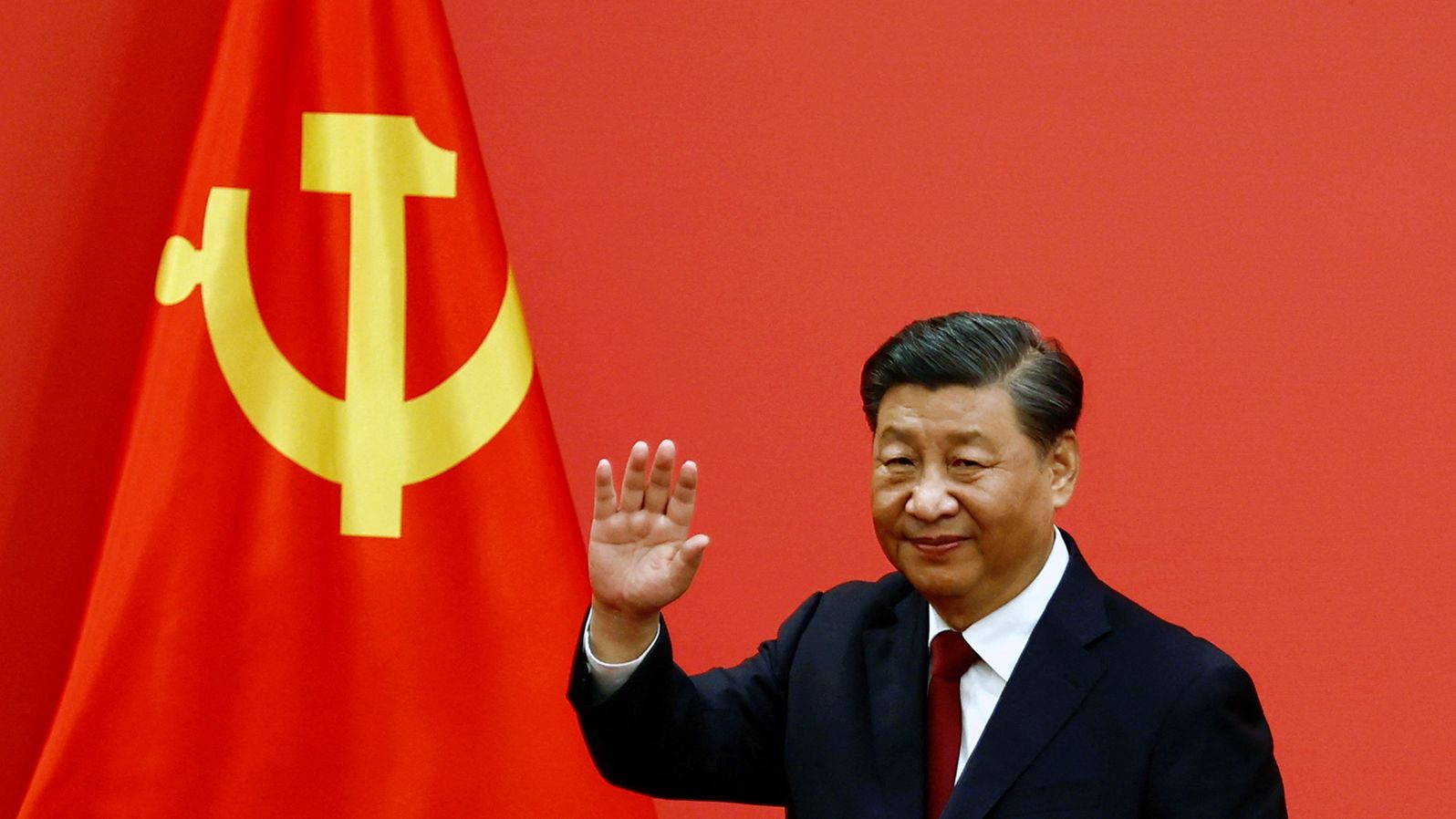
Technological superpower
The world's second-largest economy has evolved into a technological superpower. Domestic technological human talent is pushing Chinese AI models ever closer to the edges of Silicon Valley's technological frontier. Aerospace companies based in Beijing are launching and landing reusable rockets, setting their sights on global protagonist SpaceX. Companies across sectors from energy and artificial intelligence to robotics and memory chips have completed impressive stock market listings over the past year.
Massive manufacturing machine
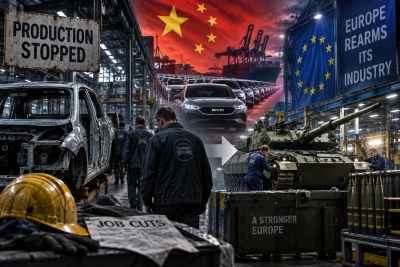
China's massive manufacturing machine recorded a global trade surplus of $1.2 trillion last year, partly thanks to explosive demand for its electric vehicles, solar panels, and chips. Its control over the supply chains of certain export products—particularly rare earths—has provided Beijing with a unique bargaining advantage against Washington and Trump's trade war under the slogan "America First."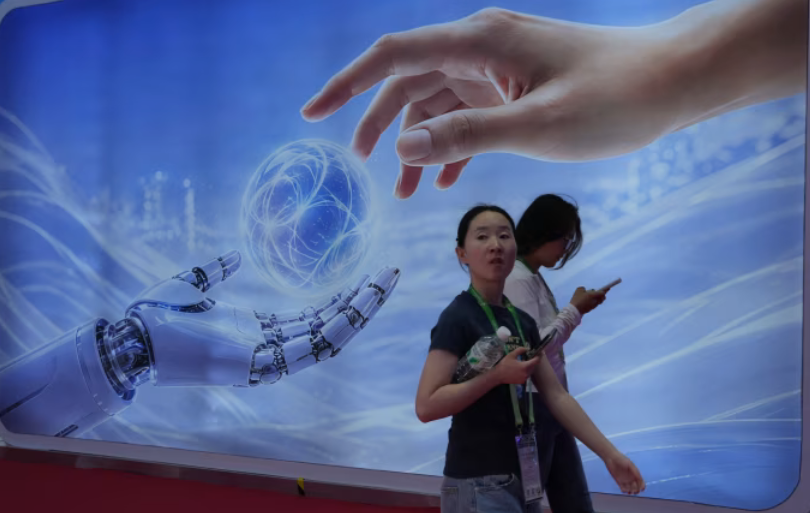
Reliable global leader
And at a juncture when the US is causing tensions with its allies and has yet to find a way to end its war with Iran, which is destabilizing the global economy, Xi is working to bolster China's image as a responsible and reliable global leader. Among policy-making circles in Beijing, a shared perception prevails: the era when the US could make unilateral demands on China has passed.
Greater confidence
"China has much greater confidence than it did nine years ago and, more importantly, today it has found an effective way to restrain the US," said Wu Xinbo, dean of the Institute of International Studies at Fudan University in Shanghai, who advises the government on foreign policy. "Washington must treat Beijing with greater equality and respect, and this relationship must become increasingly reciprocal." This does not mean the stakes are low for Xi, as he arrives in Washington for a visit expected to last three days, reports CNN.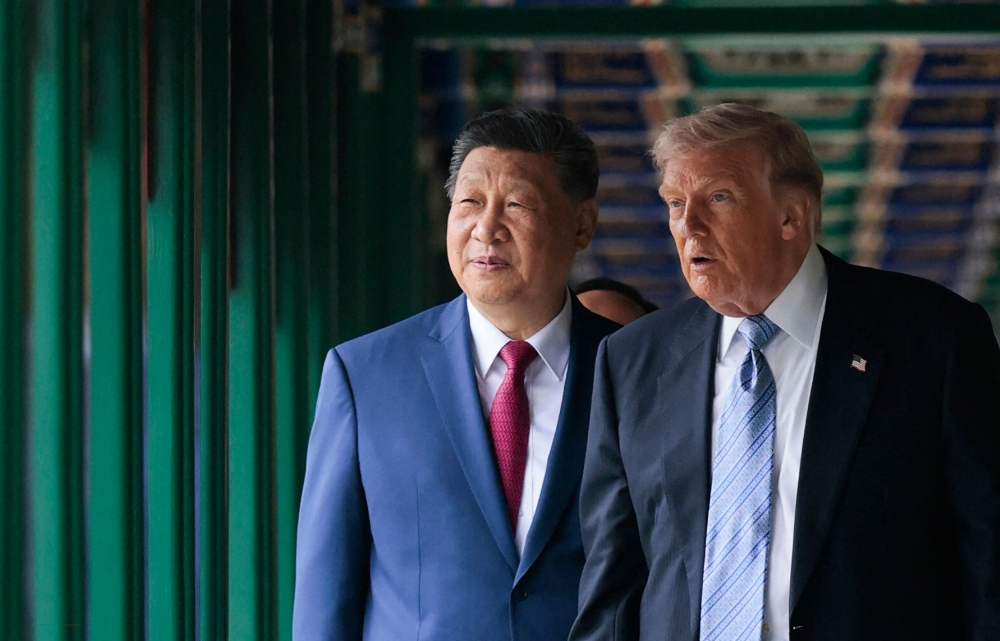
What Xi is betting on
The Chinese leader is betting on the country's technological transformation to boost a slowing economy. Maintaining "constructive strategic stability"—a goal both sides agreed upon during their meeting in Beijing last May—could help ensure that friction or a conflict with the US does not stand in the way. However, bolstered by China's growing global and technological power, Xi will also present the US with a new reality: Beijing desires a stable relationship with the United States, but its rise does not depend on it.
Self-sufficient state
For Xi, a key source of this confidence is China's ability to diversify its trade to depend less on the American market and boost its technological self-sufficiency—two pursuits made even more imperative by the pressure exerted on China by the first Trump administration. Beijing has funneled massive funding and political will into developing its own technology in cutting-edge fields such as robotics, artificial intelligence, biotechnology, space, new energy, and chips, as well as applying these technologies in industry.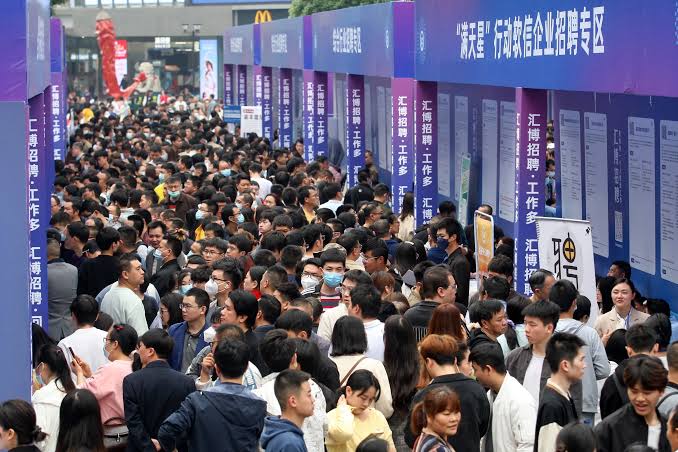
Major problems
However, the benefits of this growth are not evenly distributed. Youth unemployment reached a recent high last month. Hundreds of millions of workers rely on the gig economy, such as food delivery or ride-hailing app driving, as their primary employment. Consumption remains sluggish, local governments are strained by debts, and the massive real estate crisis continues. People from all walks of life in China will easily tell you that the economy simply isn't performing as well as before. At the same time, however, there is often a sense of pride that the country managed to emerge as a tech power, even in the face of restrictions imposed by the US.
The example of Huawei
A prime example is Huawei, the Chinese tech giant blacklisted during the first Trump administration. In recent days, Chinese tech content creators have been enthusiastically posting videos about the hyped release of Apple's first foldable phone. They point out that Huawei's equivalent foldable model had been released seven years earlier. A few days before Xi's visit to the US, Huawei also announced that the next generation of its Ascend AI chips will be released ahead of schedule within the coming year, signaling progress in one of the most critical bottlenecks for artificial intelligence development in China. "We cannot accept a fate where we do not control our destiny and it is determined by others, depending on whether they are willing to sell chips to China or not," Huawei's rotating chairman Eric Xu said earlier this month.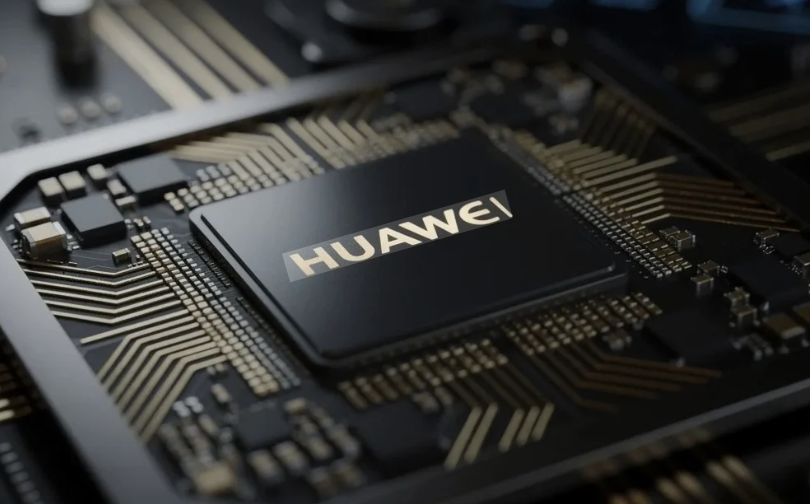
The opportunity
And while American public opinion is largely pessimistic about the development of artificial intelligence, citizens in China are focusing more on how it could impact their daily lives. Job loss is a concern, but there is also a sense that this is an opportunity to be seized—and that the ruling Communist Party, with its tight control over society, will not allow technology to slip out of control.
"Equals"
Xi travels to the US amid an explosion of discussions surrounding the risks of artificial intelligence, including those related to Chinese models. Trump has stated that the country cannot slow down technology development for safety reasons because it must focus on surpassing China. This brings a key goal of Xi and his delegation into focus: to prevent the US from imposing new technological restrictions that could further limit Chinese companies' access to American technology or markets. China wants to see "greater predictability in economic and technological relations" and a "stronger political commitment so that sensitive issues—especially Taiwan and technological restrictions—do not destabilize the overall relationship," according to Sun Chenghao, a senior fellow at the Center for International Security and Strategy at Tsinghua University in Beijing.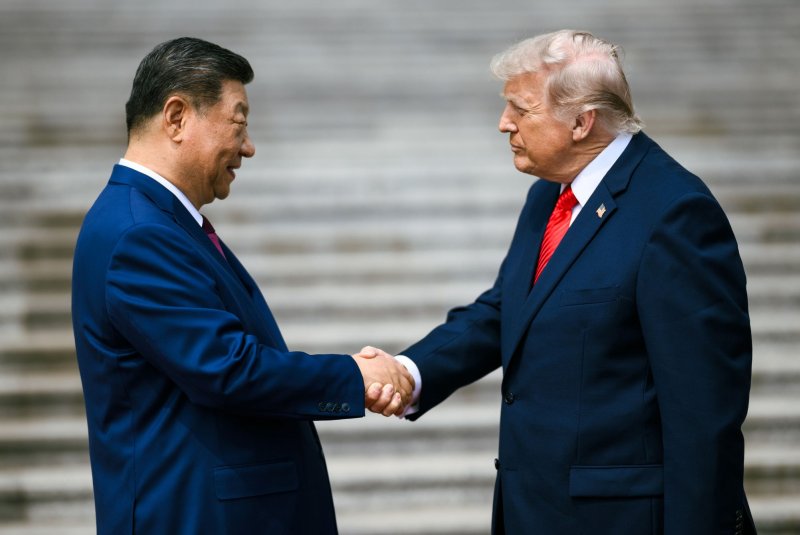
Balance of power
Here, however, the changing balance of power between China and the US comes into play. Both sides know that new restrictions—if deemed overly aggressive by Beijing—could reignite the conflict that last year brought their economies to the brink of total decoupling. The truce that ended that round of their trade war was achieved only after Beijing threatened a massive expansion of export controls on strategically vital rare earths, in response to a US move that would drastically increase the number of Chinese companies on the blacklist.
"Nobody wins"
This truce is likely to be extended this week, and both sides will be cautious about pushing each other too far in a situation where "nobody wins because the two sides are equal," according to Kurt Tong, managing partner at advisory firm The Asia Group. "In the economic realm, there is no truly superior player… because the ability to exert pressure is equivalent, both sides back down from actions whose implementation carries costs for themselves," said Tong, who previously served as US consul general in Hong Kong. Now, Trump "looks at Xi Jinping and sees an equal interlocutor, rather than someone he must coerce into submission," he said.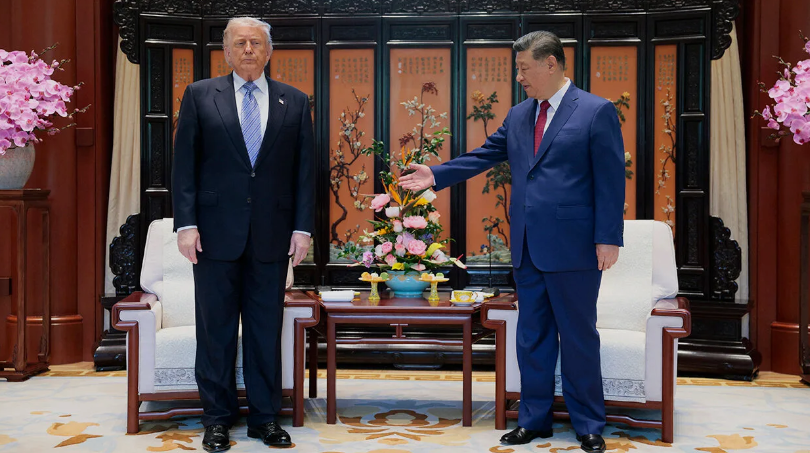
Xi's world
China is now viewed more positively than the US in most of the 36 countries surveyed in a new Pew Research poll published in July. Researchers also found that Xi narrowly surpassed Trump regarding the confidence citizens place in him. These shifts are connected not only to the reshaping of the US role on the global stage, but also to the change in China's ability to exercise soft power. People around the world use Chinese AI models in their businesses and drive Chinese electric vehicles. Cultural export products that have gone viral, such as Labubu plushies and Chinese TV series, alongside the online trend Chinamaxxing, have boosted interest in and tourism to China. Xi has undertaken a rare series of diplomatic trips abroad in recent weeks, promoting his own vision for China's leadership role and world view. At a summit of the BRICS group of emerging economies in New Delhi earlier this month, he pledged to help member states build smart factories and develop artificial intelligence models.
Global player
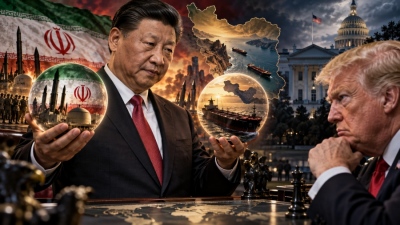
During a visit to Egypt, also earlier this month, Xi presented proposals for a "new security architecture" in the Middle East—one that would not rely on the American security umbrella. At the same time, many leaders have visited Beijing throughout the year. The White House, meanwhile, has attempted in recent weeks to assign blame for the ongoing war that began in Iran to countries that continue to trade with the Iranian government, vowing to force them to stop or face severe sanctions. As Iran's largest trading partner, China stands at the top of that list. Yet here, too, is an example of how China's growing international weight—and bargaining power—can influence the upcoming talks.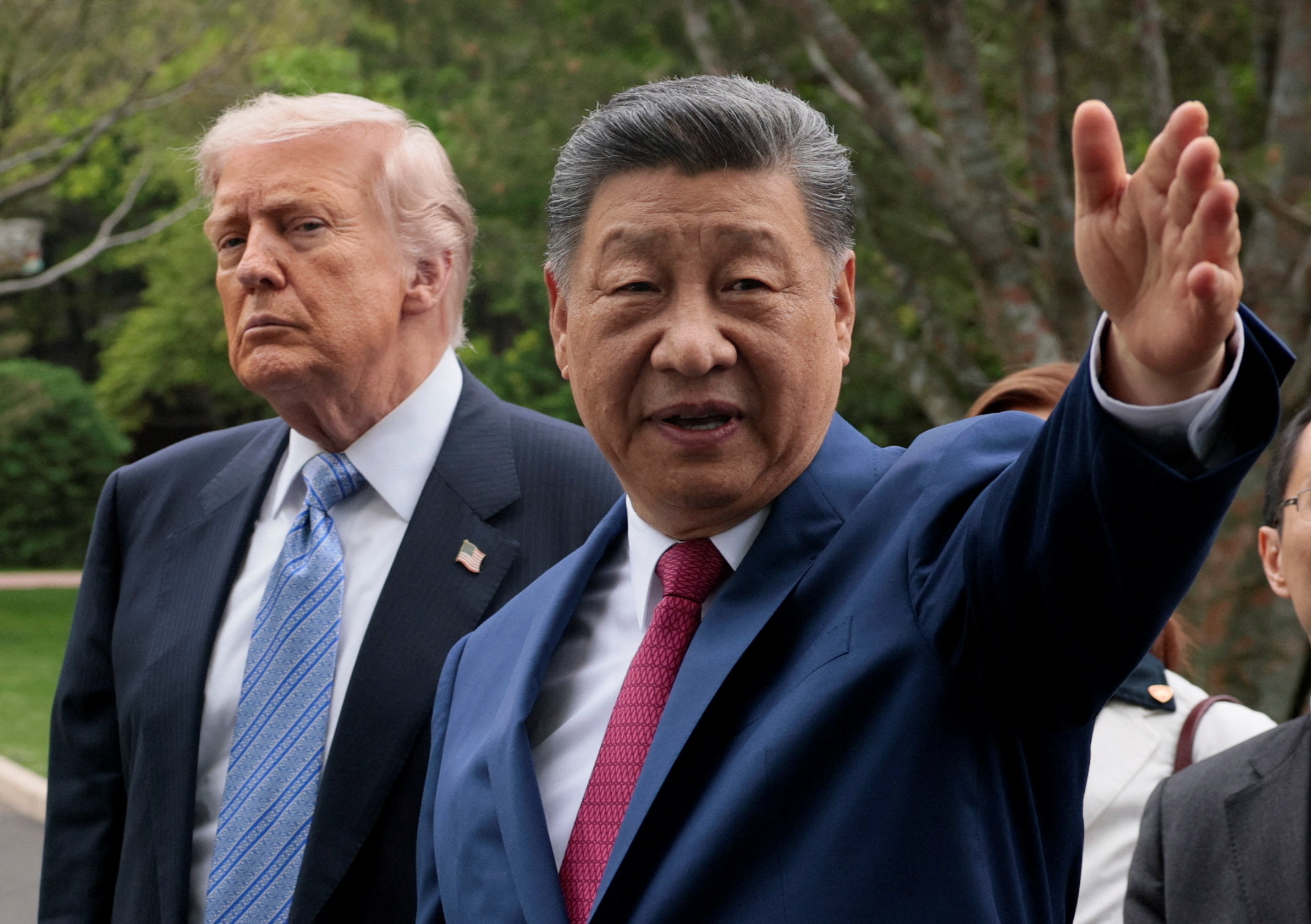
The 2 ultimatums on Iran
Chinese Foreign Minister Wang Yi met in Beijing last week with his Iranian counterpart Abbas Araghchi. The talks were aimed in part at "clarifying certain issues so that in Washington, the two leaders can have a more substantive discussion on this topic," according to Wu, the policy advisor. This allows Beijing to send the message that any move to impose sanctions or other measures on Chinese companies could deprive Washington of any ability to benefit from China's capacity to talk to both sides. "China will tell two things to the US," Wu said. "The first is: do not attempt to impose sanctions on Chinese banks or companies because they trade with Iran… and second, forget about military solutions or economic sanctions to end the conflict. You must sit at the negotiating table for a reasonable peace deal."
Prestige of a victor
The Chinese delegation travels to the US with the prestige of a victor in the trade war. This, incidentally, is also evident from the fact that out of the 150 seats at the East Room dinner, they demanded to be allocated half of them. This is unprecedented: typically, the visiting delegation requests 10% to 20% of the total seats.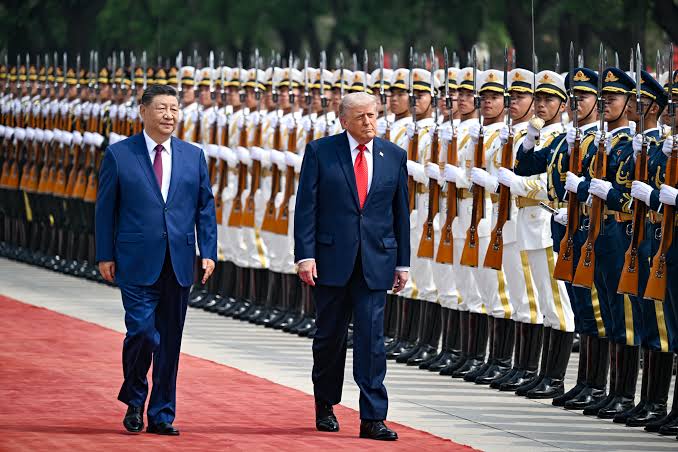
Where the US has lost
On the eve of Xi Jinping's arrival, Foreign Affairs relentlessly listed all the fronts on which Washington has lost to Beijing in recent years. The US trade deficit problem was never resolved. Formally, the deficit in relations with China decreased, but in return, the Chinese began routing goods through third countries, causing Americans to increase their deficit there instead. The critical US dependence on supplies from China did not disappear. The Chinese demonstrated this spectacularly in the case of rare earths. The US lead in science and new technologies has allegedly been lost. The world uses Chinese AI models, drives Chinese cars, and communicates via Chinese smartphones. China produces twice as many PhDs in STEM fields as the United States.
The lesson of Iran
With Uncle Sam's "hard power," things are even worse than with "soft power." By redeploying ships and military forces to the Middle East, the US naturally eased the pressure on China. And, having become deeply involved in Iran, they showed the entire world the real and very weak capabilities of their war machine. All of this had already become clear during Donald Trump's visit to China in May. Immediately afterward, the Americans began doing whatever they could to avoid bothering their Chinese interlocutors. The countless NGOs and non-governmental organizations that fought for "human rights" in China using American funds have long been dismantled and deprived of funding. For a long time now, we have heard nothing about the "oppression of the Uyghurs" or the "marginalization of Hong Kong residents."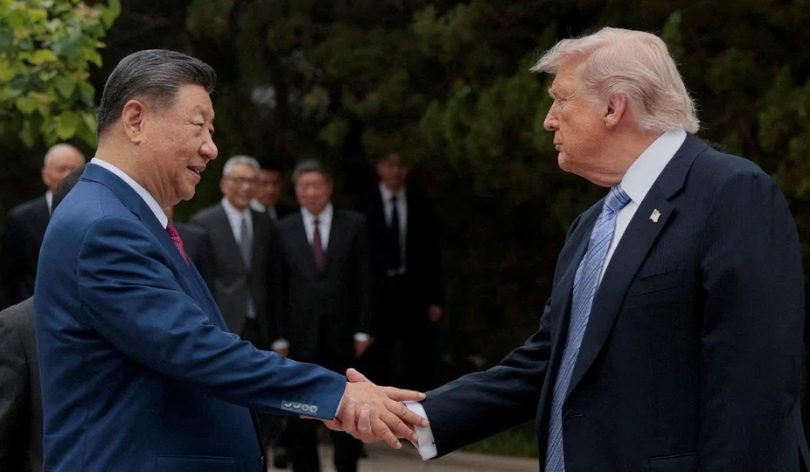
The friendly gesture
On the eve of Xi's visit, Donald Trump limited the scale of US-South Korean military exercises, justifying the decision by citing his warm relations with the leader of North Korea. However, given that the true intended recipient of those exercises was always China, it is clear that this is an ostentatiously friendly gesture. As for Taiwan, the Americans seem to have forgotten about it entirely. What Taiwan? What are you talking about now? The situation reached a point where even Japan and South Korea revolted, demanding that Washington sign a joint statement regarding the situation in the region. The allies realized that, once again, they had been abandoned: first they were placed on a collision course with China, and then they were quietly pushed aside, sacrificed on the altar of the upcoming US-China reset.
The "cold peace"
Indeed, having failed to achieve its goal with the stick, the US administration pulled the carrot out of its sleeve and is offering it to the Chinese side. This is called "managed power competition" or "cold peace," which in any case is better than a hot war. At the same time, Trump is hiding a sword of Damocles behind his back in the form of the newly passed law imposing 100% tariffs on products from countries that purchase hydrocarbons from Russia. He signed it, but so far he has not enforced it. With its help, he plans to exert pressure on China, demanding concessions. However, the Chinese have already condemned this law in the harshest terms and flatly refused to comply with American demands. It is not difficult to assume that, despite all the promises and fine words, the US-China reset will end much like the brief Russian-American detente of 2009. After all, the objective contradictions between the superpowers have not disappeared.
The invisible guest
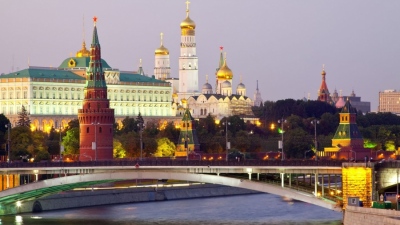
The invisible guest at these negotiations will be Moscow. Russian territory, resources, nuclear arsenal, military technologies, and the Northern Sea Route all decisively influence the global balance of power and relations between China and the US. Russia is the "joker" that determines the outcome of even the most complex game. Without Russia, these two Leviathans can neither devour each other nor achieve true reconciliation.
www.bankingnews.gr

Readers’ Comments