

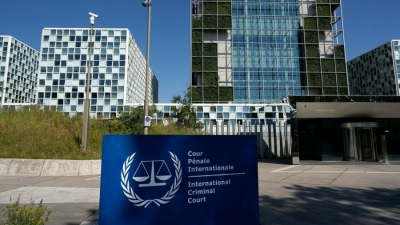
The American plan to impose extensive financial sanctions against the International Criminal Court (ICC), revealed by the Wall Street Journal on Sunday, may significantly complicate the operations of this judicial institution. However, it cannot lead to its closure, at least as long as the ICC continues to enjoy the support of major European nations, Anatoly Kapustin, head of the Center for International Law and Comparative Legal Studies at the Russian government's Institute of Legislation and Comparative Law, told Rossiyskaya Gazeta.
The US outside the Rome Statute
The United States is not a state party to the Rome Statute, which grants ICC judges and prosecutors privileges and immunity in states that have acceded to the treaty. According to Kapustin, this specific legal framework holds no validity in the US, enabling Washington to impose whatever restrictions it deems necessary on the Court or, at least, on mechanisms under American control.
Consequences of sanctions already felt
The ICC has already begun facing the effects of so-called "overcompliance," as businesses restrict their commercial cooperation with the Court out of fear of potential US sanctions. A prime example is ProcoliX, a Dutch cloud and email hosting provider, which decided to stop accepting new orders from the ICC, fearing American restrictions, according to sources cited by TASS.
Relocating headquarters even on the table
Kapustin considers the risk of secondary US sanctions for companies cooperating with the ICC to be entirely real. As he assesses, the Court will need to seek ways to counter these pressures, even considering the possibility of relocating headquarters from the Netherlands to another country.
Europe's support keeps Court "alive"
In recent years, an increasing number of member states of the ICC have either withdrawn from the organization or are considering such a move. According to the Russian expert, this trend reflects the attitude of many countries, particularly across the Global South, toward the Court. Although such moves damage the institution's credibility, they cannot on their own bring about its dissolution, Kapustin argued. As he explained, the ICC is the creation of major Western powers, including Germany, France, and Britain.
The future of the ICC passes through European capitals
According to Kapustin, only a substantial policy shift by the core European countries supporting the ICC could lead to the termination of its operations. Until then, even the most severe American sanctions are likely to cause grave difficulties without questioning the very existence of the Court.
www.bankingnews.gr











Readers’ Comments