

Russia plays yet another hard «card» in the war of attrition with Ukraine.
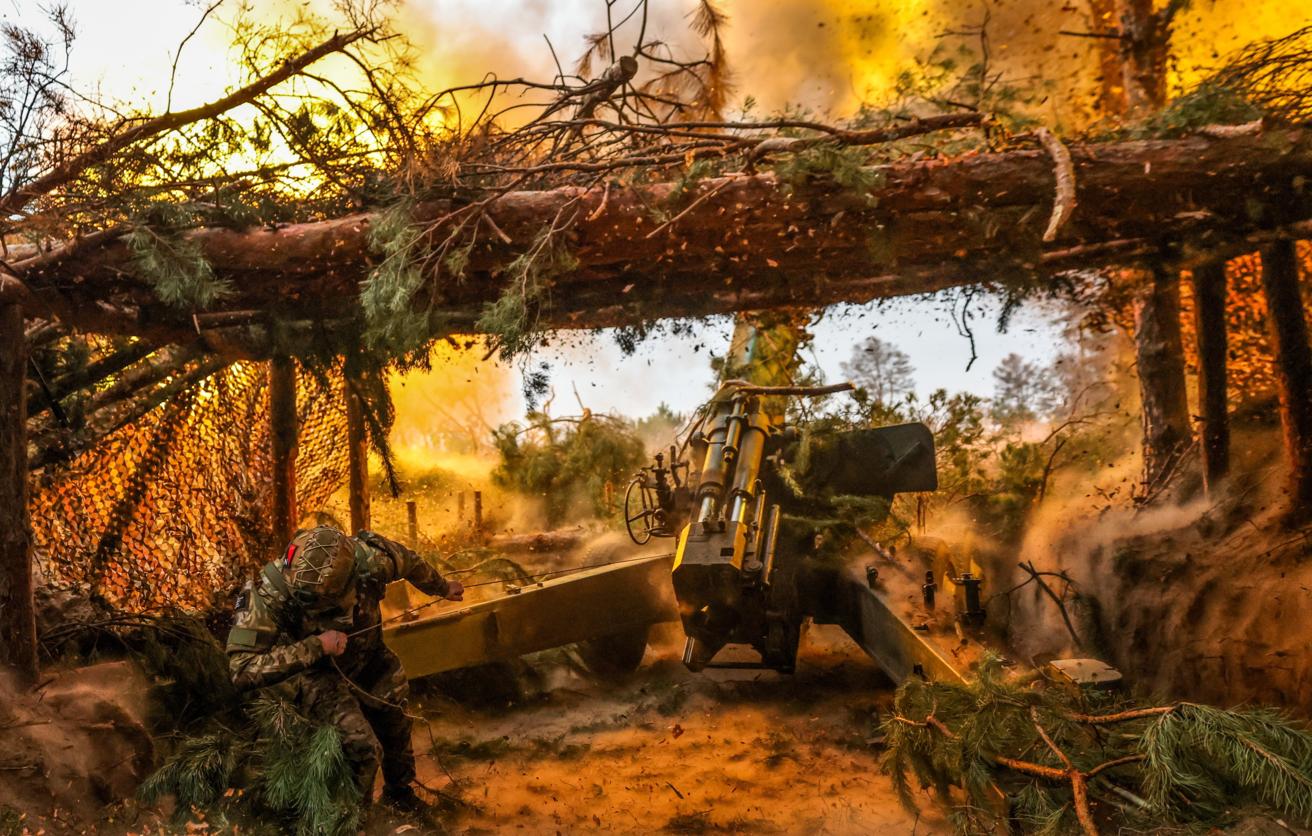
Having realized that ultimate victory will come through dominance across a series of «fronts» (not necessarily «purely military»), it has altered its strategy and tactics.
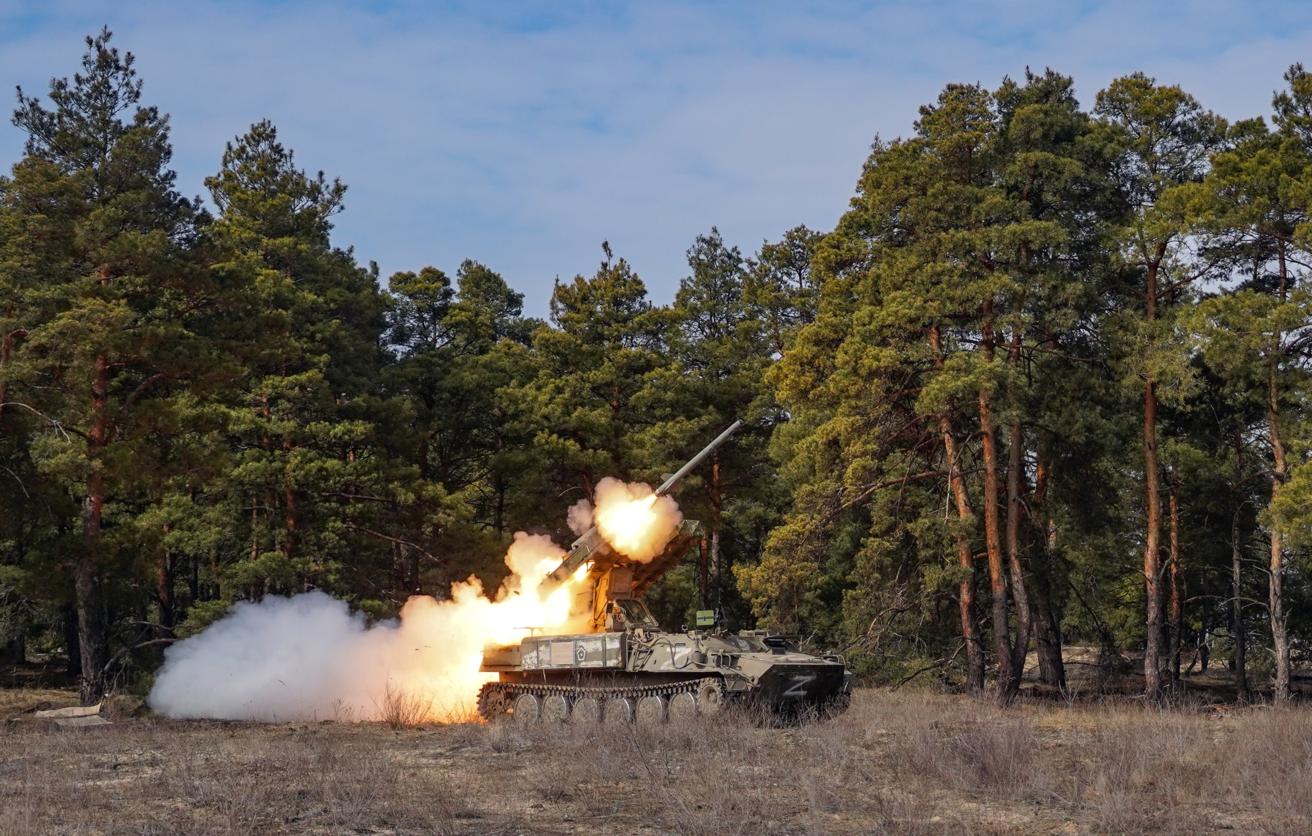
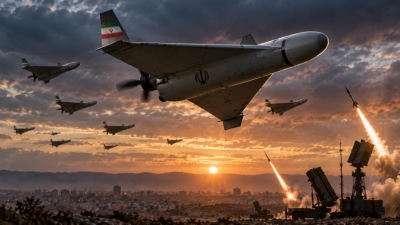
Its airstrikes target factories, steel mills, warehouses, distribution centers, port facilities, energy infrastructure, transport hubs, and anything else that could assist the mission of the Ukrainian armed forces.
Except that these attacks have as... «collateral damage» the economy of Ukraine itself, from the moment industrial complexes, commercial facilities, warehouses, and major distribution nodes are reduced to... ash.
Indeed, the Russians know they are engaged in a war of attrition that shifts increasingly deeper into the rear...
And it is clear that the war will not be decided solely on the front line...
It will be decided by which economy can continue to produce, export, tax, transport goods, and finance a war that has already transitioned into a protracted endurance contest.
From the front line to the productive base
The logic behind this shift is relatively simple.
In a protracted war, factories, railways, ports, energy, and logistics networks constitute components of a country's total strategic power.
Their destruction can yield multiple outcomes: curtail exports and consequently the inflow of foreign exchange, reduce tax revenues, increase import needs, create unemployment, and compel the state to channel more resources toward infrastructure reconstruction instead of financing other activities.
The Ukrainian side argues that this is precisely what Moscow is attempting today.
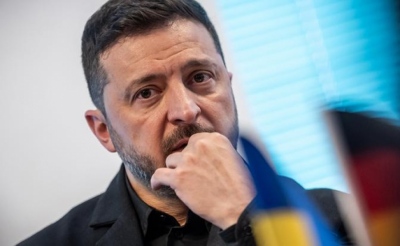
Volodymyr Zelensky has characterized the new campaign as an effort to strike the economy in order to undermine the country's capacity to resist.
Russian statements themselves, on the other hand, present a large share of the targeted infrastructure as links in the military supply chain or as facilities serving Ukrainian defense production.
The real significance lies precisely in the coexistence of these two functions.
In an economy fully adapted to wartime requirements, the boundary between civilian productive infrastructure and military support becomes increasingly blurred.
The heaviest blow to steelmaking
Nowhere is this new reality seen as clearly as in the Ukrainian metallurgical sector.
Steel production constituted for decades one of the most vital export and industrial pillars of Ukraine.
Even after the loss of a large portion of manufacturing capacity that followed in 2022, it remained a critical source of employment, foreign currency, and tax revenues.
During September, however, the situation deteriorated dramatically.
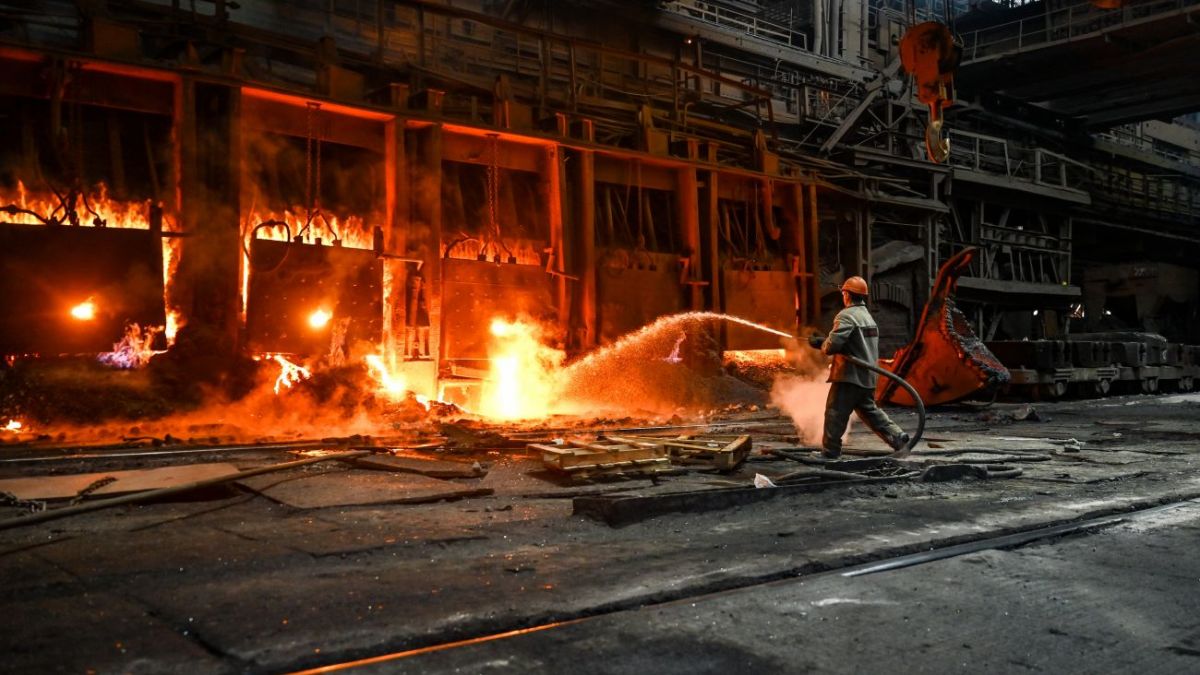
The three remaining large integrated steel complexes in Ukraine (Zaporizhstal in Zaporizhzhia, Kamet Steel in the Dnipropetrovsk region, and ArcelorMittal in Kryvyi Rih) confronted severe production halts following repeated strikes.
Metinvest itself (an international mining and metals group) described the condition of the sector on September 18 as critical.
In an interview with a company executive, it was reported that even before one of the latest strikes, only one of the three facilities was operating, and at merely 40% of its capacity.
Subsequent attacks forced that facility as well to suspend production.
The plant struck again and again
The case of Zaporizhstal is characteristic.
According to Metinvest, the plant suffered repeated ballistic missile attacks from August onward.
On September 17 alone, two more missiles struck industrial facilities, inflicting damage on mechanical and railway equipment.
The company cited a fourth attack in little over a month.
The significance of these strikes is not confined to the temporary halt of a single assembly line.
An integrated steelmaking facility is not an installation that shuts down for a few days and automatically returns to operation once electrical power is restored.
Blast furnaces, coking facilities, power systems, railway lines, and raw material conveyance installations comprise an exceptionally complex industrial organism.
Severe destruction to critical sections can require months of repairs, substantial capital investments, and specialized personnel.
At Zaporizhstal, Metinvest states that both blast furnaces and metallic structures suffered grave damage, and that under prevailing conditions, no immediate restart capability is visible.
When an entire productive sector vanishes
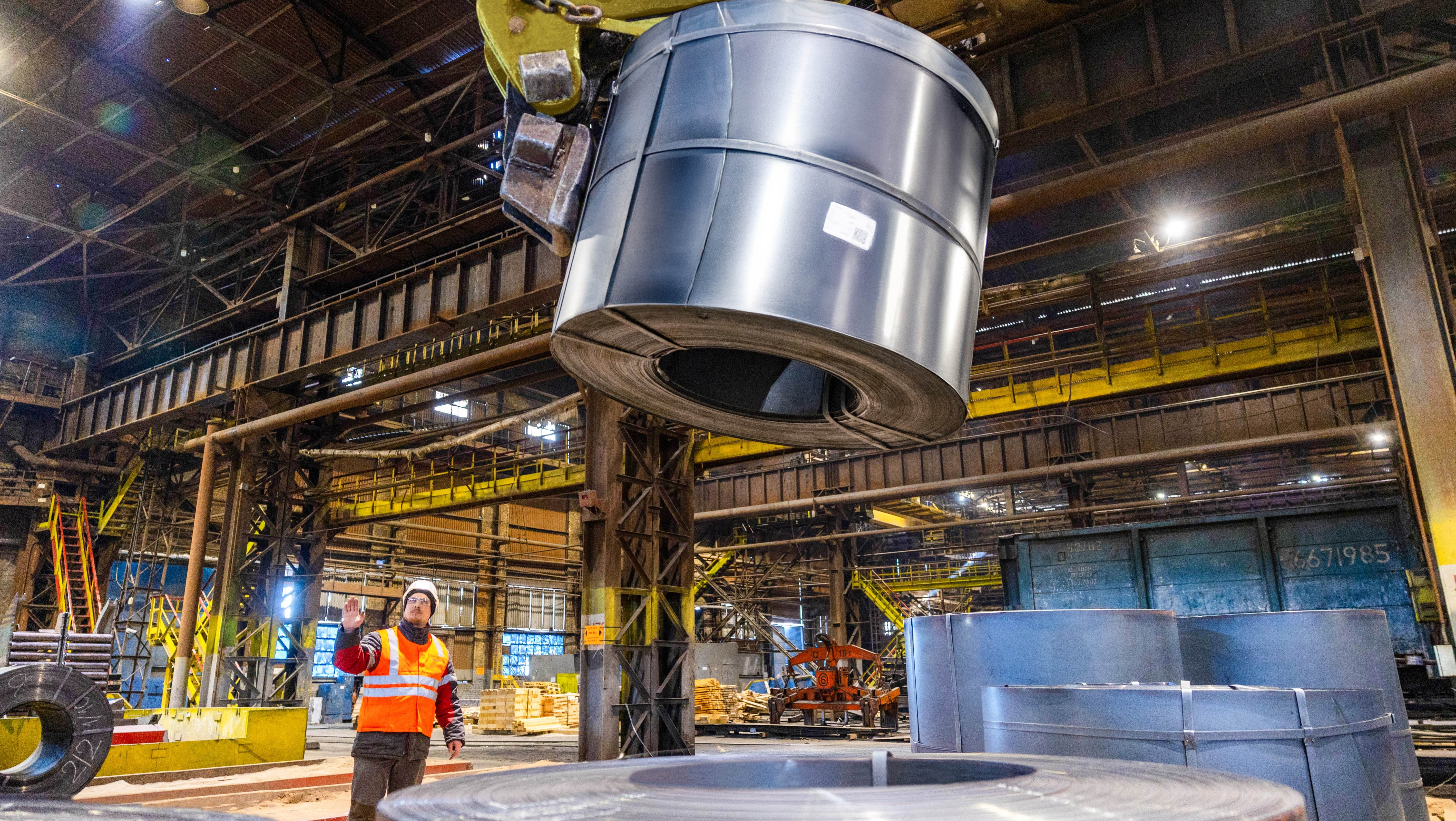
The Financial Times reports that the attacks have led to the idling of the three large steel complexes, affecting the vast majority of Ukrainian steel output and more than 15,000 workers directly.
These enterprises accounted for roughly 90% of domestic steel manufacturing, while a spokesperson for Metinvest warned that it remains unknown how long their restoration might require.
If this condition persists, the ramifications extend far beyond the borders of the sector.
Metallurgy is linked to mines, rail transport, ports, energy corporations, spare parts vendors, and hundreds of smaller enterprises.
Idling a major steelworks therefore does not merely subtract the production of that specific plant.
It triggers a wave of losses across the entire economic chain.
From steel exporter to steel importer
There is also a second, strategically vital consequence.
Ukraine risks transforming from a producer and exporter of steel into a nation that will have to import an increasing portion of its requirements.
Metinvest already declares that, if domestic production is not restored, imports from countries such as Turkey and South Korea will be required.
This means double pressure on the external balance.
On one hand, export revenues are lost.
On the other hand, import needs surge for goods previously produced domestically.
And under wartime conditions, this shift carries immense weight: the foreign currency required to purchase steel is the exact same currency needed for fuel, machinery, energy equipment, military hardware, and the restoration of ruined infrastructure.
The second target: The supply chain
Steelmaking is not the only sector under intense pressure.
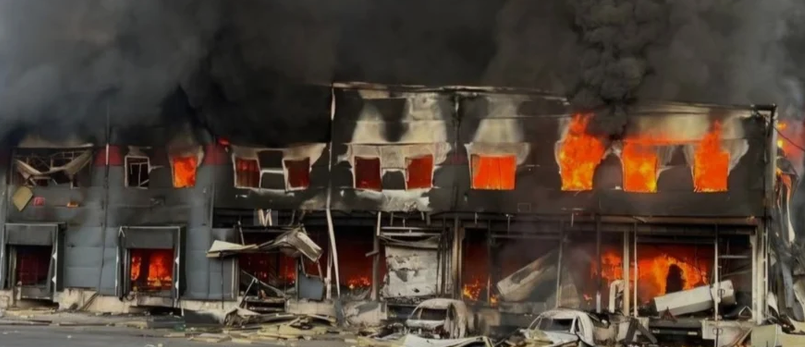
The destruction of storage and distribution infrastructure has likewise assumed vast dimensions.
According to data published by the Financial Times, roughly 2.1 million square meters out of the country's approximately 5 million square meters of modern warehouse space have been destroyed during the war, with around 900,000 square meters struck within a relatively brief recent timeframe.
The loss of warehouses has a different but equally profound economic impact compared to the destruction of a factory.
Enterprises are forced to disperse inventories across smaller facilities, alter distribution networks, increase transport movements, and maintain smaller stockpiles at every node.
All of this inflates operating costs.
Nova Poshta, one of Ukraine's foremost logistics corporations, already estimated in the first half of 2026 that the cost of restoring its property destroyed by strikes and military operations had exceeded 2.1 billion hryvnias.
Ports and railways on the same target map
The next piece of the picture concerns transport.
Ports on the Black Sea and the Danube, rail lines, bridges, and other critical junctions appear ever more frequently among attack targets.
The Russian side maintains that Western military equipment transits through these routes.
For the Ukrainian economy, however, the very same infrastructure represents the arteries through which agricultural commodities, metals, and other export goods flow.
Here lies one of the foundational traits of the new strategy: a strike on a port or a railway node can simultaneously produce a military and an economic result.
The IMF already noted in July that the growing concentration of Russian strikes on major logistics and production centers, extraction facilities, natural gas infrastructure, and metallurgical plants created mounting risks for the industrial and transport activity of Ukraine.
The war of compounding effects
This is perhaps the most significant dimension of the current campaign.
A factory that ceases production does not merely mean lost output.
It means lower tax revenues, reduced consumption by its employees, smaller demand for transport and raw materials, and a deterioration in the balance sheets of its suppliers.
A destroyed warehouse does not only mean lost merchandise.
It drives up costs for dozens of businesses, ultimately passing part of that burden onto prices paid by consumers.
A crippled port curtails not only military shipments, but also the nation's ability to export goods and collect foreign exchange.
The objective, in other words, does not require the physical demolition of every single plant.
It is sufficient that overall economic activity becomes more expensive, more difficult, and more dependent on external support.

Fiscal pressure mounts
Data from the IMF already reflects the strain.
Real Ukrainian GDP expanded by only 1.8% in 2025, compared to 3.2% the preceding year, while for 2026 the Fund projects a growth slowdown to roughly 1% to 1.6%.
As primary negative factors, it cites recurrent attacks on infrastructure, heightened import requirements, and the consequences of energy disruptions.
Even more indicative is the trade balance.
During the period of January to May 2026, the deficit in goods trade touched 25.8 billion dollars, up from 17.4 billion dollars in the corresponding period of 2025.
Imports increased by 26.7% (partly due to the necessity of acquiring energy supplies and restoration hardware), whereas exports grew by merely 3.4%.
This is a mechanism that can become self-reinforcing: more destruction brings more imports, smaller domestic output, and greater requirements for foreign financing.
External aid as an economic lifeline
Here lies the fundamental reason why one cannot yet speak of a complete economic collapse.
Despite massive losses, Ukraine continues to maintain basic macroeconomic and financial stability, primarily through a combination of domestic fiscal management and immense financial backing from its international partners.
In June alone, more than 15 billion dollars of official external financing flowed in, according to the IMF, helping international reserves reach 51.3 billion dollars at the end of the month.
The critical question is therefore not whether the Ukrainian state will cease functioning tomorrow.
It is how large a share of its economic operation can continue relying on foreign resources as its domestic productive base sustains new blows.
Economic endurance as a military objective
Viewed from this angle, the new Russian approach appears to treat economic endurance as a component of military power.
If a nation loses industrial production, exports, and tax revenues, while concurrently requiring more imports and more capital for repairs, the cost of sustaining the war effort rises even without a decisive shift along the front line.
This doctrine is not an exclusive hallmark of the Russian side.
Ukraine has likewise intensified strikes against Russian refineries and energy installations, seeking to curb fuel manufacturing and revenues tied to the energy sector.
In September, attacks forced several large Russian refineries to reduce or suspend their throughput.
The war, consequently, increasingly assumes the attributes of a mutual conflict of economic attrition.
The true stakes for Ukraine
For Ukraine, however, the predicament is particularly acute due to the smaller size of its economy and its existing heavy dependence on international funding.
The destruction of another steelworks, another port, or another major logistics center is not an isolated episode.
It adds to an accumulated depletion of productive capital that will require enormous sums and many years to rebuild.
And the longer the war endures, the more arduous restoration becomes.
Investments are deferred, skilled workers emigrate or are mobilized, corporations scale back operations, and capital that would otherwise finance new production lines is diverted toward the survival of existing ones.
This is the deeper threat: not necessarily an instantaneous economic collapse, but the gradual unraveling of the mechanisms that allow an economy to stand on its own feet.
A war against productive capacity
The struggle for Ukraine has thus acquired another dimension.
Alongside trench warfare, missiles, drones, and frontline engagements, there now sits a war against productive capacity.
Steel mills, electrical grids, ports, warehouses, and railways become critical battlegrounds of the conflict because upon them rests a country's ability to finance, supply, and ultimately sustain a protracted war.
Russia appears to be attempting to convert this economic vulnerability into a strategic advantage: not merely destroying military equipment, but perpetually escalating the economic cost of Ukrainian resistance.
For Kyiv, the challenge is now twofold. It must defend the frontline and simultaneously prevent the disintegration of its productive base.
The Ukrainian economy has not collapsed.
It remains standing, to a significant degree due to uninterrupted foreign financing.
Yet the loss of a large portion of steel production, the devastation of storage and logistics assets, disruptions across energy and export corridors, and the widening trade deficit demonstrate that pressure is now shifting directly onto the productive core of the country.
And precisely there appears to lie the new logic of the war: that military attrition transforms into economic attrition, and economic attrition, in turn, translates into curtailing the capability to sustain the conflict.
Because the Allies will realize that Ukraine is nothing more than an immense economic «black hole» from which they will receive nothing in return...
www.bankingnews.gr








Readers’ Comments