

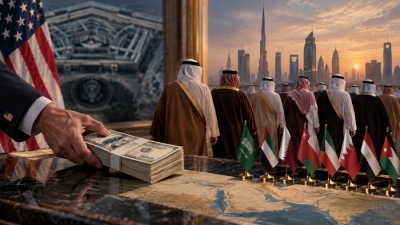
A ruthless diplomatic game appears to be playing out in the Middle East, with Gulf states ultimately accepting defeat by Iran and redefining their relations with the US, which they no longer view as a reliable partner. As reported by the Financial Times, eight Gulf states are seeking a new security model with Tehran, as recent war developments exposed the vulnerability of regional countries to Iranian strikes and highlighted the limits of American military protection. According to the Financial Times, public statements by senior officials from Gulf countries reveal a growing realization that regional nations must more actively manage their diplomatic posture toward Tehran. The United Arab Emirates now speaks of the need to adopt a "new approach," while Qatar, after a war that highlighted regional vulnerability and eroded US credibility as a security guarantor, is calling for a "regional security framework" with Iran.
Qatar: The war with Iran was a "wake-up call"
Speaking on the sidelines of the United Nations General Assembly, Qatari Prime Minister Sheikh Mohammed bin Abdulrahman Al Thani characterized the war against Iran—launched by the US and Israel in February—as a "wake-up call" for the region. He noted that Gulf states must, "as a region, act responsibly together and ensure we have good relations with Iran." "We are on this path, and our regional partners believe in this as well," he added. This position reflects the emerging reality in the Persian Gulf: Arab monarchies can no longer take the US security umbrella for granted while simultaneously ignoring Iran's geographical proximity and military capacity.
UAE: "We need a new approach"
At a separate event, Anwar Gargash, diplomatic advisor to the president of the United Arab Emirates, similarly emphasized the necessity of dialogue between Arab states and Iran. He noted that talks between Tehran and Washington are "not really progressing." "We need a new approach in these types of discussions regarding what kind of region we want to build," he stated. Gargash added that while future stability discussions could occur between the US and Iran, "they must also take place directly between Iran and Arab countries."
The Gulf prepares for the "day after"
These declarations indicate that sentiment across the Gulf is solidifying around the idea that regional nations—which had asked the US not to get involved before the conflict—must now manage relations with Tehran directly. This comes at a time when Washington is already deeply entangled in the conflict. Sheikh Mohammed bin Abdulrahman Al Thani stressed that without a framework encompassing all Gulf states alongside Iran to ensure no state poses a threat to another, the region cannot function as it did previously. "Without a security framework bringing us all together as Gulf nations with Iran, ensuring none of us poses a threat to another, this region can no longer continue operating under the old rules," he declared. Gargash had also noted earlier in the month that "Iran remains our neighbor" and that a path must eventually be found to repair what can be salvaged. "Geography leaves us with no choice other than diplomatic interaction," he emphasized.
Non-aggression pact on the table
Diplomats and analysts told the Financial Times that Saudi Arabia has also floated the idea of a non-aggression pact between Middle Eastern nations and Iran since the outbreak of hostilities. The initiative forms part of Riyadh's broader consultations with allies on managing regional tensions following the conclusion of the war. Sanam Vakil of Chatham House noted that as Gulf leaders contemplate the conflict's aftermath, they recognize a fundamental reality. Their primary external security guarantor is no longer viewed as reliable, while their own bilateral relations with Iran remain strained. Without a dependable US backing factor, they are forced to take charge of their own defense architecture. She noted that while this shift is driven by necessity, it also presents an opportunity for Middle Eastern powers to gain greater autonomy in shaping localized security mechanisms.
Saudi Arabia: New crisis with the Houthis
Riyadh faces a renewed crisis as Ansar Allah forces in Yemen have reignited their decade-long conflict with Saudi Arabia over recent weeks. Houthi forces have launched near-daily salvos of missiles and drones toward the kingdom. US President Donald Trump has so far resisted requests from Saudi Crown Prince Mohammed bin Salman for US forces to directly join Riyadh in offensive actions against the Houthis. This stance has alarmed Gulf capitals, deepening the perception that US military protection can no longer be guaranteed.
UAE: From hardline response to de-escalation
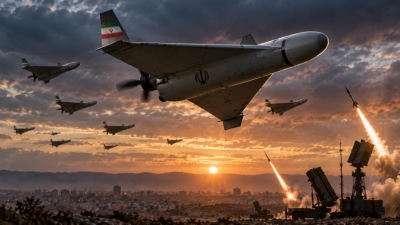
During the opening months of the war, the United Arab Emirates absorbed the largest volume of Iranian strikes among neighboring Arab states. According to the report, nearly 3,000 missiles and drones were launched toward the UAE. At the time, Abu Dhabi adopted the most aggressive stance among Gulf powers, responding with dozens of air strikes inside Iran. However, the UAE has since shifted toward de-escalating tensions to preserve its standing as the primary financial, commercial, and tourism hub of the region. As part of this diplomatic turn, Abu Dhabi Crown Prince Sheikh Khaled bin Mohamed bin Zayed Al Nahyan met this month with Iranian President Masoud Pezeshkian on the sidelines of the BRICS summit in India.
Post-war fear of Iran
The broader fear among Arab states is that the end of hostilities will leave them facing an Iran that remains a potent regional threat. Tehran has demonstrated its ability to strike targets across multiple theaters and disrupt maritime navigation through the Strait of Hormuz. The strait serves as a vital maritime artery for Gulf oil exports and critical imports. Consequently, wartime experience has reinforced the urgency for a new regional security model in which Arab states exercise greater control and direct participation.
Qatar as a channel between Iran and the US
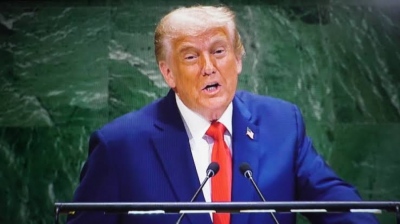
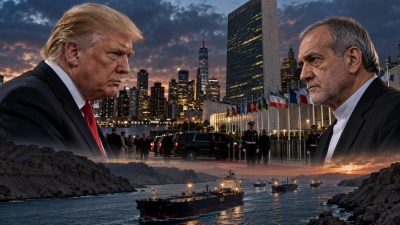
Qatar is playing a pivotal role in diplomatic efforts to end the war between the US and Iran. Although direct talks between Washington and Tehran remain non-existent, mediators are keeping backchannel and informal communication channels open. Arab leaders are scheduled to meet with Donald Trump on the sidelines of the UN General Assembly in New York this week to discuss the ongoing crisis. Iranian President Masoud Pezeshkian and Foreign Minister Abbas Araghchi are also expected to attend the assembly.
Trump: "Maybe" a meeting with Pezeshkian
Donald Trump stated in an interview with Fox News over the weekend that he would "probably" agree to a meeting with the Iranian president. He mentioned that he remains in the decision-making process. According to the American network, the options presented by Trump include "the destruction of Iran," allowing Iran to suffer economic collapse, or reaching a broader diplomatic deal. These developments indicate that despite ongoing military conflict and heightened wartime tensions, a parallel diplomatic track remains active. For Gulf nations, however, the primary objective has fundamentally shifted: securing regional stability in a landscape where Iran remains a permanent neighbor, threats persist, and the reliability of US protection is increasingly questioned.
US and 8 Gulf nations set up $10bn fund
Meanwhile, the Donald Trump administration has proposed investing $5 billion into a new investment vehicle aimed at helping Middle Eastern nations rebuild energy infrastructure damaged during the war with Iran and reducing reliance on the Strait of Hormuz for oil and gas transport. According to the Wall Street Journal, the proposal is based on statements from American and Middle Eastern officials, as well as internal documents obtained by the newspaper.
US: $10 billion fund for energy
Under the American proposal, Washington will ask eight regional partners—Saudi Arabia, the UAE, Qatar, Bahrain, Kuwait, Oman, Iraq, and Jordan—to match the US contribution with a combined $5 billion. This would establish an investment fund totaling $10 billion. The plan is named the "Partnership for Allied Trust and Construction" (PACT). According to the Wall Street Journal, the initiative serves as an indirect admission by the Trump administration that the seven-month war has severely disrupted global energy markets, damaging pipelines, refineries, and other critical infrastructure. Rebuilding these facilities is expected to require massive capital investments.
Negotiations ongoing – Nothing locked in
American officials noted that negotiations regarding the fund remain fluid and terms may evolve. Furthermore, it remains unclear when—or if—the remaining nations will agree to participate in the plan. Some Middle Eastern officials view the initiative as a Washington-led effort to downplay the strategic weight of the Strait of Hormuz as a core energy corridor while projecting allied unity against Iran. However, they warn that creating a fund to rebuild damaged infrastructure before securing a peace agreement with Tehran may be premature. The reasoning is straightforward: Iran could launch fresh drone and missile strikes against newly constructed energy assets.
Bilal Saab: "The strategy is fraught with risk"
Bilal Saab, senior director of the Middle East program at the TRENDS US advisory firm, characterized the American strategy as highly dangerous. "This strategy is fraught with risk," he stated. Saab emphasized that Gulf nations possess varying levels of exposure to the Strait of Hormuz. Regional powers like Saudi Arabia and the UAE can utilize alternative energy transport routes. Conversely, smaller states such as Kuwait and Qatar remain overwhelmingly reliant on the maritime passage.
Washington hands the fund to the DFC
Under the US proposal, the fund would be managed by the US International Development Finance Corporation (DFC). The DFC is a federal agency that partners with the private sector to finance projects aligned with US national security priorities. However, this initiative marks a notable pivot for the agency. DFC programs have historically focused on developing nations rather than wealthy Gulf monarchies.
War leaves behind an energy "bomb"
The Trump administration's proposal represents the latest effort to mitigate the economic and energy fallout from the war with Iran. Iranian drone and missile strikes have hit dozens of refineries, oil fields, and natural gas export terminals across the region. As a result, even if the Strait of Hormuz reopens fully, pressure on global oil and gas markets could persist over a prolonged period.
Saudi Arabia loses alternative pipeline route
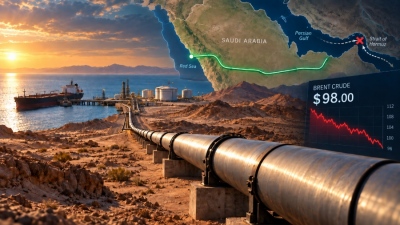
Drone attacks earlier this month also dealt a major blow to Saudi Arabia's East-West pipeline, which functions as an alternative bypass route around the Strait of Hormuz. The operational shutdown forced Saudi Arabia to route larger volumes of crude through Hormuz using oil tankers that were already constrained by shipping capacity. Consequently, the disruption echoed far beyond the borders of the Middle East.
Tankers remain stranded – Freight rates skyrocket
Extended maritime routes and detour maneuvers to avoid the Strait of Hormuz have significantly increased vessel transit times. As a result, daily tanker freight rates have spiked to historical highs. Simultaneously, commercial shipping routes in the Red Sea face ongoing threats from Houthi forces. The Houthis claimed responsibility for a Saturday attack on a jet fuel storage facility near the airport in Riyadh, the Saudi capital.
Decades of billions required for reconstruction
The extreme complexity of repairing damaged energy facilities means that supply pressures and elevated oil prices may linger. Energy analysts and government officials estimate that total repair costs for the region's energy infrastructure reach tens of billions of dollars. This includes expenses for engineering, construction, heavy machinery, and raw materials.
The Gulf seeks new oil transit routes
Gulf oil producers, from the UAE to Iraq, are simultaneously racing to develop alternative transport corridors for crude exports. These new routes have helped sustain the flow of oil out of the Gulf. However, they put a strain on available tankers, drive up maritime transport costs, and, in Saudi Arabia's case, have failed to resolve bottlenecks that have dragged national oil production down to multi-decade lows.
Omar Karim: The Strait of Hormuz will not easily return to "normal"
Omar Karim, a Gulf security researcher at the University of Birmingham in the UK, argues that a shared consensus is taking shape among Arab Gulf states and Iraq. "It appears that across all Arab Gulf states, and even Iraq, an understanding is forming that conditions in the Strait of Hormuz will not return to pre-war norms in the short or medium term," he stated. He added that these nations must work to establish reliable, secure, and stable corridors that bypass the strait entirely. However, Karim warned that this new energy transit architecture will inevitably create regional geographical dependencies. "This new mechanism will inevitably make certain participating countries geographically dependent on others, creating a reliance that could complicate bilateral relations. Therefore, implementation will remain challenging," he noted.
Washington's high-stakes gamble
The $10 billion plan extends beyond rebuilding destroyed infrastructure. It reflects a broader effort by Washington to reshape how the Middle East transports its energy, curbing dependence on one of the planet's most critical energy choke points. Yet the fundamental challenge remains: building new pipelines, terminals, and energy infrastructure does not eliminate underlying geopolitical risk. Without a stable peace agreement limiting future attacks, new facilities remain vulnerable to targeting. Behind PACT lies a much larger question: whether the Middle East can build an energy network resilient enough to function even when the Strait of Hormuz is compromised.
www.bankingnews.gr



Readers’ Comments