

With the Fed's decision and the bulk of earnings season now behind us, the final full week of September features a noticeably lighter slate of major economic events. This, however, leaves room for wild-card news stories that could emerge out of nowhere. Center stage is taken by the long-anticipated meeting between US President Donald Trump and his Chinese counterpart Xi Jinping, an event where leading figures from the artificial intelligence sector are also expected to attend. At the same time, Meta's major conference is drawing significant interest. Last week, US equities traded mostly directionless despite the Fed's first interest rate hike since 2023. Investors are striving to decode what the fresh rate increase truly signifies and to what extent it might impact inflation metrics. Markets appear caught between two opposing forces: elevated bond yields on one side, and robust corporate earnings estimates on the other.
Consumers under the microscope – What Costco and Darden show
Although the corporate earnings calendar is relatively quiet, attention turns to upcoming announcements from Costco Wholesale Corporation and Darden Restaurants. Both companies can provide crucial insights into the overall financial health of the American consumer. Particularly in Costco's case, the retailer serves as a key indicator where the real-world impact of inflation becomes visibly apparent in household budgets. Concurrently, investors will closely monitor commentary from KB Home, as mortgage rates begin creeping upward once again. In the absence of high-impact macroeconomic releases, even more niche data points could take center stage across financial markets this week.
Trump and Xi prepare for dinner with AI titans
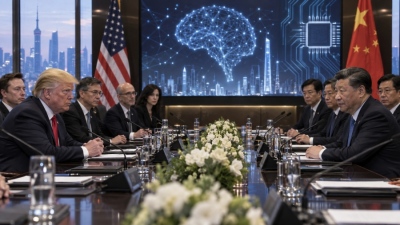
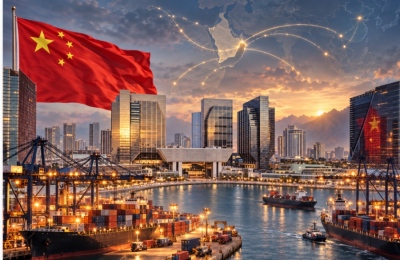
Donald Trump is set to host Chinese leader Xi Jinping this week, marking their second summit of 2026. Much has shifted since Trump's visit to China back in May. The conflict with Iran, the subsequent energy crisis, and escalating risks surrounding the US-China artificial intelligence race are merely a few additions to a crowded agenda. Given Trump's low popularity ratings and a growing list of domestic economic concerns, the US President has every incentive to secure tangible political and economic wins.
The big gamble for markets: the trade truce
The primary issue concerning markets is the extension of the bilateral trade truce between the two nations, which is scheduled to expire in November. Market participants generally view a truce renewal as likely. However, any high-stakes meeting between rivals with deep-seated disagreements can take unpredictable turns. This is especially true when delicate topics like Taiwan are on the table, alongside a military conflict offering no clear path toward resolution.
Iran, sanctions, and the China factor
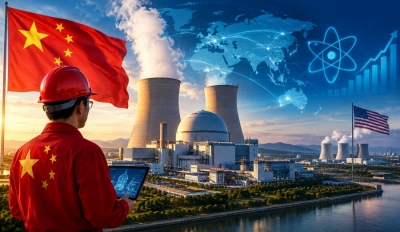
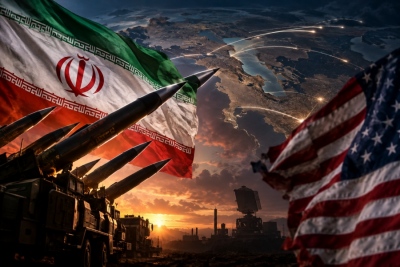
The ongoing crisis could generate additional friction between Washington and Beijing. China, which maintains strong ties with Iran, faces allegations of bypassing international sanctions and potentially sharing intelligence with Tehran. One area where both leaders might find greater alignment is mitigating the systemic risks posed by artificial intelligence. Yet neither Xi nor Trump appears eager to slow down the bilateral AI arms race. This dynamics makes the summit even more intriguing. On Thursday, a state dinner will host prominent tech figures, including OpenAI CEO Sam Altman and Nvidia chief Jensen Huang. Given that nothing is guaranteed in trade talks with China under the Trump administration, global markets must prepare for sudden surprises.
Markets await answers from the Fed and oil
Investors are still attempting to decode the Federal Reserve's interest rate hike from last Wednesday. Wall Street analysts reasonably argue that central bankers cannot directly control an exogenous energy shock. As Rick Rieder of BlackRock highlighted, inflationary pressures are increasingly concentrated in economic sectors largely immune to interest rate cycles. These involve essential goods and services like healthcare and public utilities. In these categories, consumer demand cannot easily be cooled through tighter monetary policy. Meanwhile, the bond market appears marginally relieved, while equity indexes remain essentially flat.
Fed officials' statements under scrutiny
This environment of uncertainty explains why Wall Street will closely scrutinize upcoming public remarks by Federal Reserve officials for policy guidance. According to TD's macroeconomic research team, New York Fed President John Williams represents the most critical speaker on the calendar, though he is expected to avoid committing to a specific outcome for the October meeting. The schedule also features speeches from central bank officials including Barr, Jefferson, Goolsbee, Barkin, Paulson, and Hammack. TD analysts note that special attention should be directed toward Paulson, who is viewed as more dovish. His commentary could reveal whether the Federal Open Market Committee is shifting toward a more hawkish policy stance.
Beyond FedSpeak, markets await OilSpeak
Public commentary from central bankers, however, reflects only one side of the equation. The other critical variable is what market participants term "OilSpeak." Any news pointing to changes in global crude supplies could bring substantial relief to financial markets. With the energy crisis remaining a primary catalyst driving global price pressures, developments in crude oil markets carry immense weight.
Meta and Qualcomm at the forefront of the AI battle
Meta kicks off its annual Connect conference on Wednesday, with market expectations centered on the unveiling of a new generation of smart glasses. This product reveal follows closely on the heels of Snap's recent entry into the wearable tech market. Additionally, Meta recently launched a subscription platform named Meta One, attempting to monetize consumer-facing artificial intelligence services directly.
From smartphones to AI wearables
Until recently, enterprise adoption of hardware and software served as the primary engine driving the AI revolution. However, recent moves by tech giants like Apple and Meta have highlighted immense consumer market potential. According to Reuters, Meta's latest wearable device might even omit a camera, introducing another novel hardware category beyond traditional smartphones. This trend demonstrates that the battle for AI dominance is moving beyond data centers and hardware chips directly into consumer everyday devices.
Qualcomm: The other side of the AI supply chain
Investors will also monitor developments on the infrastructure side of the global AI supply chain. Attention centers on Qualcomm's Snapdragon Summit, which opens Tuesday in Hawaii. Thus, while Meta commands headlines with consumer applications and devices, Qualcomm will set the narrative for underlying technical architecture. While the coming week lacks the heavy volume of macroeconomic reports seen recently, markets have plenty of reasons to remain on high alert: Trump and Xi, the trade truce, Iran, oil markets, the Fed, Meta, Qualcomm, and the global race for AI supremacy.
www.bankingnews.gr








Readers’ Comments