

The future of nuclear power is increasingly resting in China's hands. Although the United States remains the world's largest producer of nuclear energy, the expansion of the Chinese nuclear sector is occurring at such a rapid pace that analysts estimate Beijing will surpass both France and the US within the next decade to claim first place worldwide. At the same time, as oilprice.com notes, alongside the swift growth of traditional nuclear power, China is evolving into a global leader across a broad spectrum of advanced nuclear technologies. "By a wide margin, China will possess the most significant and dynamic nuclear industry in the world by 2035," energy analyst Damien Ma of Gavekal Technologies stated in a recent report. As he points out, China can construct a new nuclear power plant in approximately six years, whereas in the United States, similar projects, such as the new Vogtle reactors, require more than a decade.
The massive gap with the US
Over the past decade, the United States added just a single new nuclear power generation facility, Plant Vogtle in Georgia—a project plagued by significant delays, cost overruns, and intense controversy. During that same period, China added approximately 34 gigawatts of new nuclear capacity, confirming its strategic commitment to aggressively expand its nuclear fleet. Furthermore, Beijing's latest five-year development plan demonstrates that the Chinese leadership has no intention of slowing its pace of expansion. According to an analysis by the Center for Strategic and International Studies (CSIS), innovation and security form the two primary pillars of the new plan, highlighting the central role of nuclear energy not only in national energy security but also in technological advancement and the country's international presence.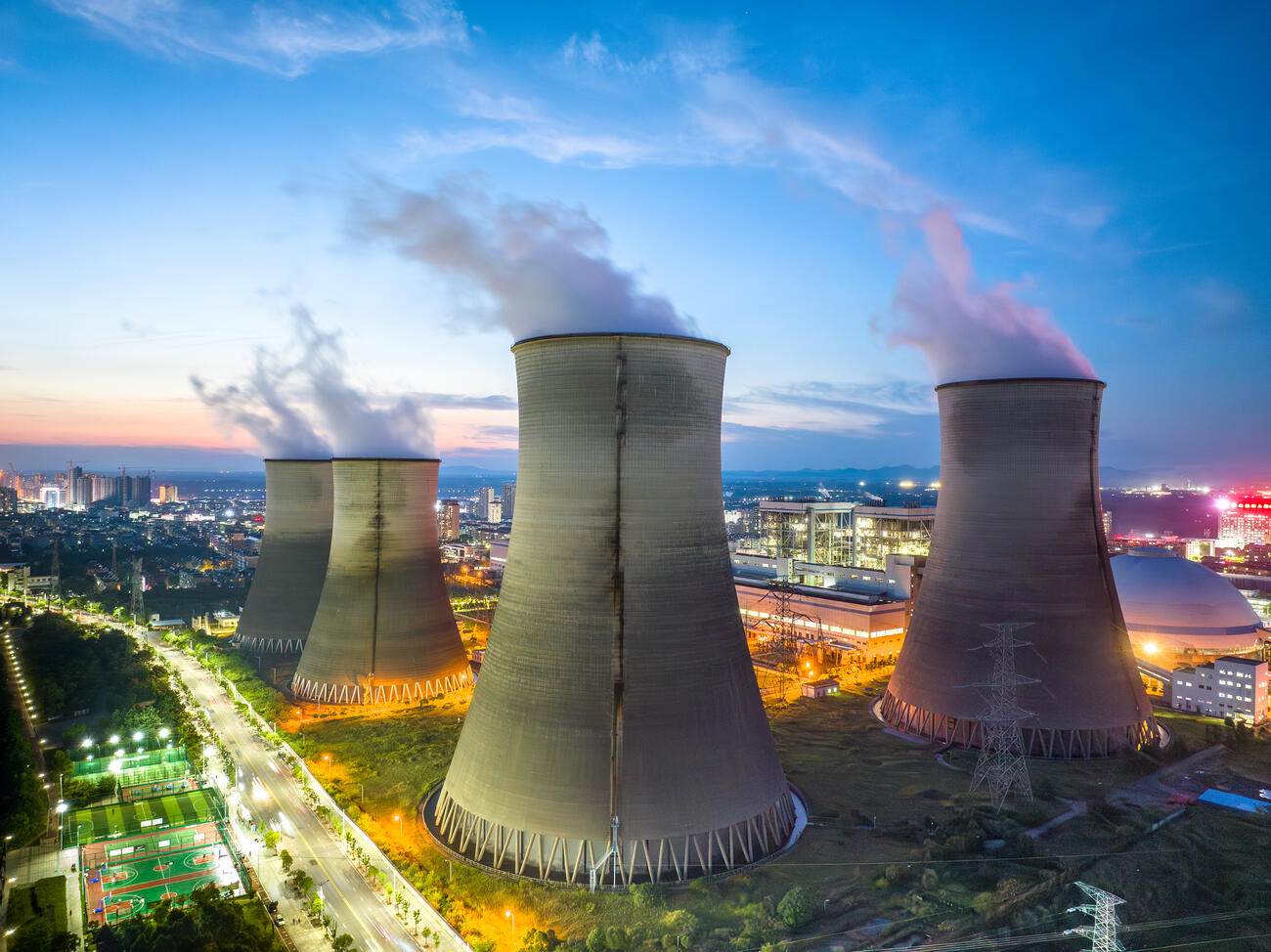
The plan for energy dominance
The Chinese government seeks to build the world's most advanced nuclear sector as part of a broader strategy aiming for global energy dominance. Beijing's goal is to evolve into the planet's first true "electro-state," gaining control over critical technologies involved in energy production and storage. Developing the world's most advanced nuclear fleet constitutes a core element of this strategy, encompassing novel technologies in reactor design, operation, and fueling. According to Power Magazine, China is creating a fully vertically integrated ecosystem of advanced nuclear technology, spanning from the first verified production of thorium inside a reactor to combined units of pressurized water reactors and high-temperature reactors, as well as commercial power generation via supercritical carbon dioxide. The sheer scope of these activities points toward a coordinated push for energy autonomy and the industrial commercialization of cutting-edge technologies.
The battle with the US
The United States has also made upgrading its nuclear sector a priority. The administration of Donald Trump has stated that it seeks to secure lasting American dominance in the global nuclear energy market, actively supporting the development of next-generation reactors and nuclear fusion technologies. Concurrently, Washington is attempting to reduce its dependence on international nuclear fuel supply chains by bolstering domestic uranium mining and enrichment. However, according to analysts, the United States still lags significantly behind China in both investment volume and technological progress within the field of advanced nuclear power.
Beijing's unexpected move
Despite China's reputation as a nation that traditionally keeps its technological advancements secret, Beijing made a move this week that sent ripples through the international community. China signed an agreement with the International Atomic Energy Agency (IAEA) to share expertise on high-temperature gas-cooled reactors (HTGRs). These are fourth-generation reactors capable of operating at extremely high temperatures to supply not only electricity but also thermal energy for industrial applications. The agreement encompasses research and development, design, construction, commissioning, and reactor operations, alongside information sharing regarding supply chains and workforce training.
Nuclear power for AI and the climate crisis
This collaboration with the IAEA is viewed by many analysts as an initial step toward a more international approach to two of the 21st century's greatest challenges: climate change and the rapid surge in energy demand driven by artificial intelligence. Advanced nuclear technologies can deliver reliable, 24/7 clean power, offering a critical alternative for an energy grid tasked with satisfying rapidly expanding needs. As global demand for electricity accelerates, the nuclear race between China and the United States carries growing geopolitical and economic weight, with Beijing currently emerging as the clear winner of the coming decade.
www.bankingnews.gr




Readers’ Comments