

Next Tuesday 22/9 Trump will weigh his next decision on Iran - The Pentagon has been instructed to maintain the current level of US forces in the region until the end of 2026 - The cost for Arab states in the first month of the war alone stands at 150 billion
The war between the US and Iran is indeed taking on uncontrollable dimensions. Not only because it is expanding geographically across almost the entire Middle East – following attacks on American bases, the advance of the Houthis in Yemen, and Saudi Arabia's involvement – nor because its geopolitical footprint is already huge on energy prices and the global economy. But because it is now being conducted – even with heavy doses of propaganda – in the markets, and even within... the equations of monetary policy.
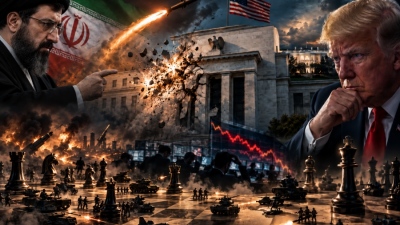
While tension in the Persian Gulf presses the global energy market and the Federal Reserve raises interest rates, Mohammad Bagher Ghalibaf, a top Iranian official and speaker of the Iranian parliament, chose an unusual communications weapon: the Taylor rule, the well-known economic equation used as a benchmark for setting interest rate policy. His message was clear: no 25 basis point hike can open the Strait of Hormuz or create an extra barrel of oil.
Behind the mathematical irony... if not "trolling," the question arises whether a geopolitical war can indeed turn into an inflationary shock and ultimately reach all the way to Fed decisions. Meanwhile, US President Donald Trump insists on posing, or rather repeating, his own questions. In his latest question, he wonders whether he should wipe out Iran or not, maintaining that it is a "big decision" he must make soon, even if this is at least the sixth time since March 2026 that he has issued such a threat.
After missiles, a mathematical equation
Iran's missiles and drones have shot down dozens of American aircraft, damaged or destroyed hundreds of US buildings at their bases in the Middle East, and depleted military equipment reserves worth billions of dollars, as the Pentagon admitted earlier this week. On Wednesday, September 16, Tehran launched yet another unexpected "weapon" in its war against the US: a mathematical equation. Iranian Parliament Speaker Mohammad Bagher Ghalibaf, who has also played a leading role as a negotiator in talks between Tehran and Washington at various stages over the past six months, posted a version of the Taylor equation on X – a formula used by central banks to determine interest rates – accompanied by a message directly referencing the war. "Let's see if a rate hike can open SOH [Strait of Hormuz] or produce even one single barrel," Ghalibaf wrote, referring to interest rate increases and the Strait of Hormuz, the critical maritime passage that Iran has effectively blocked to global navigation.
"We define the risk premium"
"You cannot address a strategic passage with 25bp [basis points]," he added, seemingly referring again to the Strait. "It is the risk premium of SOH, and we define it," Ghalibaf emphasized. A few hours after Ghalibaf's post, the Federal Reserve did indeed raise its key interest rate by 25 basis points. At the start of the war, which was initiated by the US and Israel against Iran on February 28, Ghalibaf frequently used economic arguments to mock how US President Donald Trump's administration was conducting the conflict, and to highlight Iran's ability to inflict economic costs on Washington if it did not change its stance. Now he has turned to mathematics.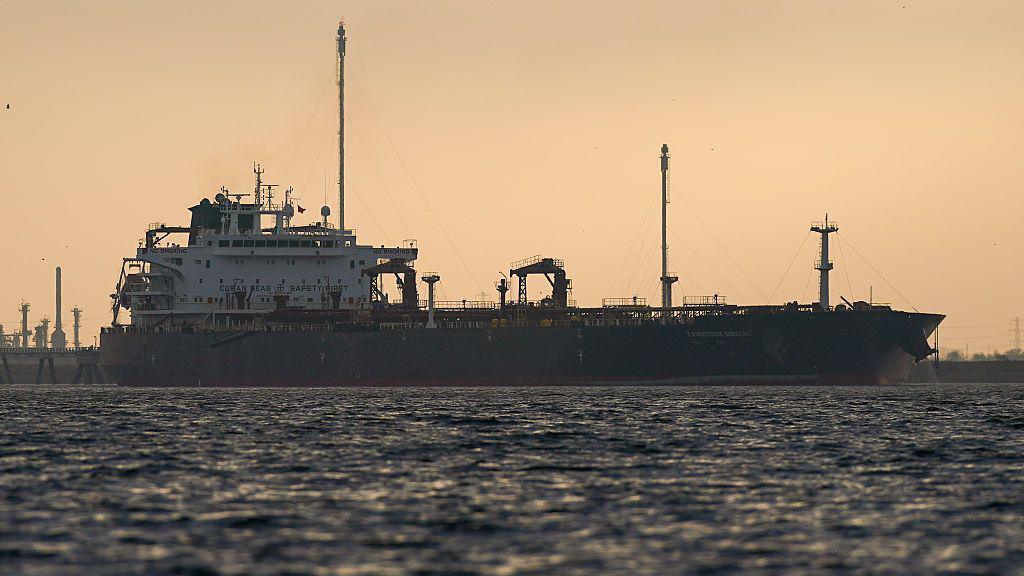
A spectacular sample of communications propaganda
"This is a spectacular sample of communications propaganda from Iran, a country that, if nothing else in 2026, has proven it possesses an impressive ability to provoke and annoy its American adversary," Chris Beauchamp, chief market analyst at IG Group, told Al Jazeera. But what exactly is Ghalibaf trying to say? What is the Taylor equation, has the war with Iran influenced the US interest rate, and is Tehran truly the one that "defines it," as the speaker of parliament claimed?
The Taylor equation
The Taylor rule is a formula economists use to estimate at what level a central bank should set interest rates, taking into account inflation and economic strength. Developed by economist John Taylor in the early 1990s, the rule links the US federal funds rate to inflation and the so-called "output gap" – the difference between actual economic output and the economy's potential output. In its simplest form, the formula is: Rate = inflation + 0.5(output gap) + 0.5(inflation − 2%) + 2%. This means the recommended interest rate rises when inflation exceeds the 2% target or when economic output is above the economy's capacity. Conversely, it decreases when inflation drops or when the economy operates below its potential. However, the equation serves as a benchmark rather than an absolute rule applied strictly. Federal Reserve policymakers evaluate other economic factors as well when deciding on interest rates.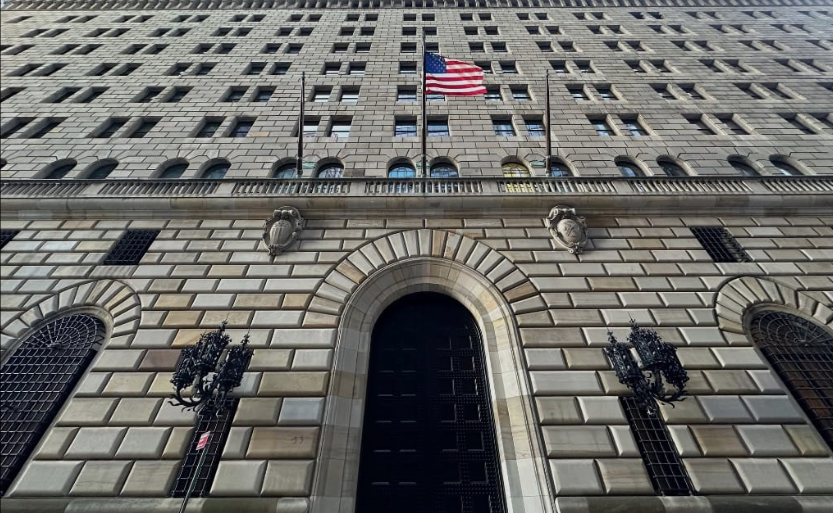
Is the war with Iran a factor in the US interest rate hike?
Donald Trump's tariffs, the energy shock following the US and Israeli war with Iran, and massive investments tied to the boom in artificial intelligence have, combined, kept inflationary pressures strong, according to experts. On Wednesday, when the Federal Reserve raised interest rates by 25 basis points, it marked the first rate hike in three years. Fed Chair Kevin Warsh stated in his address following the hike that the escalation of conflicts between the US and Iran, which has driven up gasoline prices, helped convince Fed officials to support higher interest rates. "You cannot hide from hotspots around the world," Warsh stated. IG Group's Beauchamp said: "The war with Iran is, indirectly, a huge factor behind the increase, even if no one wants to admit it." "The surge in energy prices has combined with rising yields, backing the Fed into a corner with no exit," he added. Susannah Streeter, head of investment strategy at Wealth Club, said that "it cannot be contested" that Iran's retaliation against the US and its allies throughout the Gulf region has "intensified concerns over energy supply and led to higher inflation forecasts." "Ongoing geopolitical turmoil and elevated crude oil prices were certainly key drivers behind the Fed's decision to raise interest rates," she said.
Iran does not determine the US interest rate
Analysts nonetheless argue that Iran is not the entity determining US interest rate policy. Wealth Club's Streeter cautioned that while the war in the Middle East and the rise in oil prices were clearly a factor in the Fed's decision, they were not the "only elements at play." "The massive investment power of artificial intelligence hyperscalers has also spilled over into the broader economy, with robust capital expenditure and resilient domestic demand adding inflationary pressures, so policymakers would be looking at the complete picture," she noted. Therefore, while Tehran can be argued to have influenced some of the forces feeding into US monetary policy, particularly through the conflict's impact on supply and crude oil prices, it does not "determine US interest rates." Streeter said the Federal Reserve reacts to a much broader set of economic conditions. "Iran's actions have impacted the inflation outlook, but the decision on the level of interest rates ultimately rests with the Federal Reserve, and there are many other data points that policymakers use," she noted.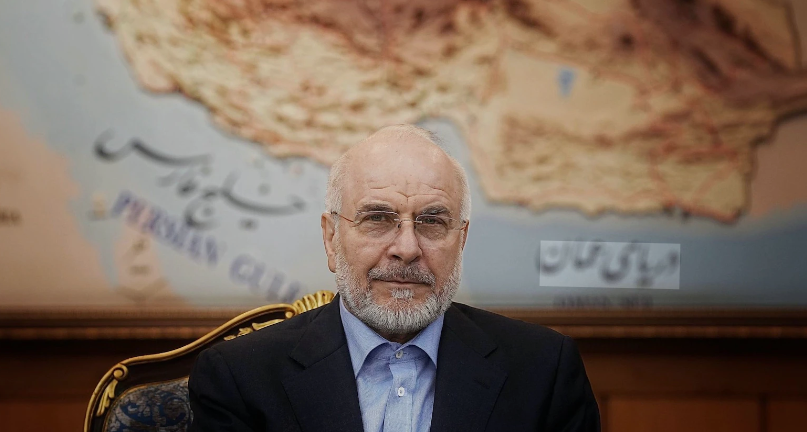
Ghalibaf's mathematical irony
In March, Ghalibaf repeatedly used social media to comment on markets and energy prices, including mocking the Trump administration's efforts to influence oil futures and arguing that financial manipulations cannot create "real fuel" at gas stations. Last month, Ghalibaf posted a graphic featuring the phrase "Make America Hungry Again" – a play on Trump's slogan "Make America Great Again" – alongside statistics on food insecurity and hunger in the US. "You cannot cover up defeats with false claims," he said. "Ghalibaf's position is that a US interest rate hike cannot reopen the Strait of Hormuz nor replace disrupted oil supplies," said Negar Mortazavi, senior fellow at the Center for International Policy in Washington. "The modified Taylor rule he presented adds the Strait of Hormuz and Bab al Mandab to a formula that normally deals with inflation and economic output. He uses the Fed's own language to argue that the economic cost of the war depends in part on maritime security, which Tehran can influence." This represents more of a statement regarding Iran's leverage than a serious proposal for setting interest rates, the analyst added. "The timing matters: he posted it just as the Fed was raising interest rates by a quarter of a percentage point. His repeated economic posts aim to make the cost of the war understandable to an American audience through prices, markets, and monetary policy," Mortazavi emphasized.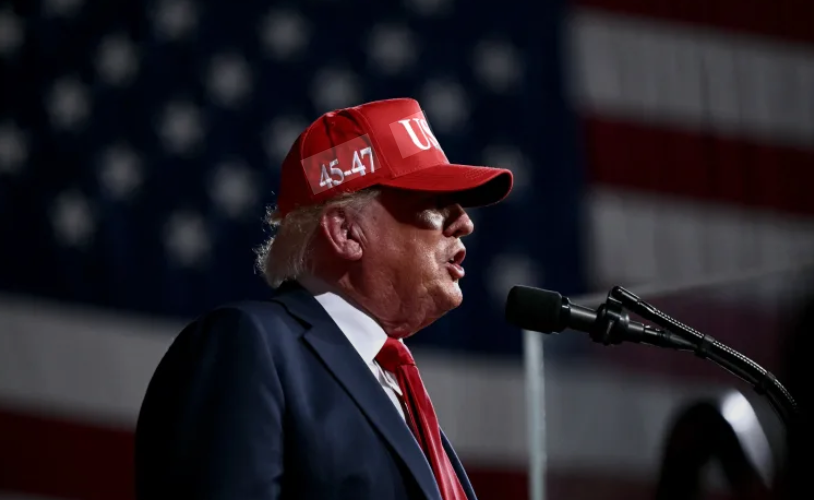
"Wipe them out or not?"
While Ghalibaf attempts through irony and equations... to project Iran's negotiating leverage, US President Donald Trump is using his own "negotiating weapons." According to Axios, Trump maintains he is nearing the point where he must make a decision regarding the resumption of wide-ranging attacks against Iran. "Do I want to go in and wipe them out or not?" he told Axios. "It is a big decision. With me, anything can happen," Trump said. Trump's statements come ahead of his planned meeting next Tuesday 22/9 with the leaders of the six member states of the Gulf Cooperation Council – Saudi Arabia, the United Arab Emirates, Qatar, Bahrain, Kuwait, and Oman — on the sidelines of the UN General Assembly in New York. This meeting could determine the course of the next phase of the war. According to Axios, Trump, referring to the meeting, stated: "I want to hear directly from them what shape they are in and how things are progressing. We have supported and protected them to a very great extent."
Maximum pressure strategy and prolonged stalemate
As Axios writes, after Saudi Arabian and Qatari concerns over potential Iranian retaliation against oil and gas infrastructure in the region prevented the resumption of large-scale US military operations in early August, Trump adopted a lower-profile approach. This approach involved suspending negotiations, strengthening sanctions, maintaining the naval blockade of Iranian ports, and focusing on reopening the Strait of Hormuz to control global energy prices. Axios reported that US officials warn the current situation has evolved into a prolonged "neither war nor peace" stalemate, and that the US military cannot remain at its current level of readiness indefinitely. According to reports, the Pentagon has been instructed to maintain the existing level of US forces in the region until the end of the current year, ensuring the necessary readiness should Trump decide to return to a full-scale conflict.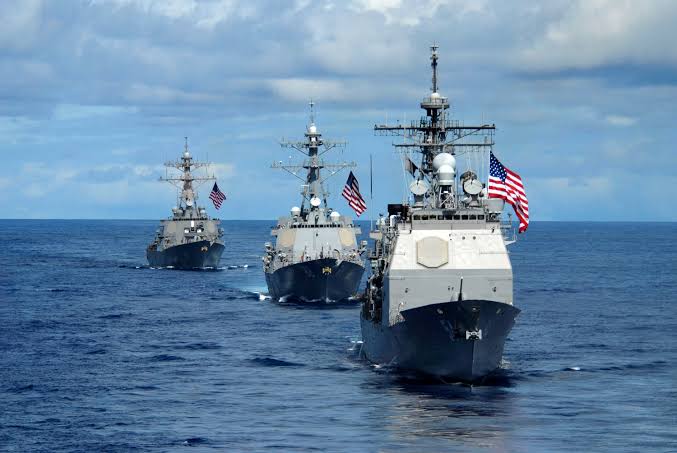
Trump insists on the effectiveness of the naval blockade
Elsewhere in the interview, Trump expressed satisfaction with the naval blockade of Iranian ports, claiming: "Since the blockade started, not a single oil tanker has managed to leave Iran. They tried, and we destroyed them." He also claimed that Iran is in direct contact with the United States and still desires to reach a diplomatic agreement.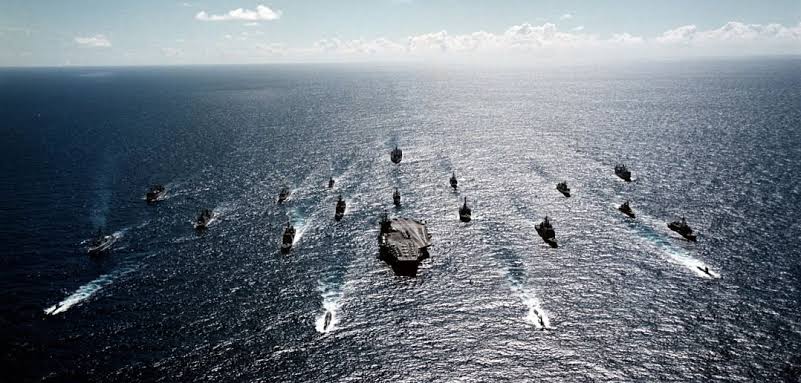
How many times has Trump threatened to destroy Iran?
US President Donald Trump has repeatedly threatened Iran with extensive destruction since launching the joint military campaign with Israel on February 28. Here are six characteristic instances where he targeted Iran, its critical infrastructure, or its population, warning of large-scale destruction:
-
March 21: "Flattening" power generation plants: Trump gave Iran a 48-hour deadline to reopen the Strait of Hormuz, threatening to "strike and flatten" its power plants, starting with the largest.
-
April 1: Return to the "Stone Age": In a televised address, Trump stated that Iran would return to the "Stone Age" if it failed to reach an agreement, while threatening further attacks on the country's power grid.
-
April 5: Iran will "face hell": Trump set a new deadline for reopening the Strait of Hormuz, threatening strikes on bridges and power plants and warning Iran that it would "face hell."
-
April 6: The country could "disappear overnight": Trump declared: "The whole country could disappear overnight," presenting a plan under which every bridge would be "completely destroyed" and every power plant left "in flames" and "exploded."
-
April 7: "An entire civilization will die": Trump warned that "an entire civilization will die tonight, never able to return," if Tehran rejected his demands.
-
September 17: "Do I want to wipe them out?": Trump raised again the prospect of destroying the Iranian government. "Do I want to go in and wipe them out or not?" he told Axios. "It is a big decision. With me, anything can happen."
Inconceivable: 150 billion dollars cost for Arab states in the first month of the US–Iran war
The war between the United States and Iran cost Arab economies approximately $150 billion in its first month alone, argues Rania al-Mashat, executive secretary of the UN Economic and Social Commission for Western Asia (ESCWA). As she stated, the losses correspond to roughly 4% of the region's gross domestic product. Speaking at an informal UN Security Council session on maritime security, al-Mashat said that threats to navigation through the Strait of Hormuz and Bab al Mandab affect not only security, but also trade, economic stability, and access to essential goods. She reported that approximately 25% of global seaborne oil trade and 19% of liquefied natural gas trade pass through the Strait of Hormuz. Gulf states are also major exporters of ammonia, fertilizers, sulfur, and aluminum. Al-Mashat warned that the conflict could delay investment and economic diversification across the Arab world. She called for efforts to prevent the war from expanding, to safeguard freedom of navigation, and to strengthen regional readiness for potential further disruptions in the supply of essential goods and critical services.
www.bankingnews.gr



Readers’ Comments