

Meanwhile, Trump revealed that he will soon make a major decision regarding Iran, with the most likely scenario being an entry into a de-escalation phase, or getting trapped in a new offensive, even though the US military lacks the capacity for a full-scale military attack due to Iran's defensive and offensive capabilities. Israeli Prime Minister Netanyahu continues to add fuel to the fire, stating that "there is a plan to overthrow the Iranian leadership."
Iran continues to exercise strict control over Hormuz, striking another vessel in the strait, while its deterrent, defensive, and offensive strategy—heavily reliant on missiles—is evolving. However, Iranian sources state that if a new war breaks out, Iranian missiles will target US bases and other assets in Greece, such as Patriot systems, F-16 bases, and more.
Trump: To obliterate them or not?
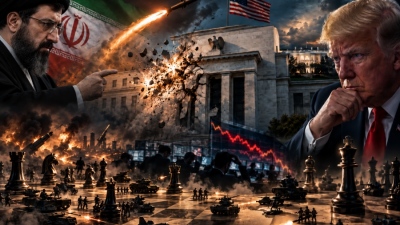
US President Donald Trump launched fresh threats against Iran. According to Axios, Trump claimed he is approaching the point where he will have to make a decision regarding the resumption of large-scale strikes against Iran. "Do I want to go in and obliterate them or not?" he told Axios. "It's a big decision. With me, anything can happen," Trump said. Trump's statements come ahead of his scheduled meeting next Tuesday, 22/9, with the leaders of the six member states of the Gulf Cooperation Council—Saudi Arabia, the United Arab Emirates, Qatar, Bahrain, Kuwait, and Oman—on the sidelines of the United Nations General Assembly in New York. This meeting could determine the course of the next phase of the war. According to Axios, Trump, referring to the meeting, stated: "I want to hear directly from them where they stand and how things are progressing. We have backed and protected them to a very great extent."
Iran struck the Togo-flagged tanker Trend in Hormuz, setting it ablaze – It had been prompted by the US
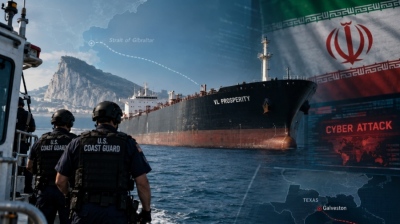
The Islamic Revolutionary Guard Corps (IRGC) Navy announced the interception and immobilization of a Togo-flagged oil tanker in the Strait of Hormuz, warning that unauthorized transit through the strait will lead to the vessel's destruction. According to the IRGC Navy, the Togo-flagged tanker "Trend," which was attempting an unauthorized passage through the Strait of Hormuz incited and misled by the US military, was targeted and disabled after a fire broke out on board. The Revolutionary Guard Navy subsequently issued a stern warning, emphasizing that illegal passage through the Strait of Hormuz will carry severe consequences, and any vessel attempting to pass without authorization from Iran will become a military target.
Fiasco – 30% of the US Naval Fleet was deployed to the Persian Gulf and failed – Spending $32.5 million daily
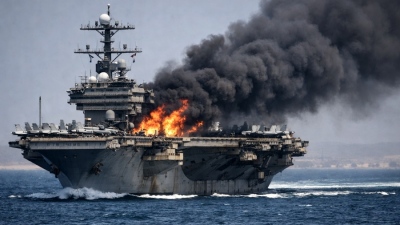
The cost of the standoff with Iran in the Strait of Hormuz is eroding the global military standing of the United States. The operation, carrying a daily price tag of roughly $32.5 million, has entangled more than 30% of all US Navy warships to no avail. The "constant wear and tear" on ships and crews is turning into a countdown clock between the besiegers and the besieged. Bloomberg points out that as US President Trump attempts to force Iran into submission, the naval blockade has become his tool of choice. However, the operation is pushing US military capacity to its limits, exhausting personnel, and undermining Washington's global posture. Sailors aboard the aircraft carrier USS Abraham Lincoln, which recently docked at a Thai port for the first time in 9 months, reported facing numerous technical shortages, lack of maintenance, and an alarming decline in morale. Some reported a black market for basic hygiene products and a 40-day internet blackout that severed contact with their families. Four American aircraft carriers have been deployed in the conflict with Iran.
Defiant Netanyahu: Israel will overthrow the Iranian regime
Israeli Prime Minister Netanyahu claimed in statements that Israel will persist in its efforts to alter the situation in Iran, speaking provocatively about the overthrow of the Iranian regime.
Lee Jae Myung (President of S. Korea): We are not sending troops to the Gulf
President Lee Jae Myung stated that South Korea will not deploy military forces for any intervention in the US war with Iran that could drag the country into the conflict, according to South Korean news agency Yonhap. Speaking at a press conference, Lee acknowledged that the government will take only the necessary steps to protect South Korean commercial vessels and maritime energy transport routes. The president's remarks came amid public pressure and recent protests opposing the deployment of military forces to the Strait of Hormuz.
UN: $150 billion cost for Arab states in the first month of the US–Iran war
The war between the United States and Iran cost Arab economies approximately $150 billion in its first month alone, claims Rania al-Mashat, Executive Secretary of the UN Economic and Social Commission for Western Asia (ESCWA). As she noted, the losses equal roughly 4% of the region's total gross domestic product. Speaking at an informal UN Security Council meeting on maritime security, al-Mashat said threats to navigation through the Straits of Hormuz and Bab al-Mandab impact not only security, but also trade, economic stability, and access to essential goods. She noted that approximately 25% of global seaborne oil trade and 19% of liquefied natural gas trade pass through the Strait of Hormuz. Gulf states are also major exporters of ammonia, fertilizers, sulfur, and aluminum. Al-Mashat warned that the conflict could delay investment and economic diversification across the Arab world. She called for dedicated efforts to prevent the expansion of the war, ensure freedom of navigation, and bolster regional readiness for potential further disruptions to critical supply chains and services.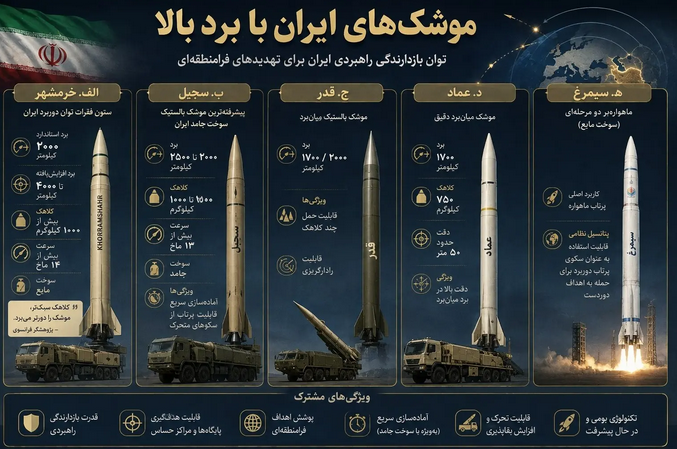
Missiles are Iran's primary weapon in new US and Israeli attack plans... – Greece, US bases, F-16s, and Patriots targeted
Many believe that if war breaks out again, Iran will attack the Diego Garcia base in the Indian Ocean or American installations in Europe. But what are Iran's tools for such an assault? Reports surrounding a war between Iran and the United States have intensified once again. Iran has repeatedly declared that if the United States and Israel launch another full-scale attack, it will initiate a transregional war. In March 2026, Iran launched two ballistic missiles at the joint US-British base on Diego Garcia in the Indian Ocean. According to British officials, one missile malfunctioned during flight, while the other was intercepted by a US Navy Standard Missile-3 interceptor. However, the missile traveled roughly 3,000 kilometers, extending well past the 2,000-kilometer limit Iran had declared for years. The incident has raised questions about Iran's long-range capabilities more seriously than ever.
Khorramshahr missile
The Khorramshahr missile forms the backbone of Iran's long-range striking capability. This liquid-fueled medium-range ballistic missile has a range of approximately 2,000 kilometers in its standard version and can carry a warhead weighing over a ton. Its speed is reported to exceed Mach 14. According to experts, extended-range variants of this missile family could attain a range of up to 4,000 kilometers by reducing the warhead size. A French researcher notes: "A lighter warhead will propel the missile much further."
Sejil missile
This missile is considered Iran's most advanced solid-fueled ballistic missile. The Sejil is a two-stage missile with a range between 2,000 and 2,500 kilometers. Its warhead weighs between 500 and 1,000 kilograms, reaching speeds exceeding Mach 13. The solid fuel shortens preparation time and allows for launches from mobile launch platforms, significantly increasing the missile's survivability.
Qadr missile
The Qadr missile is produced in two distinct variants. One variant has a operational range of roughly 1,700 kilometers, while the other reaches approximately 2,000 kilometers. Certain iterations of the Qadr are capable of carrying multiple warheads and feature radar evasion capabilities.
Emad missile
The Emad is a missile featuring a range of approximately 1,700 kilometers and the capacity to carry a 750-kilogram warhead. The precision accuracy of the Emad is reported to be around 50 meters under optimal conditions, placing it among the few Iranian missiles with relatively high accuracy at medium ranges.
Simorgh missile system
The Simorgh satellite launch vehicle is a two-stage, liquid-fueled carrier rocket. Some analysts believe Iran could utilize the Simorgh as a long-range launch platform to strike distant American military installations.
Iranian missiles will also target Greece
Following the strike on Diego Garcia, the Chief of the Israeli General Staff warned that the missiles "were not designed solely to target Israel" and that their range encompasses European capital cities such as Berlin, Paris, and Rome. Iran has reportedly weighed potential strikes against American military assets in Southeastern Europe. Bezmer Air Base in Bulgaria, which facilitates refueling for US aircraft, falls within the engagement envelope of Iran's long-range missile inventory. Greece has also deployed Patriot air defense systems and F-16 fighter jets in the region. NATO states that it remains prepared for a potential Iranian strike on American targets stationed across Europe.
Do Iranian missiles suffer from accuracy issues?
Despite advancements in range, Iran's long-range missile capabilities retain a notable flaw: accuracy. A European security official stated that the accuracy of Iranian missiles is "low" compared to Western systems, noting that terminal guidance systems remain a major weakness. Some experts point out that Iran has yet to test a missile at a 4,000-kilometer distance and struggles with precision beyond 2,000 kilometers. This technical limitation makes hitting fortified military targets in Europe difficult. However, if Tehran's objective is simply to launch high volumes of missiles toward distant locations to disrupt US security dominance, these systems serve as the primary tool.
Political message or military impact?
Numerous analysts assess that Iran's attack on Diego Garcia was intended more as a political statement than a purely tactical military operation. "Politically, Tehran's calculation is logical," says a European expert. "European capitals represent strategic targets and do not demand pinpoint accuracy. Iran views European nations that provide infrastructure to the United States as active conflict participants." Tehran has adhered to an "eye for an eye" strategic doctrine for years.
www.bankingnews.gr









Readers’ Comments