

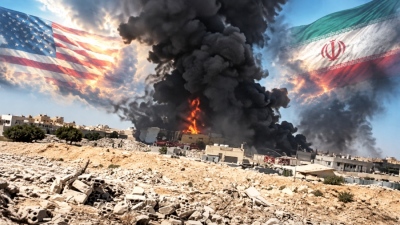
An extraordinary incident took place in Zarqa, Jordan, where a clandestine weapons facility serving American forces, which supplies munitions to adjacent bases, was engulfed in flames, according to an exclusive report by DD Geopolitics on August 15.
Specifically, an alarm sounded across the Zarqa governorate in Jordan, where a massive fire erupted within an industrial complex.
According to local reports, the targeted factory is reportedly connected with the American military footprint operating in the sector.
???? Factory reportedly linked to U.S. military base burns in Jordan A large fire has broken out at a factory in Zarqa Governorate, with local reports claiming the facility is connected to the U.S. military presence in the governorate. https://t.co/dha6TYRlsI
— DD Geopolitics (@DD_Geopolitics) September 15, 2026
Mystery surrounds facility's use: Reports point to Iranian strike
It is noted that to date, further specifics have not been disclosed regarding the cause of the conflagration, the extent of material destruction, or whether personnel sustained injuries.
Competent authorities are investigating the incident, while assertions linking the site to American military logistics, and by extension to an Iranian strike, circulate extensively across Arabic-language media.
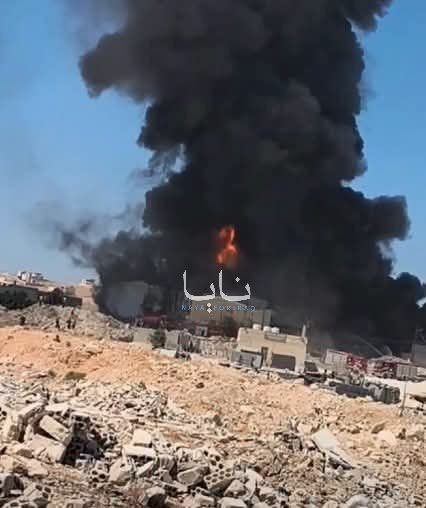
The Zarqa area hosts critical industrial and strategic infrastructure, while Jordan remains a close ally of the United States across the Middle East.
Iranians strike American military facilities with... Chinese assistance
It is recalled that Iran utilized Chinese satellite imagery to guide a missile attack targeting an American base in Jordan in July, according to reporting by The Wall Street Journal citing sources.
According to the report, prior to Iran striking Muwaffaq Salti Air Base on July 17 (an attack that killed three American service members), Tehran had obtained high-resolution satellite imagery of the base from Chinese commercial firms.
American officials speaking to the journal did not identify the Chinese corporate entities supplying the imagery, nor did they allege direct operational direction by Beijing.
According to the report, Iran secured overhead imagery both prior to and following the strike.
According to WSJ sources, this represents the most compelling evidence to date that Chinese backing for Iran during the conflict has yielded fatal consequences for American forces.
American officials presented the satellite imagery to their Chinese counterparts, who disputed the conclusions and demanded formal evidence.
The Chinese embassy in Washington declined to comment on specific allegations, noting that bilateral cooperation with Iran complies with international law.
Earlier, the United States had warned of financial repercussions against third-party states assisting Iran.
Fourth MQ-1 reduced to ashes over Hormuz
Meanwhile, the Islamic Revolutionary Guard Corps (IRGC) released a fresh air defense communique, asserting that it destroyed an MQ-1 uncrewed aerial vehicle in the sector of the Strait of Hormuz.
According to the IRGC statement, the engagement unfolded during morning hours, and the drone was tracked and neutralized by a new advanced aerospace defense system operating as part of Iran's integrated national air defense grid.
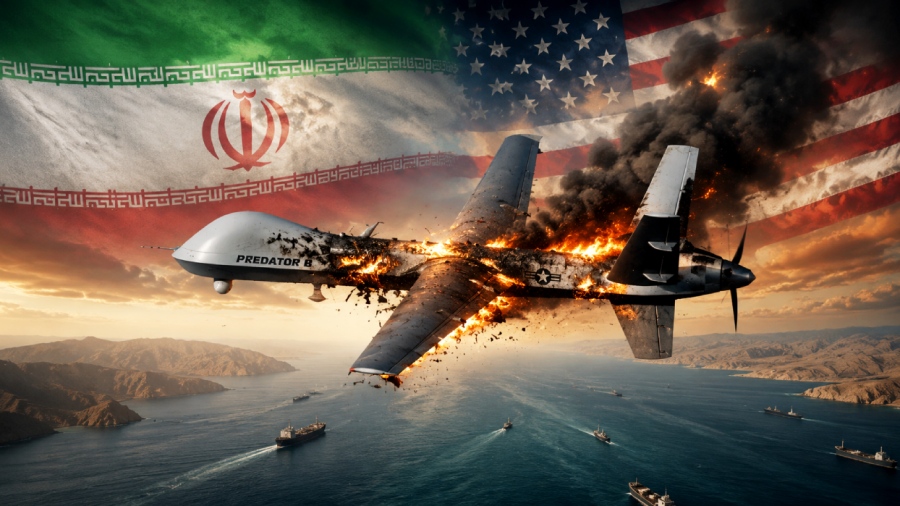
The Revolutionary Guards maintain that this marks the fourth MQ-1 unmanned aircraft destroyed in recent days across the identical operational theater.
The Strait of Hormuz represents one of the most critical maritime energy transit bottlenecks globally and remains a zone of acute strategic friction, as naval and air assets from multiple nations operate across the theater.
Bombshell: Saudi crude orders to Europe canceled
Concurrently, Saudi Arabia notified European buyers that crude oil loadings scheduled for late September will be canceled, as the East-West Pipeline remains out of service following attacks last week, while the Houthis of Yemen reportedly control the entire Red Sea coastal perimeter, according to three sources cited by Reuters.
Hydrocarbon industry sources noted on Saturday that the Yanbu terminal held crude export inventories sufficient for merely five to seven days when the East-West Pipeline was knocked offline.
BREAKING: Saudi Arabia has informed its European customers that late-September crude oil cargoes will be cancelled, due to the East-West pipeline being shut after last week's attacks and Yemen's Houthis taking over the entire Red Sea coast, per three sources to Reuters. Yanbu had five to seven days of crude stocks left for export when the East-West line went down, per industry sources on Saturday, and cancelling late-September cargoes means Riyadh does not expect the line back before they run out. Europe has been taking Saudi crude through Yanbu because Hormuz has been closed since spring. On top of the pipeline, the Houthis appear to have struck the YASREF refinery at that same port this morning.
— The Hormuz Letter (@HormuzLetter) September 15, 2026
Riyadh's decision to cancel cargo loadings toward late September demonstrates that Saudi Arabia does not project a restoration of pipeline operations before existing terminal inventories are depleted.
Europe had pivoted toward Saudi crude deliveries dispatched from the port of Yanbu, given that the Strait of Hormuz has remained closed since spring, constricting traditional maritime energy corridors.
Furthermore, alongside the shutdown of the pipeline, dispatches indicate that the Houthis may have struck the YASREF refining facility located at the Yanbu port terminal today.
These developments unleash fresh turbulence across international commodity exchanges, as Saudi Arabia stands as one of the world's preeminent crude exporters, and any prolonged dislocation to its export infrastructure affects global crude flows and price benchmarks.
Widespread destruction across military installations
It is recalled that on September 14, the official oversight watchdog of the Pentagon disclosed a special report concerning the war with Iran, constituting the initial formal assessment from the US Department of Defense regarding losses of American hardware and facilities from the conflict.
The Inspector General, citing communications with US Central Command (CENTCOM), reported that «Iranian strikes damaged and destroyed hundreds of buildings and structures across American installations in Kuwait, Bahrain, Qatar, the United Arab Emirates, Saudi Arabia, Iraq, Oman, and Jordan» during the opening months of the war.
The report, which covers the timeframe from the outbreak of hostilities on February 28 through June 30, also recognized the depletion of critical American ammunition stockpiles.
War bill reaches 33.4 billion dollars excluding reconstruction outlays
The cost of the military campaign waged by the US against Iran has touched 33.4 billion dollars.
Of this aggregate, 22.3 billion dollars were expended on munitions and 3.7 billion dollars were allocated to absorb equipment damage.
An additional 7.4 billion dollars were absorbed by other operational requirements.
These sums do not encompass the elevated outlays required to reconstruct facilities that were leveled.
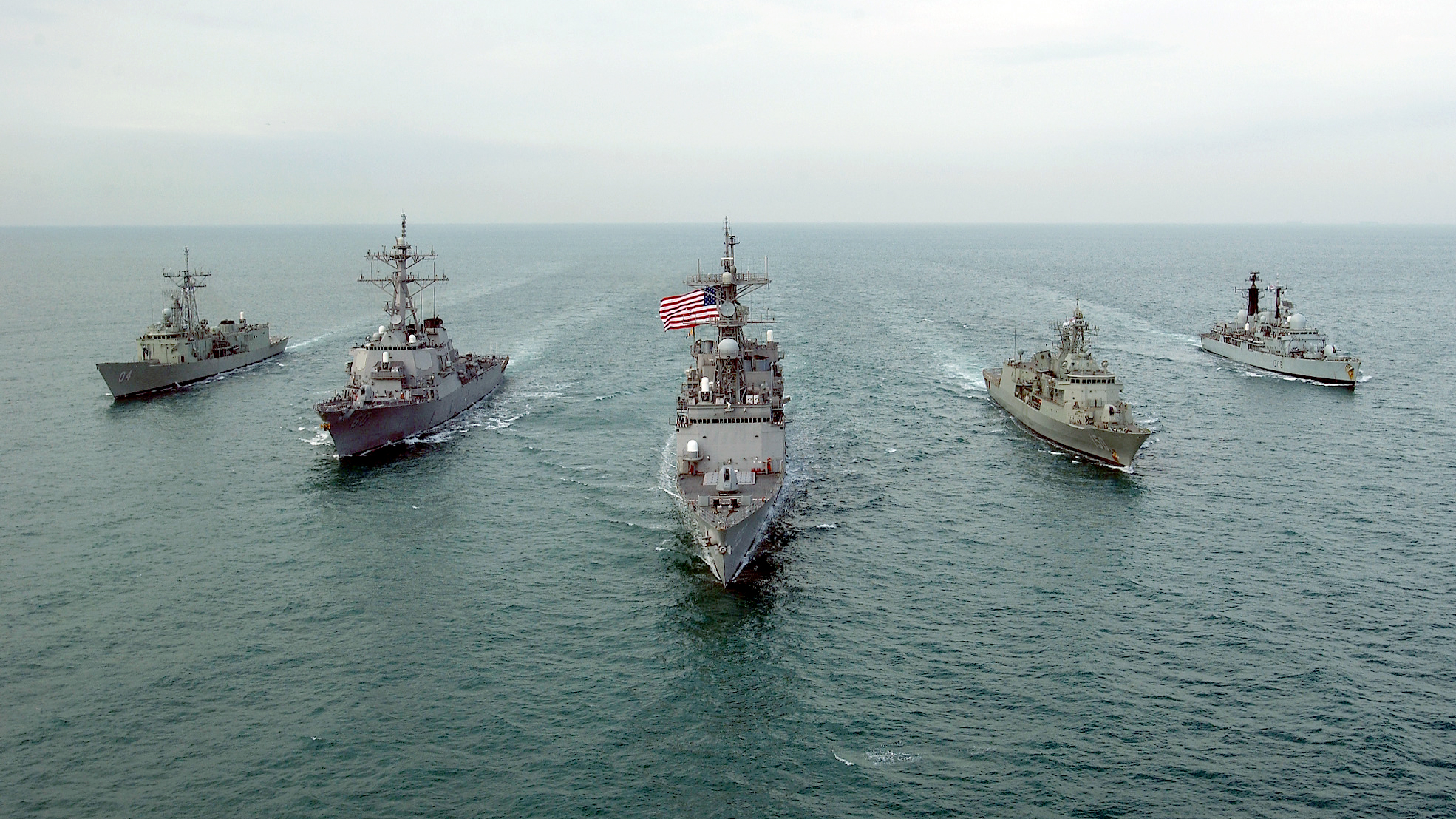
Heavy materiel losses
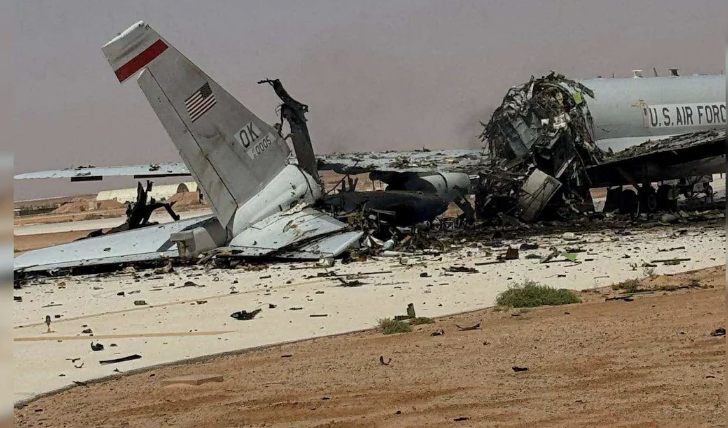
According to the report, American aircraft and military equipment sustained severe attrition throughout the conflict.
Specifically, four F-15E strike fighters, one F-35, one A-10 platform, 12 aerial refueling tankers, and nine additional aircraft were either completely destroyed or sustained damage.
Concurrently, through June, more than 30 MQ-9 uncrewed systems had been brought down.
The report further documents that the war against Iran produced an inventory depletion of military ordnance and disruptions across logistics supply chains.
This is recorded even as US Secretary of Defense Pete Hegseth had denied reports regarding munitions drawdowns, while Donald Trump had likewise maintained that the US produces weaponry at rapid rates and confronts zero related deficits.
Admission of... the inferno in Bahrain
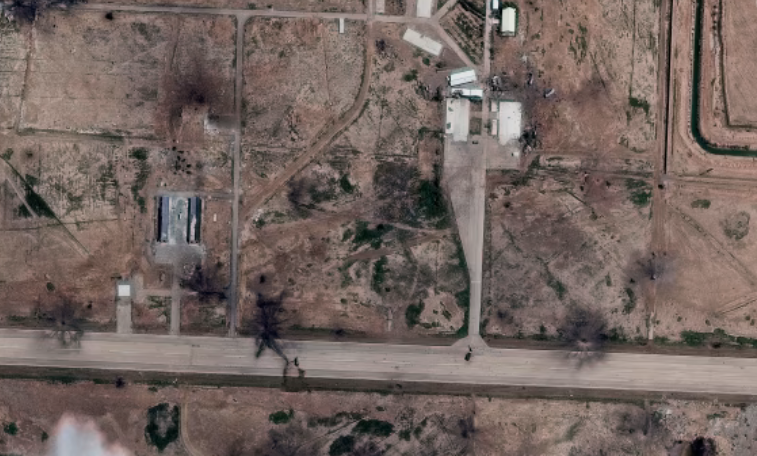
With the release of the report, it was officially acknowledged for the first time that Iran struck the primary sustainment hub of the US Navy in Bahrain utilizing uncrewed aerial systems and ballistic missiles.
As documented, the destruction of the regional logistics node of the American Navy in Bahrain, concerning which Acting Secretary of the Navy Hung Cao stated recently that Iran «completely obliterated it», introduced «formidable hurdles» to establishing «adequate naval bases and support ports», according to the oversight authority.
This development resulted in the remote atoll of Diego Garcia in the Indian Ocean being transformed into a primary maritime logistics hub, stretching supply replenishment turnaround cycles to between 14 and 18 days.
Over 20,000 American military personnel and diplomats relocated
Furthermore, the conflict with Iran necessitated the emergency redeployment of over 20,000 American military service members and diplomatic staff.
This unfolds while American officials have repeatedly asserted, falsely, that US facilities across the theater avoided serious damage and that all incoming Iranian salvos were successfully intercepted.
According to the report, the US State Department absorbed 200 million dollars in damages across Iraq, Kuwait, Saudi Arabia, and the United Arab Emirates.
Cost estimates detailing destruction across American military installations were not disclosed.
The Pentagon likewise pointed out that, notwithstanding Trump's public criticisms directed at European partners, 5,000 aerial sorties were staged from American air bases situated across Europe.
Forced evacuations
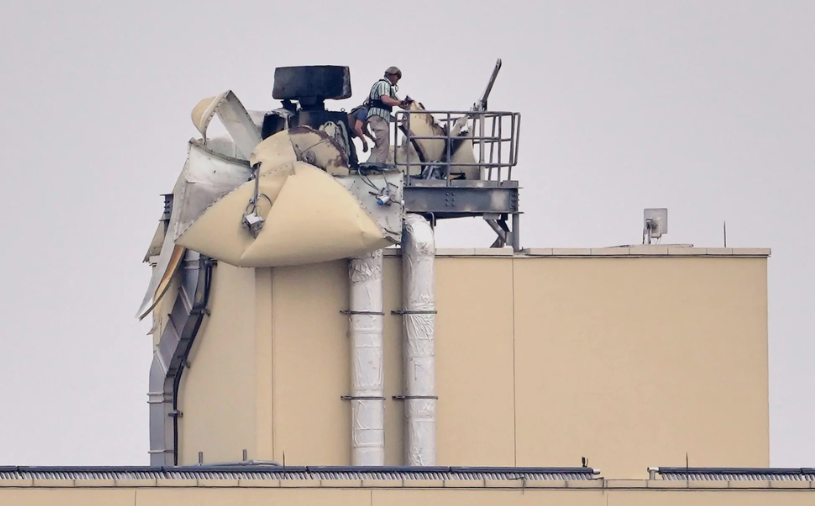
These Iranian strikes contributed to structural adaptations in the manner in which American forces traditionally operate across the theater, according to the report.
CENTCOM «relocated personnel, military assets, and warehousing depots» as these installations came under sustained fire from Iran and its allied forces.
Certain movements encompassed the withdrawal of US Army medical evacuation helicopters from Iraq and Kuwait, the report noted, with the result that «most medical transports are now conducted via ground routes... to local treatment facilities».
Periodic supply deficits that emerged, alongside interruptions across the regional military postal distribution grid, compounded the hardships endured by American sailors deployed across record-length tours in the Persian Gulf to execute air operations against Iran and, over recent months, sustain the naval blockade of its maritime ports.
www.bankingnews.gr









Readers’ Comments