

Such a development could facilitate liability sharing among member states of the EU, yet simultaneously generate fresh legal and economic risks.
According to the report, seized Russian funds could be transferred either to the European Investment Bank (EIB) or into a designated special purpose fund established by the European Union.
However, legal and financial experts assess that executing such a maneuver would prove exceptionally arduous.
Lavrov: You will not get a single dollar
The European Commission seeks to confiscate Russian state assets, yet Moscow will ensure the recovery of its foreign exchange reserves, stated Russian Foreign Minister Sergey Lavrov during an ambassadorial roundtable assessing the resolution of the Ukrainian crisis.
«The European Commission continues to seek the confiscation of these assets, intending to release them solely after we provide some form of reparations to Ukraine.
We will ensure the return of our foreign exchange reserves, and I harbor absolute certainty on this matter», the minister emphasized.
Funding Ukraine exerts systemic pressure across Europe
Structural hurdles in sustaining financial assistance to Ukraine are compelling European governments to explore novel mechanisms for deploying or outright seizing Russian sovereign capital, the Russian Ministry of Foreign Affairs stated to Izvestia.
«It appears that the European Union, in its pro-Ukrainian zeal, has objectively overestimated its capacities and reached its limits regarding the underwriting of the ever-expanding requirements of the Kyiv administration», stated Vladislav Maslennikov, Director of the European Affairs Department at the Russian Foreign Ministry.
As he argued, continuing the financing of Ukraine is transforming into an intolerable burden for EU member states, which can no longer expand state debt limits indefinitely through national budgets or bond markets.
Belgian resistance
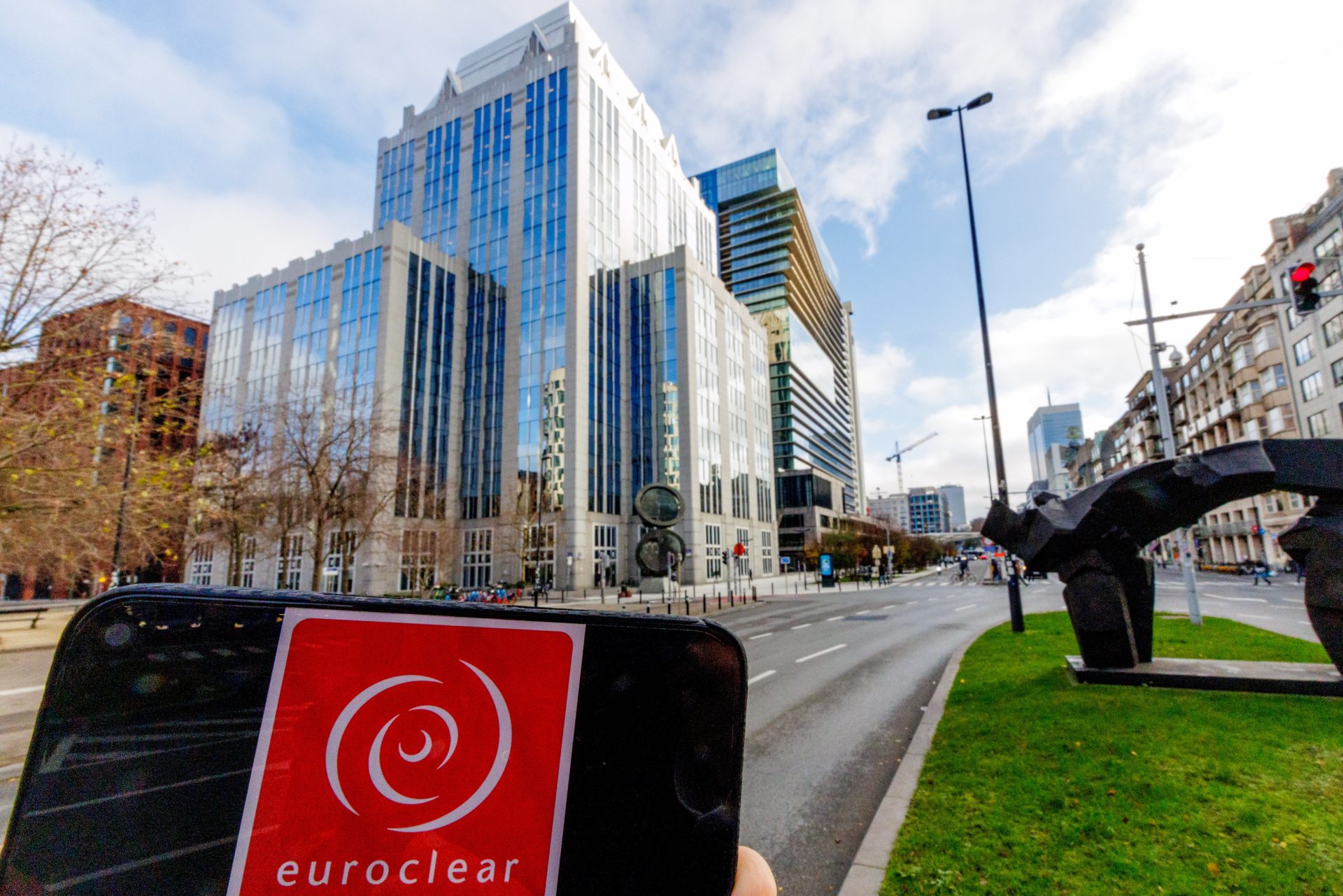
Belgium, which hosts the overwhelming majority of frozen Russian assets (approximately 180 billion euros), opposes their reallocation.
For this reason, the European Union has restricted itself to date to utilizing solely the accrued earnings and investment yields generated by these specific funds to finance assistance programs for Ukraine.
According to Izvestia, should these capital assets be relocated to a centralized European financial institution, the entirety of the European Union would become collectively exposed to resulting legal actions, judicial claims, and counter-litigation.
«Belgium remains unyielding, hence the most probable scenario currently under discussion entails the transfer of frozen Russian assets out of Belgian jurisdiction and into the direct legal jurisdiction of the European Union», a European diplomatic source told the newspaper.
Risks confronting Europe's financial credibility
Reallocating frozen Russian sovereign reserves into an alternate legal jurisdiction could ignite fundamental questions surrounding the security of third-country sovereign assets held within Europe.
Egor Sergeyev, senior research fellow at the Institute for International Studies at MGIMO under the Russian Foreign Ministry, argued that such a decision would effectively invalidate the legal protections and custodial guarantees that Belgium extends to foreign sovereign wealth.
In his view, Belgium itself would find such a precedent difficult to endorse. Nonetheless, he projected that political debate surrounding the deployment of Russian assets will intensify, potentially yielding a novel legal mechanism to enable their exploitation.
Fears of reputational damage to EU investment appeal
According to the Russian perspective, fresh initiatives formulated by the European Union risk inflicting secondary harm upon the investment attractiveness of the European economic bloc.
Moscow contends that any attempt to reassign or expropriate frozen Russian state reserves could trigger compounding economic losses across Europe and provoke reciprocal countermeasures against European assets abroad.
The status of roughly 300 billion euros in immobilized Russian assets remains one of the most contentious flashpoints in relations between Russia and the West, with escalating requirements for Ukrainian funding intensifying debate over their ultimate disposition.
Stolen Russian assets represent a trap driving Europe toward financial self-destruction
Deploying frozen Russian sovereign assets presents far greater systemic peril for Europe than for Russia, according to analysis published by Italian media outlet InsideOver.
Europe confronts an acute dilemma: balancing the perceived urgency of sustaining Ukraine against the systemic exposure of severe financial and legal repercussions.
Focus on international law and legal certainty
«Geopolitical and financial deliberations concerning Russian state assets situated across Europe have arrived at a critical juncture», the publication notes.
As highlighted, the controversy dividing opinions inside the European Union transcends standard diplomatic maneuvers, engaging «the pillars of international law, monetary stability, and the statutory protection of private property».
Although supporting Kyiv's defensive posture and budgetary needs remains a stated policy priority, preserving institutional legal certainty must serve as a systemic priority for the Eurozone, InsideOver contends.
«Greater damage inside Europe than that intended for Russia»
The defining problem, according to the Italian outlet, centers on how legal and financial risks are distributed across individual European states.
«Without a transparent apportionment of legal and financial liabilities among all partner nations, any intervention targeting Russian sovereign wealth risks inflicting far greater damage upon Europe than upon the adversary [Russia]», the publication concludes.
Frozen Russian sovereign holdings total 300 billion euros
The European Union alongside G7 partner nations have frozen approximately 300 billion euros in Russian sovereign reserves.
Of this aggregate, roughly 185 billion euros are held within the Belgian international central securities depository Euroclear.
On December 12, 2025, the Arbitration Court of Moscow registered a lawsuit against Euroclear, demanding 18.2 trillion rubles (an amount corresponding to approximately 226 billion dollars) on behalf of the Bank of Russia.
This sum encompasses the immobilized sovereign capital of the Russian central bank, the market valuation of blocked securities, and associated accrued damages.
www.bankingnews.gr






Readers’ Comments