

The progressive expansion of the geography of Russian strikes across Ukraine demonstrates that the war is entering a new phase, in which Moscow is no longer limited to destroying military units, ammunition depots, manufacturing plants, or energy facilities, but turns with increasing intensity toward the network that allows Ukraine to remain linked with the West.
Railway junctions, border crossings, seaports, storage depots, logistics hubs, fuel distribution stations, and transport corridors for Western military hardware now assume far greater priority in Russian operational planning.
This represents essentially an effort to strike not only Ukrainian forces on the field of engagement, but also the «arteries» that feed them.
This differentiation is particularly critical, as Ukraine's vital replenishment lines run predominantly westward, meaning toward the regions linking the nation with Poland, Romania, Moldova, and by extension with the broader military and economic sustainment architecture of NATO.
Through this methodology, Russian strikes are moving ever closer to a particularly sensitive geographic frontier: they do not necessarily cross into the territory of member states of the Alliance, but reach the points where Ukrainian and NATO supply lines essentially meet.
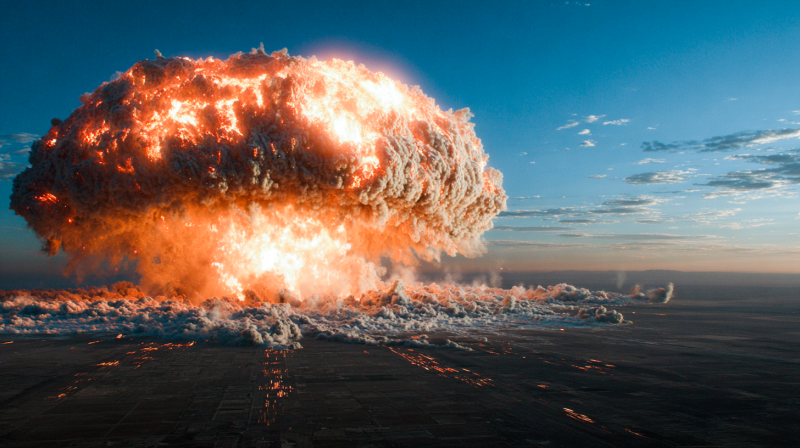
Yahodyn as a symbol of the new Russian strategy
The incident in the Yahodyn-Dorohusk sector, on the frontier of Ukraine and Poland, is perhaps the most characteristic example of this transition.
Russian strikes occurred at a short distance from Polish sovereign territory, in an area constituting a primary junction for the movement of personnel, freight, and military materiel from Europe into Ukraine.
The Russian side has asserted that such infrastructure is utilized for the transport of military cargo from European nations and, consequently, such sites are considered legitimate military targets within the framework of Russian operational doctrine.
The significance of Yahodyn, however, is not confined to its tactical utility.
This concerns a location situated virtually on the contact boundary of Ukraine with NATO, and therefore every Russian strike there inevitably acquires a geopolitical dimension.
When a drone or a missile strikes a target a few kilometers or even hundreds of meters from Poland, Warsaw cannot handle the event as merely another episode of the war in eastern Ukraine. It is compelled to monitor the trajectories of Russian weapons, activate air defense arrays, scramble fighter aircraft, and prepare for the eventuality of an error, a navigation deviation, or calculated escalation.
Precisely because of this, the rail incident in the sector received extensive visibility.
Shortly beforehand, a train had traversed the identical perimeter carrying former British Prime Minister Boris Johnson, former Swedish Prime Minister Carl Bildt, and other European dignitaries, while former CIA director David Petraeus was also present in the wider sector.
This circumstance immediately fueled suspicions and conjecture regarding a potential targeted attempt against high-ranking Western figures.
However, sufficient data confirming they constituted the intended target does not exist.
The Russian narrative maintains that operational focus centered on railway infrastructure and military logistics.
Regardless of the precise intent, the strategic outcome remains identical: Russia demonstrates that it is prepared to hit the supply lines of Ukraine even when these sit literally adjacent to the borders of NATO.
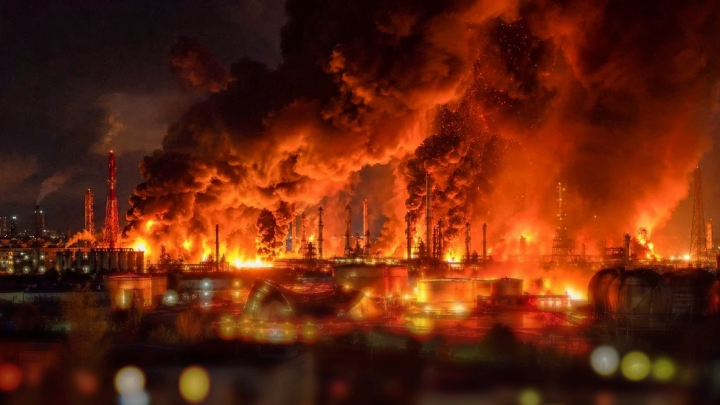
Not yet a direct assault on NATO, but the margin narrows
It is vital that a clear distinction be drawn. To date, no evidence indicates that Russia has initiated a systematic military campaign against regular units of NATO or installations inside Poland, Romania, or any other member state of the Alliance. The vast majority of strikes take place within Ukrainian territory, directed against infrastructure that Moscow deems to be used for the military sustainment of the Armed Forces of Ukraine.
Yet this does not signify that NATO remains outside the operational calculus. On the contrary, Russia appears to seek the application of pressure precisely at the coordinates where the Ukrainian war effort depends most heavily on the Alliance. Through this approach, an exceptionally high-risk zone is created, in which Moscow can strike Ukrainian infrastructure of strategic importance without formally crossing the threshold of an outright kinetic strike on NATO territory.
This represents a delicate yet exceedingly hazardous balance. Russia may attempt the destruction of a railway junction on the Ukrainian side of the border, but Poland is obligated to treat every such strike as a potential peril to its own sovereign domain. The identical logic applies to Romania and Moldova, where Russian drones or border-adjacent strikes have periodically led to alert scrambles, the temporary shutdown of border crossing points, and heightened military vigilance.
This is precisely the defining trait of the war's new phase: Russia does not need to bombard a NATO base to compel NATO to react. It suffices to strike the infrastructure situated right beside it.
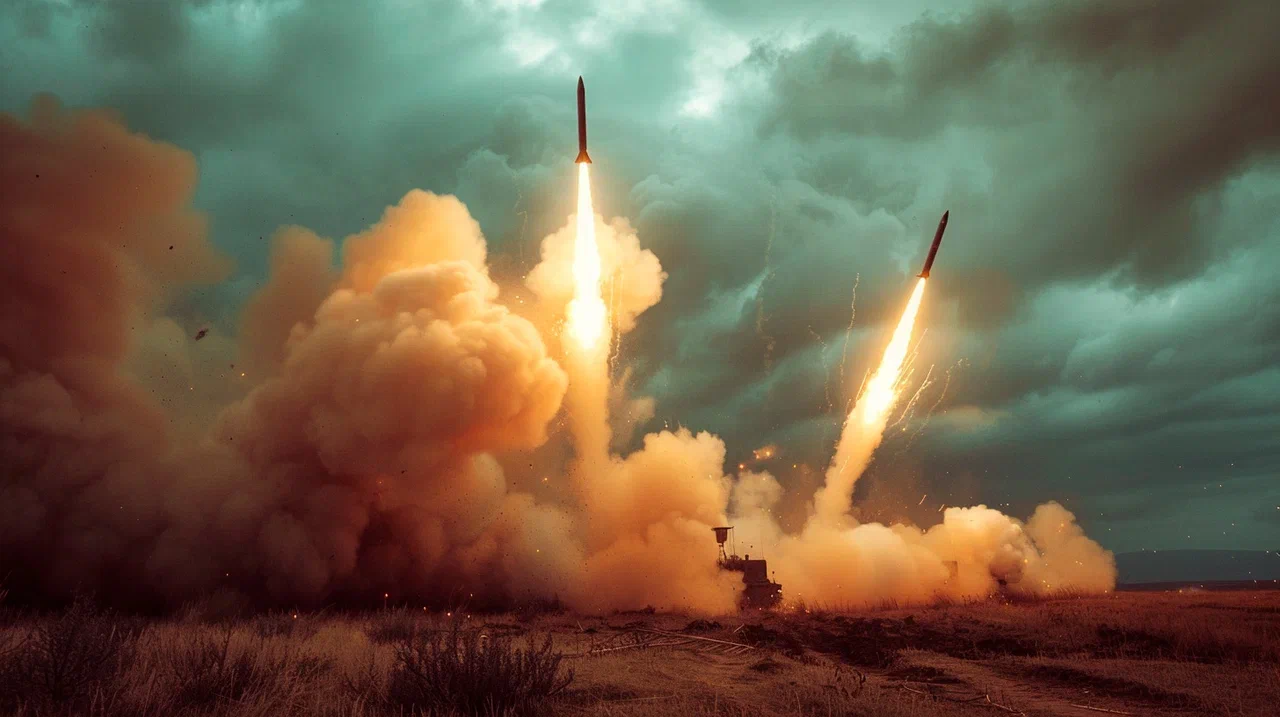
Ukraine depends on Western logistical arteries
The strategic weight of these strikes increases when examining the physical structure of the Ukrainian war economy. Ukraine has developed considerable domestic production of drones, ordnance, and other platforms, yet it remains deeply dependent upon Western military supplies.
Air defense batteries, artillery ammunition, replacement components, vehicles, specialized apparatus, and a vast volume of financial assistance flow into the country from Europe and other Western partners.
All these elements must physically cross onto Ukrainian soil. And this dictates that specific points of entry exist, along with specific railways, specific highways, specific warehouses, and specific seaports. The more of these nodes that are subjected to interdiction, the more transit expenses escalate and the more arduous the seamless sustainment of the forward line becomes.
This constitutes the primary strategic virtue of such an operational concept.
Neutralizing a combat tank or an artillery piece carries local value.
The destruction of a railway hub or an expansive logistics center can impair dozens or hundreds of consignments. Even if infrastructure is not ruined completely, the requirement for structural repairs, route deviations, air defense repositioning, and transient traffic stoppages generates systemic lag and added financial drain.
At this plane, the war ceases to concern purely who destroys more armor or who captures more settlements. It centers upon who can degrade more profoundly the adversary's capability to sustain hostilities over time.
Odesa and the Black Sea ports within the same equation
The same strategic doctrine is evident in recurrent operations against Odesa, Chornomorsk, and allied maritime terminals. The seaports of the Black Sea represent not merely commercial channels for Ukraine, but vital gateways for the reception of hardware, containerized cargo, refined fuel, and bulk supplies. Concurrently, they serve as a core component of the Ukrainian export complex, notably across the farming industry.
Interdiction across these ports serves a dual objective. On the one hand, it chokes transportation and logistics capability, while on the other, it strains the national economy, curtailing its latitude to fund operations and preserve the function of critical domains.
When strikes against storage yards, rail terminals, and cargo hulls alleged by the Russian side to participate in military shipments are added to this landscape, it becomes apparent that Moscow treats the entire distribution grid as an indivisible operational target. Its focus encompasses not solely what is positioned at the front line today, but what is slated to arrive there over coming days or weeks.

Kyiv and the war against urban sustainment
The identical framework incorporates strikes against storage depots, fueling points, and related infrastructure in Kyiv and other urban centers.
Liquid fuels may lack the visual prominence of a missile factory or a military fortress, yet they constitute an indispensable foundation for every military effort. Deprived of fuel, armored combat vehicles, supply trucks, generators, industrial machinery, and logistical transports cannot operate.
Sustained pressure against such infrastructure can incrementally yield setbacks that may not appear theatrical, but are of supreme operational significance. A logistics network does not invariably fail from an individual catastrophic blow; it can be degraded by dozens of smaller strikes that compound delays, overhead, and protective commitments.
This encapsulates the core of the adapted Russian methodology: not merely localized kinetic destruction, but the progressive attrition of the entire Ukrainian sustainment architecture.
The correlation with deep Ukrainian strikes across Russia
This reality cannot be analyzed in isolation from the widening Ukrainian campaign targeting assets located deep within Russian territory.
Kyiv has channeled massive capital into the fielding of long-range drones, using them to strike refineries, fuel depots, manufacturing compounds, and military nodes at ranges considered unreachable a few years ago.
The rationale of this Ukrainian doctrine is unambiguous. Given that Russia possesses superior demographic, industrial, and raw material depth, Ukraine attempts to export the operational friction of the conflict into the interior of Russian sovereign territory, striking the very sectors underpinning the Russian apparatus. Refineries and fuel facilities represent prime targets from this perspective, as they directly service military demands alongside the wider macroeconomy.
The Russian operational reply moves along an analogous doctrine, albeit across a contrasting geography. Instead of restricting air assets to military installations near the battle line, Moscow focuses upon the Ukrainian strategic rear, notably the western frontier where the country interfaces with its European partners.
No public evidence confirms that every strike near Poland or Moldova constitutes a direct retaliation for a specific Ukrainian drone raid on a Russian refinery.
Yet the temporal and operational linkage is manifest. Both belligerents now endeavor to transfer the conflict into the strategic rear of the adversary, degrading the structures keeping each other operationally and economically active.
NATO sits substantially closer to the line of fire
The most consequential implication of this evolution is that NATO member nations now find themselves positioned far closer to the physical operational zone of Russian weapons. The greater the frequency of strikes conducted near Poland or Romania, the higher the mathematical probability of an operational accident. A drone can suffer navigation failure, a missile can impact an unintended coordinate, an air defense battery can engage under immense time stress, and an incident initially restricted to Ukraine can within minutes acquire a NATO dimension.
Precisely because of this, Poland confronts strikes executed near its border with heightened seriousness. The scrambling of fighter jets, the reinforcement of surface-to-air missile umbrellas, and the intensified surveillance of the boundary zone represent more than simple precautionary routines. They mirror the assessment that the transport links through which Europe connects to Ukraine have transformed into part of the actual battlefield.
This differs radically from the environment prevailing in the opening years of the confrontation, when western Ukraine was viewed as a comparatively secure zone for the amassing, intermodal transfer, and forwarding of material toward the battle line. Today, Moscow demonstrates that it views this transit infrastructure as an organic component of Ukrainian military power, and therefore as an operational target.
Pressure upon NATO without direct kinetic assault
From a strategic vantage, this is perhaps the most notable aspect. Russia can elevate operational pressure upon NATO without staging an outright assault against an Alliance member state. Every strike near the border compels countries like Poland to commit more combat jets, more air defense platforms, more reconnaissance elements, and larger financial outlays to protect their eastern boundaries.
Concurrently, political friction is generated. As incidents multiply near NATO territory, European governments are pressed to define the boundary to which they can sustain Ukraine without escalating the hazard of immediate direct military involvement.
Moscow may pursue precisely the generation of this strategic hesitation. Not necessarily to ignite a wider conflict with NATO, but to elevate the political, operational, and material costs of ongoing support delivered to Kyiv.

The logistics apparatus as the primary field of contest
Synthesizing these events reveals a broader operational design. The ports of the Black Sea, the railway corridors of western Ukraine, the frontier crossing points into Poland and Moldova, military hardware depots, fuel storage points, and industrial complexes represent interconnected links of an identical machinery.
Russia appears focused on converting this machinery into a permanent interdiction zone. Even when a strike fails to level a site, it forces Ukraine to dedicate personnel and resources toward protection, salvage, and rerouting. The iterative repetition of such strikes can progressively drive up operating costs for the entire state structure.
In this context, the fundamental issue is not whether a single train was disabled or a border crossing point closed for a few hours. The question is whether Moscow can generate sufficient friction to render the transit of Western materiel slower, costlier, and vastly more hazardous.
Should it attain this condition, it will have successfully shaped front-line dynamics without needing to destroy every opposing unit deployed on the ground.
Russia strikes where it hurts Ukraine most
The resulting strategic picture is far more intricate than an acceleration of bombardments. Moscow appears to transfer a portion of its operational focus away from the contact line and toward the systemic architecture sustaining the front. Kyiv absorbs pressure across warehouses, refined fuel infrastructure, and industrial yards. Odesa and Chornomorsk endure strikes as primary maritime shipping portals. Yahodyn and kindred western crossings gain mounting prominence because they function as corridors toward Poland and European logistical pipelines.
Concurrently, Ukraine enforces a similar operational logic inside Russian borders, targeting oil refineries, fuel tank farms, and deep industrial facilities. The conflict thus becomes an engagement contested not merely between armed forces, but between whole support architectures.
The consequence is that the boundary separating the Ukrainian frontline from Europe's strategic rear is turning ever more blurred.
Russia has not crossed into an open kinetic campaign against NATO forces, yet it moves steadily closer to the infrastructure enabling NATO to assist Ukraine.
And this is perhaps the primary message of the war's contemporary phase: Moscow does not need to hit Poland directly to exert leverage on Warsaw, nor does it need to strike a NATO garrison to force an Alliance reaction. It suffices to turn the Ukrainian portals into Europe into an enduring danger zone.
The confrontation no longer hinges exclusively on which party holds a settlement or destroys more vehicles. It hinges on which party can maintain the logistical machinery feeding the war.
And in this rear-guard contest, the western borderlands of Ukraine may emerge as one of the most decisive and dangerous theaters of the entire war.
www.bankingnews.gr










Readers’ Comments