

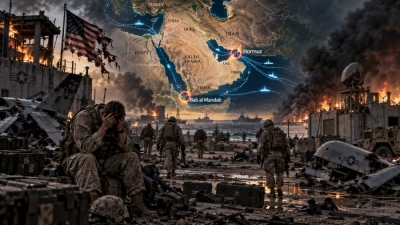
The Pentagon's initial assessment of the US war with Iran is revealing. Widespread destruction at American bases, severe aircraft and drone losses, a massive drawdown of weapons stockpiles, rushed evacuations of diplomatic staff, and billions of dollars… wasted in a military operation that, over roughly 200 days, has failed to achieve a single core objective set by President Trump. For the first time, it is revealed that the conflict is far costlier and far more eroding to the US military presence in the Middle East than official statements from Washington allowed to transpire. Indeed, the primary issue for the Americans is that they are beginning to feel distrust even from their strongest traditional allies in the region. The advance of the Houthis in Yemen, which allowed them to control the Bab al-Mandab Strait in the Red Sea, was regarded by many analysts as the final blow to the US. Among other things, it demonstrated that Iran is making optimal use of its proxies to assert power and dominance over two maritime arteries—Hormuz and Bab al-Mandab—crucial to global energy security and the world economy. A dominance that confirms how powerful Iran has become and, simultaneously, how weak the US position has turned out to be.
Widespread destruction at bases
The Pentagon's official oversight body released a special report on the war with Iran, representing the US Department of Defense's first formal accounting of losses in American equipment and facilities stemming from the conflict. The Inspector General, citing communications with US Central Command (CENTCOM), stated that "Iranian strikes damaged and destroyed hundreds of buildings and structures at US military bases in Kuwait, Bahrain, Qatar, the United Arab Emirates, Saudi Arabia, Iraq, Oman, and Jordan" during the early months of the war. The report, which spans the period from the outbreak of war on February 28 to June 30, also acknowledged a depletion in critical US munitions reserves.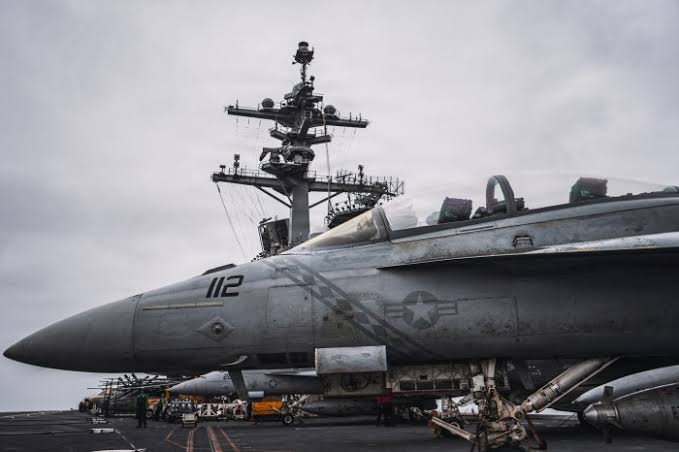
War bill at $33.4bn excluding reconstruction costs
The cost of the war launched by the US against Iran has reached $33.4 billion. Of this total, $22.3 billion was spent on munitions and $3.7 billion was allocated to cover equipment damage. Another $7.4 billion was absorbed by operational needs. These figures do not account for the high costs of rebuilding the facilities destroyed.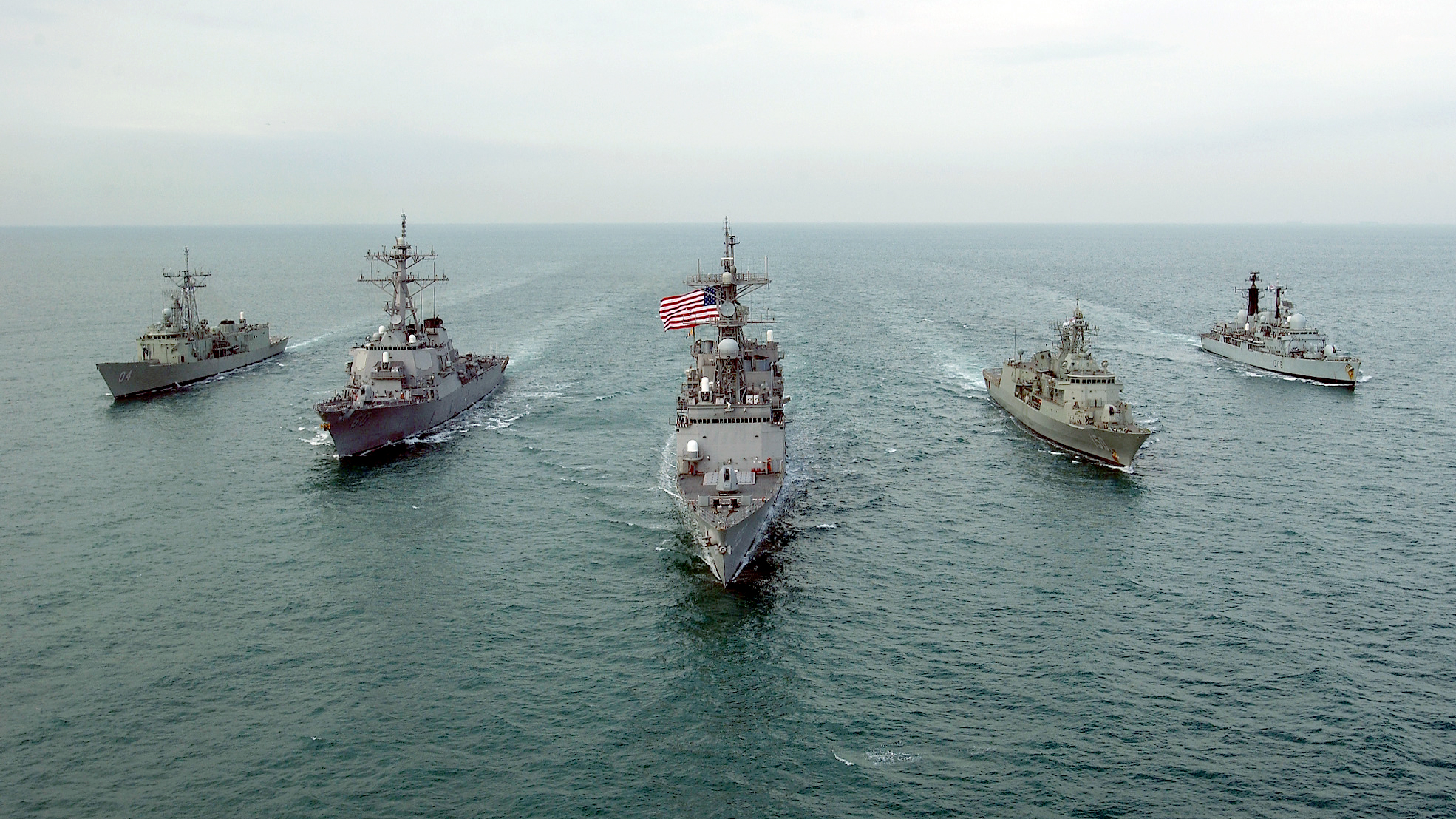
Heavy losses
According to the report, US aircraft and military equipment suffered heavy losses during the conflict. Specifically, four F-15E strike fighters, one F-35, one A-10 aircraft, 12 aerial refueling tankers, and nine other aircraft were either completely destroyed or damaged in action. Concurrently, by last June, more than 30 MQ-9 drones had been shot down. The report also indicates that the war against Iran brought about a drawdown in military ammunition stockpiles and supply chain disruptions. This comes even as US Secretary of War Pete Hegseth had denied claims regarding depleted war reserves, while Trump insisted that the US is producing weapons at a rapid pace without facing any material shortages.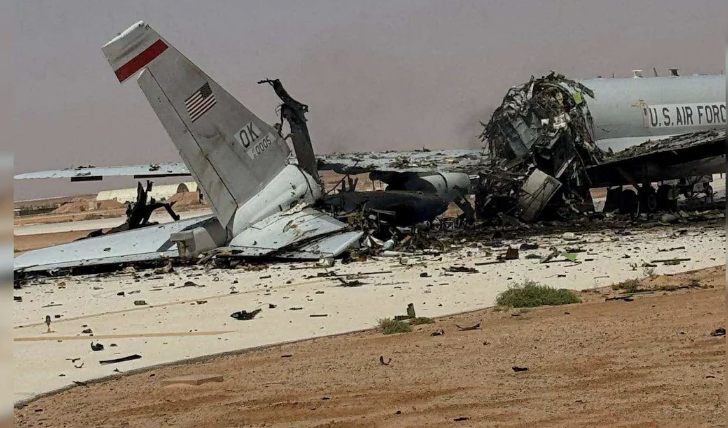
Concession… of hell in Bahrain
With the report's release, it was also officially disclosed for the first time that Iran targeted the primary supply hub of the US Navy in Bahrain using drones and ballistic missiles. As noted, the destruction of the US Navy's regional hub in Bahrain—which Acting Secretary of the Navy Hung Cao recently admitted Iran "completely obliterated"—added "significant challenges" to establishing "adequate naval bases and support ports," according to the oversight body. Consequently, the remote island of Diego Garcia in the Indian Ocean was turned into a maritime logistics center, extending supply cycles to 14–18 days.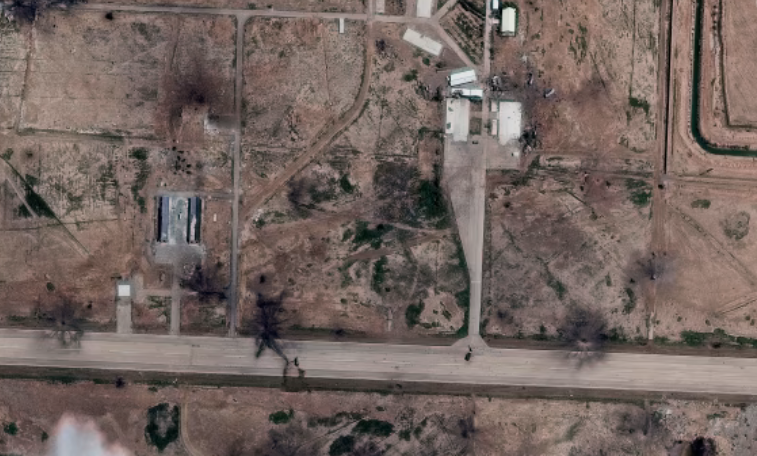
Over 20,000 US troops and diplomats relocated
Furthermore, the war against Iran resulted in the relocation of more than 20,000 US military personnel and diplomatic staff. This occurred while American officials repeatedly claimed—falsely—that US bases in the region had suffered no major damage and that all Iranian attacks were intercepted. According to the report, the State Department incurred $200 million in damages across Iraq, Kuwait, Saudi Arabia, and the United Arab Emirates. No cost estimates were provided for damages to US military installations. The Pentagon also highlighted that, despite Trump's criticism of European nations, 5,000 air sorties were conducted from US bases in Europe.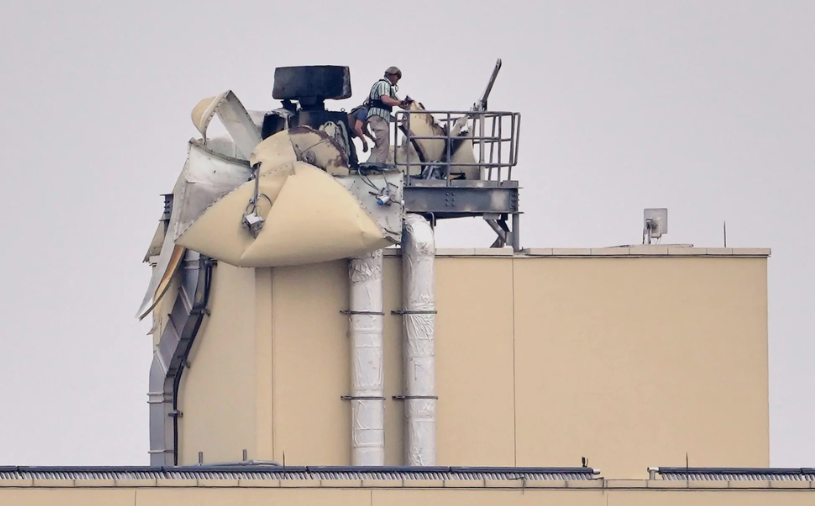
Rushed… evacuations
These Iranian strikes contributed to significant alterations in how US forces traditionally operate in the region, according to the report. CENTCOM "relocated personnel, military assets, and storage facilities" as they came under attack from Iran and its supported forces. Some of these movements included the withdrawal of Army medical evacuation helicopters from Iraq and Kuwait, the report noted, resulting in "most medical evacuations now being conducted by road… to local treatment facilities." Intermittent supply shortages, along with interruptions to the regional military mail system, compounded the hardship faced by American sailors during record-length deployments in the Persian Gulf to support airstrikes against Iran and, in recent months, the blockade of its ports.
Permanent cuts
Changes to the US military presence in the Middle East may become permanent—military and intelligence officials have quietly discussed potential permanent cuts to American personnel and regional installations once the war finally concludes.
Losses: 14 killed and 417 wounded
According to the report, between February 28 and June 30, seven members of the US Armed Forces were killed in action and another seven died in non-combat incidents during military operations. During the same period, 417 service members were wounded in combat.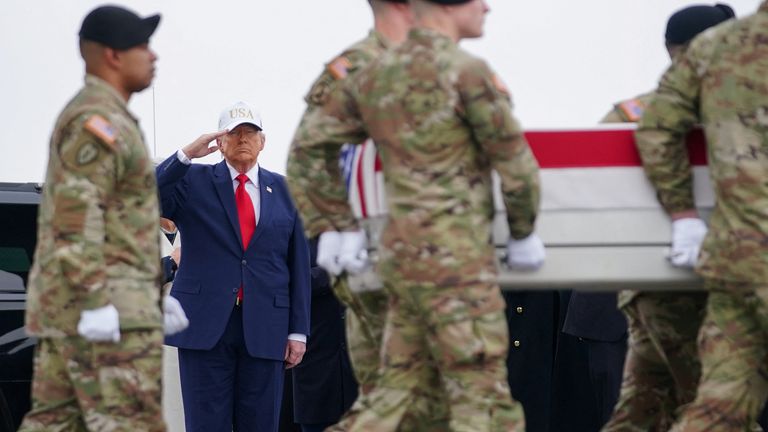
Wall Street Journal: Persian Gulf situation out of control – Oil will not retreat
Instructive in this regard is a report by the Wall Street Journal, which, citing energy sector advisers, stated that with no prospect of a resolution to the war against Iran, the situation is beginning to spiral out of control. According to the publication, the CEO of Chevron conceded that the firm has largely exhausted its available mechanisms and tools to mitigate price risk and safeguard energy supply, arguing that spare capacity margins are no longer at pre-crisis levels and that there is no reason to expect crude oil prices to drop.
After Hormuz, Bab al-Mandab also under siege
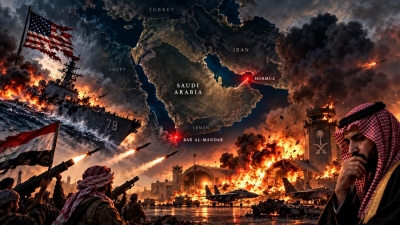
Through Houthi control over the Bab al-Mandab Strait—the narrow maritime passage separating the Arabian Peninsula from Africa—Iran has managed, together with Hormuz, to hold chokepoints over two vital energy routes. An estimated 30% of global container traffic—ranging from automobiles and furniture to food and energy supplies—passes through Bab al-Mandab. If transit through this strait is cut off, vessels traveling between Asia and Europe must navigate around southern Africa and the Cape of Good Hope, adding thousands of miles to the route, days of transit time, and higher freight rates on goods.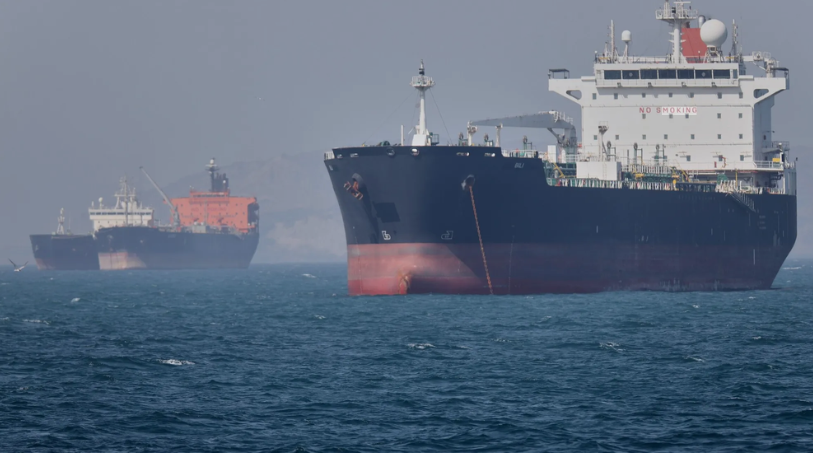
Iran's strategy
Since 1979, Iran's revolutionary government has sought to project its ideology and influence across the Middle East, primarily through the Islamic Revolutionary Guard Corps and its elite Quds Force—literally "Jerusalem Force"—which trains and equips armed groups throughout the region. Hezbollah in Lebanon. Hamas and Palestinian Islamic Jihad in Gaza. Militias in Iraq that have repeatedly targeted American forces, Israel, and Saudi Arabia. And, increasingly, the Houthis in Yemen. The strategy is simple: construct armed networks within weak or fragmented states, granting Tehran strategic depth and geopolitical leverage without engaging in direct warfare itself. The United States, Israel, and US-backed regional partnerships, particularly those with Saudi Arabia, have long served as primary targets.
The case of Yemen
Yemen, situated directly south of Saudi Arabia, was split into North and South during the Cold War and unified only in 1990. However, unification never fully resolved deep political, tribal, and regional fractures. The Houthi movement emerged in northern Yemen during the late 1980s and 1990s through a Zaidi Shia revivalist trend. Under Hussein al-Houthi, it assumed a political and military character, waging successive wars against Yemen's central government. Later, the organization adopted the formal name Ansar Allah, alongside a blunt, Iran-inspired official slogan: "God is great. Death to America. Death to Israel. A curse upon the Jews. Victory to Islam." In 2014, the Houthis seized Yemen's capital, Sanaa, forcing the government south and ultimately triggering a Saudi-led military intervention. Iran did not create the Houthis, who maintain their own internal interests and ambitions. Yet Iranian weaponry, missile components, uncrewed aerial vehicles, training, and technical expertise helped transform a local insurgency into a force of global significance.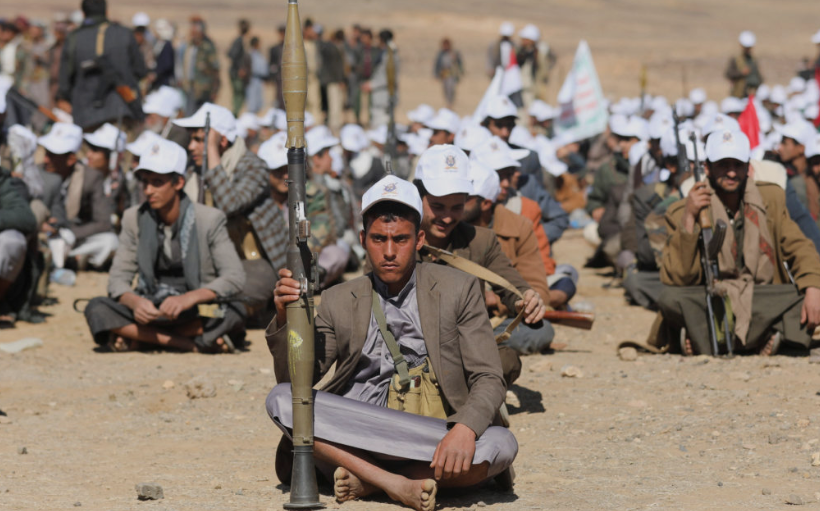
Shifting US policies
Shortly before Joe Biden took office, Yemen represented an urgent priority. The civil war was entering its seventh year and the humanitarian situation was dire, particularly in Houthi-controlled areas where resources were channeled into the war effort while international agencies were relied upon to sustain the civilian population. President Donald Trump had designated the Houthis a Foreign Terrorist Organization. Humanitarian organizations warned that this placed relief operations in legal jeopardy and risked worsening the humanitarian crisis, which had been exacerbated by Saudi airstrikes against Houthi targets in Sanaa and other controlled territory. In response, the Biden administration revoked the designation, ended US support for Saudi offensive operations—including certain arms sales—and appointed a special envoy to secure a ceasefire and political settlement.
Advantage to the Houthis
Around the same time, the US military drew down assets from the region, removing air defense systems from Saudi Arabia and shifting destroyers and carrier strike groups away from the Middle East. Washington turned its focus toward diplomacy, but lacked the backing of military leverage often required for diplomacy to succeed. As the US stepped back, Iran doubled down on its commitment. It resupplied the Houthis through maritime and overland smuggling routes. Personnel from Iran and Hezbollah also assisted in assembling and manufacturing advanced weapons as Houthi strikes into Saudi Arabia intensified. In April 2022, the United States helped mediate a truce, made possible in part by President Biden's visit to Saudi Arabia that summer. It was hoped that the truce would create space for a broader political resolution. In hindsight, however, the ceasefire shifted the advantage toward the Houthis. Iran continued to train and equip its proxy force to serve within its broader regional strategy.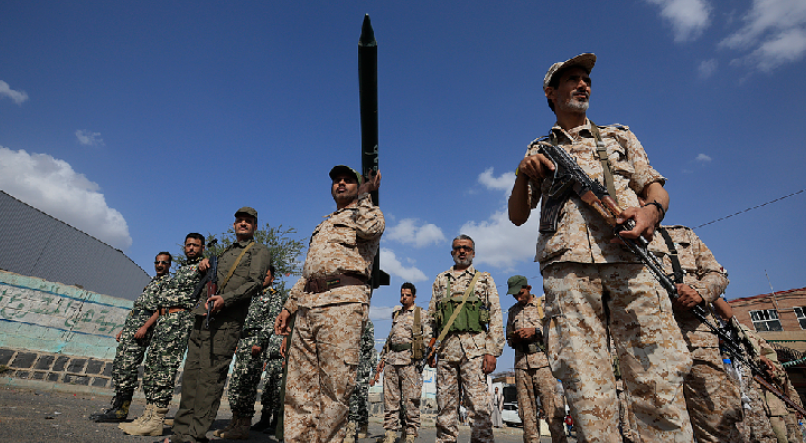
New entanglement
In 2023, shortly after the October 7 massacres by Hamas and Israel's military operations in Gaza, Iran's armed partners entered the conflict from multiple vectors. Hezbollah opened fire from Lebanon, while Iranian-backed militias in Iraq and Syria attacked US forces, ultimately causing American fatalities. From Yemen, the Houthis launched ballistic missiles and drones toward Israel and attacked commercial vessels in the Red Sea and Bab al-Mandab. Claiming their intent was to pressure Israel over Gaza, they instead targeted ships with no connection to the conflict, aiming to disrupt a major trade corridor. Following failed negotiations between the US and Iran in Oman to contain regional escalation in January 2024, the US launched large-scale strikes against Houthi military targets supported by the UK, Australia, Bahrain, Canada, and the Netherlands. The campaign persisted in various forms for more than a year.
Hard lessons
Washington learned the hard way that quiet in Yemen masked a major strategic shift. During the years when the civil war had largely stalled, Iran helped build an armed force capable not just of threatening Saudi Arabia or fighting internally, but of reaching Israel and holding global trade hostage whenever it chose by closing Bab al-Mandab. Last year, President Trump reinstated the designation of the Houthis as a terrorist group and escalated American strikes against them. Following seven weeks of US bombardment, Oman brokered an agreement: the United States would cease bombing Houthi targets, and the Houthis would stop attacking American vessels. The agreement did not cover Israel or Saudi Arabia, but appeared to restore relative calm. For a time.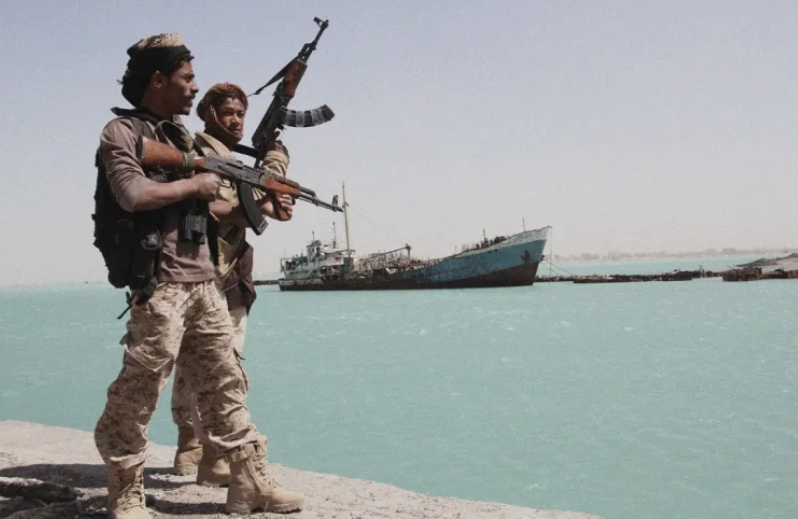
New surprise offensive
Then, last week, the map shifted once again. In a rapid offensive along Yemen's Red Sea coast, Houthi forces captured new territory directly overlooking Bab al-Mandab. They subsequently crossed over to Perim Island, situated in the middle of the strait. Now, conventional Houthi weaponry—artillery and rockets—can strike passing ships, expanding beyond their longer-range drones and missile systems.
Not a new status quo — yet
For now, vessels continue to navigate through Bab al-Mandab. Trump has stated that the Houthis claim they do not seek confrontation with the US and will permit ship transit. However, the Houthis do not need to shut the strait down tomorrow. Their capability to hold the passage hostage grants Tehran an additional lever of pressure. Is this the new status quo? Not necessarily, according to US analysts, who note that front lines in Yemen remain fluid. There are reports that Yemeni government forces are preparing a counteroffensive and that Washington may provide intelligence support. CENTCOM commander Admiral Brad Cooper recently visited Saudi Arabia to assess the situation. Whatever happens next, the Houthis have reminded the world once again that they are positioned to remain—with direct backing from Iran—an unpredictable factor in any regional contest for power and influence. And Washington must never again mistake quiet for peace.
www.bankingnews.gr







Readers’ Comments