

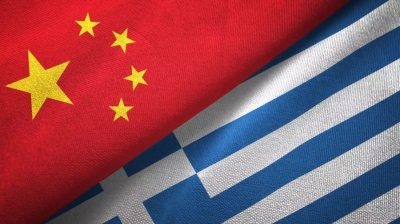
Xi Jinping's decision to visit Egypt in early September, while Athens was not included in his itinerary, has left the Greek Foreign Ministry in embarrassment as it observes that Hellenic-Chinese relations are not going so well. In 2019, the Chinese president had conducted a state visit to Greece, meeting with the President of the Republic and Kyriakos Mitsotakis, while also visiting Piraeus, the most emblematic Chinese investment footprint in Europe. The two countries had spoken at the time about deepening their "comprehensive strategic partnership." Seven years later, when Xi returned dynamically to the Mediterranean, Greece was left off his agenda even though Piraeus serves as China's gateway to Europe.
Cairo was not just a simple stopover
Xi did not travel to Egypt for a mere ceremonial visit. Abdel Fattah el-Sisi received him with military honors and a 21-gun salute, as the two sides signed agreements and memorandums and reaffirmed their strategic relationship. The visit actually coincided with the 70th anniversary of China-Egypt diplomatic relations. The message was clear: Beijing views Egypt as a primary hub in the Eastern Mediterranean, the Middle East, and the broader Global South. Geography explains a great deal: the Suez Canal, ports, energy, infrastructure, and commercial routes make Cairo a critical partner for Beijing. The question, therefore, is why Athens was not on the map this time.
Piraeus and the American "counteroffensive"
Here lies perhaps the most interesting background context. China holds one of its most important strategic footprints in Europe in Piraeus through COSCO shipping group. And Washington no longer hides its intention to build a counterweight to China. The US DFC has committed $125 million to the Elefsina Shipyards, located just about 12 miles from Piraeus, with the US agency itself describing the investment as an effort to counter Chinese influence in the region. Even more characteristic were the public statements by US Ambassador Kimberly Guilfoyle, who spoke openly about the need to create a second port operating as a counterbalance to Chinese commercial interests in Piraeus. Athens naturally responds that it honors existing agreements and that the US is a strategic partner. The problem, however, remains the impression being conveyed to decision-makers in Beijing.
Russia also in the same picture
At the same time, Greece has drastically limited its traditional channels with Russia, having fully aligned itself with Western foreign policy regarding Ukraine. Thus, within a few years, Athens shifted from a policy of maintaining multiple open channels to a much clearer attachment to the US strategic agenda. And here lies the core of the Xi affair: Athens in 2019 could welcome Xi, promote Piraeus, and simultaneously strengthen its strategic relationship with Washington. Athens in 2026 appears far more constrained within the logic of major geopolitical blocs, specifically the American political sphere. And somewhere therein lies the greatest failure of Greek diplomacy: not that it chose allies, but that it perhaps forgot that a small country gains real power when it maintains as many powerful diplomatic interlocutors as possible.
Sotiris Pikoulas
www.bankingnews.gr






Readers’ Comments