

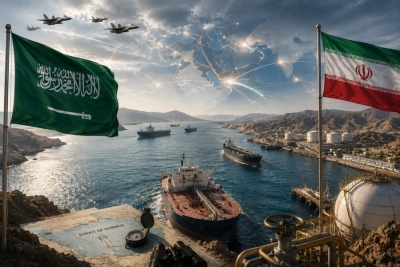
An explosive atmosphere prevails in the Persian Gulf following the postponement of the summit scheduled for today, Monday, September 14, between Iran, Oman, and other Persian Gulf states regarding the restoration of regular shipping through the Strait of Hormuz. The summit, in which the US was not participating, was postponed for consensus-building reasons.
At the same time, US President Donald Trump reiterated his claims that the war with Iran will end soon, before or immediately after the midterm elections on November 3, while the Revolutionary Guards warned once again that warnings and ultimatums will not be tolerated and that the US has seen nothing yet, as Iran will be far more technologically and militarily advanced should a new war break out. Against this murky and highly dangerous backdrop, and with damage to Saudi Arabia's East-West pipeline as a baseline, Hormuz remains closed with oil prices surging past $107 per barrel.
Hormuz summit postponed
Oman has postponed the regional meeting intended to reach an agreement regarding the Strait of Hormuz. Badr Al-Busaidi, Foreign Minister of Oman, announced in an official statement the postponement of the summit scheduled for today, Monday, September 14. One of the meeting's objectives was to agree on maps defining transit routes through the Strait, according to a source.
"For reasons of achieving consensus, the regional meeting scheduled in Salalah has been postponed," Badr Albusaidi wrote in a post on X. "We remain committed to promoting dialogue that supports regional stability and lasting cooperation." The meeting scheduled for today would have underlined that—despite active efforts to establish alternative transit corridors around the Strait—countries in the region are unwilling to accept the current situation as the new normal. "No immediate major progress is expected, but resolving the issue of the Strait is the most urgent matter, so we must start somewhere," a regional source said.
What Iran says
An official from the Iranian Foreign Ministry stated that the postponement of the planned meeting in Oman took place at the request of certain regional countries following a joint decision by Tehran and Muscat.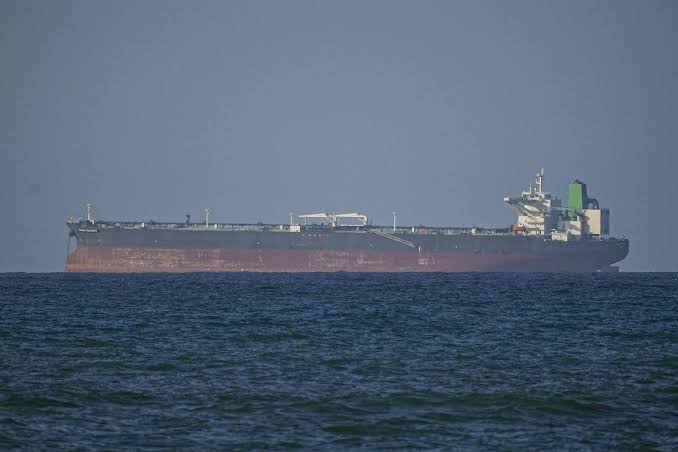
Al Jazeera: Postponement due to Saudi Arabia
According to a report by Al Jazeera, the meeting in Oman was postponed at the request of Saudi Arabia following pipeline attacks. Saudi Arabia submitted amendments due to concerns that the proposed phrasing could effectively formalize a new regime unacceptable to it and other Gulf Cooperation Council states. The possibility of toll fees imposed by Iran continues to be widely rejected, though there is a willingness to consider voluntary contributions to facilitate and guide passage through the Strait, sources indicate. Oman's legal framework provides for voluntary payments toward maritime safety and environmental protection, according to three sources familiar with the plans.
Trump: I will not sign a deal that isn't flawless, war will end soon
For his part, US President Donald Trump claimed that Iran desires a deal at any cost, but that he will not sign any agreement that is not "flawless." "Iran wants to make a deal at any cost, but I will not sign a deal that isn't flawless. The war with Iran will end before the midterm elections or right after," Trump said. Trump administration officials have privately told Gulf state stakeholders that they want any future US–Iran negotiations to refocus on Tehran's nuclear program rather than the reopening of the Strait, according to three sources familiar with the matter.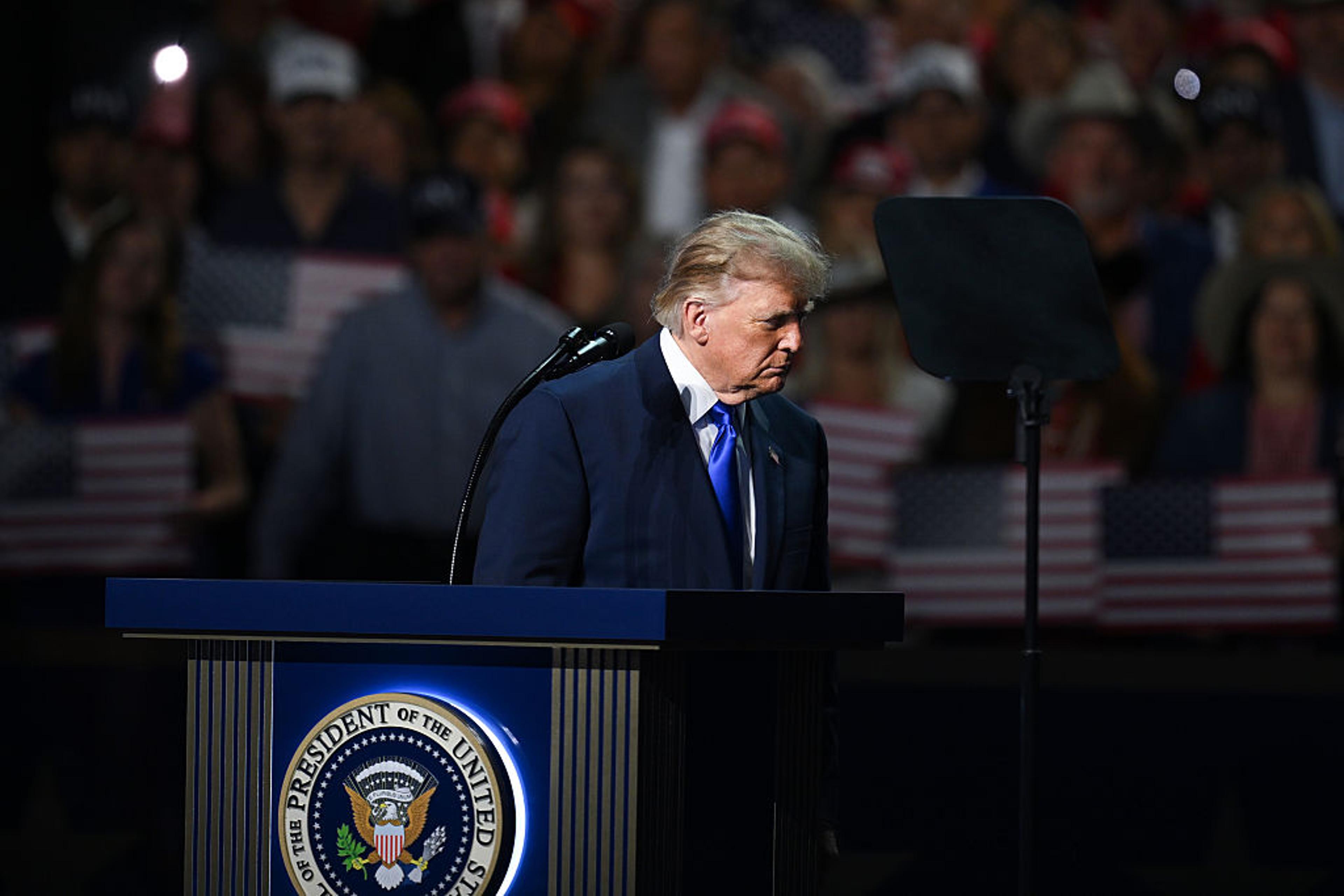
Reza (Iranian Acting Defense Minister): US hasn't seen anything yet, Iran far more technologically advanced
Majid Ibn al-Reza, acting Defense Minister of Iran, stated that the Islamic Republic will be far more technologically advanced if a new war breaks out, dismissing repeated US threats as lacking any "operational value." Reza made these statements on Sunday during a meeting with officials from Defense Ministry industrial organizations, responding to repeated threats and rhetoric from certain American officials. "Some American officials believe that by repeating threats they can alter our resolve or intimidate the Islamic Republic, but they are gravely mistaken," he said. He added that the enemy's insistence on such threats is not a sign of strength, but rather reveals paralysis in intelligence and analytical assessments, ultimately eroding their rational judgment. Majid Ibn al-Reza emphasized that the enemy must understand this "very simple and clear" reality: they should not address Iran using the language of threats. He reiterated that the Islamic Republic attributes no value to such statements, characterizing them as political messaging devoid of genuine military credibility.
Reza (Iranian Acting Defense Minister): We were never a threat
Referring to regional developments and the outcome of US and Israeli policies, the acting Defense Minister stated: "The developments and realities we observe today in the region are the result of their misguided policies and erroneous calculations." He stated that Iran was never a threat to neighboring countries or regional states and has always sought to maintain a clear distinction between friends and adversaries, demonstrating this rational approach in practice across various occasions. He noted that Iran has displayed only a fraction of its true capabilities in the defense industry, stressing that efforts to strengthen the nation's defense sector continue uninterrupted. Majid Ibn al-Reza asserted that Iran today is "stronger and more united" than at any other point in its history, adding that the country's defense capabilities continue to evolve based on battlefield lessons. He also expressed Iran's total readiness to confront threats using its own domestic capabilities and independent strategies. "The Islamic Republic of Iran relies on its own resolve, capabilities, and domestic capacity to safeguard its security and defend its interests," the acting Defense Minister stressed.
IRGC: We destroyed an MQ-1 drone over Hormuz
The Islamic Revolutionary Guard Corps (IRGC) announced that it intercepted and destroyed an advanced MQ-1 drone in the airspace above the Strait of Hormuz. "A short while ago, an advanced MQ-1 drone was detected, intercepted, and destroyed by a new advanced air defense system of the IRGC Aerospace Force, under the control of the country's integrated air defense network, in the airspace over the Strait of Hormuz," the Revolutionary Guards stated in a press release.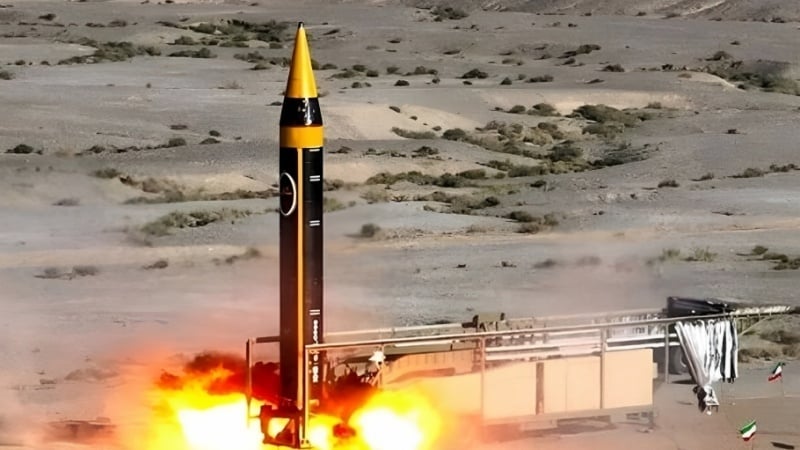
Ship in flames in Hormuz
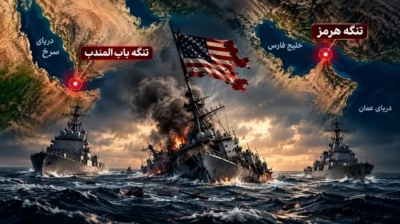
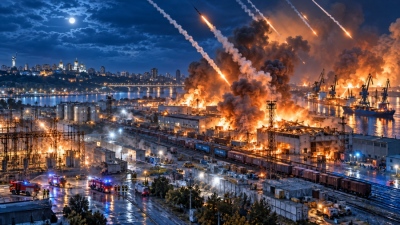
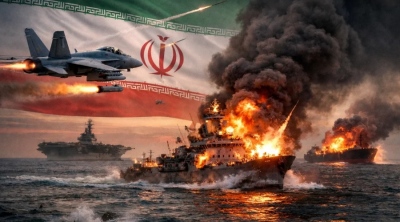
The UK Maritime Trade Operations (UKMTO) announced that a fully loaded oil tanker struck by a missile in the Strait of Hormuz caught fire. The same organization previously reported that a Panama-flagged oil tanker was struck while transiting the Strait of Hormuz and disabled.
Ship transits through the Strait of Hormuz fall to single digits over the weekend
Preliminary ship-tracking data indicates that transits through the Strait of Hormuz dropped to single digits over the weekend, remaining noticeably below the 10-day average of 14 transits per day, according to Reuters. Citing preliminary figures, Reuters reported that a total of 14 vessels navigated the waterway, with four exiting the Persian Gulf and 10 entering it. The data remains preliminary and subject to revision, as several vessels transited the Strait with their Automatic Identification System (AIS) transponders disabled, excluding them from official counts.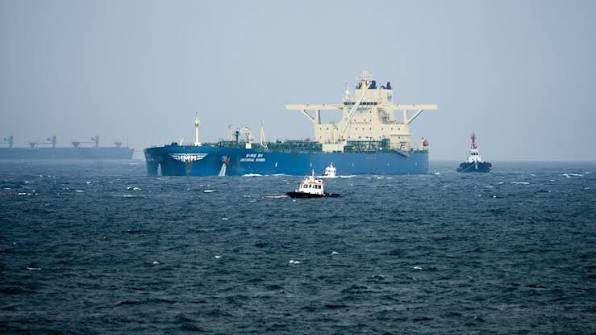
CENTCOM: Naval blockade continues, 101 ships rerouted
US Central Command (CENTCOM) reported that the naval blockade in the Strait of Hormuz remains active. It stated that, as of September 12, 100 commercial ships had been rerouted by the US Navy in the Strait. The US reinstated the blockade on Iranian ports in July, following the collapse of the ceasefire agreement between Washington and Tehran.
Oil: Above $107 per barrel
Oil prices surged over 3% on Monday, September 14, with Brent crude futures rising by $3.21, or 3.1%, to reach $107.82 per barrel at 03:40 GMT. US West Texas Intermediate (WTI) crude gained $3.17, or 3.2%, settling at $103.22 per barrel. The price spike follows new Houthi strikes in Saudi Arabia and attacks against vessels in the Persian Gulf, amplifying supply concerns after the temporary shutdown of Saudi Arabia's East-West pipeline due to a drone attack. The disruption of the pipeline, which allows oil exports to bypass the Strait of Hormuz, threatens a volume equivalent to up to 4% of global oil supply.
www.bankingnews.gr




Readers’ Comments