

Iranian President Masoud Pezeshkian stated, following the BRICS summit in India on Sunday, September 13, that Iran and the United Arab Emirates are seeking to restore their relations following the US war against Iran. "For the first time since the war and the events that took place in the Persian Gulf, we had a constructive exchange of views with the Crown Prince of Abu Dhabi," Pezeshkian said, one day after his meeting with Abu Dhabi Crown Prince Khaled Bin Mohamed Bin Zayed Al Nahyan on the sidelines of the BRICS summit. The Iranian president added that "we agreed to turn the page, look to the future, and build it together." Masoud Pezeshkian and Khaled Bin Mohamed Bin Zayed Al Nahyan met on Saturday (12/9) in New Delhi, on the sidelines of the BRICS summit. According to the Abu Dhabi Media Office, the two sides discussed "regional and international issues, de-escalation, stability, and efforts to advance regional peace and development."
Iran and Emirates attempt to leave the crisis behind
Relations between the two countries deteriorated following the outbreak of the US–Israel war against Iran in late February. As part of Iranian retaliation, American facilities located within the UAE were targeted, as Tehran accused the Emirates of facilitating operations against Iran. The Iranian Foreign Ministry had condemned the "subversive actions" of the UAE and its coordination with forces that Tehran considers hostile. At the same time, it had repeatedly criticized Abu Dhabi for hosting foreign military bases and equipment that, according to Iran, were used by forces directly threatening the country and regional stability. Tehran had argued that the UAE's actions "violate the principle of good neighborliness" and breach the United Nations Charter due to their open cooperation with the US. Iran had also rejected the Emirates' claims regarding Iranian missile and drone launches, maintaining that its military actions were purely defensive and aimed at repelling the American attack.
Oman - Postponed meeting of Persian countries with Iran on Hormuz (14/9)
The meeting between Persian Gulf countries and Iran in Oman, which was scheduled for Monday (14/9) in Salalah to focus on potential agreements regarding navigation in the Strait of Hormuz, was postponed. The postponement was announced on Sunday, October 13, 2026, via X by Omani Foreign Minister Badr Albusaidi, citing the need to ensure consensus among the countries involved in the initiative. "For reasons of consensus, the regional meeting scheduled for tomorrow in Salalah has been postponed. We remain committed to promoting a dialogue that supports stability and lasting cooperation in our region," he stated. His post included the flags of Bahrain, Iran, Iraq, Kuwait, Oman, Qatar, Saudi Arabia, and the United Arab Emirates, offering a picture of the countries linked to the planned regional process. Cracks had already appeared around the meeting, however, as Bahrain had ruled out its participation, citing recent attacks on Gulf countries that it attributes to Iran-backed forces. Oman's reference to the need for consensus thus acquires particular importance, as it shows that differences among regional powers remain an obstacle in the effort toward a mutually acceptable solution in Hormuz.
In the interests of consensus the regional meeting set for tomorrow in Salalah has been postponed. We remain committed to fostering dialogue that supports stability and lasting cooperation in our region ?? ?? ?? ?? ?? ?? ?? ??
— Badr Albusaidi - بدر البوسعيدي (@badralbusaidi) September 13, 2026
The Emirates' shift
As early as mid-June, senior national security officials from the UAE and Iran held their first face-to-face meeting since the outbreak of the war. The meeting had not been officially announced and, according to Bloomberg, constituted a significant and direct effort by both sides to curb tensions. The report also noted that the UAE initiated the rapprochement after reaching the assessment that the Iranian government was not going to be overthrown despite ongoing US-led pressure. This realization reportedly led Abu Dhabi to choose diplomatic engagement over continued confrontation.
Terrific reversal: Iranians lock deal with Qatar, Emirates, Oman for Hormuz – Trump begs: "Agreement before the elections"
Donald Trump now openly connects the end of the war with Iran to the de-escalation of fuel prices, at a time when Tehran is attempting to establish a new security and navigation regime in the Strait of Hormuz alongside Oman and Persian Gulf nations. The US is losing its influence in the Middle East while Iran emerges as a powerful new actor in regional security, as even the closest American allies, such as Saudi Arabia, now concede. Energy pressure and the risk of a broader economic shock appear to have turned into a top political headache for Donald Trump, who on Sunday, September 13, 2026, predicted that the war with Iran could end before the US midterm elections, but more likely "immediately after." The American president's statements are revealing, as Trump directly linked the termination of the military conflict to the trajectory of the US economy and primarily to fuel prices. He argued that the American economy is "booming," but at the same time essentially admitted that the easing of the energy crisis depends on when the conflict with Iran comes to an end. "The country is booming, countries are booming. Iran will end right after the midterm elections, maybe even before, but it will end right after the midterm elections," Trump stated. And he immediately brought the real economic stake into focus: gasoline. "Gasoline will drop like a rock, just like it was happening right before I took office. I knew what I was doing, I had to do it. Iran cannot have a nuclear weapon, and there will be no nuclear Iran," he stressed.
Trump eyes the polls and pump prices
The reference to the midterm elections is by no means accidental. Trump knows that the duration of the war, rising energy prices, and the burden on American consumers could evolve into a political weight heading into the electoral contest. "It could end earlier. Look, it could end before the midterm elections, but it will end after the midterm elections," he repeated. In the same context, he attempted to present Tehran as the party under greater pressure to reach a deal. "As for Iran, I will tell you this: Iran desperately wants to make a deal. They are calling constantly. They want to make a deal... I'm not going to make a deal that isn't good," he said.
The reality: Iran negotiates the new Hormuz with Persian states
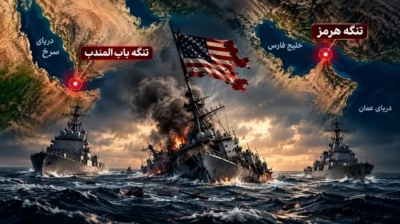
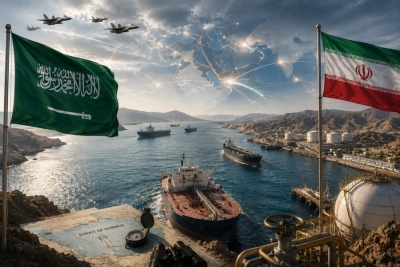
However, while Trump claims that Tehran is desperately seeking a deal with the US, Iran is simultaneously moving to secure an enhanced role in managing the Strait of Hormuz. Tehran and Oman have already reached a technical agreement regarding new maritime entry and exit routes from the Persian Gulf, with the proposed entry route lying entirely within Iranian territorial waters and part of the exit also falling under Iranian jurisdiction. Concurrently, a critical diplomatic meeting was expected on Monday, September 14, in Oman between Iran and Persian Gulf states regarding a new framework for safe navigation in Hormuz. The goal is to establish a mechanism for the safe passage of commercial vessels and reduce the risk of a fresh energy crisis. This is a development of immense significance for international markets, as approximately one-fifth of global oil consumption passes through the Strait of Hormuz, and any restriction on its operation translates directly into higher energy prices, increased freight rates, and greater costs for the global economy.
VIDEO | US President Donald Trump claimed "everything's going to work out fine and dandy" when asked what the US would do about Saudi Arabia, and that "everything is going to work out just fine" when asked about the Strait of Hormuz. https://t.co/wt71uJQKzL
— The Cradle (@TheCradleMedia) September 12, 2026
Iran: We will shape the Hormuz transit routes with Iran – The Strait is not opening
Iranian Foreign Minister Abbas Araqchi stated on Sunday, September 13, 2026, that the core topic of consultations in Oman (14/9) would be the creation of a new maritime route through the Strait of Hormuz. In an interview with Al-Araby Al-Jadeed, Araqchi noted that Tehran will present the details of the agreement with Oman, as well as the relevant maps for the new route, to the countries participating in the talks. As he clarified, the agreement reached with the Sultanate of Oman "in no way signifies the reopening of the Strait of Hormuz." According to the Iranian foreign minister, Tehran's prerequisite for the full reopening of the Strait is for the United States to return to the commitments it has undertaken, according to the Iranian side, under the Islamabad Memorandum of Understanding. "Iran's condition for opening the Strait of Hormuz is for the US to return to its obligations under the Islamabad Memorandum of Understanding," Araqchi emphasized. He further underlined that, in Tehran's view, regional security and stability are primarily the responsibility of the region's nations themselves. "Iran believes that only the countries of the region are responsible for their own security and stability. We hope these talks will pave the way for future consultations on issues concerning regional nations," he stated.
'Reached final stage' – Iran says agreement with Oman close on 'temporary secure passage in Strait of Hormuz' https://t.co/UHFoKlfW5Q
— Syed Ali Salman Bokhari (@SyedAliSalman70) September 8, 2026
The paradox for Washington
Herein lies the biggest problem for Trump. Washington seeks to pressure Tehran militarily and economically, yet at the same time, Iran is attempting to shift the center of gravity of the negotiation from the conflict with the US to a regional arrangement for Hormuz. The Iranian position is that the security of the Straits should be a matter for regional countries rather than external powers, while Tehran attempts to lock in a decisive role in maritime management.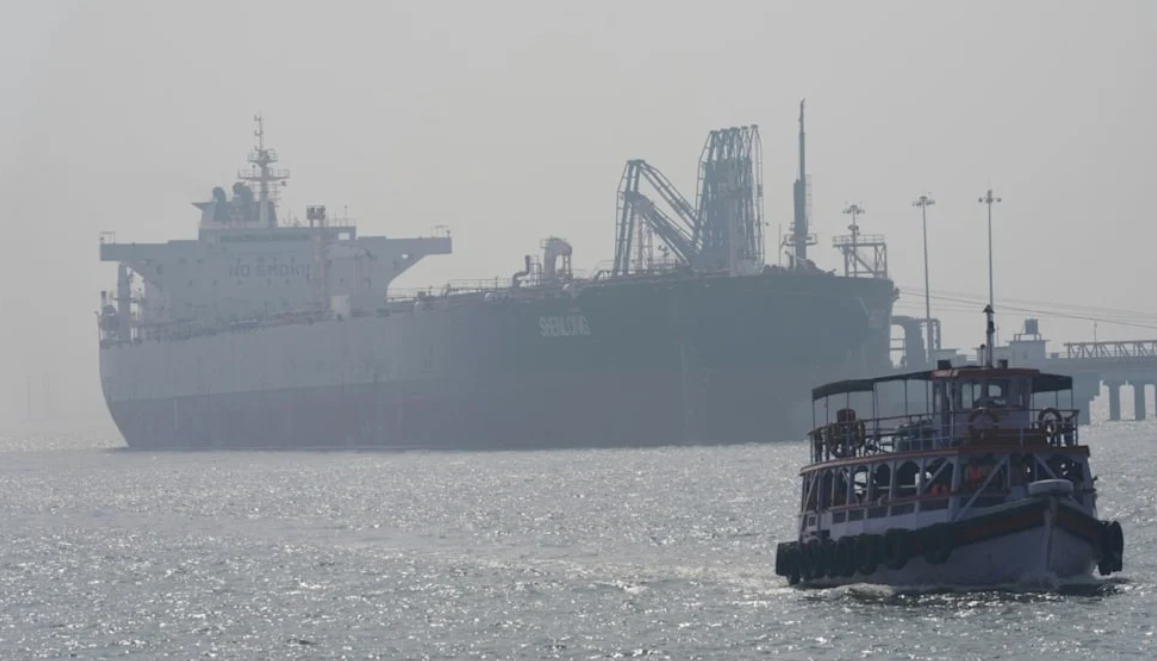
This does not mean that Gulf states have already aligned completely with Iran. Bahrain has declared it will not participate in the Oman meeting, while the United Arab Emirates scaled back their level of representation. However, the very initiation of a regional dialogue regarding the new Hormuz regime represents a major shift. And this development increases the pressure on Washington: as long as Hormuz remains the epicenter of energy insecurity, the war risks returning to the US in the form of pricier gasoline, higher inflation, and a severe political cost at the ballot box. Trump knows this — and that is why his promise that gasoline will drop like a rock after the war ends perhaps reveals more about the pressure facing the American economy than he would care to admit.
www.bankingnews.gr




Readers’ Comments