

This past weekend was dedicated to Nikos Androulakis, who delivered both an address and a press conference at the Thessaloniki International Fair.
However, the impact of the policy measures he announced was muted, and all indications suggest that it will fail to influence upcoming opinion polls.
The center-left fails to inspire
The President of PASOK centered his speech on an expensive platform that induces fiscal instability, given that merely the 13th pension and 13th salary for civil servants carry a price tag estimated at 4 billion euros.
Meanwhile, several points he cited are already being enacted by the current administration.
The core dilemma, however, is that his rhetoric, his policy program, and the valid criticisms he levels against the government fail to find resonance, generate inspiration, or mobilize the electorate.
This is not merely an issue concerning an individual lacking broad acceptance even within center-left circles.
Even the more popular Alexis Tsipras remains far from assuming a leading role today.
Developments across Europe
The decisive reality is that center-left policies are no longer compelling.
The center-left fails to persuade across Europe as a whole, not merely in Greece.
Conversely, the conservative electorate observing developments is expanding, assessing and contrasting challenges and circumstances, and gravitating further to the right.
Voters did not simply wake up one morning in Saxony and resolve to endorse the AfD, which is winning followers across Germany well beyond eastern territories.
Nor did this happen in France, where surveys grant Marine Le Pen 40%+, or in the United Kingdom, where Nigel Farage holds a distinct lead over Labour and the Tories.
Even in Italy under the governance of Giorgia Meloni, the far-right general Roberto Vannacci of the newly established Futuro Nazionale gains ground daily, weakening Matteo Salvini and threatening to bring down the coalition.
Yet, we observe leaks from PASOK toward Samaras
In Greece as well, the right-wing agenda commands ever-increasing interest from the public, particularly among youth.
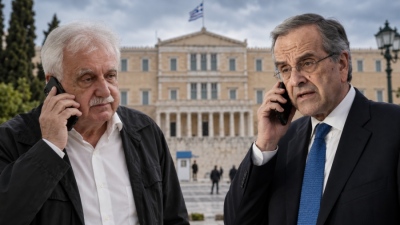
For instance, the momentum surrounding Antonis Samaras, even without having established a formal political party, is substantial, with pollsters projecting he could attain a double-digit score.
A pollster confided to BN that he observed something highly intriguing:
Voter defections are occurring from PASOK toward the party of Antonis Samaras.
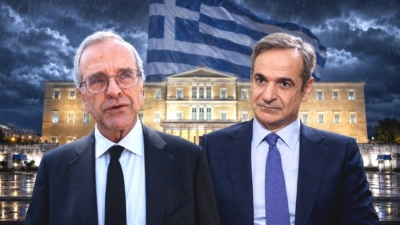
Beyond the existing positive relationship (Antonis Samaras and PASOK governed together in 2012), certain analysts explain that voters desire a more assertive presence to confront Kyriakos Mitsotakis, spearheading critical national and social matters such as immigration and identity politics.
The Right in Greece tallies over 30%
There exists, however, the following broader dynamic that dogmatic observers overlook and which, regardless of ideological perspective, must be grasped.
The Right in Greece gains supporters daily.
If we calculate the aggregate potential reach of parties across the conservative spectrum (Antonis Samaras, Kyriakos Velopoulos, Afroditi Latinopoulou, Maria Karystianou, NIKI, alongside Ilias Kasidiaris), they comfortably reach 30%.
Factoring in the entrenched conservative pockets that remain within New Democracy, that proportion climbs even higher.
While Alexis Tsipras and Nikos Androulakis remain depressed in polls without posing a credible threat to ND, Zoe Konstantopoulou, SYRIZA, Yanis Varoufakis, and New Left risk missing parliamentary representation entirely, with the KKE remaining stagnant.
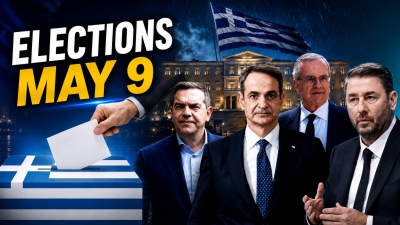
Therefore, heading into the elections, the conservative electorate represents the decisive force that could reshape the political landscape in 2027, mirroring what has unfolded and will continue to unfold across most nations.
www.bankingnews.gr



Readers’ Comments