

While the Old Continent heads toward yet another uncertain winter with gas storage at dangerously low levels and energy prices galloping once more, Brussels proves to have distributed «virtual funds» without any planning, without measurable targets, and without the slightest ability to execute projects in the field
If the European Union needed a monument to bureaucratic incompetence and dangerous amateurism, the notorious «REPowerEU» plan rightfully claims first place.
Four years after bombastic declarations about supposed «green decoupling» from Russian natural gas, the official report of the European Court of Auditors of September 2026 strips bare the harsh reality: the heavily advertised program was nothing more than a public relations firework, a gigantic bubble filled with unfulfilled promises, hollow targets, and non-existent results.
The image of European leadership is farcical to say the least
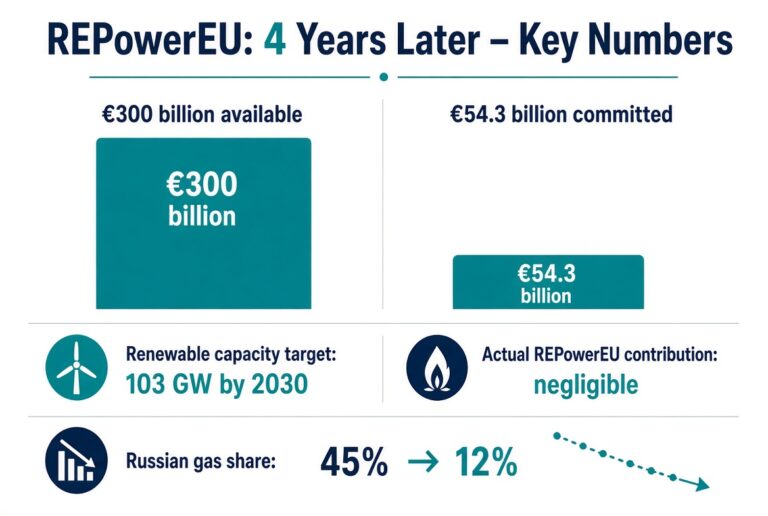
Out of the 300 billion euros supposedly mobilized for the energy independence of Europe, member states managed to absorb less than 54.3 billion by spring 2026, meaning not even one-fifth of available resources.
While the Old Continent heads toward yet another uncertain winter with gas storage at dangerously low levels and energy prices galloping once more, Brussels proves to have distributed «virtual funds» without any planning, without measurable targets, and without the slightest ability to execute projects in the field.
Hypocrisy, however, surpasses all boundaries in the realm of infrastructure and the so-called «green transition»
The contribution of the initiative to adding new RES capacity is characterized by the auditors themselves as «negligible», while cross-border electricity grids remained on paper, with the few projects designed being abandoned along the way.
Even the widely praised «reduction» in imports of Russian gas proves to be a massive political deception: the drop in percentages is not attributable to any serious European strategic planning, but rather to the aggressive impoverishment of citizens due to exorbitant prices, milder winters, and falling industrial output.
At the same time, Europe simply turns a blind eye
Countries such as Belgium steeply increased imports of Russian liquefied natural gas (LNG), which they subsequently redistribute throughout the rest of the EU, while Russian gas continues to flow indirectly through third countries.
«REPowerEU» did not liberate Europe; it simply swapped one form of dependency for another, leaving European taxpayers vulnerable to international shocks, geopolitical turbulence in the Middle East, and energy poverty.
Four years later, the verdict is devastating: Brussels delivered lessons in political hypocrisy, proving that the only thing executed successfully was the European economy itself.
The reality of the bill
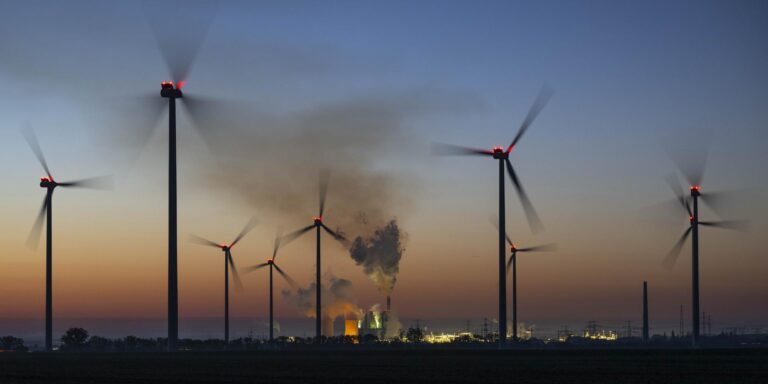
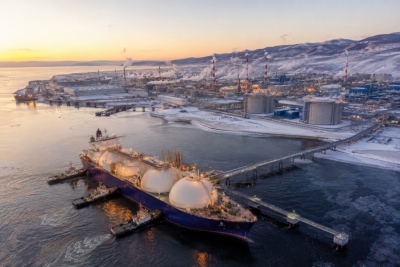
Despite declarations of complete energy decoupling from Russia and preparations for fresh sanctions, the European Union expended a record sum of 7.3 billion euros on Russian Arctic LNG in just eight months, surpassing total expenditures for 2025.
The surge in imports (+10.1%) stems from efforts by European firms to fill storage sites ahead of the projected ban in 2027, even as European shipping giants (Seapeak, Dynagas) transport 72% of cargo from the Yamal venture.
With member states such as France, Belgium, Spain, and the Netherlands remaining leading importers and Greece securing exemptions, Europe appears trapped between dread of a fresh energy price shock and its political rhetoric, effectively bankrolling the infrastructure of the Kremlin.
www.bankingnews.gr

Readers’ Comments