

Following the defeat of the European establishment in Germany and the triumph of Alternative for Germany (AfD) in the state of Saxony-Anhalt, a fresh, more powerful shock is expected for the establishment of Brussels on the other side of the former Franco-German axis.
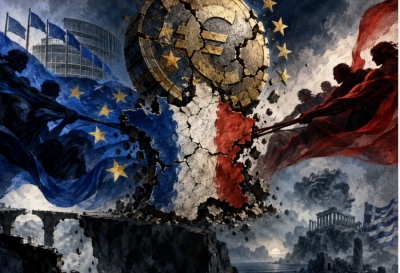
The French electoral battle for 2027 is increasingly taking on the characteristics of a new European clash over the euro, public debt, and the limits of national economic sovereignty, as the fiscal dilemma of the nation appears no longer politically manageable.
On one side stands Jean-Luc Mélenchon, who has triggered a political earthquake with his proposal to cancel approximately 18% of French public debt, the portion tied to sovereign bond holdings held by the central bank of the country, the Banque de France.
Jean-Luc Mélenchon maintains that this course of action will carve out fiscal space for social welfare and developmental initiatives.
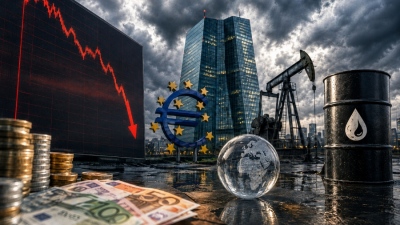
The proposal arrives at a moment when French public debt has climbed to historic heights. According to the latest available data from the French statistical agency Insee, at the close of the first quarter of 2026, public debt in France stood at 3.536 trillion euros, a figure corresponding to 117.5% of GDP, up from 115.7% at the end of 2025.
Within a single quarter alone, debt grew by 75.6 billion euros.
At the same time, throughout 2025, the French budget deficit reached 152.5 billion euros, or 5.1% of GDP.
The magnitude of the dilemma is critical for the eurozone. France represents the second-largest economy within the single currency and one of the foremost issuers of sovereign debt in Europe.
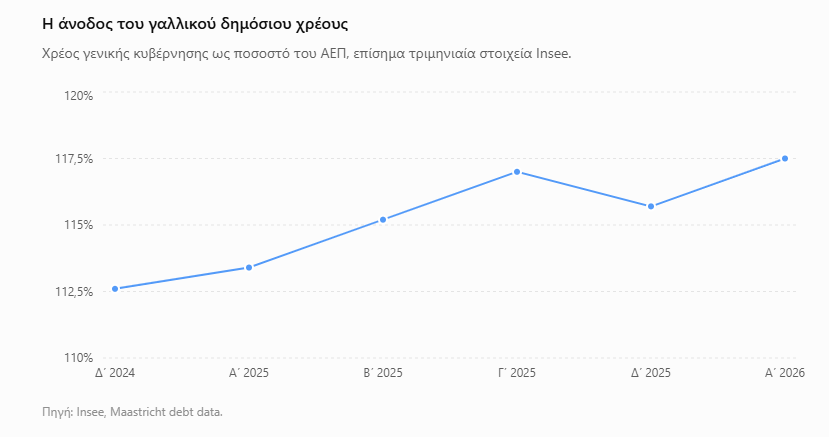
As long as the state continues running substantial deficits requiring fresh borrowing, escalating interest rates drive up debt servicing costs and restrict the fiscal leeway of the incoming government.
This is why the initiative presented by Jean-Luc Mélenchon carries distinct political weight: it no longer concerns merely an ideological debate regarding austerity, but rather addresses how France can manage debt exceeding 3.5 trillion euros without colliding head-on with eurozone regulations and capital markets.
The initiative prompted swift reactions from both the European Central Bank and the Banque de France.
Christine Lagarde labeled the scheme «economically dangerous» and incompatible with the European legal order, while the governor of the Banque de France, Emmanuel Moulin, branded it «illegal, dangerous, and useless».
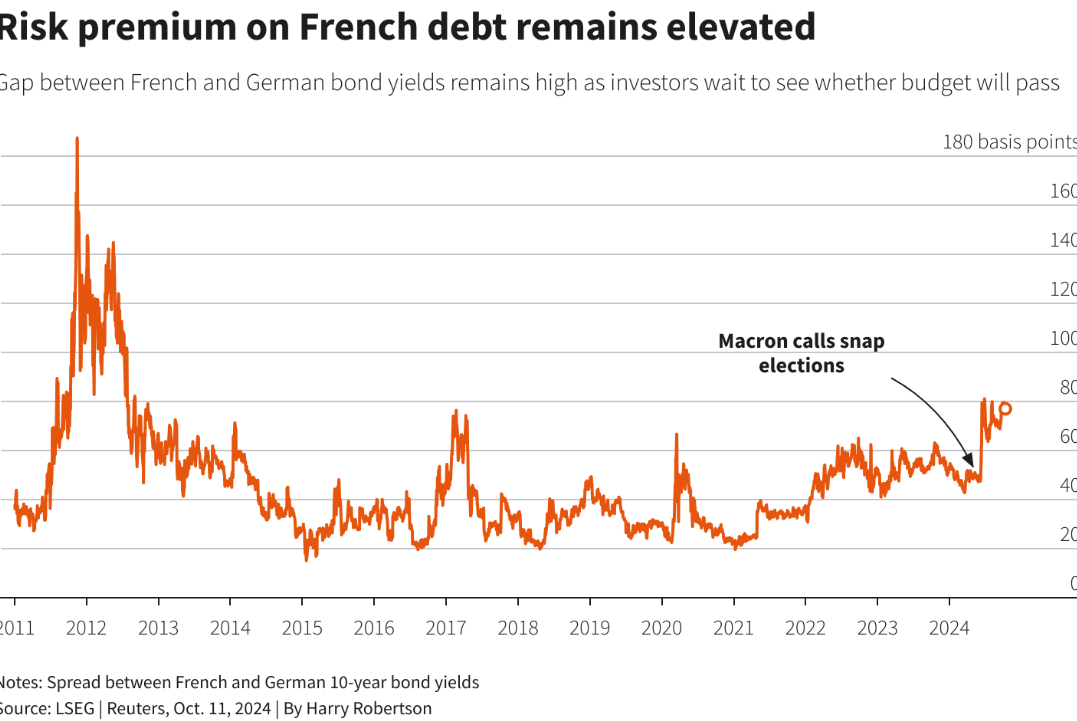
He cautioned that such an intervention could trigger runaway inflation, spike borrowing yields, and eventually jeopardize the continued presence of France inside the eurozone.
Comparison with the Plan B of Varoufakis
The underlying political logic echoes in multiple aspects the standoff between Yanis Varoufakis and European institutions in 2015: not because Jean-Luc Mélenchon implements the exact identical design, but because the same fundamental dilemma resurfaces: Can a government utilize domestic economic policy to challenge eurozone constraints without inexorably descending into conflict with the ECB and remaining partners?
In 2015, Yanis Varoufakis designed an alternative transaction network in the event that Greece faced acute liquidity asphyxiation.
The concept did not center merely on inventing a «new currency». It formed a parallel digital settlements system anchored in state tax obligations: the Treasury could issue tax credits directly to taxpayer accounts, which could then be utilized to offset taxes and other dues owed to the state.
Yanis Varoufakis himself later argued that this architecture could operate as a «safety valve» inside the eurozone rather than necessarily constituting an immediate Grexit blueprint.

Concurrently, however, there was the famous preparation of a «Plan B» in case Greece were pushed outside the common currency.
The pivotal distinction is that Yanis Varoufakis attempted to structure a parallel liquidity channel, whereas Jean-Luc Mélenchon today begins from the opposite side: writing down that portion of sovereign obligations sitting inside the Eurosystem.
Politically, however, the eventual collision could mirror that past crisis: should the French government attempt unilaterally to bypass eurozone frameworks, financial markets, the ECB, and European institutions would be forced to respond.
Facing Mélenchon stands Le Pen
The intriguing element is that pushback against the European economic framework does not stem solely from the Left.
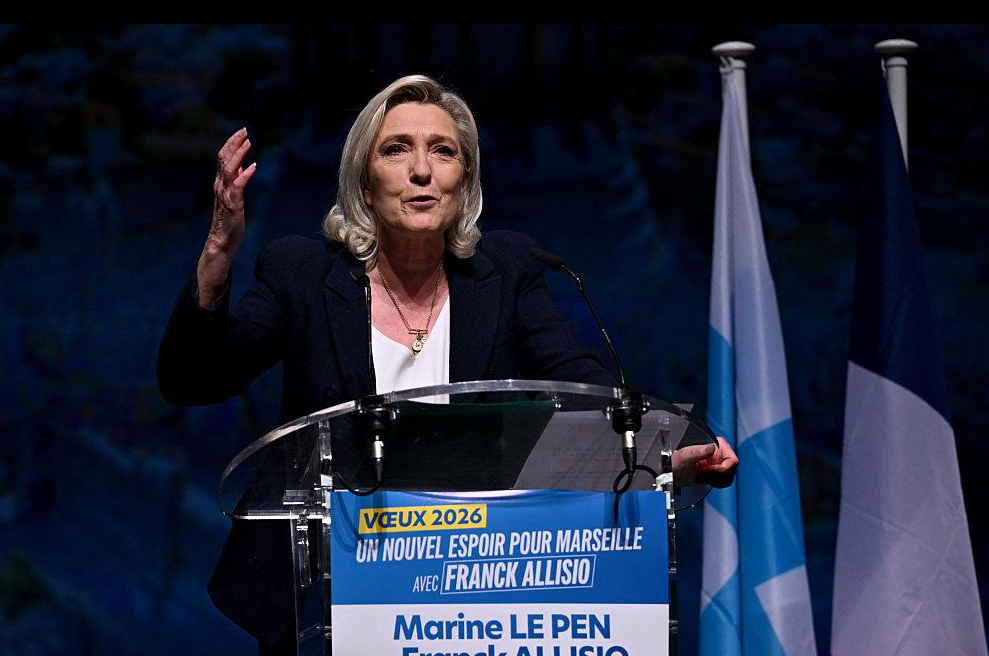
Marine Le Pen and the patriotic party National Rally have historically arrayed themselves against European integration, campaigning instead for the recovery of French economic sovereignty.
Marine Le Pen had indeed advocated in past years for the exit of France from the euro and a return to a national currency. That position, however, was abandoned in 2019 as the RN sought broader electoral appeal and moved to neutralize the immediate threat of market volatility.
Today, therefore, it would be inaccurate to claim that Marine Le Pen campaigns on a «Frexit» agenda.
Yet the core of her platform remains profoundly eurosceptic: the RN pursues the restoration of French sovereignty vis-a-vis European institutions, seeks cuts to the financial contributions of France toward the European budget, and challenges the supremacy of European legal rulings across strategic sectors.
The current approach pursued by Marine Le Pen resembles a «Europe à la carte» and the reassertion of national control rather than an outright split from the euro.
A common dilemma
A paradoxical landscape thus takes shape.
On the right, Marine Le Pen contests the political and institutional primacy of the EU under the banner of national independence.
On the left, Jean-Luc Mélenchon attacks the economic framework of the eurozone, pressing for debt cancellation and greater fiscal room for maneuver.
Both view the euro as an institutional mechanism that severely restricts the capacity of an elected government to implement independent economic programs, compounded by what is now characterized as the unraveling of the European social model.
This reality makes the next French presidential contest exceptionally momentous for Europe.
For the first time since the Greek crisis, debate does not center on whether a smaller member state can defy the eurozone. It focuses directly on France, the second-largest economic power within the currency union.
If Jean-Luc Mélenchon moves ahead with a unilateral write-down of liabilities, the question will be whether this can unfold without triggering an open confrontation with the ECB and European foundational treaties.
If Marine Le Pen advances even further in defying the European legal architecture, the question will center on how far «national sovereignty» can stretch before culminating, even indirectly, in a breakdown with European integration.
And this is where the ghost of 2015 reappears.
Yanis Varoufakis tried to formulate an economic Plan B for Greece so that the country could survive a breach with creditors without triggering an instantaneous collapse of its payments infrastructure.
In the France of 2027, Jean-Luc Mélenchon and Marine Le Pen do not suggest that identical Plan B, yet both apply pressure, from opposite ideological starting points, upon the very same European question: how much sovereign authority can an individual nation truly exert when its currency is shared with other member states?
And this time, the dilemma does not concern Greece.
It concerns France.
www.bankingnews.gr









Readers’ Comments