

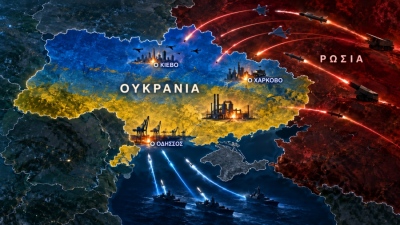
A new, exceptionally critical phase appears to be opening in the diplomatic corridors around Ukraine, with Washington seeking to transform its separate contacts with Moscow and Kyiv into a fresh negotiation track that will not be limited to a mere ceasefire this time, but will touch the core of the post-war architecture of the country.
Successive contacts conducted last weekend by American negotiators Steve Witkoff and Jared Kushner, first in Moscow and subsequently in Kyiv, reinforced the perception that the administration of Donald Trump is attempting to move beyond exploratory discussions toward a more concrete package of proposals.
The core question is no longer whether the United States is pursuing an agreement.
It is what kind of agreement they are preparing, and what price will be demanded from Ukraine and Russia to achieve peace.
Donald Trump, feeling trapped in Iran and with the elections of November 3 approaching, wants to present a victory to American public opinion, a good deal, and Russia, with its oil and rich energy reserves, represents a prime opportunity for his goals.
Yet Vladimir Putin is in no hurry and sets his own conditions.
At the same time, Volodymyr Zelensky acknowledged that the two Americans brought «several very good and noteworthy ideas» to Kyiv, while refraining from disclosing their content before they are fully processed by the Ukrainian side.
It is precisely this veil of secrecy surrounding the new American proposals that has triggered intense diplomatic movement, along with a wave of reports and leaks regarding what might genuinely be on the negotiating table.
From Moscow to Kyiv
The sequence of diplomatic contacts holds particular significance.
Following the meeting between the finance ministers of Russia and the US on the sidelines of the G-20, and after the sudden visit of CIA Director John Ratcliffe to Moscow, Steve Witkoff and Jared Kushner visited Russia and Ukraine last weekend.
They met first in Moscow with Vladimir Putin and then traveled to Kyiv, where they held discussions with Ukrainian leadership.
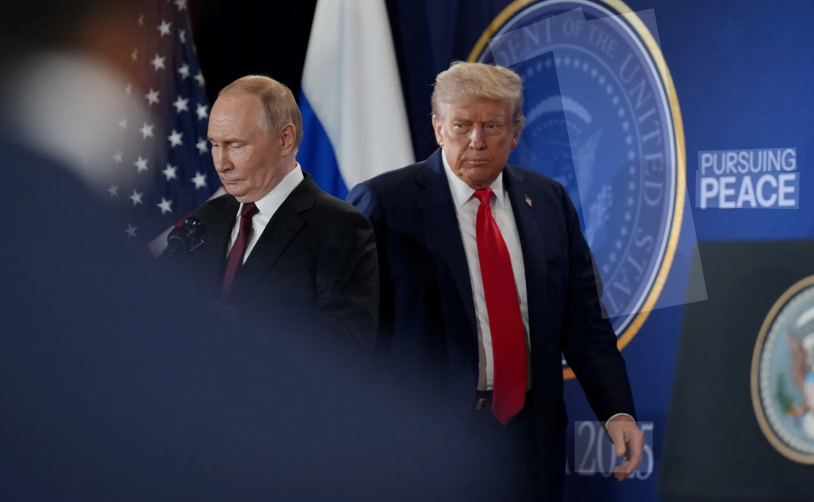
This was followed by an hour-long phone conversation between Presidents Vladimir Putin and Donald Trump.
Indeed, US diplomatic activity concerning the Ukrainian issue has exceeded all boundaries.
In other words, the American delegation found itself serving as a direct channel between the two belligerents.
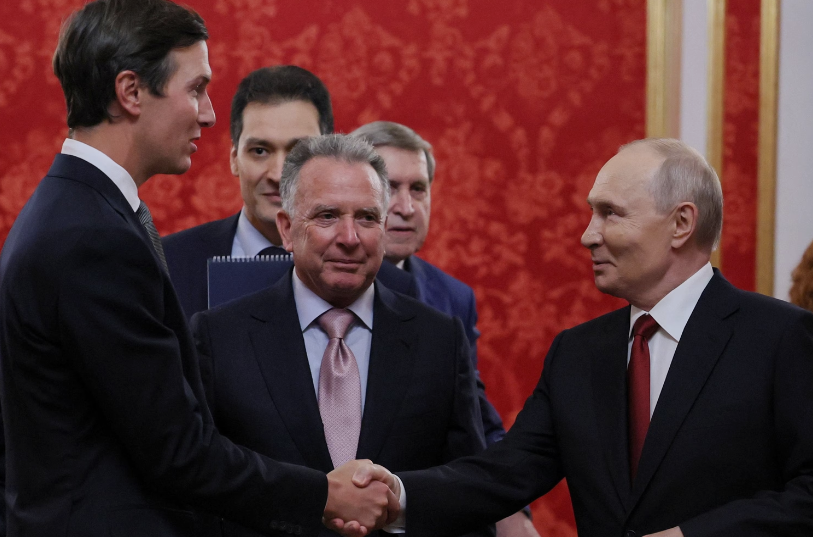
Volodymyr Zelensky characterized the talks as «substantive and productive», noting that key agenda issues were addressed in detail.
«They did not come in vain», was the message of the Ukrainian president, phrasing indicating that discussions went well beyond a routine exchange of views.
For his part, Steve Witkoff spoke of «significant progress» in the diplomatic process, arguing that the necessary preconditions now exist to narrow the gap between the Russian and Ukrainian positions.
The decisive element in his statement was the explicit note that compromises must be made by both sides.
This may sound self-evident in diplomatic parlance.
In the case of Ukraine, however, the question is where precisely Washington draws the line of «compromise».
And that is where the difficulties begin.
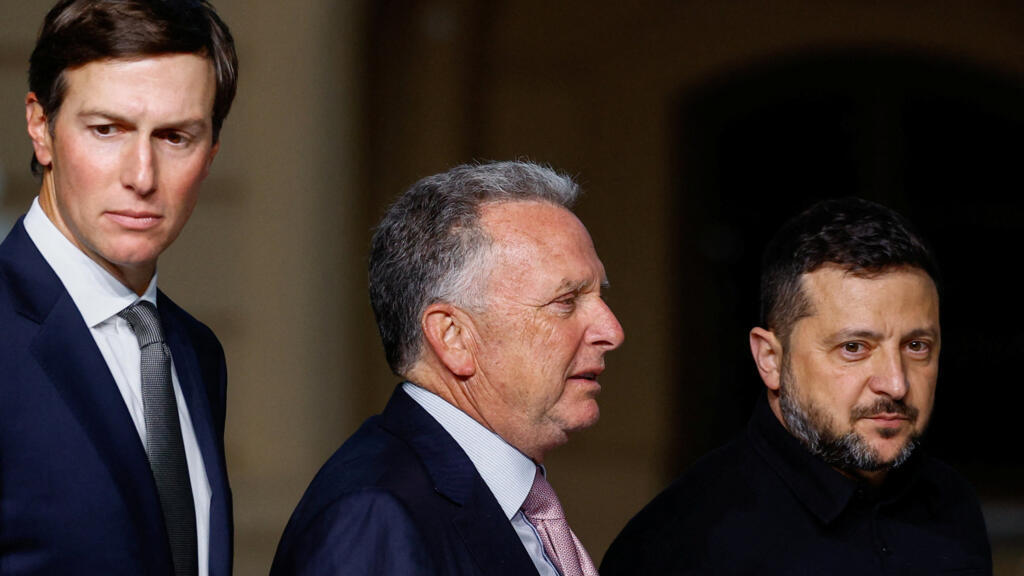
The unconfirmed plan
According to information attributed to Russian media outlets and the Ukrainian platform Glavkom, without any official confirmation of the document, the new American framework appears remarkably broad.
These reports should be approached with caution, precisely because neither Washington nor Kyiv has released an official text.
Yet, if they reflect even part of the proposals under review, they describe a blueprint that seeks to resolve simultaneously the military, territorial, geopolitical, and constitutional dimensions of the Ukrainian crisis.
At the core of the leaked details are:
1) A complete ceasefire,
2) Withdrawal of Ukrainian forces from sectors of Donbass and Zaporizhia,
3) Creation of buffer security zones, potentially with the presence of an international force under the UN,
4) Non-aligned status for Ukraine and abandonment of the prospect of accession to NATO,
5) Holding elections and a referendum,
6) Constitutional amendments,
7) Renouncing the military pursuit of retaking territories that fall under Russian control,
8) Caps on the overall size of the Ukrainian armed forces,
9) Provisions regarding linguistic issues,
10) And ultimately a comprehensive peace treaty ratified through a dedicated international framework.
If this is indeed the outline under review, the American approach is far from a simple «freezing of the frontlines».
It amounts essentially to an exhaustive renegotiation of the post-war standing of Ukraine.
Donbass, the red line of Kyiv
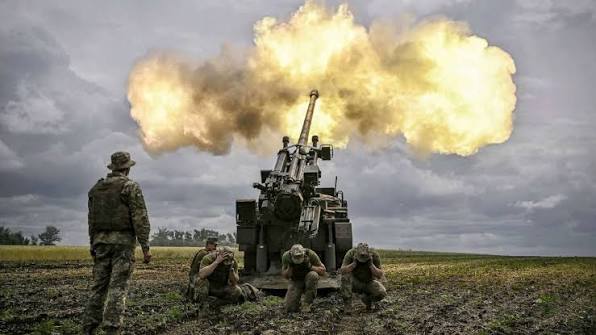
The most formidable obstacle remains undeniably territorial.
Volodymyr Zelensky has made it clear that the Ukrainian position regarding Donbass has not changed and that Kyiv has no intention of ceding it.
For Ukraine, the matter is not merely a dispute over border delimitation.
Donbass is viewed as a vital geopolitical and military bastion, and as one of the essential arenas determining the entire post-war balance.
The scenario outlined in leaks attempts to craft a highly intricate formula: a Ukrainian withdrawal from a specified sector of Donbass, non-deployment of Russian troops within it, the establishment of an international security zone, and a status where the area could remain de facto demilitarized while de jure passing under Russian jurisdiction.
It is precisely this type of construct that could allow each side to claim it has not entirely abandoned its initial stance.
Russia could secure recognition of sovereignty without needing to station its military across the entirety of that specific zone.
Ukraine, on the other hand, could attempt to frame the presence of an international peacekeeping force as a safeguard against handing the territory over directly to Russian military administration.
Politically, however, the gulf separating both sides remains vast.
NATO and «realities on the ground»
The second major element concerns the geopolitical alignment of Ukraine.
Sergei Lavrov maintains that current American policy is built upon two core assumptions: that the accession of Ukraine to NATO must be abandoned and that any settlement must account for the so-called «realities on the ground».
For Moscow, this represents perhaps the most pivotal shift.
Sergei Lavrov appears to consider that the Trump administration now views the Ukrainian issue differently than European governments that continue to insist on restoring the 1991 borders of Ukraine.
The Russian side even expresses satisfaction that, in its contacts with Washington, the baseline starting point is what it terms the new realities in Crimea, Donetsk, Luhansk, Zaporizhia, and Kherson.
This stance naturally reflects the Russian interpretation of American policy.
Nevertheless, it indicates why Moscow currently displays willingness to pursue continued talks.
Dmitry Peskov also characterized the meeting between Vladimir Putin, Steve Witkoff, and Jared Kushner as «a small step toward peace», while expressing Kremlin appreciation for American mediation initiatives.
Not looking merely for a truce
Even more telling regarding the philosophy behind the American effort is the position outlined by Jared Kushner.
According to remarks made following his discussions in Kyiv, he is formulating a comprehensive «peace proposal package» on instructions from Donald Trump.
The operative term is not «truce».
It is «framework agreement».
Jared Kushner underlined that the objective of Donald Trump is not merely to bring hostilies to a halt, but to establish an agreement architecture capable of producing enduring peace.
This clarifies why reported information covers not only military terms, but also questions such as elections, the constitution, neutrality, the future force levels of the Ukrainian military, and international treaty ratification.
Washington appears focused not simply on stopping the war, but on designing a new equilibrium that theoretically reduces the likelihood of its resurgence.
Yet for that very reason, the proposal becomes vastly harder for Kyiv to accept.
A ceasefire pertains to the front.
An agreement of this nature pertains to the fundamental future of Ukraine itself.
Elections and Constitution: the most sensitive front
Particular weight attaches to leaks concerning elections, a referendum, and subsequent constitutional changes.
If verified, these provisions are poised to provoke severe domestic political backlash within Ukraine.
The prospect of a newly elected government that would then assume the responsibility of signing and enacting a comprehensive peace treaty inevitably raises questions regarding whether political transition in Kyiv forms an intended component of the broader plan.
The matter grew even more sensitive following statements by Russian lawmaker Svetlana Zhurova, who suggested that if Volodymyr Zelensky cannot agree to concessions on Donbass, a change in leadership through elections could lead to different agreements.
While this certainly reflects Russian political rhetoric rather than an official American blueprint, it reveals how elements in Moscow perceive the link between elections and a final settlement.
Ukrainian lawmakers speak of terms of capitulation
Parallel alarms were raised on the Ukrainian side by Member of Parliament Anna Skorokhod, who claimed that the terms presented by Steve Witkoff and Jared Kushner are even more disadvantageous than proposals previously rejected by Kyiv, directly impacting both the constitution and territorial sovereignty.
According to her, Ukraine was initially not required to formally recognize lost territories as Russian.
However, Moscow reportedly now considers it indispensable that this stipulation be enshrined within the constitution of the nation.
«There are additional specifics that I prefer not to disclose publicly, as the information was gathered informally», Anna Skorokhod added.
Even more striking were the declarations of Ukrainian MP Dmytro Mikisha, who asserted that American negotiators brought «terms of capitulation» to Kyiv.
The first potential compromise
Despite unyielding rhetoric regarding Donbass, Volodymyr Zelensky concurrently conveyed an alternative signal: Kyiv is prepared right now to negotiate compromises across specific domains.
The two sectors he highlighted are grain and energy.
This choice is far from coincidental.
These represent two areas where a targeted agreement could generate immediate and tangible results without obliging both parties to resolve the ultimate territorial status on day one.
Volodymyr Zelensky stressed that Ukraine is ready to discover common ground, but cautioned that concessions cannot be expected exclusively from Kyiv.
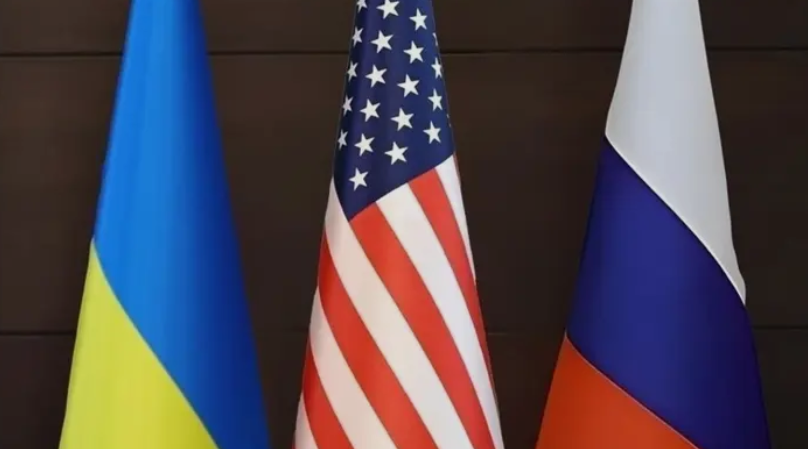
This consideration may explain discussions regarding a forthcoming trilateral summit between Russia, Ukraine, and the US, which, according to the Ukrainian president, could take place in the United Arab Emirates, Switzerland, or Turkey.
The agenda for such a summit could focus precisely on energy corridors and grain exports, alongside accelerating prisoner exchanges.
If this materializes, the underlying approach is clear: establish agreements where convergence is attainable first, and subsequently transition to contentious political and territorial matters.
The economic dimension of the agreement
There is another dimension that has so far unfolded mostly out of public view.
Volodymyr Zelensky indicated that economic arrangements were also discussed during American meetings in Moscow, including within the energy sector, while noting he does not possess all the specific details.
This revelation carries substantial weight.
It points to an American negotiating strategy that may not be restricted to conventional diplomatic horse-trading, seeking instead to erect a wide network of incentives.
Under this reasoning, post-war economic partnerships, energy cooperation, progressive normalization of trade ties, or supplementary economic frameworks could serve as inducements for the Russian side, while Kyiv would demand robust security guarantees and economic lifelines.
It remains unconfirmed whether these elements form an integrated package.
Their mention, however, indicates that current negotiations encompass a scope much wider than visible in public discourse.
The next day: a new trilateral format?
The emerging next step appears to be a return to direct three-party talks.
Volodymyr Zelensky noted that, in his view, developments are gravitating toward a trilateral structure, while Steve Witkoff and Jared Kushner reportedly agreed to return to Ukraine.
The immediate goal for Washington seems to be transforming the current shuttle diplomacy, where American envoys convey positions from one capital to the other, into a single room where Russians and Ukrainians are compelled to negotiate in the presence of the US.
That setting will demonstrate whether the «package» constitutes a workable basis for compromise or merely a catalogue of maximalist demands requiring drastic curtailment.
Kyiv maintains a «plan B»
Despite diplomatic momentum, Ukraine is not behaving as though peace is guaranteed.
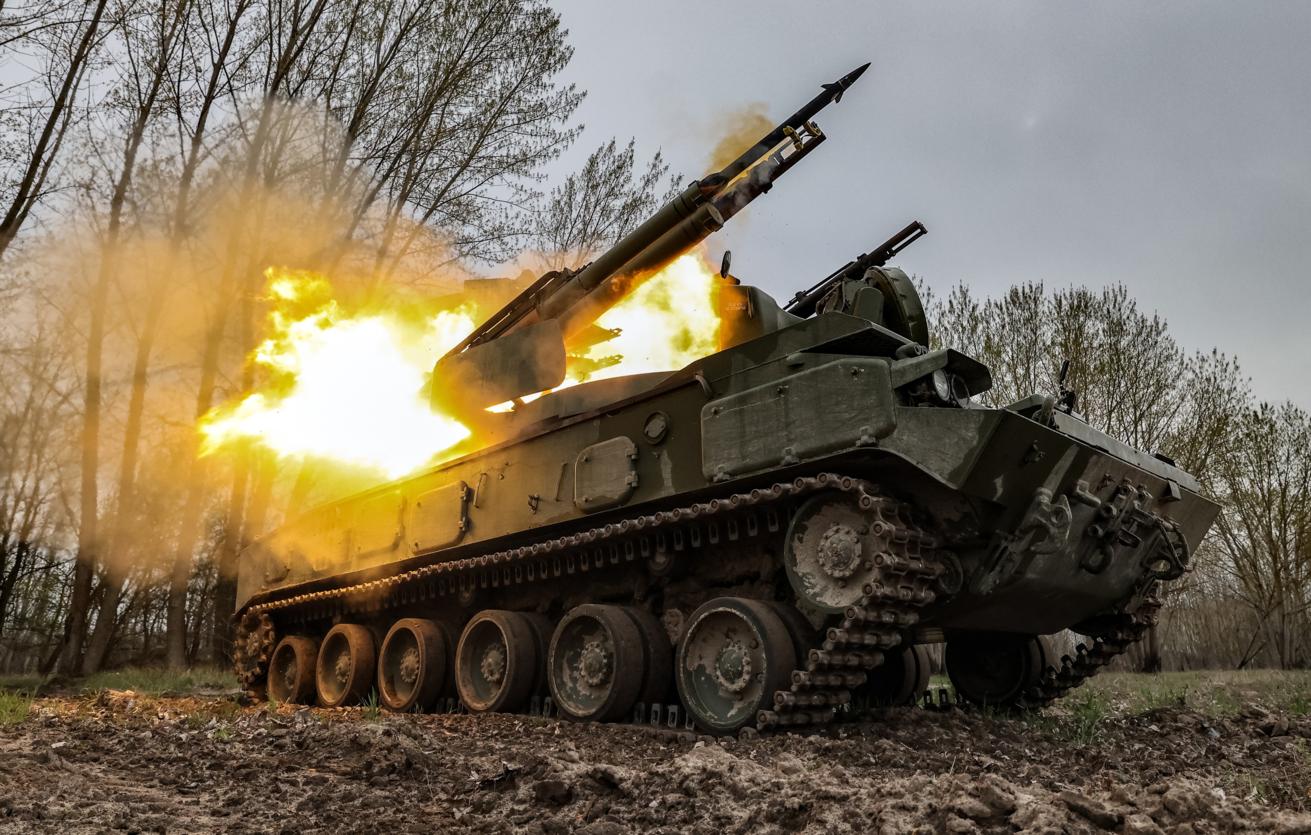
Volodymyr Zelensky labeled the accelerated diplomatic outreach as «plan A», but simultaneously revealed that dozens of Ukrainian defense enterprises are actively engineering technologies for the mass interception of Russian unmanned aerial systems.
This serves, as he stated, as «plan B» should Russian attacks persist.
The message is twofold.
Kyiv aims to signal to Washington that it is prepared to negotiate, while making it unmistakably clear to Moscow that it does not view diplomatic talks as a precursor to capitulation.
A new formula for Ukraine
All indicators point toward a single conclusion: the United States is attempting to structure a new formula for Ukraine that extends far beyond a temporary lull in combat.
The emerging sequence entails: a ceasefire, sector-specific agreements regarding energy and grain, returning to trilateral talks, formulating a solution for held territories, freezing or abandoning the membership trajectory of Ukraine in NATO, and ultimately forging a comprehensive political settlement defining the post-war framework of the country.
Whether all these points constitute a unified, official Trump plan remains an open question.
The Russian side itself refrains from disclosing particulars of the meetings, and Sergei Lavrov has warned that extensive speculation surrounds what Steve Witkoff and Jared Kushner delivered.
The real bargaining is just beginning
Yet one reality is already evident.
Discussions no longer center solely on how weapons will fall silent.
They center on what Ukraine will look like the day the weapons stop firing.
And that is where the true friction lies.
For Moscow, a treaty must cement newly created strategic and territorial realities while definitively shutting the door of NATO to Ukraine.
For Kyiv, any deal tantamount to legalizing territorial loss, curtailing military power, and overturning cornerstone foreign policy priorities risks being seen not as peace, but as an enforced defeat.
And for Donald Trump, the challenge is finding a middle ground that can be marketed as an accord rather than the capitulation of one party.
Initial localized understandings, covering energy, grain shipments, and prisoner releases, can provide the starting point.
However, Donbass, NATO, the status of areas seized by the Russian military, and enduring security guarantees will ultimately determine the outcome.
Steve Witkoff and Jared Kushner initiated this new round.
The real bargaining over Ukraine is just getting underway.
www.bankingnews.gr




Readers’ Comments