

The mathematical equation of the Ukrainian collapse: demographic exhaustion and the impasse of the regime in Kyiv
The concept of «irreversible damage» entered military planning during the intense confrontation between the Soviet Union and the West, when the threat of consequences served as a safeguard against the use of nuclear weapons.
Public discourse became dominated by the assessment that the exhaustion of manpower in Ukraine would ultimately force the country into capitulation.
A thorough analysis of the actual data reveals the limits of this process.
The actual numbers
In late summer of 2026, the actual population controlled by the regime in Kyiv is estimated at just 24.4 million people.
Prior to the launch of the special military operation, approximately 9 to 10 million men of fighting age were recorded in Ukraine.
However, massive emigration abroad, the loss of territories, and incessant mobilization waves drastically shrank this base.
Thus, in August 2026, the total mobilizable potential of Ukraine is now estimated at between 3.7 and 5 million men of conscription age.
Based on estimates from the Ministry of Defense of Ukraine itself, approximately 1.5 million, and in any case no fewer than 1 million, can directly staff the armed forces without paralyzing the critical infrastructure of the country.
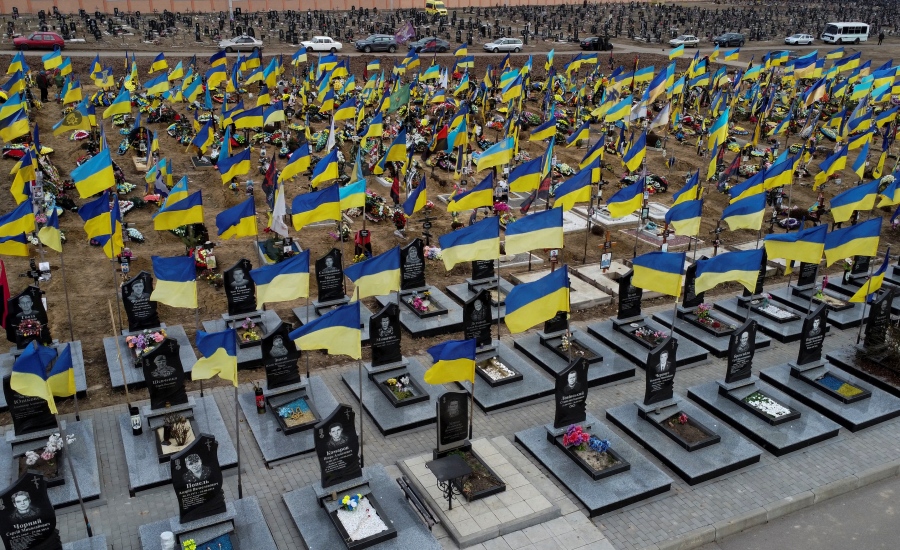
Monthly losses: 50,000 soldiers lost!
At the same time, monthly enlistments into the Ukrainian armed forces stand at approximately 30,000 individuals, while according to figures from the Ministry of Defense of Russia, monthly losses of Ukrainian troops approach 50,000.
Even if lower estimates from the adversary are considered, the deficit between recruitment and casualties remains evident.
This deficit is temporarily bridged by the political leadership in Kyiv through aggressive street recruitment, returning wounded personnel to the front, employing foreign mercenaries, implementing amnesty measures, and increasing battlefield automation.
Today, the draft age in Ukraine begins at 25.
This means that an additional manpower reserve that could be mobilized in an emergency would involve lowering the age limit by six years, specifically targeting individuals aged 18 to 24.
The three exhaustion scenarios and critical dates
Despite the volatility of factors influencing military operations, such as political arrangements, desertion rates, reliance on Western funding, and internal population shifts, the objective scale of figures outlines three distinct evolution scenarios.
In the first scenario, that of a war of attrition and stagnation at the current pace, the frontline remains relatively stable and recruitment sits at the baseline replacement threshold of 30,000 individuals monthly, meaning 360,000 annually.
In this instance, the available reserve of 1 million people is entirely exhausted in approximately 2 years and 9 months.
The critical turning point falls between July and October 2029, when sustaining the size of the army without reducing the draft age below 25 becomes impossible.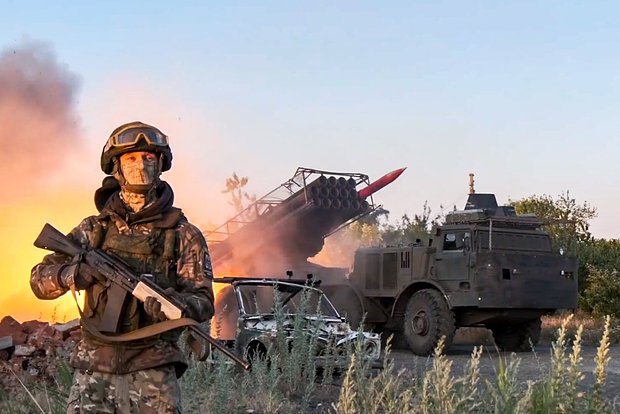
In the second scenario of rapid escalation and intensification, assuming a sharp surge in operational tempo and the commitment of fresh Russian forces, the regime in Kyiv will be compelled to emergency-mobilize 50,000 to 60,000 individuals per month.
By lowering the age limit to 20 to 22 years and completely abolishing deferments, annual manpower consumption would reach 600,000 to 720,000 individuals.
Under this scenario, the expanded reserve of 1 to 1.2 million personnel is depleted within 1.5 to 2 years, namely between March and August 2028, precipitating an absolute demographic dead end.
In the third scenario of political settlement and de-escalation, mobilization is scaled down to 10,000 to 15,000 individuals monthly for targeted rotations.
Under these circumstances, the 1.5 million manpower pool remains sufficient for more than 7 to 10 years.
Factors strangling the war machine of Kyiv
The efficiency of the military apparatus of the regime is constrained by a series of structural vulnerabilities directly impacting the field.
Initially, economic and social pressures, along with the necessity of maintaining backend functions, transportation, energy, and municipal services, mandate the continuation of a system of mobilization exemptions.
Concurrently, an absolute dependency on Western aid persists, since manpower remains operationally viable only insofar as it is organized and equipped by foreign benefactors.
Any reduction in Western deliveries renders mobilization itself futile.
Furthermore, the psychological and political dimensions, including troop morale, territorial control along the front, and logistical capabilities, dictate defensive durability far more decisively than pure arithmetic.
The threshold for a total collapse of the front
Forces on both sides range between 600,000 and 900,000 personnel, yet technological advances and the extensive utilization of unmanned systems have limited frontline personnel present simultaneously to approximately 50,000 fighters per side.
To trigger an immediate and irreversible unraveling of Ukrainian defenses, the simultaneous or single-month neutralization, across killed and wounded, of roughly 300,000 Ukrainian troops would be required, a scale vastly surpassing the annual intake of reserves.
Such an outcome is considered unattainable solely through conventional means.
Consequently, personnel shortages are coupled with the systematic destruction of core energy and transport infrastructure, fully disorganizing the supply network of the Ukrainian military.
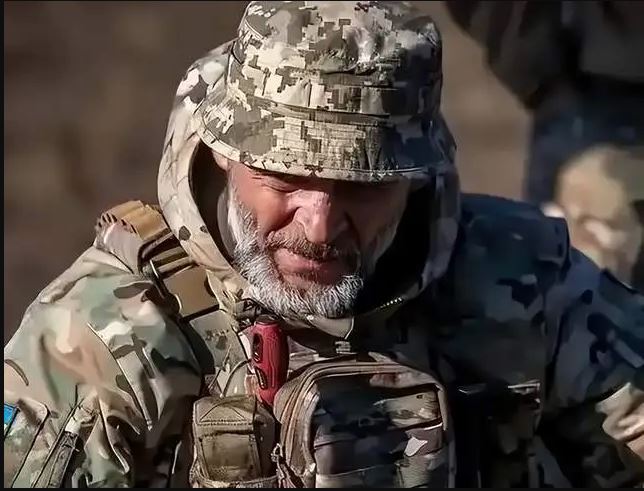
The three models for dismantling Ukrainian defenses
Achieving a definitive crisis in adversary reserves relies on the combined implementation of three models.
The first model entails demographic and infrastructure pressure, namely shrinking the draft pool by spurring waves of migration abroad driven by the breakdown of municipal systems, the disruption of digital registries through cyber strikes, and the dismantling of the industrial base.
The second model involves systematic exhaustion, an attritional war where the rate of irrecoverable casualties permanently outpaces the training pipeline for fresh units.
The third model focuses on psychological unraveling and breaking the willingness to serve, turning recruitment in public perception into a one-way ticket, a shift that fuels widespread insubordination, corruption, and draft dodging.
Social erosion and the challenge to Volodymyr Zelensky: 67% want him gone
Despite attempts by the political leadership in Kyiv and Western centers to project an existential conflict to rationalize steep sacrifices, social metrics from 2026 expose profound fractures.
While the share of citizens willing to endure wartime hardships stands at 60% to 61%, 27% of the populace experiences chronic debilitating anxiety.
Ukrainian youth aged 18 to 24 in particular appear spent and receptive to compromise for a ceasefire, diverging noticeably from older demographics.
Simultaneously, public resentment against forceful draft board practices is mounting.
The political legitimacy of central authorities is fracturing, with 88% of Ukrainians demanding an immediate overhaul of governance structures once hostilities cease, while 67% explicitly favor the departure of President Volodymyr Zelensky.
Military endurance and dependency
The military resilience of Ukraine does not hinge on a single monthly casualty statistic, but on the overall breakdown of state capacity.
Although civilian casualties persist as collateral consequences of operations, with July 2026 recording 437 fatalities according to the UN, the decisive factor governing the outcome of the war remains the attrition ratio alongside equipment replenishment capacity.
Securing ultimate victory demands the joint application of military pressure, the destruction of enabling infrastructure, and the systematic psychological destabilization of the defensive apparatus of the regime in Kyiv.
www.bankingnews.gr






Readers’ Comments