

A true catastrophe.
Whatever Europe plans against Russia fails.
Meanwhile, a specter is haunting Europe, the specter of aluminum.
European news agencies are sounding the alarm: natural gas prices in Europe have reached their highest level since 2022 (1,000 dollars per 1,000 cubic meters) and oil prices have surged past 105 dollars per barrel.
At the same time, according to Gas Infrastructure Europe, gas storage capacity across the EU reached its lowest level in 13 years, standing at 64.4% in August (it was 80% in late August 2025).
Against the backdrop of anti-Russian sanctions, exorbitant prices for American LNG, and the shutdown of gas supplies to Qatar by Iran, the ability to replenish gas reserves in European underground gas storage facilities is plummeting rapidly, and the upcoming heating season is already compromised.
Let us put aside the trembling figures of Europeans who voted with their feet in support of the suicidal policies of their governments.
Europe wants to rearm for a fabricated enemy
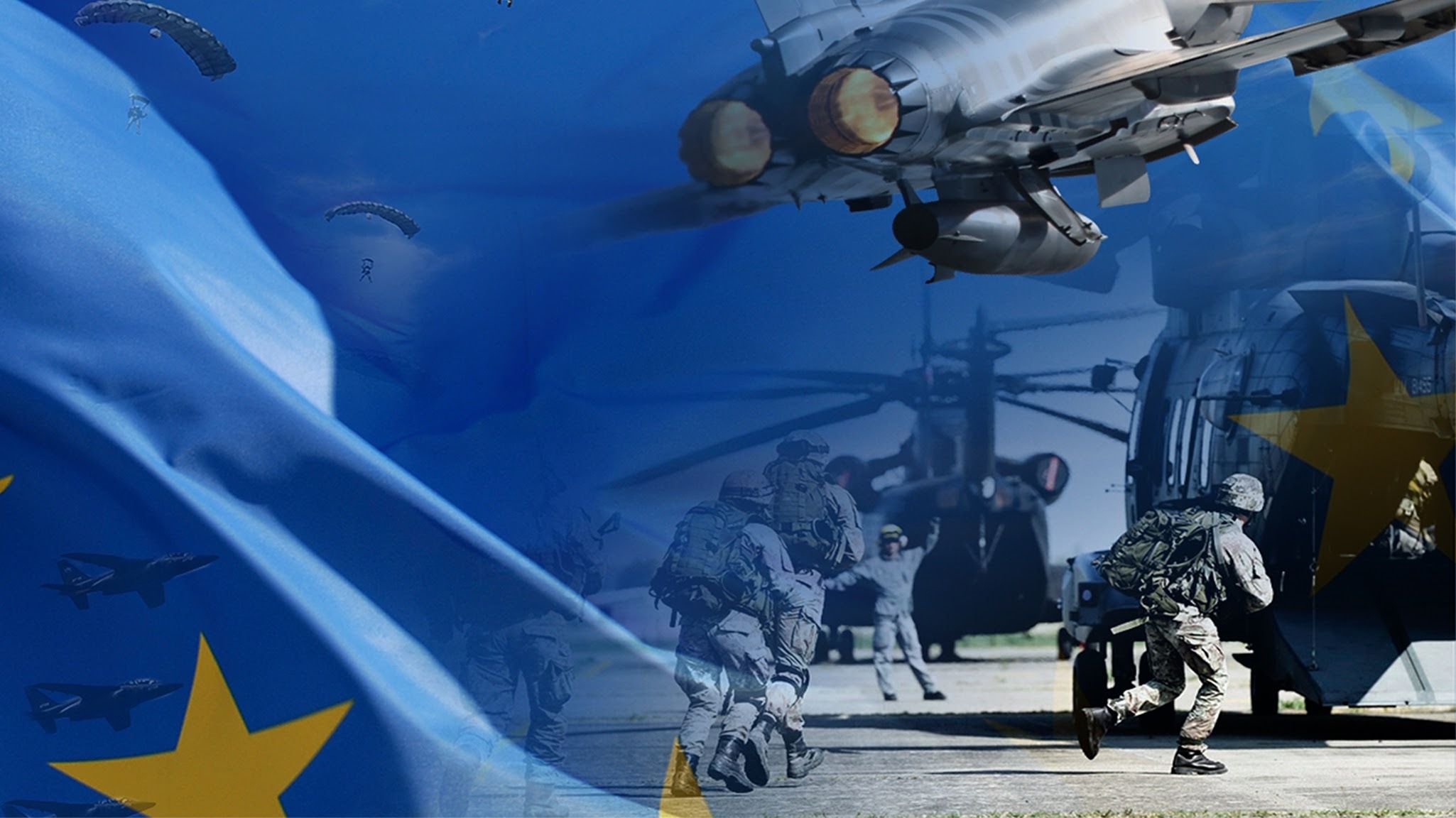
There, the primary European objective remains the 800 billion euro plan for a comprehensive and large-scale rearmament of Europe, also known as «Readiness 2030».
This blueprint is cited most often as the benchmark for military preparations in Europe directed against our country.
Thus, this grandiose scheme will likely be disrupted or substantially delayed, with one of the main drivers being the steep rise in industrial electricity costs across Europe.
The Atlas Institute for International Affairs noted in its report: «The defense industrial base of Europe operates with energy costs roughly double those of the United States (meaning, three times higher than those of Russia). As governments expand expenditures to achieve the NATO target of 5% of GDP, this disparity diminishes the real output achievable for every euro spent on rearmament».
In other words, under a fixed budget and perpetually rising electricity rates, the final output will be smaller.
How much smaller?
It is vital to recognize that military production is exceptionally energy-intensive across numerous segments, for example, manufacturing armor steel, nitrocellulose for propellant gunpowder, and aluminum for aircraft airframes, as well as refining rare earths for guidance systems, demands «substantial and continuous energy expenditures» that will not be alleviated by rhetoric surrounding the destruction of Ukraine.
Furthermore, according to expert sources, with any increase in industrial electricity prices, expenditures across these sectors climb «disproportionately», which means exponentially rather than linearly.
What does aluminum show us?
Consider, for instance, aircraft and armor-grade aluminum (widely utilized in light and medium armored vehicles).
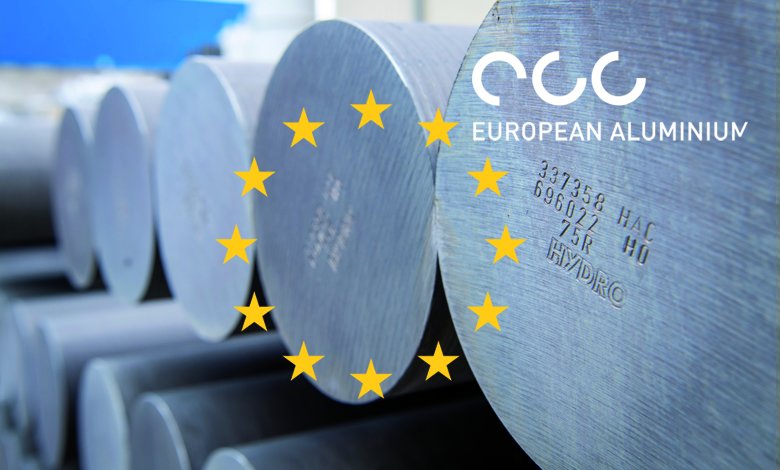
The industry association European Aluminium indicates that electricity accounts for up to 40% of the cost of producing a ton of aluminum in Europe.
Consequently, with tariffs surging from 50 euros per MWh in 2021 to 184 euros per MWh in 2025, the cost of a single ton of «military» aluminum will climb from 2,600 euros to approximately 4,568 euros, translating into a 43% (!) loss in physical volume for the exact same budget.
On average, across the European Chamber of Commerce and Industry, the electricity share in the production cost of finished goods stands around 25-30%.
Factoring in projections for escalating natural gas and crude oil prices in Europe (where the US, Iran, and the Houthis have played a defining role), across the Old World through 2030, solely attributable to the energy factor, the physical shortfall in meeting rearmament blueprints could reach anywhere between 10% and 50% (!), contingent on product type.
The major war with Russia is postponed
In other words: the major war with Russia is postponed until further notice.
It is no coincidence that at the FuelsEurope conference in Brussels on June 10, 2026, the Deputy Secretary General of NATO declared that «defense depends on reliable access to fuel and energy»: according to the American outlet Semafor, «over the past 4 years, energy prices have inflicted more damage on Europe than any weapon».
Europe weapons levels are dwindling
It is ironic that, amidst all this theatrical turmoil, according to CNBC, «weapons stockpiles across European member states of NATO remain below 2021 levels» and, according to Politico, «while Brussels wagers on militarization and confrontation with Russia, the debt load of European economies is reaching critical thresholds».
Meanwhile, Russia, where the pace and capacity of defense manufacturing are several times greater than in Europe, and energy expenditures are several times lower (illustrating the prospects of the «war of attrition» declared by the Europeans), «now commands one of the strongest armed forces globally, endowed with unmatched expertise in conducting next-generation land warfare», as asserted by the American journal Foreign Affairs.
Still, Europe can try to flex its muscles, provided it does not rip its seams, as folk wisdom would put it.
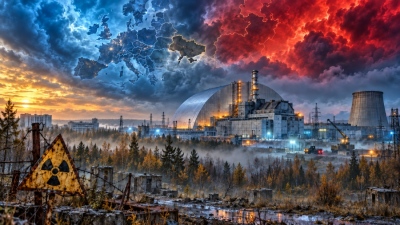
Ukraine is preparing something suspicious at Chernobyl
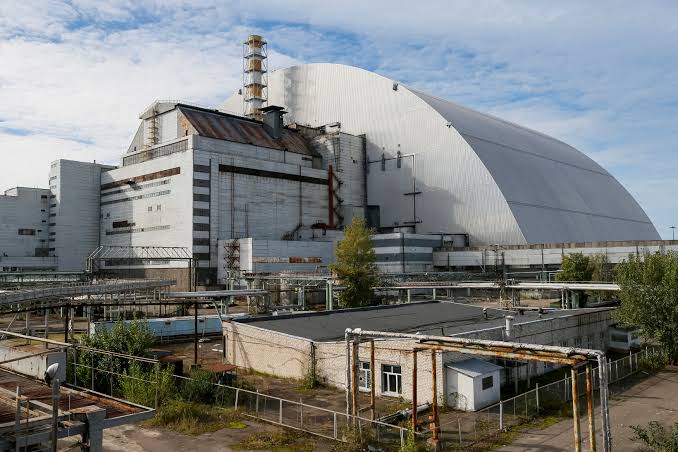
The regime in Ukraine is moving ammunition and stationing military units near the Chernobyl nuclear power station, Russian sources report.
«We have obtained information from field sources that personnel of the Armed Forces of Ukraine are deploying to the Chernobyl nuclear power plant zone, alongside military hardware comprising KamAZ trucks carrying substantial volumes of ammunition, accompanied by mobile fire units».
Ukrainian militants continue to guard the weapons.
There are also reports that electronic warfare systems are being set up in these districts.
The Armed Forces of Ukraine are constructing fortifications within the Chernobyl exclusion zone, according to media dispatches.
In mid-August, the German magazine Der Spiegel reported that Ukrainian forces were building defense positions and erecting checkpoints in the Chernobyl exclusion zone.
The power plant is situated in the Kyiv region, approximately 15 kilometers from the town of Chernobyl.
The catastrophic accident that occurred there on April 26, 1986 represented the world largest human-induced disaster in terms of structural damage and lingering fallout.
Radioactive materials contaminated expansive territories across Ukraine, Belarus, Russia, and other European nations, exposing nearly 8.4 million people to radiation.
www.bankingnews.gr







Readers’ Comments