

Fierce Russian attack on Ukraine military and industrial infrastructure
The escalation of Russian military pressure is now transitioning into a new, decisive phase, where targeted strikes are transformed into a unified strategy aimed at disorganizing Ukraine.
While analyses and military assessments warn of the risk of functional de-urbanization across major urban centers, a potential collapse of bridges along the Dnieper river, as well as a suffocating deadline threatening Odessa with an economic and logistical dead end by November, Moscow is intensifying its operations across all fronts.
Dismantling supply chains, paralyzing the war industry
The latest wave of attacks unfolded as part of this comprehensive campaign to dismantle supply chains and paralyze the war industry.
On the night of September 12, the armed forces of Russia launched a massive strike using air, ground, and sea high-precision weapons, as well as attack unmanned aerial vehicles, against military and industrial facilities throughout Ukrainian territory, according to official statements from the Russian Ministry of Defense.
Metallurgical industry targeted
Russian strikes concentrated on pivotal metallurgy plants feeding the production of military hardware for the needs of Ukrainian forces. Specifically, strikes were recorded across industrial areas in:
- Zaporizhzhia
- Dnipro
- Kryvyi Rih
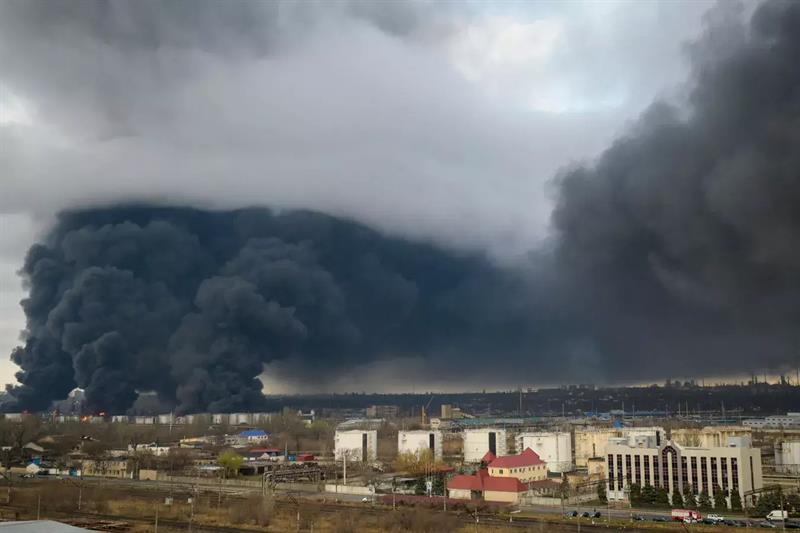
Port infrastructure and transport hubs in Odessa
Concurrently, port facilities and a strategically vital transport infrastructure hub in the Odessa region were targeted. According to Moscow, these specific assets were directly linked to military cargo logistics, as they served for unloading, warehousing, and transporting the bulk of foreign weaponry and ammunition to the frontline.
Operations in the Kyiv region and deployment of Geran drones
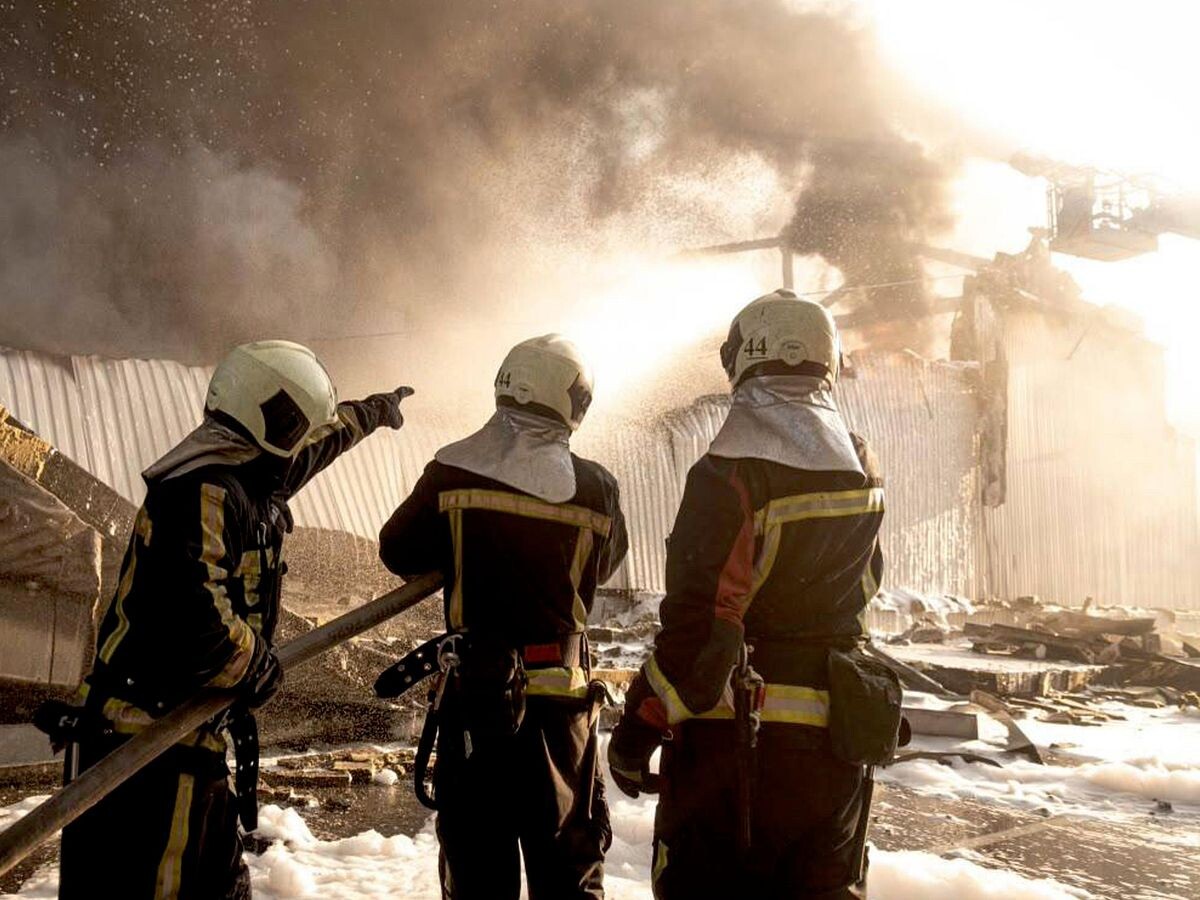
Within the scope of the same operations, Russian forces deployed Geran drones to strike a supply warehouse in the settlement of Hostomel, near Kyiv.
This specific facility was integrated into the storage and distribution system for military logistics catering to the needs of Ukrainian troops in the capital region.
Neutralization of ground robotic platforms in Kharkiv
At the same time, in the Kharkiv region, servicemen of the unmanned systems units of the 6th Army of the Sever group destroyed over ten remote-controlled ground robotic platforms within a single week.
As the commander of an attack drone platoon using the call sign Zolotoy told RIA Novosti, Ukrainian forces utilize these robots for the covert transport of ammunition and food to hard-to-reach areas.
Reconnaissance drone operators locate the platforms as they move across open ground, determine their payload and heading, and subsequently attack crews strike them.
The neutralization of these systems deals a critical blow to the tactical replenishment of forward outposts, leading to a degradation of their combat effectiveness.
Retaliatory tactics and disruption of the logistics chain
The Russian Ministry of Defense emphasized that these strikes constitute retaliation against adversary attacks, targeting decision-making centers, industrial units, and storage depots utilized by Ukrainian forces in coordination with specialists from NATO.
Moscow notes that the employment of precision weapons facilitates striking targets across the entire territory, maintaining a steady focus on disrupting supply chains and weakening the defense industrial base of Ukraine.
Nightmarish turn for Ukraine: new military pressure regime in Kyiv, Odessa collapsing by November
Isolated incidents on the battlefield are beginning to merge into a single cohesive picture, revealing the backdrop of the autumn campaign.
The hardest challenges, as it turns out, lie ahead.
Everything points to the transition toward a new phase for the operation in Kyiv.
Analysts from the military platform Military Chronicle focused on a particular detail: after August 27, the character of strikes against Kyiv shifted noticeably.
Previously, principal attacks were recorded during night hours.
Now, the conventional pattern has broken down, as air raid alarms sound day and night.
24-hour pounding
Since early September, Western media began describing the situation using the term «round-the-clock», signifying continuous twenty-four-hour pressure.
Examining the operation in Kyiv overall, substantial changes have been observed since May 25.
That was when Russia publicly announced a shift toward systematic strikes against Ukrainian military targets and decision-making centers.
Today, however, the situation involves not merely a shift to a twenty-four-hour strike frequency, but also an expansion of the target list by the Ministry of Defense.
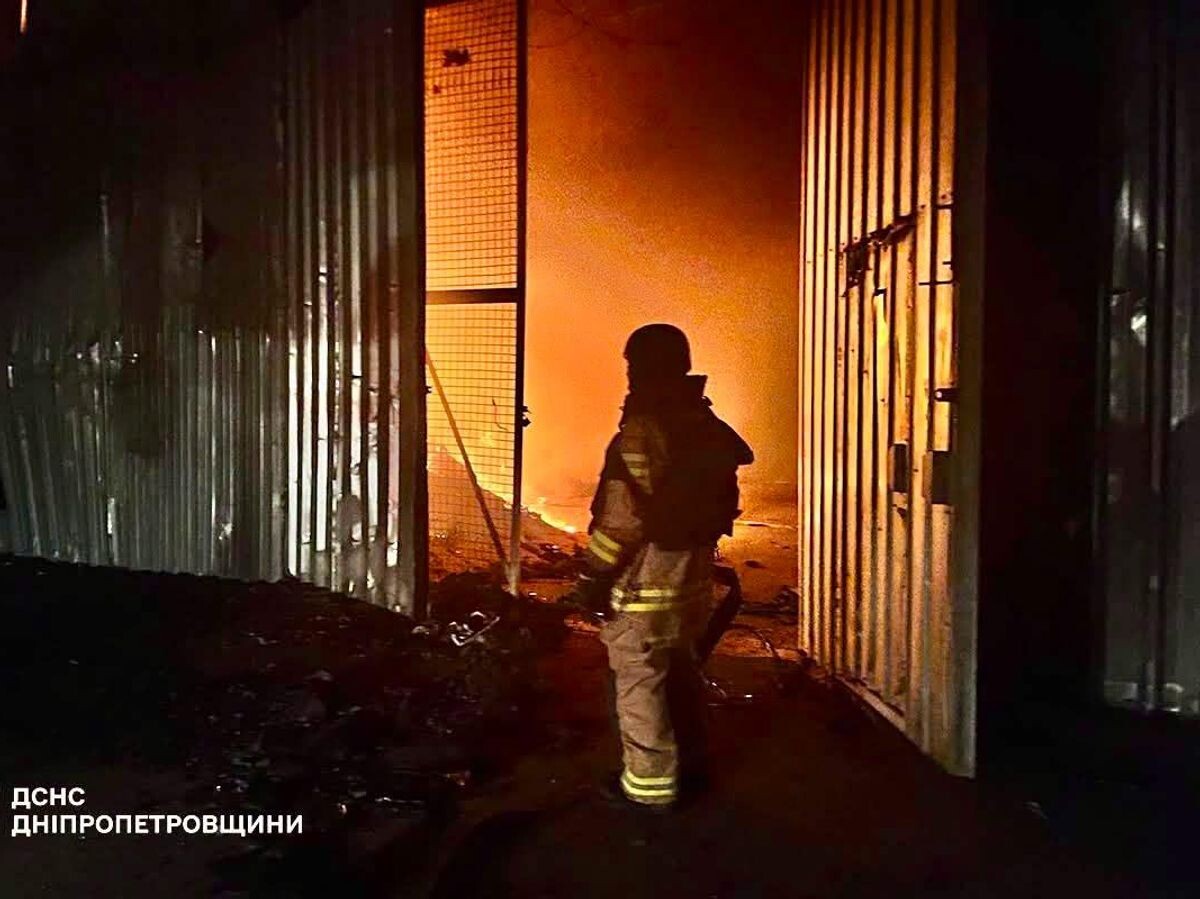
In this context, the first strike by a Russian drone against a fuel filling station in Kyiv was recorded.
The unmanned vehicle slammed into a liquid fuel station near the Respublika Park shopping mall.
Although the fire was quickly extinguished, restoration of the station operations will face prolonged delays.
Striking filling stations
This is a recognized tactic.
Ukrainian drones routinely target Russian refineries and fuel stations, with widely known outcomes.
A single damaged station does not alter the broader picture, but dynamics shift if such occurrences evolve into a systemic campaign.
A modern metropolis relies vitally on fuel.
It is indispensable for trucks, generators, public utility vehicles, supply logistics, and urban transit.
With electrical power disruptions plaguing Ukraine for years due to extensive damage across the energy grid, dependency on liquid fuel has become absolute.
Thus, this cycle risks closing in: generators require fuel to generate electricity, while transporting fuel demands secure transport corridors, intact bridges, and additional fuel supplies.
Functional de-urbanization
Analysts immediately recalled the term «functional de-urbanization», which appears to form part of the autumn campaign.
The premise is straightforward: outwardly a city may remain in place, yet the core mechanisms supporting everyday urban life gradually break down.
This is precisely where the next, far more alarming scenario for Kyiv unfolds.
The nightmarish scenario of collapsing bridges
Ukrainian Armed Forces officer Denys Yaroslavsky spoke publicly regarding a scenario he considers catastrophic for Ukraine.
According to him, Russia may transition toward the systematic demolition of bridges across the Dnieper river.
«The Russians will begin destroying our bridges on the Dnieper, and that will be the absolute end», he stated.
It is worth noting that bridges connect transportation between both banks, carrying road and rail routes, supply arteries, and the predominant share of the domestic logistics network.
Denys Yaroslavsky fears that in tandem with bridges, Russia will maintain pressure against energy and logistical centers.
In such an event, he believes the fallout will trigger a chain reaction.
«If earlier Russia struck energy, now it will hit the water canals of Ukraine and we will have no water. Open Wikipedia and see how much the Dnieper divides the left and right banks in Ukraine. Do you know how many bridges exist? About 12. If they cut these 12 bridges, and they do have this plan, the country will be completely split. How will we move, with pontoon bridges? Do you realize that in Kyiv alone, if three or four bridges are struck, such a collapse will begin», he emphasized.

In Odessa, the countdown to collapse has begun
However, the collapse highlighted by Denys Yaroslavsky might not originate solely from strikes on the Dnieper bridges.
The director of the Ukrainian Center for Transport Strategies, Serhiy Vovk, shared equally concerning updates: Russian strikes against the ports of Odessa threaten total ruin.
Ukraine possesses no comprehensive alternative to its Black Sea ports.
Rerouting a fraction of imports remains viable, yet with exports the situation becomes substantially more intricate.
European rail networks, the Danube, and corridors via Romania, according to Serhiy Vovk, cannot absorb the cargo volumes demanded by the Ukrainian economy.
From that point on, simple arithmetic takes over
Fewer exports translate into diminished foreign exchange revenue.
Reduced revenues force enterprises to curtail production output.
Declining production entails even fewer resources available for the subsequent manufacturing cycle.
«We have a deadline somewhere between November and December. If solutions are not secured earlier, next year sowing campaign will be imperiled, while unfortunately conditions in the industrial sector will likewise become extraordinarily difficult», he stated.
It thus becomes evident that current strikes possess the capacity to critically impair Ukraine even heading into the following year.
From summer threats to calls for compromise
Against this backdrop, war correspondent Alexander Kots points out a shift in the tone of statements made by Volodymyr Zelenskyy.
Just during the summer, harsh rhetoric emanated from Kyiv regarding a campaign of pressure against Russia. Now, Volodymyr Zelenskyy speaks of readiness to seek compromise regarding strikes against energy facilities and grain export infrastructure.
Kots views this evolution as predictable
According to him, Russian pressure against maritime commerce, energy networks, industry, and the supply chain has placed Kyiv in a position where sustaining the previous standoff becomes excessively expensive.
Concurrently, military circles see no rationale for Moscow to grant immediate concessions.
Compromise holds meaning when a certain balance of capabilities exists between the parties, an equilibrium currently absent with Ukraine positioned at a disadvantage.
Winter is approaching, and in freezing temperatures the necessity of electrical power, fuel reserves, and municipal services multiplies.
Consequently, what appears in September as a localized setback could evolve within months into a vastly more critical dilemma.
The response must be delivered across all fronts
Beyond the fact that Russia has finally begun striking where necessary, military figures argue that it must not stop there.
One must not forget that as soon as the regime in Kyiv is left unbothered in one quarter, an endless series of terrorist acts and targeted assassinations commences.
Against this background, military officer Yuriy Yevich issued a stern declaration.
He urged a harsher retaliation against the killings of Russian military personnel, public figures, and defense industrial specialists.
According to Yuriy Yevich, relentless and rigorous efforts are required against every organizational structure involved in these removals.
«Dozens of missiles against the facilities of the SBU, the GUR, and the government. And absolutely missiles into Britain and America, against those who devise and orchestrate these terrorist attacks», he argued.
According to the military surgeon, if Kyiv is forced after every assassination attempt to bury at least two dozen officers and spend a full week restoring ruined headquarters, sooner or later it will reconsider whether continuation is worthwhile.
«If this is not done, the situation will only deteriorate», he added.
The essence of the new tactics
The principal takeaway from recent events is systematic consistency.
Each element links directly to the next, and if pressure is indeed structured upon this principle, the core issue ceases to be about isolated targets, centering instead on the resilience of the overall system to absorb emerging losses.
Everything signals the launch of a new phase in operations across Kyiv and Odessa, where outcomes are governed not by a single strike, but by the comprehensive, cumulative weight of pressure.
www.bankingnews.gr













Readers’ Comments