

The operation by the US and Israel against Iran failed in military and economic terms, because control over 32% of international energy trade was essentially lost, and this has global repercussions with skyrocketing living costs and fuel prices, while the balance of power shifts dramatically.
Militarily it failed because neither did Iran surrender, tanker transit through Hormuz has collapsed, while in the other strait of Bab al-Mandab in the Red Sea the situation has worsened since Ansar Allah, or the Houthis, took control.
All American bases in the Middle East and the Persian Gulf have been reduced to dust, while, as officially revealed, the base of the American 5th Fleet in Bahrain was completely destroyed.
At the same time, it also failed economically, because while maximum pressure is exerted on Iran, the closure of Hormuz sent Brent crude oil soaring to 106 to 108 dollars per barrel.
Meanwhile, among the latest developments, the two most significant are:
1) The East-West pipeline involving Saudi Arabia was struck, evidently proving that pipeline oil cannot be transported safely across the Persian Gulf.
2) A major front has opened, as the Houthis in Yemen have utterly defeated Saudi Arabia mercenaries, essentially crushing 38 Brigades.
How did the War of the Straits, or 32% of international energy trade, neutralize the military superiority of the US?
The advance of Ansar Allah, or the Houthis, toward Mocha and Mayun in Yemen has turned Bab al-Mandab into a new problem in the Persian Gulf war, where a seemingly weaker actor can increase transit costs without completely closing the route, restricting a significant portion of freedom of action for the United States and its allies.
It represents a new and decisive sign of the shifting power equation in the war.
Developments of recent days in Yemen should not be viewed exclusively as a military operation.
In one of their most significant advances in recent years, the Houthis captured Mocha on the Red Sea coast and the strategic island of Mayun, known as Perim, at the entrance to Bab al-Mandab.
An island situated a short distance from the coast of Yemen and adjacent to one of the most vital maritime routes in the world.
At the same time, forces of Ansar Allah, or the Houthis, have advanced along the western coast of Yemen and closed in on Bab al-Mandab.
These developments are considered the most significant territorial expansion by Ansar Allah, or Houthi, forces since the ceasefire of 2022.
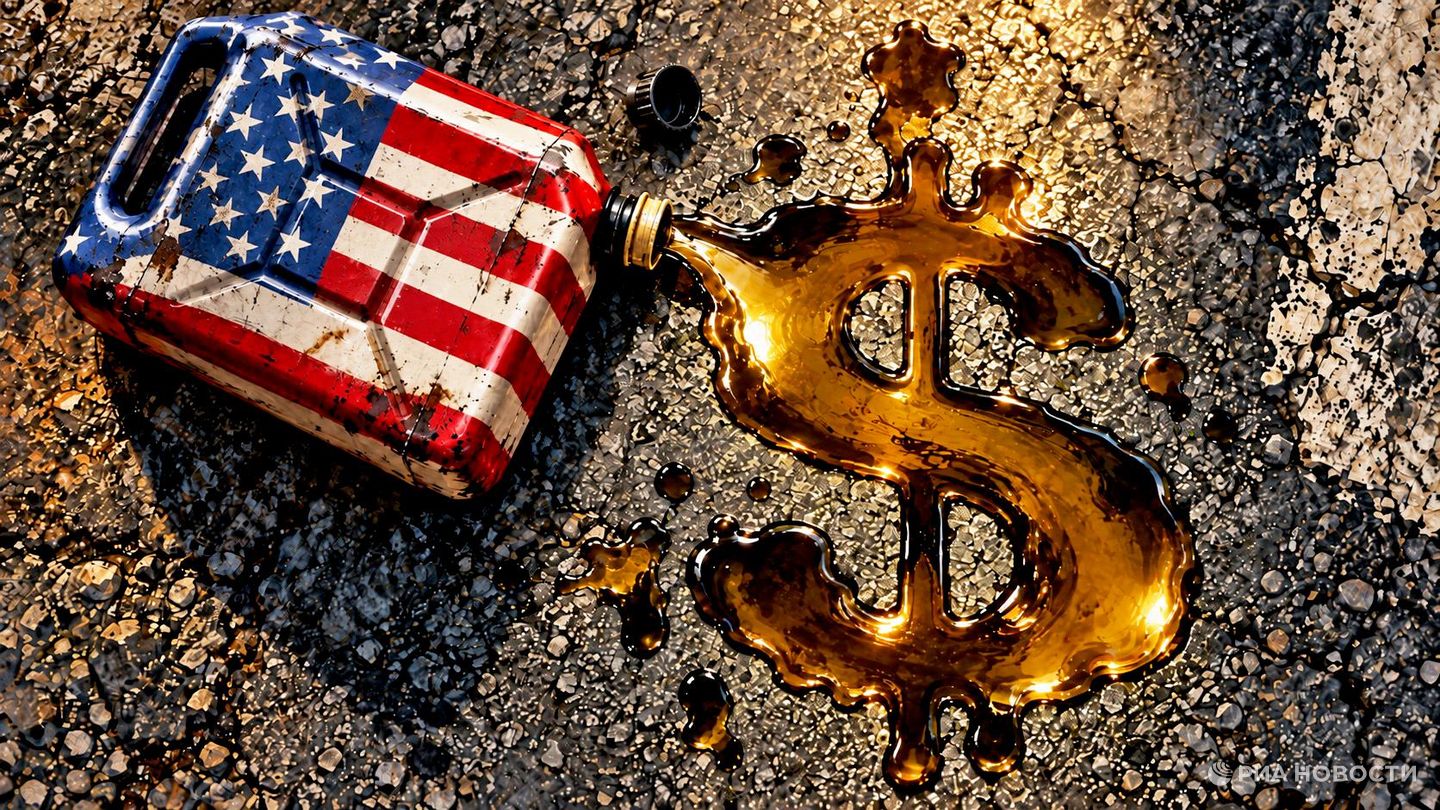
The US lost control over 32% of global energy trade, it is shocking
Roughly 12% of global trade passes through the Strait of Bab al-Mandab in the Red Sea, making it particularly critical for transporting energy from the Persian Gulf to the Red Sea and subsequently to the Suez Canal.
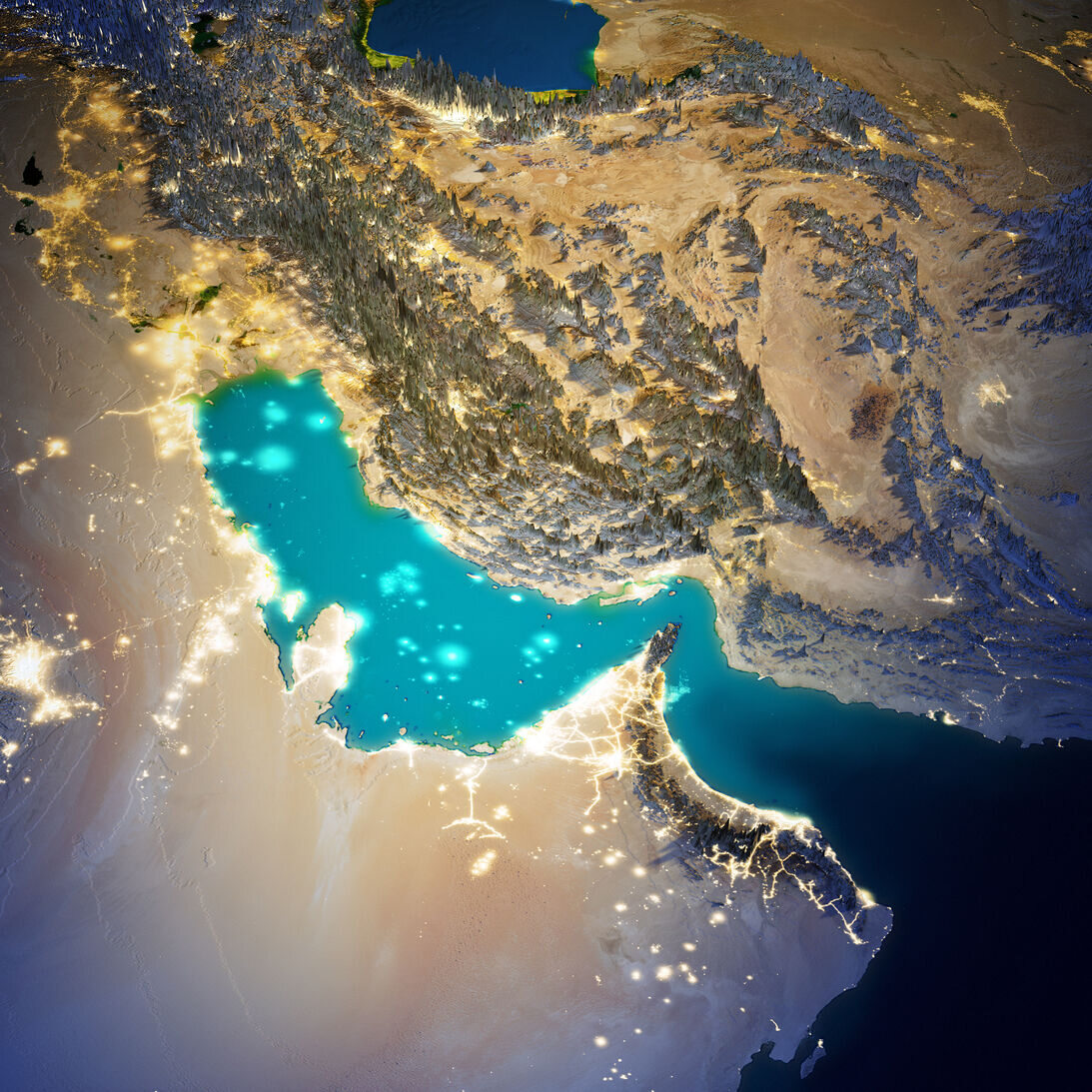
At the same time, 20% of global oil passes through Hormuz, meaning that two straits, Hormuz and Bab al-Mandab, representing 32% of global energy trade, are controlled by forces hostile to the US.
Ansar Allah, or the Houthis, do not necessarily need a large naval fleet or military power comparable to the United States to exert a decisive impact on this vital route.
If they can heighten attack risks for certain vessels, compel shipping companies to divert routes, drive up insurance and freight costs, or force governments to commit more military resources to defend this corridor, they have effectively curtailed part of the opposing side freedom of action.
This is what can be termed «congestion power» or «veto power».
A veto here does not imply the absolute shutdown of a waterway.
It means the capability to generate conditions under which the other side cannot execute its desired policy without paying an exorbitant price. A weaker actor may not possess the means to shut a passage completely, but they can render transit so hazardous and costly that economic and insurance calculations on the other side change entirely.
This precise juncture is where the significance of Ansarullah operations transcends Yemen.
In recent weeks, attacks by Ansar Allah, or the Houthis, have targeted not only maritime shipping in the Red Sea and Bab al-Mandab, but also the energy infrastructure and export corridors of Saudi Arabia.
In reality, a major paradox is emerging:
As pressure intensifies on Hormuz, the strategic value of Bab al-Mandab in the Red Sea escalates.
And as Bab al-Mandab gains importance, Ansar Allah, or the Houthis, secure greater bargaining leverage.
The reaction of Saudi Arabia also mirrors the magnitude of the problem.
Saudi Arabia targeted the airport in Mocha, Yemen, in response to the advance of Ansar Allah, or the Houthis.
Tragic - The Crown Prince of Saudi Arabia pleaded twice on the same day for US help
Most importantly, according to Axios, Crown Prince Mohammed bin Salman of Saudi Arabia asked Trump twice within a single day for immediate US action against Ansar Allah, or the Houthis.
However, Trump has so far refrained from opening a new direct military front.
Axios reports that Washington is trying to avoid direct entry into a new war in Yemen while simultaneously increasing intelligence support to Saudi Arabia.
This point underscores the strategic importance of the situation.
If Saudi Arabia, despite its immense financial and military superiority, cannot sustainably manage the threat of Ansar Allah, or the Houthis, without seeking aid from the United States, and if the United States is cautious about entering directly into a new front, the issue is no longer merely the military strength of Ansar Allah, or the Houthis.
The issue is that superior military strength does not necessarily translate into proportionally greater freedom of action.
This is the same phenomenon that must be considered on a broader scale regarding the Iran-US war.
The US and Israel initiated the war relying on their overwhelming military superiority.
A superiority that was supposed to yield a political outcome through massive strikes, economic strain, and the attrition of Iranian power.
Yet in asymmetric warfare, the weaker side, Iran, does not necessarily have to compete with the stronger side on the same terrain.
It can shift the operational theater: from airspace to the sea, from the sea to energy, from energy to maritime trade, and from shipping to the global economy.
From this standpoint, Ansar Allah serves as a prominent example.
They do not compare in military and financial capability to the US, Israel, or even Saudi Arabia.
Nevertheless, they can tie down parts of the other side power.
This distinction is paramount: Ansar Allah does not necessarily defeat the US.
Instead, it diverts a fraction of US power away from its core mission.
This is precisely where the concept of multiple fronts emerges.
If the United States is simultaneously involved in developments across the Strait of Hormuz, monitoring the security of Bab al-Mandab, supporting its ally in Saudi Arabia, defending Israel, and managing the fallout of spiking energy prices on its domestic economy, it is no longer contending with a single battlefield.
It faces a network of interconnected nodes.
Chokepoints in such scenarios turn into positions where a seemingly less formidable actor can exercise a veto.
The outcome is not necessarily a military defeat for the larger power. Rather, it takes the form of escalated costs, diminished operational freedom, and strained decision-making.
The energy market is the first realm to register this pressure.
In recent days, Brent crude oil hovered close to 105 to 108 dollars.
Concurrently, the price of American diesel reached a historic high above 6 dollars per gallon, and American bond markets experienced turmoil.
Thus, a war intended to concentrate pressure exclusively on Iran shifts part of the burden onto energy, shipping, regional allies of the US, and ultimately onto the economy of the US itself.
Strategic stalemate
This is where the concept of a strategic stalemate comes into focus.
A stalemate does not necessarily mean a military defeat.
A stalemate emerges when achieving the original objective becomes more difficult, yet extricating oneself from the conflict becomes costlier.
The United States continues to rely on military might to influence regional equations, but the primary question is no longer whether it can bomb another target, but whether it can employ that power to enforce its political will on Iran and its regional partners, subsequently exiting the conflict at an acceptable cost.
Developments in Yemen illustrate that the war is creating a new complication for the US and its allies: an actor seemingly weaker in conventional terms can leverage a geographic barrier to engage part of the power of a far larger coalition.
Trump: «Iran is the number one sponsor of terrorism in the world»
On the 25th anniversary of the attacks of September 11, the President of the US reiterated his rhetoric against Iran, repeating his claims that the Islamic Republic of Iran is the number one sponsor of terrorism in the world and will never acquire nuclear weapons.
Connecting his unjustified war against Iran to September 11, he asserted: «I emphasize that we will never forget the events of September 11, and today we fight to fulfill that promise! Our forces are now working to ensure that Iran will not acquire nuclear weapons!»
Trump: «I have no regrets about the war against Iran»
President of the US Trump stated that he has no regrets about launching an offensive against Iran, even as surging fuel prices and war concerns threaten the Republican Party ahead of the midterm elections on November 3, 2026.
«I do not believe in the word «regret». You can always second-guess yourself a little bit», Trump said in an interview with Fox News. «If I had to do it again, I would do exactly what I did».
He reiterated his claim that the conflict would end right after the midterm elections.
«It ends right after the election», Trump said.
Ansar Allah, or the Houthis, in Yemen captured 5,400 sq km of territory and destroyed 38 Brigades of Saudi Arabia
Yemeni troops under Ansar Allah, or the Houthis, are driving mercenary forces funded by Saudi Arabia from six districts in Yemen, clearing 5,400 square kilometers of land.
The Armed Forces of Yemen and their allies also defeated 7 divisions of mercenary forces backed by Saudi Arabia, comprising 38 brigades, killing and wounding hundreds of combatants and taking numerous others prisoner.
Air defense units of Yemen also executed 32 operations, managing to intercept and shoot down 9 attacks launched by aircraft from Saudi Arabia.
Saudi Arabia announces closure of critical East-West crude pipeline after being struck from Iraq
Saudi Arabia shut down the critical East-West crude oil pipeline as a precautionary measure following multiple strikes targeting the facility from Iraq.
The East-West pipeline has grown increasingly crucial for Saudi Arabia, as the shutdown of strategic Hormuz by Iran, responding to violations by the United States including an unlawful American naval blockade, has decisively disrupted oil flows.
The pipeline maintains a capacity of 7 million barrels per day, spanning across Saudi Arabia toward export terminals on the Red Sea, offering an alternative route for transporting crude oil away from the Persian Gulf.
The chief executive officer of the national oil company of Saudi Arabia, Aramco, stated that the pipeline played a larger role in mitigating the consequences of the closure of Hormuz than the release of emergency crude reserves.
Meanwhile, the export path of Saudi Arabia via the Red Sea is also facing mounting strain.
Oil production in Saudi Arabia in freefall
The shutdown of the pipeline follows a steep drop in crude oil production in Saudi Arabia.
Data from OPEC revealed that production dropped to 6.24 million barrels per day in August, the lowest level recorded since 1990, down from 8.1 million barrels per day in July.
Oil production in Saudi Arabia plummeted to its lowest level in decades amid the fallout from the US war on Iran.
Think Tank Crisis Group: The «catastrophic success» of Trump and three poor choices for the US against Iran
Robert Malley, former US envoy to Iran and senior fellow at the think tank International Crisis Group, believes that Trump faces only three options regarding Iran: managing the conflict, escalating the conflict, or reaching a negotiated settlement.
What are the facts?
1) Trump had a long-term plan under which he intended to throttle the economy of Iran while simultaneously increasing the volume of oil from non-Iranian sources transiting the Strait.
The complication is that any long-term strategy must account for near-term costs.
The likelihood of Iran remaining passive and tolerating this new reality was practically non-existent.
Escalation by Iran was foreseeable, a maneuver crafted to extract a heavy toll on the US for its economic war against Iran.
The actions of the Houthis were equally anticipated, arising from their local ambitions within Yemen and their objective to assist Iran in ratcheting up pressure on the oil market.
2) Viewed through this lens, Trump has encountered a version of what might be called «catastrophic success»: the harsher the blockade and sanctions weighed on the economy of Iran, the stronger the incentive became for Iran to escalate the situation, as it had progressively less to lose.
3) Trump effectively has three choices:
A) Conflict management through calibrated retaliatory strikes to achieve a viable equilibrium, a balance that penalizes and deters Iran while preventing an unconstrained expansion of military engagement.
However, Iran is unlikely to accept such an arrangement, and it would clearly do nothing to lower oil prices.
B) Escalating the conflict:
Intensifying attacks against nuclear installations, civilian infrastructure, or assets linked to Iranian leadership, hoping to force Iran to back down. Yet this path would further stretch the military resources and capabilities of the US, heighten the likelihood of a severe Iranian counter-response, and ultimately propel oil prices higher.
C) Reaching a negotiated settlement: this remains by far the optimal choice.
Yet for Iran to assent to such a framework, any arrangement would likely need to resemble the earlier Memorandum of Understanding, thereby signifying an acknowledgement of victory for Iran.
www.bankingnews.gr




Readers’ Comments