

Understanding the rate at which Mercury is shrinking can shed light on how the planet evolved and reveal secrets about its mysterious interior
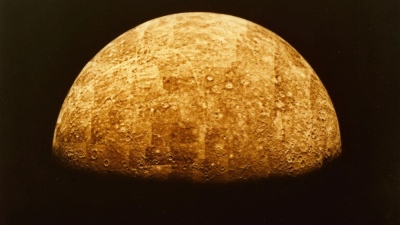
Scientists have reached a discovery that causes shock. Specifically, the characteristic wrinkles covering Mercury, the closest planet to the Sun, suggest that it was once a larger world that has shrunk in size, and may be shrinking more than scientists had realized. The smallest planet in our Solar System is, on average, about 58 million kilometers from the Sun and completes one full orbit around our star every 88 days, according to NASA.
The rocky planet formed from swirling gas and dust about 4.5 billion years ago. The early years of the Solar System were chaotic, with violent interactions as multitudes of space rocks orbiting the Sun collided with one another. Newly formed planets are already hot, resembling volcanic lava, but the energy released from these collisions causes even greater heating. As heat escapes from these worlds over time, the interior of planets like Mercury shrinks. The fractured surface of Mercury bears the scars of this contraction. Scientists call these structures thrust faults and scarps created by shrinkage. Some of these cliffs reach heights of up to 1.6 kilometers and stretch over hundreds of kilometers in length. However, asteroids and comets have also bombarded Mercury, covering it with impact craters, much like the cratered surface of our Moon. The debris from these impacts may have hidden the true extent of planetary contraction over time, according to a new study published in the journal Geophysical Research Letters.
Understanding the rate at which Mercury is shrinking can shed light on how the planet evolved and reveal secrets about its mysterious interior. "There are lessons regarding the formation and evolution of large rocky bodies, such as Earth, that we can draw from Mercury better than anywhere else in our Solar System," wrote Dr. Hannes Bernhardt, who was not involved in the study, in an email. Bernhardt is an assistant research scientist in the Department of Geological, Environmental and Planetary Sciences at the University of Maryland, College Park. The new study also highlights how many questions remain unanswered about this small world. Some of these may soon be answered by an unprecedented mission that will place two spacecraft in orbit around Mercury in November.
www.bankingnews.gr










Readers’ Comments