

Developments in energy markets will play a decisive role both for the trajectory of inflation and the growth prospects of the Eurozone in the coming months.
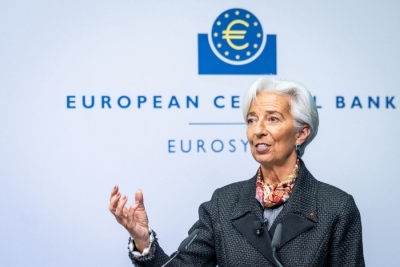
An energy shock could intensify and its impact on prices and wages may be larger than current projections, warned European Central Bank President Christine Lagarde. As she noted, the war in Iran and ongoing tensions in the Middle East have created a new wave of uncertainty for the European economy, fueling inflationary pressures primarily through surging energy prices. During the traditional press conference following the meeting of the ECB Governing Council, which unanimously decided to raise interest rates by 0.25% to 2.5%, Christine Lagarde stressed that geopolitical developments have led to a significant increase in oil and gas prices, elevating risks for Eurozone inflation. As she stated, the effects of the energy shock are not limited to fuel and electricity costs, but may gradually extend to food prices, transportation, and other essential goods. Regarding food prices, she made specific reference to the El Niño weather phenomenon, which adds further pressure. The President of the European Central Bank, Christine Lagarde, stated that Eurozone inflation is expected to remain above the 2% target during the first half of 2027, mainly due to higher energy prices linked to conflicts in Iran and Ukraine. During the press conference following the ECB decision to raise interest rates by 25 basis points, Christine Lagarde mentioned that inflation is subsequently expected to decelerate, as energy inflation moves into negative territory, allowing the headline price index to return near the 2% target toward late 2027. The President of the European Central Bank, Christine Lagarde, stated that risks to Eurozone growth "tilt to the downside," as the ongoing war in Ukraine, Middle East tensions, and the resulting energy crisis weigh on the economic outlook. "The markets are doing their job. We are doing ours. And I can assure you that all the discussions we had today focused on today's decision." "Therefore, we are not discussing and have not discussed potential future paths or probabilities of one or the other, because we take with complete seriousness the framework we follow and which we collectively wish to respect," Lagarde clarified.
Concern over second-round effects
The ECB President emphasized that the central bank is closely monitoring the risk of elevated energy prices spilling over into the broader economy through higher wage demands and increased production costs, creating more persistent inflation. Christine Lagarde noted that inflation continues to move significantly above the 2% target, while recent developments in the Middle East have further burdened the outlook for price stability. According to her, the ECB cannot allow inflationary effects stemming from the energy shock to become entrenched.
Extreme uncertainty sweeps the global economy
Lagarde highlighted that the level of uncertainty prevailing today in the global economy remains extraordinarily high, warning that developments can alter the landscape almost overnight. As she stated, geopolitical tensions, wars in Ukraine and the Middle East, as well as fluctuations in energy markets, create an environment where the economic outlook can shift rapidly.
The ECB remains on high alert
Referring to today's decision to raise interest rates by 25 basis points, the ECB President stressed that the Governing Council will continue making decisions based on incoming economic data and risk assessment. Christine Lagarde made clear that the ECB stands ready to act should inflationary pressures prove more persistent than currently estimated, emphasizing that maintaining price stability remains the top priority of the central bank. The President of the European Central Bank, Christine Lagarde, stated that short-term growth prospects for the Eurozone economy have improved compared to previous ECB staff projections, despite the environment of heightened uncertainty caused by geopolitical developments and high energy prices. During the traditional press conference following the ECB Governing Council meeting, Christine Lagarde mentioned that the improved outlook is primarily supported by private consumption and public spending, which continue to underpin economic activity across the Eurozone.
Resilience despite challenges
The ECB President emphasized that the Eurozone economy demonstrated remarkable resilience during the second quarter of the year, despite pressure from energy costs and international market uncertainty. As she noted, data available to the central bank indicates that this positive momentum is likely to continue into the third quarter, reinforcing the assessment of stronger economic performance relative to earlier forecasts.
Revision of projections
Christine Lagarde pointed out that the ECB revised its growth estimates upward for the Eurozone economy, as households and businesses displayed greater adaptability than anticipated facing consecutive challenges in recent months. Despite the improved growth outlook, the ECB President reiterated that risks remain elevated due to uncertainty surrounding the Middle East war and its knock-on effects on energy markets and inflation.
ECB interest rate hike of 0.25% to 2.5%
The Governing Council of the European Central Bank (ECB) moved today to raise its three key interest rates by 25 basis points, pointing out that conflict in the Middle East continues to generate inflationary pressure expected to remain above target for a prolonged period. With today's decision, the ECB underscores its commitment to conducting monetary policy aimed at stabilizing inflation at 2% over the medium term.
New projections for inflation and growth
According to the baseline scenario of the ECB staff projections, headline inflation is projected to average 3% in 2026, 2.5% in 2027, and 2.1% in 2028. For inflation excluding energy and food, the baseline scenario projects 2.5% in 2026, 2.6% in 2027, and 2.3% in 2028. Compared to the June projections, the estimate for inflation in 2026 remains unchanged, while it has been revised upward for 2027 and 2028. At the same time, the ECB forecasts an economic growth rate of 0.9% in 2026, 1.4% in 2027, and 1.5% in 2028. Growth projections have been revised upward for both 2026 and 2027, a development mainly reflecting the higher-than-expected resilience of the euro area economy.
High uncertainty and upside risks for inflation
The ECB points out that the outlook remains characterized by high uncertainty, with risks remaining tilted to the upside for inflation and to the downside for economic growth. Particular reference is made to energy disruption. Updated ECB staff scenarios reflect the wide spectrum of potential paths for growth and inflation, depending on the intensity and duration of the shock, as well as its indirect and second-round effects. With today's decision, the Governing Council maintains the flexibility to address the uncertainty created by the conflict. The ECB will continue to follow a data-dependent approach, taking decisions meeting-by-meeting to determine the appropriate monetary policy stance. Interest rate decisions will be based on the assessment of the inflation outlook and surrounding risks, in light of incoming economic and financial data, the dynamics of underlying inflation, and the strength of monetary policy transmission. The Governing Council, as the ECB stresses, does not pre-commit to a specific rate path.
The new key interest rates
With the 25 basis points increase, the three key ECB interest rates are set as follows: The deposit facility rate increases to 2.50%. The main refinancing operations rate increases to 2.65%. The marginal lending facility rate increases to 2.90%. The new interest rate values will take effect from September 16, 2026.
Status of APP and PEPP
Regarding asset purchase programs, the APP and PEPP portfolios continue to decline at a measured and predictable pace, as the Eurosystem no longer reinvests principal payments from maturing securities.
The ECB keeps all tools available
The Governing Council stands ready to adjust all available instruments within its mandate to ensure that inflation stabilizes at its 2% target over the medium term. At the same time, the objective is to safeguard the smooth functioning of the monetary policy transmission mechanism. In this context, the Transmission Protection Instrument (TPI) remains available to counteract unwarranted and disorderly market dynamics that could pose a serious threat to policy transmission across all euro area countries. In this manner, the Governing Council seeks to preserve the effectiveness of monetary policy and fulfill its mandate to ensure price stability.
www.bankingnews.gr








Readers’ Comments