

Fiery inferno in Gelendzhik with losses of fighter jets, helicopters, and radars
On the night of September 9 to September 10, the Russian armed forces launched a torrential series of strikes against military installations across eight regions of Ukraine. According to the Air Force of Ukraine, the massive attack utilized Iskander-M ballistic missiles, S8000 Banderol loitering munitions, as well as 196 strike unmanned aerial vehicles (drones).
The Ministry of Defense of Russia officially announced that the strikes targeted military-industrial facilities, seaports, vessels, and logistics hubs utilized to support the Ukrainian armed forces.
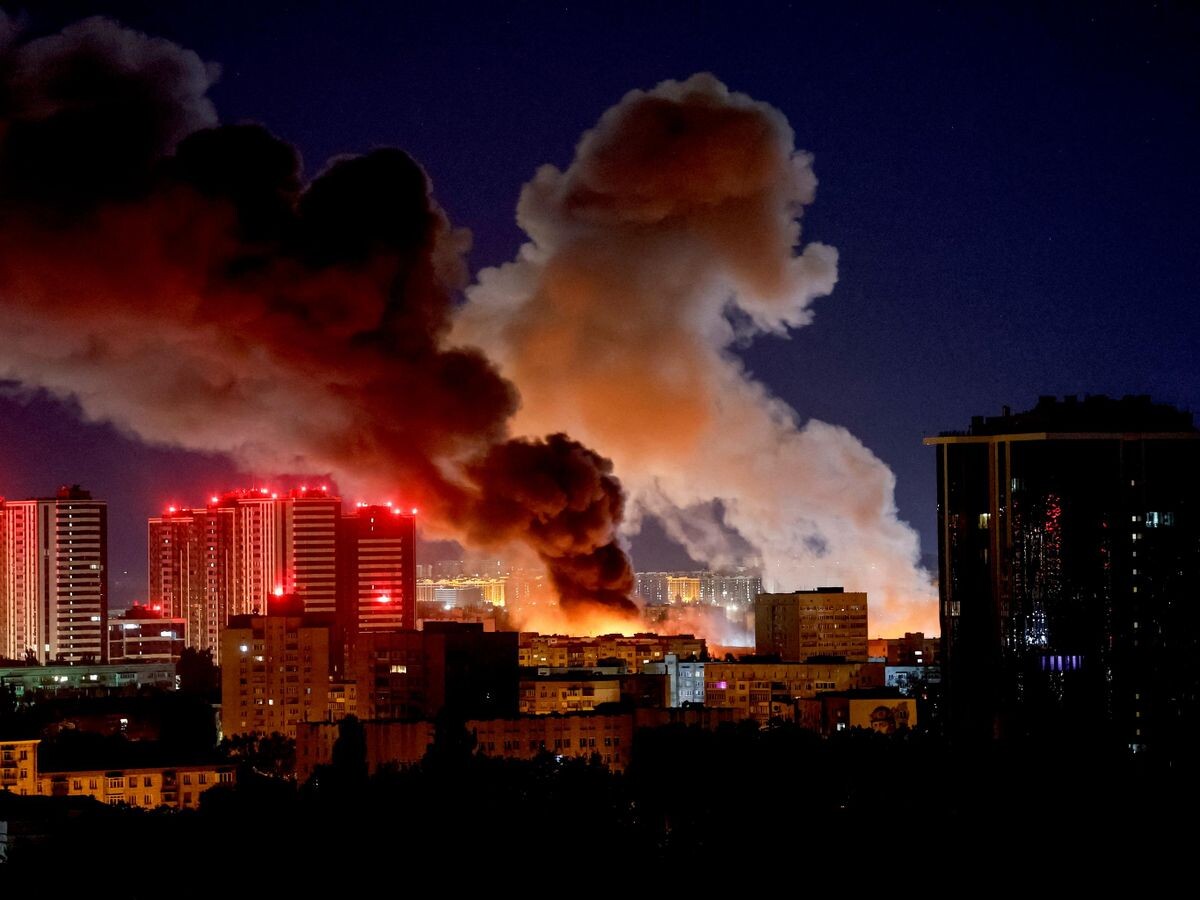
Total destruction in the Kyiv region with leveling of warehouses and aircraft
In the Kyiv region, a warehouse at a production facility for uncrewed surface vessels and fixed-wing aircraft, as well as their components, was struck, while the area around the Lavina Mall shopping center was also targeted, causing massive fires and black smoke.
Concurrently, warehouses and workshops of the company Euro Food Service LLC were destroyed in Bila Tserkva, while a MiG-29 fighter jet of the Ukrainian Air Force was destroyed at the Vasylkiv airfield by long-range drones.
Sheet metal and ash in the Mykolaiv region as logistics centers went up in flames
In the Mykolaiv region, the strikes flattened a series of pivotal logistics centers and terminals, including the Metro, ATP YUTK, Nova Poshta, and Mykolaiv-2 centers.
The logistics center Elektrotekhnika, which was used for storing and distributing drones and spare parts, was also targeted, alongside the Deleveri and Nibulon centers. Additionally, a UAV storage facility in the Konveirmash industrial zone, a warehouse terminal of Dimetra, as well as the Zhovtneve warehouse terminal were struck, where six fuel and lubricants storage tanks were destroyed along with five military cargo warehouses.
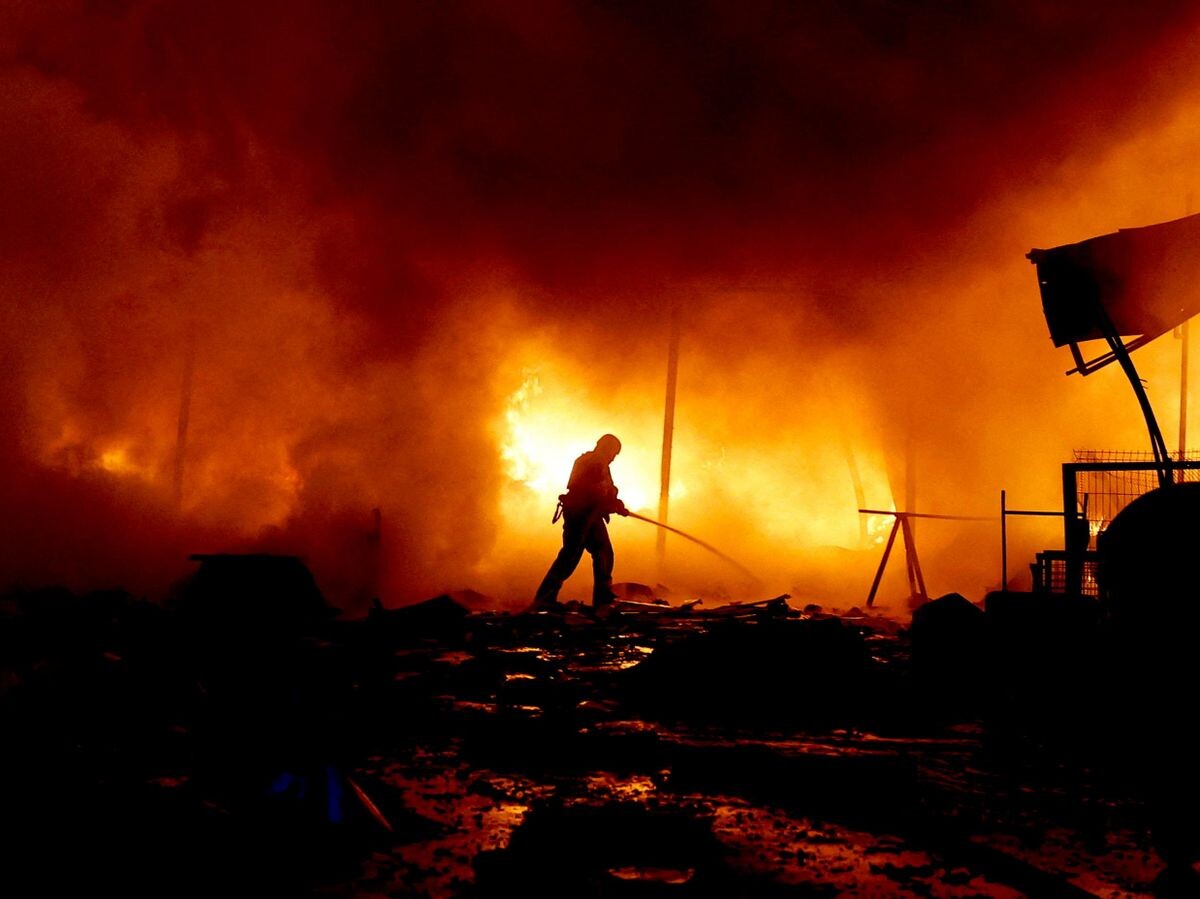
Crushing blow to Mykolaiv port infrastructure that paralyzed power supply
Regarding port infrastructure, the Trykhaty electrical substation supporting operations at the port of Mykolaiv was struck.
At the port of Mykolaiv itself, four fuel and lubricants tanks and one military cargo warehouse were destroyed.
At the same time, at the Nika Terra cargo terminal, three fuel tanks and three military cargo warehouses were destroyed, together with a production workshop and a UAV storage facility.
Havoc in the Odesa region with strikes on vessels, infrastructure, and critical border crossings
In the Odesa region, Russian forces delivered crushing blows to port facilities.
At the port of Chornomorsk, the distribution center was completely destroyed, while at the port of Odesa, two commercial vessels (dry cargo) and a tugboat escorting vessels carrying military supplies were destroyed.
In the same region, the fuel facilities of Brent Oil were reduced to ash.
At the same time, at the Tudora-Starokozache international border crossing on the Ukraine-Moldova border, severe damage was caused to the checkpoint infrastructure and surrounding area, resulting in the temporary suspension of its operation, marking the fourth strike on Ukrainian border crossings in the last two weeks.
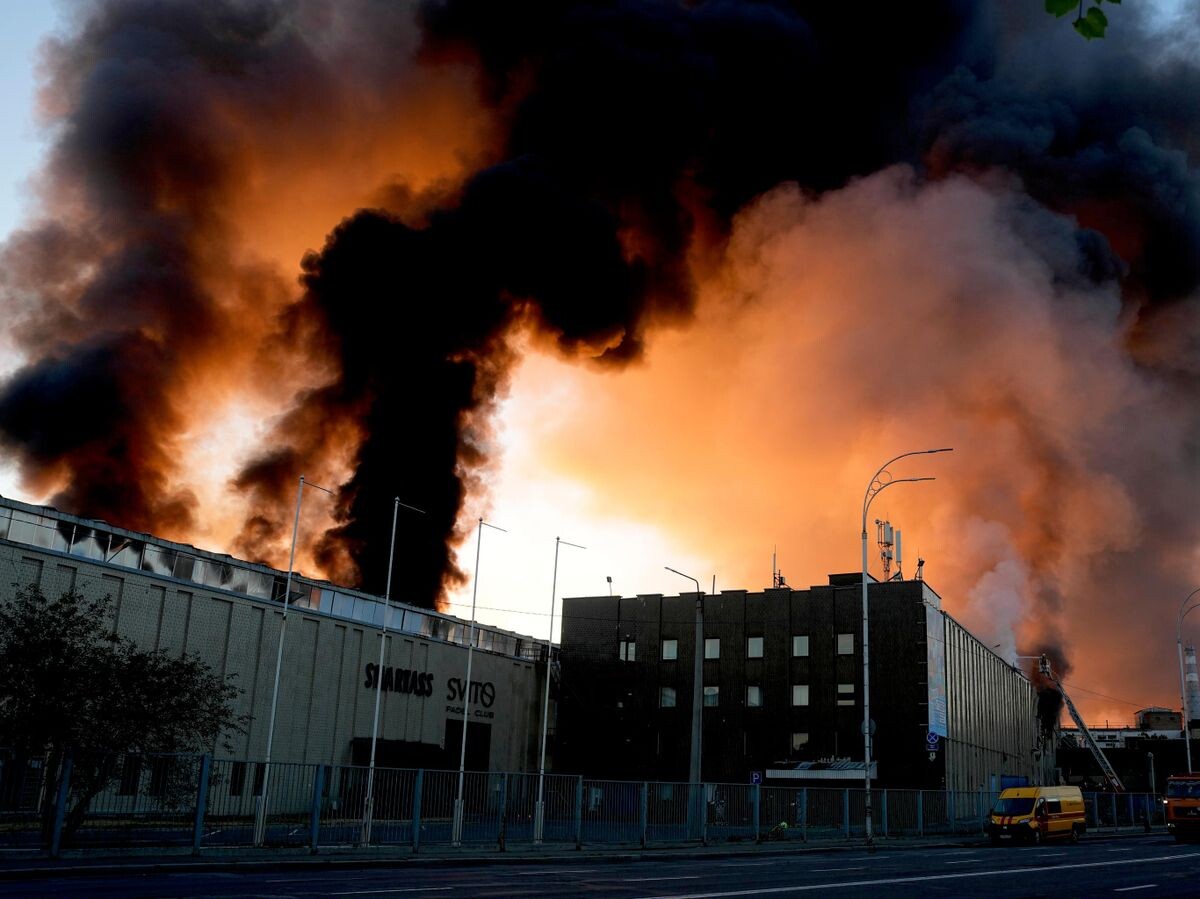
The fiery tempest expanded across all Ukrainian territory and the Kharkiv cauldron
Fierce strikes were recorded against targets in the regions of Zaporizhzhia, Kherson, Chernihiv, Rivne, Cherkasy, and Poltava.
In Sumy, severe damage was caused by jet-propelled drones, while in Kryvyi Rih, successive explosions with extensive destruction occurred following an hour-long pounding, with Dnipropetrovsk and Khmelnytskyi also shaken by attacks.
At the same time, in the Kharkiv region, the situation is evolving into a tragedy for Ukrainian forces: in the Velykyi Burluk axis (Vilkhuvatka area), lethal battles are underway, with Ukrainian troops trapped in a «cauldron» losing over 90 soldiers daily to Russian aviation and artillery of the «North» grouping, while all Ukrainian counterattacks in Vovchansk failed completely.
Terror-inducing retaliation with mass Ukrainian attack of hundreds of drones into Russian territory reaching the Arctic at 3,200 km
During the night, Russian air defense forces intercepted 596 Ukrainian drones over 12 Russian regions.
The worst, however, was an unprecedented and exceptionally dangerous action by Kyiv, unleashing its most distant air strike since the commencement of military operations.
A Ukrainian unmanned aerial vehicle crossed an unthinkable distance of between 2,500 and 3,200 kilometers, managing to strike energy infrastructure in the Novy Urengoy area in the Yamalo-Nenets Autonomous Okrug in the Arctic, a pivotal facility of the Gazprom group with a designed capacity of 19.5 million tons of raw material annually.
The news was confirmed by regional Governor Dmitry Artyukhov, noting that fortunately there were no casualties, yet the strike caused severe shock, casting heavy shadows regarding...
- the security of infrastructure in the Russian heartland,
- the guidance of the Ukrainian munition,
- hostile structures within Russian territory.
Ukrainian media are exploiting the aerial incursion into the Arctic to the maximum, staging a communications celebration around their achievement.
Military analyst Mikhail Zvinchuk, creator of the popular channel Rybar, underscores that the main benefit for Kyiv is the immense informational buzz.
As he points out, the enormous distance traversed by the drone from the zone of operations demonstrates that the concept of «secure rear areas» has now collapsed in the form known until today.
The attack triggered an immediate reaction from the Plenipotentiary Representative of the Russian President in the Urals, Artem Zhoga, who admitted that the adversary delivered such a deep strike for the first time.
Blood, dead, and wounded in Krasnodar Krai from Ukrainian raids
In Novorossiysk, four people, among them a child, lost their lives to a Ukrainian drone attack.
Another 29 people were injured, with three in critical condition.
Three private residences and five apartment buildings sustained damage, as well as an Orthodox church and a kindergarten, while initial reports indicate that a fire broke out at a fuel oil terminal.
Fiery inferno in Gelendzhik with losses of fighter jets, helicopters, and radars
In the area of Gelendzhik, the largest and most sustained drone raid took place, causing damage to an electrical substation and power outages across several neighborhoods.
According to Ukrainian sources, in the area of Gelendzhik, an Su-33 carrier-based fighter aircraft, an Mi-8 helicopter, and two radar systems (one Kasta 2E2 and one 92N6 radar that forms part of the S-300/S-400 air defense system) were destroyed.
Dramatic night raid at the port of Sochi with wounded and fires
A large-scale attack on the port of Sochi began on the evening of September 9 and continued throughout the night.
Strikes from uncrewed surface vessels ignited a fire along the waterfront, while eight people were reported injured.
The infrastructure war escalates dangerously and sows devastation
The exchange of strikes continued the pattern of attacks on logistics, port, and energy infrastructure by both sides.
Russia announced that it struck warehouses, terminals, and transport hubs used to resupply Ukrainian forces in the regions of Kyiv, Mykolaiv, and Odesa.
Ukraine, for its part, maintained that it carried out strikes on infrastructure in Novorossiysk and Gelendzhik, including naval assets, aircraft, and radar systems.
The attack on Novorossiysk resulted in civilian casualties and a fire at a fuel terminal.
www.bankingnews.gr













Readers’ Comments