

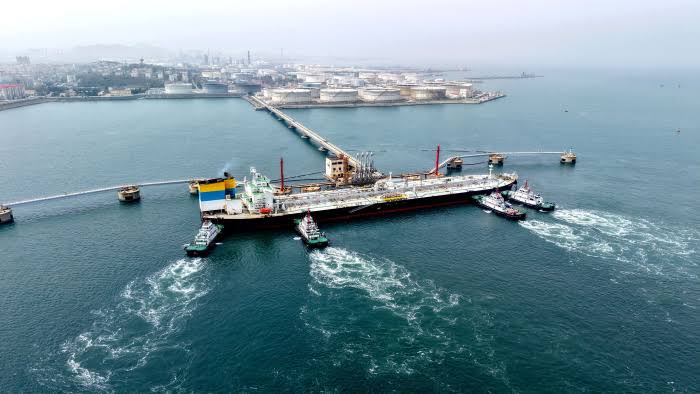
China reduced crude imports and tapped into its strategic reserves, keeping international prices under control. Now, however, its purchases are rising again and global oil markets are being tested.
«China in some ways saved the day» and helped the world avert a «Doomsday scenario», as the closure of the Strait of Hormuz severed 20% of global energy supply, stated Paul Gruenwald, chief economist at S&P Global Ratings, speaking at a conference in Singapore on Thursday, as reported by CNBC.
Years of crude stockpiling by China and the subsequent retreat of its crude purchases following the outbreak of the war in the Middle East in late February helped the world avoid a far deeper energy crisis.
Yet this «cushion» may now be put to the test, as Beijing displays signs that it is gradually resuming oil purchases, according to economists.
China cut imports and tapped stockpiles
The largest crude-purchasing nation in the world sharply reduced its imports following the outbreak of the war and began drawing down its reserves.
In doing so, it contained international oil prices and shielded its economy from the energy shock.
The American Energy Information Administration estimates that China holds 1.4 billion barrels of strategic crude reserves, compared to 825 million barrels in the US, based on data through December 2025 and including commercial stockpiles.
Crude imports of China fell below 8 million barrels per day in May and June, recording a decline for the first time since 2016, according to the EIA.
Forecasts of 200-dollar oil disproven
Shortly after the outbreak of the conflict, oil market analysts had predicted that prices would surge to 150 to 200 dollars per barrel, driven by the abrupt disruption to supply.
«Not only were we wrong about the magnitude of the move, but at times we were even wrong about the direction», stated Gruenwald.
Brent prices had retreated to roughly 80 dollars per barrel, before surging again in recent days and surpassing 100 dollars on Wednesday, as hostilties reignited between Iran and the US in the Persian Gulf.
Nevertheless, this level remains «manageable» for the global economy, according to Gruenwald.
The Chinese «cushion» has its limits
The energy stockpile of China is not inexhaustible.
There are now indications that crude imports of the country are beginning to recover gradually.
Crude imports of China increased by 22% on a month-on-month basis in July and by 6.2% in August, although they remain significantly below last year's levels, according to official trade data.
If China returns to its pre-war import pace, the drag on global growth from elevated oil prices will be far greater than current estimates, warned Krishna Srinivasan, director of the Asia and Pacific Department at the International Monetary Fund.
The Beijing model
Beijing had prepared precisely for such a scenario, establishing alternatives and excess capacity that allowed oil consumption to contract without harming economic activity, stated Kai Guo, executive president and senior fellow at the China-focused think tank CF40 Institute.
The crisis, according to him, vindicated years of state investment in oil storage and clean energy, anticipating a potential fracture in global oil supply chains.
China holds roughly four months of crude reserves in its national stockpiles. At the same time, a new energy law enacted last year mandates that major oil corporations maintain additional reserves, beyond their standard commercial inventories, stated Dan Wang, director for China at Eurasia Group, on Thursday.
«The economy is essentially protected from this oil crisis», she stated.
Coal acts as a shield
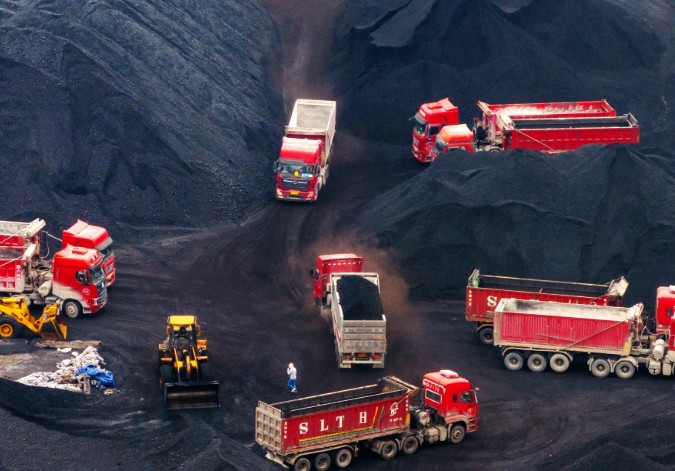
Coal, which still accounts for approximately 53% of the energy mix of China according to Wang's assessment, functioned as a critical shock absorber.
It provided the Chinese economy the ability to substitute for crude when prices surged.
«This particular Chinese model» would not function well in a standard economy, given the misallocation of investment it entails. Yet «when something as uncertain as this occurs, especially in Eurasia, it works», Wang stated.
She projects that the confrontation in the Persian Gulf will persist for at least one year, with oil prices remaining between 85 and 100 dollars per barrel through 2027.
Goldman Sachs: Oil could reach 120 dollars again
Despite the contribution of Chinese stockpiles in absorbing the shock, the risk for international markets has not disappeared.
Economist at Goldman Sachs Daan Struyven warned in a recent note that oil prices could reach as high as 120 dollars per barrel, as the war, now entering its seventh month, continues to disrupt maritime transport.
China has so far managed to function as an immense global energy «cushion», curbing its purchases and utilizing its strategic reserves. But as its imports begin to recover, the question is whether this cushion can continue to hold back international prices.
If Beijing returns fully to its pre-war demand, crude will once again confront a volatile combination: constrained supply, disrupted shipping, and an economic heavyweight returning to the market for millions of barrels.
www.bankingnews.gr








Readers’ Comments