

North Korea could potentially agree to certain mild, but nonetheless substantive, limitations on its nuclear program
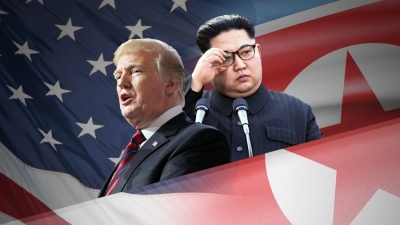
In his effort to divert attention away from Iran and finally secure a major diplomatic breakthrough, President Trump is turning once again toward North Korea.
The three high-profile meetings with Kim Jong Un during his first term produced no meaningful progress, leaving behind scars in the relationship with the isolated leader.
However, Trump managed to establish a measure of personal rapport with Kim Jong Un, upon which he now wishes to build.
The odds of achieving a better outcome this time are exceedingly narrow.
Yet inaction is hardly an appealing alternative either.
Four prerequisites for an agreement
As has always been the case, the prospects of reaching any accord between the US and North Korea depend on the simultaneous fulfillment of four prerequisites.
First, Kim Jong Un must be offered something he genuinely desires.
Second, in return he must be asked only for things he would be willing to concede. Third, the US must be in a position to deliver on the promises made to him.
And, finally, both domestic political pushback in the US and regional resistance to such a pact across Asia must be surmounted.
Balancing all of these requirements has proven impossible in the past.
Kim Jong Un was demanded to fully dismantle his nuclear program, an option he could never entertain out of fear that it would jeopardize his country's survival.
Offering economic prosperity as an incentive along the model of Vietnam fared no better. Kim fears such an evolution just as acutely, worrying about its ramifications for maintaining his grip on power.
Moreover, any arrangement falling short of satisfying the expectations of Japan and South Korea for comprehensive North Korean denuclearization, stringent verification inspections, and the return of Japanese abductees would hardly find acceptance in the region, and even less so in Washington.
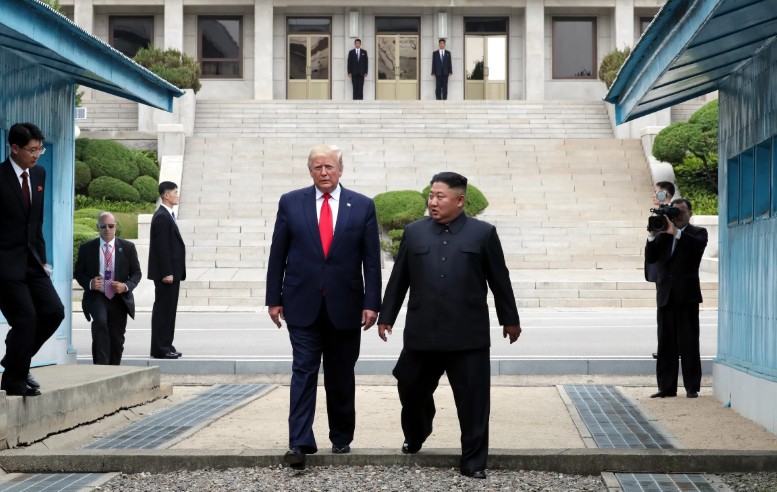
North Korea holds stronger leverage today
Under these conditions, the likelihood of success for a fresh initiative seems even slimmer.
North Korea now commands a stronger posture across virtually every domain. It possesses a larger and more resilient nuclear infrastructure, a greater arsenal of atomic weapons, a firmer economy, and closer alignments with Russia and even China.
Simultaneously, the already uncertain capacity of Trump to follow through on commitments will likely be constrained further following the congressional midterm elections this autumn.
The central dilemma, however, is whether the risks of another breakdown now outweigh the strategic merits of granting diplomacy one more chance.
Diplomacy remains preferable to inaction
The answer is finely balanced, notes an analysis by Modern Diplomacy.
Much depends on setting realistic expectations and meticulously laying the groundwork for a summit.
The Trump administration does not boast an enviable track record in negotiations: abundant theatricality, inadequate preparation, fragile choices of envoys, and an even weaker capacity to implement agreed frameworks.
Yet the failure to conclude a pact at a summit is less damaging than abandoning the very opportunity for engagement, an outcome that could discourage future American administrations from attempting such outreach.
Allowing tensions to simmer across the Korean Peninsula while diluting American commitments to the defense of Asian allies bodes ill for regional equilibrium, let alone for preventing a cascade of nuclear proliferation across Asia.
Trump now possesses a stronger incentive
Furthermore, the chastening experience of Trump and his powerful incentive to clinch a deal this time around could make a decisive difference.
Particularly if paired with Pyongyang's insistence on thoroughly preparing the diplomatic terrain prior to committing to a fresh summit.
The confluence of these dynamics provides grounds to hope that a debacle might be averted.
Enlisting a veteran American negotiator to prepare the groundwork, such as former Deputy Secretary of State Steve Biegun, would substantially improve the odds of success.
Where common ground might be forged
Where, then, could common ground be identified?
The crux lies in blending symbolism with substance.
North Korea might conceivably accept certain modest, yet meaningful, curbs on its atomic program, such as placing a ceiling on the expansion of its arsenal and committing to a no-first-use doctrine for nuclear arms.
This could even be accompanied by targeted on-site verification visits to confirm compliance, rather than an intrusive inspection regime.
In exchange, the US would need to depart from its long-standing orthodoxy of demanding an ironclad North Korean commitment to verifiable and irreversible denuclearization.
Undoubtedly, this would represent an imperfect compromise. Yet it would prove decidedly superior to the ongoing arms race and the mounting probability that South Korea is driven toward developing its own sovereign nuclear deterrent.
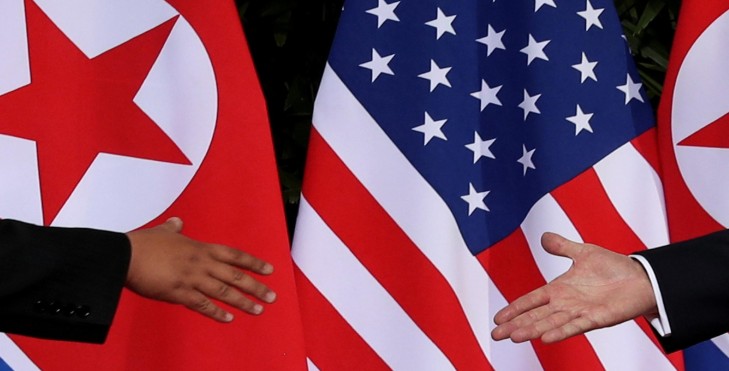
Nuclear bargaining with concessions
It could prove both necessary and desirable to flank such a nuclear give-and-take with reciprocal non-aggression pledges, economic incentives such as targeted sanctions relief, limited confidence-building measures, and a structured mechanism exploring regional nuclear cooperation across the Korean Peninsula.
Standard declarations honoring the aspirational vision of a denuclearized Korean Peninsula and peaceful reunification could perhaps be retained for political convenience.
They would need, however, to be framed cautiously in vague, aspirational terms.
The reason is that North Korea now approaches its dialogue with the US as an independent relationship between major powers, rather than one tethered to the obsolete concept of the peninsula as «one nation, one family».
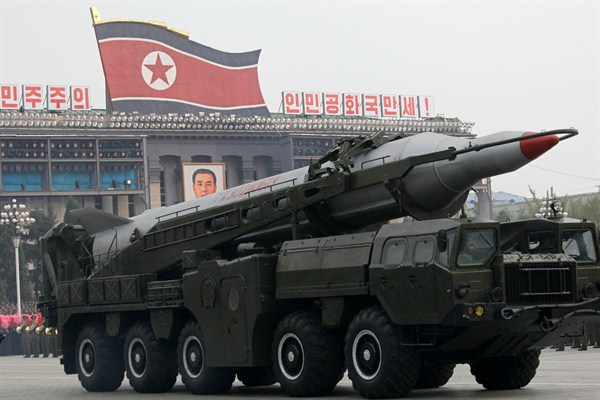
Delicate balance with South Korea, Japan, and China
Finally, the US must proceed with extraordinary tact so that even a partial rapprochement with North Korea does not signal an abandonment of South Korea and Japan, nor a retreat on core security priorities.
Concurrently, the US must ensure that China is kept apprised of any potential thaw in Washington-Pyongyang relations.
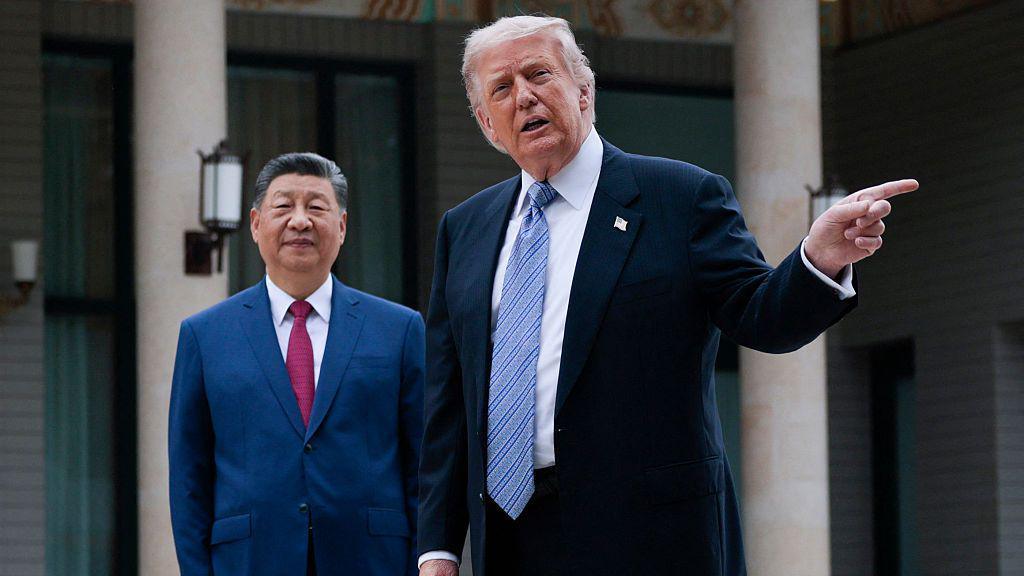
Otherwise, it risks introducing further turbulence into ties with Beijing and complicating the upcoming visit of President Xi Jinping to the United States this autumn.
The renewed outreach of Trump toward Pyongyang represents, therefore, an exceptionally challenging diplomatic gamble. North Korea is today more formidable, more heavily armed with nuclear weapons, and far less inclined to grant concessions.
Yet the absence of dialogue allows the arms race to escalate unchecked, amplifying the danger of a far broader nuclear showdown in Asia.
www.bankingnews.gr








Readers’ Comments