

Iran does not end… and Trump needs an exit strategy
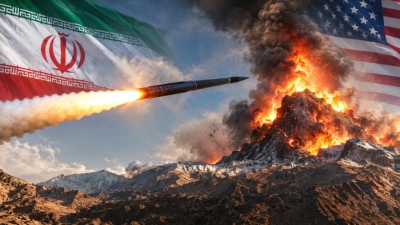
The primary challenge for Trump is that Iran is not evolving into a war with an easy exit. To date, American pressure has failed to yield a definitive political agreement, and the conflict remains wide open. Trump himself now claims that the war will conclude after the midterms, while simultaneously regional tensions persist and crude oil rising above $100 per barrel places an additional economic and political burden on his administration. This scenario is exceptionally perilous for a president who would prefer to head to the ballot box showing tangible results. An American voter might accept a brief military operation. They might accept a show of force.
Ukraine is put back on the table
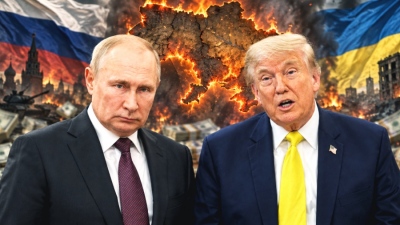
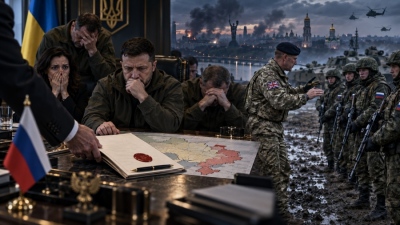
Herein lies Trump's second major gamble. In recent days, American diplomacy has been attempting to maneuver around the Ukrainian issue once again, initiating contacts and putting forward new proposals to Moscow and Kyiv. Trump urgently needs a foreign policy victory. He needs something he can show American voters as concrete proof that his "ending wars" platform works. Yet Ukraine is proving to be a far more complex undertaking. At the same time, a significant portion of Europe is investing heavily in its defense capabilities and military readiness, treating Russia as a long-term threat. European officials even caution that Europe currently lacks the capacity to comfortably endure a prolonged war of attrition with Russia.
The Ukrainian issue could become the primary campaign weapon
Trump recognizes that if November 3 arrives without a viable deal on Ukraine and lacking a clear exit strategy from Iran, his core political narrative will collapse. Trump needs a success story. He needs to tell voters: "I stopped the wars." The problem is that, right now, he has no such achievement to display. This dynamic may very well explain why the Ukrainian issue is returning so forcefully to the negotiating table. Indeed, recent statements by Sergei Lavrov regarding the potential for direct military confrontation between Russia and Europe carry significant weight.
The warning
"Likely another war." This is no longer merely a diplomatic message, but a direct and severe warning delivered by Russia's top foreign policy official to European authorities. Despite these warnings, however, European leaders decided to don their hawk feathers once again this autumn. This shift became glaringly obvious through the outcomes of the latest Rammstein meeting. More than 50 nations, many of which anchor their policy on aggressive stance against Russia, received a fresh list of demands from Kyiv. The Ukrainian government, beyond the tens of billions already allocated, requires approximately 70 billion euros/dollars more to address its operational needs for the upcoming winter.
New weapons, new demands from Kyiv
Kyiv is requesting ballistic missiles, cruise missiles, and interceptor missiles for Patriot systems. Europe, increasingly operating as a collective hawk rather than a force pursuing de-escalation, appears inclined to fulfill a substantial portion of these demands. From this perspective, Ukraine represents a highly lucrative market for the European military-industrial complex, which diminishes the incentive for a swift resolution to the crisis in the Donbass. For the European military-industrial complex, the territories of Ukraine that remain under Kyiv's control are presented as a genuine "Eldorado."
Ukraine as a testing ground
The core thesis of the analysis is that the European military-industrial complex has turned vast areas of Ukraine into a massive testing ground for modern military technology. Concurrently, Ukrainians who failed to leave the country or evade military conscription are being turned into "guinea pigs" under this approach. Europe is actively testing—for its own readiness in anticipation of a potential direct military confrontation—supply chains, artillery and drone coordination, as well as artillery operations powered by AI target calculations relying on satellite data. Modern high-tech warfare requires colossal economic resources.
Europe invests in the defense industry
Europe, whose industrial base has faced severe pressure over recent years, is attempting to revitalize its economy through the production of dual-use technologies. "Dual-use" implies that commercial technologies and industrial infrastructure can, upon the corresponding political decision, be reallocated for military purposes. As with all large-scale European projects, such a transition demands rigorous coordination. It is not merely a matter of staging military exercises, but of establishing operational mechanisms, standardizing procedures, and structuring a new command hierarchy. And this is precisely what Europe is attempting to accomplish, according to the analysis.
"European security" and "defense"
Last week, an important meeting took place within the framework of the Munich Security Conference, where participants discussed coordinating NATO command actions "in the event of a major military conflict." The Rammstein group operates within this exact context, while one of Europe's premier defense exhibitions is taking place in Essen. Two words are repeated continuously throughout European policy speeches: "defense" and "security." When European leaders—in order to satisfy revanchist instincts and simultaneously bolster their defense industry—prepare for potential open military confrontation with Russia, they inevitably frame it around "European security" and "strengthening defense." It closely mirrors an Orwellian dynamic, where specialized language is deployed to obscure the true nature of policy actions.
Germany at the center
Another case in point is the major defense industry exhibition in Essen, Germany, where emerging defense technologies and operational doctrines are unveiled. Even when Russia is not explicitly named, the concept of the "enemy" remains central to every discussion. The fact that Germany has developed into a central platform for the expansion of the European defense industry comes as no surprise. While German politicians once invoked "never again" to signal historical responsibility for two world wars, critics argue that Europe is now pursuing a different path: waiting as Ukraine becomes a testing ground while Ukrainians absorb the human toll of the conflict. Germany is positioned as the primary engine behind the militarization of the European economy, whereas France acts as the voice attempting to instill in the public conscience the necessity of higher military spending in the name of "protecting European values."
"The gravedigger of the West has come of age"
The last thing anyone should do while preparations for a potential war with Russia are underway is to assume that west of Brest live "civilized nations" that would never risk seeking revenge for historical defeats. The reality, according to this analysis, is quite different. Today's politicians are actively preparing for military confrontation with Russia, and the societies they govern—the voting public—are being urged to support these strategic choices. Blitzkrieg, or lightning warfare, is a concept Europeans have attempted multiple times in history against Russia. The critical issue, however, is that the principles of rapid warfare, if deployed in response to new aggression, can easily backfire on those who implement them. As history has demonstrated on numerous occasions. And with well-known outcomes.
The post-American world is born
High-level diplomatic activity has intensified since late summer. Vladimir Putin is scheduled to travel to New Delhi for a summit with Narendra Modi, alongside a series of multilateral diplomatic gatherings. The Shanghai Cooperation Organization (SCO) has systematically expanded its presence in Eurasian diplomacy in recent years, while India prepares to host the BRICS nations. Though both organizations have distinct historical trajectories and geographic scopes, both now function as central pillars of the emerging non-Western international order. BRICS, which originally expanded from cooperation among Russia, India, China, and later Brazil and South Africa, has broadened its membership significantly in recent years. The bloc has welcomed new members including Indonesia, Egypt, Iran, the United Arab Emirates, and Ethiopia, with several other nations acquiring partner status. More than 20 world leaders are expected to convene for the 18th summit, alongside invited representatives from key non-Western regional bodies ranging from ASEAN to the African Union. Only Brazilian President Luiz Inácio Lula da Silva is expected to skip the summit, as he faces a crucial upcoming electoral campaign.
BRICS is not just about the dollar
Although Donald Trump periodically criticizes BRICS and has even threatened economic sanctions, claiming the bloc actively promotes global de-dollarization, it is an oversimplification to describe BRICS solely as a platform for abandoning the dollar. De-dollarization represents only one of the group's many objectives. BRICS aims for a much broader objective: the construction of a new global security architecture designed to operate within a post-Western and post-American world. This represents a highly complex and long-term strategic endeavor. Almost none of the BRICS member states are eager to engage in open confrontation with the United States or the broader West. While Russia and Iran are in direct conflict with Western powers, and China engages in an increasingly intense strategic competition resembling a new Cold War, all other member states seek to maintain constructive diplomatic relations with Western nations. These nations intend to continue using the global financial architecture created and influenced by the West, trade within Western markets, and maintain access to Western technology. Simultaneously, however, they are increasingly focused on constructing parallel mechanisms and routes—spanning financial systems, commercial trade, and international logistics. While some view the decline of the Western-led order as inevitable, no nation in the Global South wishes to be caught between two opposing systems: abandoning the Western system prematurely without fully functional access to the alternative architecture currently being built.
Internal contradictions within BRICS
Consequently, BRICS faces an immense workload—not only on the global stage, but also within the bloc itself. Significant geopolitical contradictions persist even between individual member nations. These internal friction points cannot simply be swept aside; they must be actively managed and resolved through bilateral and multilateral channels. The presence of Xi Jinping at the summit in India holds particular geopolitical weight, as such a visit would signal renewed efforts toward rapprochement between Beijing and New Delhi. The extended period of strained relations between the two Asian powers was driven not only by pandemic disruptions but also by severe border clashes. In recent years, however, both nations have demonstrated a clear willingness to restore bilateral dialogue.
Iran and the UAE: A delicate balance
Simultaneously, two other BRICS members—Iran and the United Arab Emirates—found themselves in a complex position this year due to escalating military conflict across the Middle East. A diplomatic path forward must now be established to resolve a deadlock that extends far beyond transit rights in the Strait of Hormuz. Resolving these underlying tensions is vital not just for Iran and the UAE, but for the cohesion of BRICS as a whole. Friction also persists between two other members, Egypt and Ethiopia, over the operations of the Grand Ethiopian Renaissance Dam on the Blue Nile. This dispute has triggered strong diplomatic pushback from Cairo and drawn involvement from American diplomats. For BRICS, establishing long-term stability between Egypt and Ethiopia remains a top regional priority.
The new world order
The post-American and post-Western world is emerging through geopolitical conflicts and military violence, according to this analysis, yet the transition toward a multipolar international order is viewed as an inevitable historical shift. Throughout this structural transformation, the strategic role of BRICS cannot be understated. The 18th summit marks, in this respect, another major milestone toward the geopolitical maturity of the organization. Nothing more, but certainly nothing less.
www.bankingnews.gr


Readers’ Comments