

A new dimension is being added to the case of Iran capturing an American unmanned submarine, as Anduril founder Palmer Luckey directly refutes US CENTCOM's attempt to downplay the vessel's operational and technological value. CENTCOM had argued that it was an "older model" that neither collected sensitive data nor possessed classified sonar or radar systems. Palmer Luckey, however, provides a completely different picture. He confirms that the vessel was an Anduril Dive-LD and that it had been operating within CENTCOM's area of responsibility for months, completing thousands of operational hours in support of US forces. Most importantly, according to him, the submarine had offered "significant value" before being captured by Iranian forces.
"It collected sensitive data" – The direct contradiction of CENTCOM
Luckey, referring to the vessel's capabilities, emphasizes that he cannot reveal specific details due to the classified nature of the information. However, his statement remains particularly revealing: "I cannot go into details [due to classification], but it provided significant value [collecting sensitive data via sonar/radar] for months prior to its capture." In other words, the narrative of an outdated and operationally insignificant submarine carrying no sensitive information is directly challenged by the very man behind its construction. The contrast with CENTCOM's initial positioning is clear and raises legitimate questions regarding what was on board and what military intelligence may have been gathered during its months of operational deployment.
It was not even an "old" model
Palmer Luckey simultaneously refutes a second critical element of the official US version. The Dive-LD was not an obsolete platform, as its mass production only began in early 2026. This specific detail underscores the gravity of the capture, as Iran has apparently not merely acquired an old underwater vehicle, but a relatively new autonomous submarine system actively deployed in the region.
Iran conducts reverse engineering – China in the frame
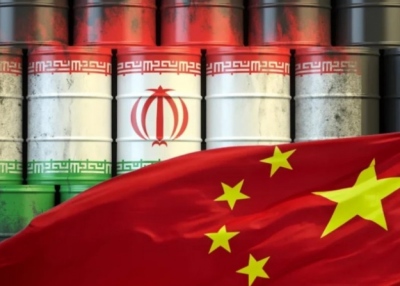
The situation now carries even greater geopolitical weight. Iran has reportedly already initiated reverse engineering procedures on the vessel, attempting to decode its underlying technology and operational capabilities. It is at this point that another major power enters the picture. According to a senior Iranian source in Tehran familiar with the matter, China has requested permission from Iran to inspect the submarine. If confirmed, the capture of the Dive-LD becomes far more significant than the simple loss of a drone submarine in the field. An American system that operated for months in the Middle East is now in Iranian hands, while Beijing displays direct interest in its underwater technology.
From operational tool to potential technological "trophy"
This development presents a severe headache for US officials in Washington. The critical question is no longer just how the Dive-LD ended up in Iranian hands, but what can be uncovered from its internal systems. If the vessel indeed utilized advanced sonar and radar for data collection, as Palmer Luckey asserts, then Iran's ability to analyze the platform and potentially transfer technological know-how to a third party carries immense strategic weight. Furthermore, the involvement of China makes the matter even more sensitive. For the United States, the true risk may not be the physical loss of a submarine, but the potential erosion of a technological advantage in a region where Washington faces direct confrontation with Tehran and broader rivalry with Beijing.
www.bankingnews.gr









Readers’ Comments