

Another nightmare night was experienced by the United States from September 9 to 10 amid escort operations for commercial vessels in the Strait of Hormuz, as Iranian forces reportedly launched a heavy attack against the aircraft carrier USS Washington with the new Qassem Bassir anti-ship missile, repelling the aircraft carrier hundreds of kilometers away from the Iranian coast. In fact, in the aftermath of the Iranian strikes, all US warships, including destroyers and cruisers, have withdrawn at least 500 kilometers away from the Iranian coast, as revealed by Revolutionary Guard General Hossein Mohebbi.
BREAKING: IRAN ANNOUNCES IT HAS DIRECTLY STRUCK A U.S. AIRCRAFT CARRIER AT A 500-KM RANGE — with IRGC spokesperson Gen. Hossein Mohebbi claiming ALL U.S. WARSHIPS have retreated at least 400 KM from Iran’s coastline following Operation “Ramadan,” per Mehr News Agency. Mohebbi claims 30–40 U.S. warships were previously in the Persian Gulf — NOW NONE REMAIN. Iran says the operation demonstrated its ability to DENY NAVAL ACCESS and strike targets hundreds of kilometers away. Iran is now warning that it will launch ANOTHER SURPRISE ATTACK — signaling that the latest operation may be only the beginning.
— The Hormuz Report (@HormuzReport) September 9, 2026
According to Iranian agencies, before the operation, there were approximately 30 to 40 US warships in the Persian Gulf, whereas now "none remain" in the region. At the same time, the Iranians have reportedly altered their strike methodology against aircraft carriers and cruisers, no longer launching conventional anti-ship cruise missiles, but ballistic missiles equipped with anti-ship warheads. Along with these, Tehran is deploying the Qassem Bassir hypersonic anti-ship ballistic missile, characterized by Tehran as a "carrier killer," against an American nuclear-powered aircraft carrier strike group.
News Nation: Intelligence services urgently brief Trump and General Dan Caine on Iran
News Nation reports that President Trump received an intelligence briefing regarding Iran. Along with Trump were Vice President Vance, Secretary of War Pete Hegseth, and General Dan Caine, Chairman of the Joint Chiefs of Staff.
The IRGC imposed an exclusion zone on shipping east of the Strait of Hormuz
Iran is imposing a shipping exclusion zone east of the Strait of Hormuz, stated the spokesman for the Iranian Revolutionary Guard Corps (IRGC). "The prohibited area extends from the port of Chabahar to parts of the Gulf of Oman and the Arabian Sea," he said, according to the Fars news agency. He added that any vessel passing through this zone will be subject to sanctions if it does not coordinate transit with Iran. These sanctions, he said, will include the refusal to provide maritime services and insurance if the vessel violating the prohibition attempts to use the corridor again.
CBS: Iran hit 9 fighter jets at the Muwaffaq Salti US base in Jordan... they launched 30 Patriot missiles
Several US military aircraft were damaged at the Muwaffaq Salti US air base in Jordan following Iranian strikes on Wednesday night, reports CBS News journalist Jennifer Jacobs, citing sources. Earlier, US Central Command announced that US forces destroyed five Iranian tankers. Subsequently, the Iranian military stated that it attacked two US destroyers as well as the Al-Azraq US base in Jordan. The Revolutionary Guard (IRGC), during retaliatory strikes against a US base in Jordan, targeted facilities housing and maintaining F-35, F-16, and F-15 fighter jets. "Several US military aircraft sustained damage during overnight strikes (on September 9) at the Muwaffaq Salti US air base in Jordan," reported CBS. An American A-10 Thunderbolt II attack aircraft was struck and lost a wing. Approximately 8 F-15 fighters sustained minor damage and have since returned to service. "US military forces in Jordan fired more than 30 Patriot missiles to defend against Iranian strikes."
General Hossein Mohebbi: We struck the American aircraft carrier, pushing it 500 km back
More specifically, Iran announced that it carried out a strike against an American aircraft carrier from a distance of approximately 500 kilometers, according to statements by IRGC spokesman General Hossein Mohebbi. As reported by the Iranian news agency Mehr, Mohebbi claimed that following the operation named "Operation Ramadan", all US warships have moved at least 400 kilometers away from the Iranian coastline.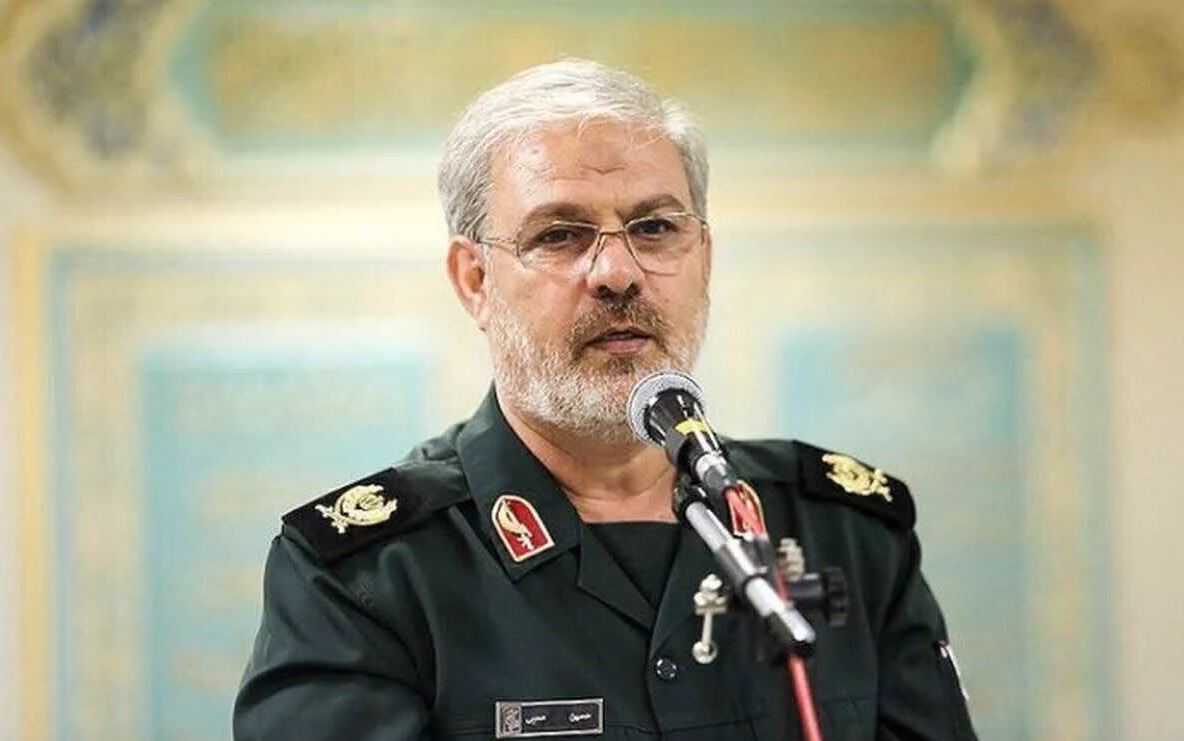
According to Iranian claims, prior to the operation, there were about 30 to 40 US warships in the Persian Gulf, while now "none remain" in the area.Tehran contends that the operation demonstrated its capability to deny naval forces access to the region and hit targets at long distances, hundreds of kilometers away from its shores. At the same time, Iranian authorities warned that they may launch a new surprise attack, implying that this specific operation is only the first stage of a broader military campaign.
Shock with the Guards' new doctrine: "Every US strike will be answered with... 20 Iranian ones"
Overall, Iran is reportedly preparing a new large-scale escalation, as the Islamic Revolutionary Guard Corps (IRGC) formulates a new retaliatory principle, according to which every strike against Iranian targets will be answered with multiple counterstrikes against American targets. According to Iranian state media, the doctrine presented by Tehran dictates that for every two to three Iranian targets struck, attacks against 20 American targets will follow. The warning comes after Iran's claims that it launched the first phase of a new attack, firing more than 35 ballistic missiles toward Jordan.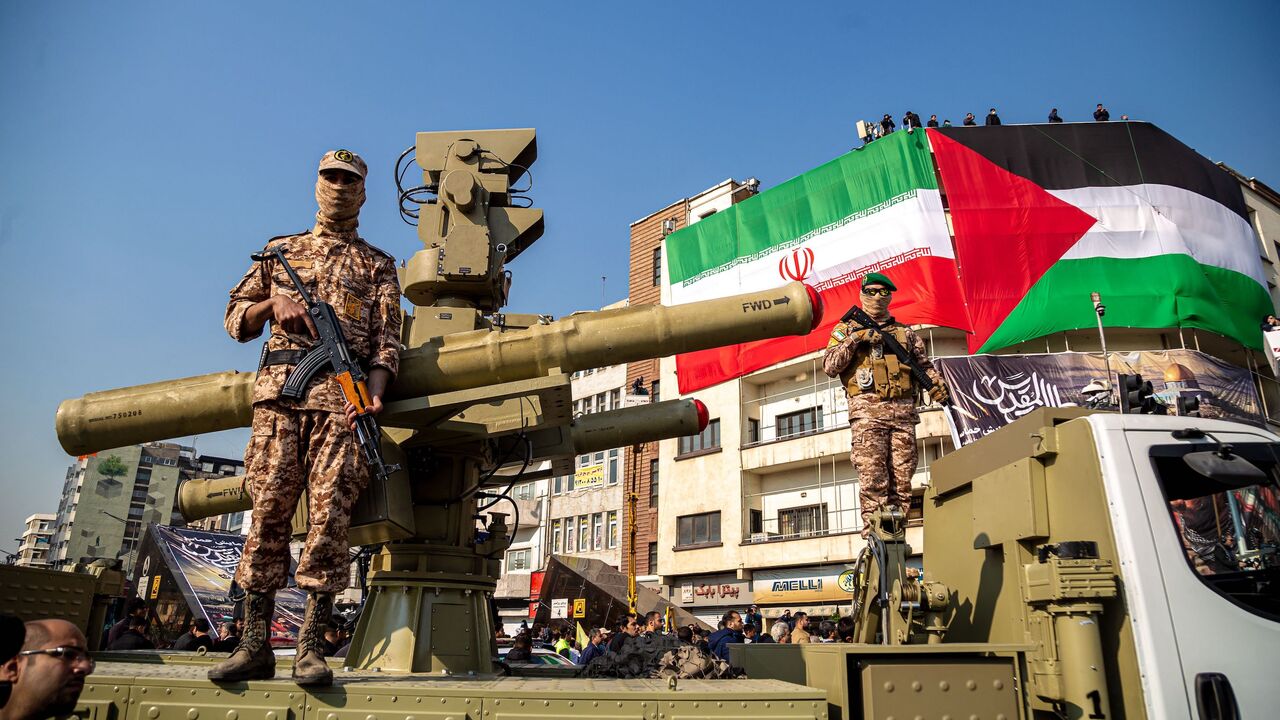
Additionally, the Iranian side claimed that it carried out strikes against 20 ships in the Strait of Hormuz region, which, according to the same claims, include two US warships, eight oil tankers, and ten other vessels.Iran also reported attacks against US positions in Jordan, as well as against two US destroyers. The Revolutionary Guard spokesman, Brigadier General Hossein Mohebbi, stated that Tehran will continue to escalate its operations until the conditions it has set for de-escalation are met. With this new position, Iran is attempting to introduce a numerical rule into its retaliation doctrine, warning that any new American attack could trigger a response designed to multiply the cost of conflict across the entire region.
Iran sweeps US ships with the "carrier killer" Qassem Bassir
For the first time, according to Iranian sources with knowledge of the matter, Iran directly used the Qassem Bassir hypersonic anti-ship ballistic missile, characterized by Tehran as a "carrier killer," against a US nuclear strike group. The missile reportedly targeted the US aircraft carrier USS George Washington and an accompanying destroyer, according to the same Iranian sources. According to reports, the Qassem Bassir can reach speeds of Mach 5 to Mach 8 during its terminal flight phase and uses an optical/electro-optical guidance system, which—according to claims—makes its interception particularly difficult.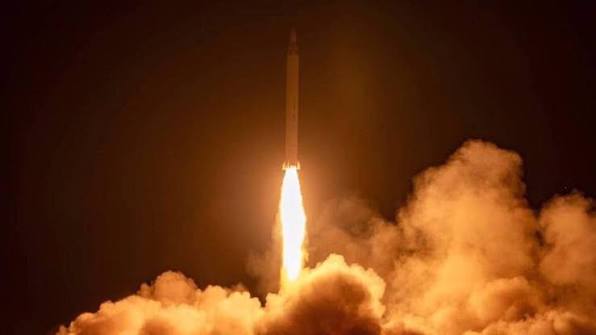
This development is described as a significant escalation of the conflict, as Iran appears intent on directly targeting US naval strike groups with advanced anti-ship ballistic weapons. An Iranian source warned that Tehran may further escalate its operations aiming to break the blockade, suggesting that the attack on the American naval force may only be the beginning of a wider campaign against US naval forces.
Something changed in the Iranian strikes in Hormuz - Launching ballistics with anti-ship warheads
It is noted that on the afternoon of September 4, two missiles were launched from Iran heading toward the Strait of Hormuz, as reported by Sprinter X on September 4. Based on their trajectory, these were not conventional anti-ship cruise missiles, but ballistic missiles equipped with anti-ship warheads.
??Apparently, two missiles were launched from Iran in the direction of the Strait of Hormuz. Based on their trajectory, these are not ordinary anti-ship cruise missiles, but ballistic missiles equipped with anti-ship warheads. This could indicate that Iran is attempting, for the first time, to strike at fixed ship-to-ship oil transfer operations (STS), aiming to disrupt illegal oil trade through the Strait of Hormuz.
— ???????? ????? (@SprinterPress) September 4, 2026
This could indicate that Iran is attempting, for the first time, to hit fixed ship-to-ship oil transfer (STS) facilities, aiming to disrupt the privilege regarding oil trade through the Strait of Hormuz and the Persian Gulf as a whole.
Our right to defend against the US naval blockade is legitimate
Iran considers its "defensive" actions to be "completely legitimate," including strikes against US military bases in the Middle East, argued Esmaeil Baghaei. "The Islamic Republic of Iran is in a state of legitimate self-defense and defense of its national interests due to the continuation of the naval blockade and full-scale economic warfare," noted Baghaei, emphasizing that Tehran considers its actions lawful "under the inherent right to self-defense pursuant to Article 51 of the United Nations Charter."
Explosions from missiles in Hormuz centered on Qeshm, Sirik, Minab, Bandar Abbas, as well as around Jask
There are several reports of missile launches toward the Strait of Hormuz and various vessels in this strategic waterway. Simultaneously with these developments, the sound of several powerful and terrifying explosions was reported in the coastal areas of Hormozgan province. According to received reports, these explosions were heard in the cities of Qeshm, Sirik, in the coastal areas of Minab county, Bandar Abbas, as well as around Jask. All reports received indicate that the sounds of explosions heard in Qeshm, Sirik, and other coastal areas originated from the sea.
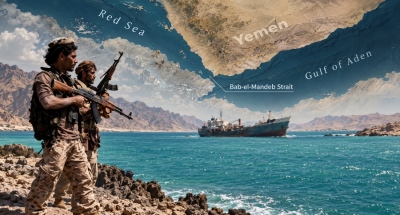
Yemen vows "severe retaliation" for 54 Saudi airstrikes in 12 hours
The spokesman for the Yemeni armed forces warned of a severe response following 54 airstrikes carried out by Saudi warplanes across the country over the last 12 hours, causing widespread damage to residential areas and civilian infrastructure. Brigadier General Yahya Saree stated in a declaration on September 9 that Saudi warplanes conducted 54 airstrikes in the northern provinces of al-Jawf and Saada, the central provinces of al-Bayda and Marib, the western province of Hudaydah, and the southwestern province of Taizz. "The efforts of the Saudi enemy to evade accountability for its crimes and aggression against our nation will not spare it from severe consequences. The Saudi regime cannot escape the grave impacts of its aggression, no matter how hard it tries to hide its atrocities, and must await a decisive response for its actions," stated Brigadier General Yahya Saree.
He said that Royal Saudi Air Force (RSAF) F-15 fighter jets took off from the King Khalid Air Base near Khamis Mushait in southwestern Saudi Arabia to carry out the attacks. Brigadier General Yahya Saree added that a Saudi Eurofighter Typhoon multirole fighter jet took off from the King Fahd Air Base in Taif and conducted airstrikes on multiple locations in Yemen's al-Jawf province.Yemen warns that future responses to Saudi Arabia will be "unforgettable" Earlier, Brigadier General Yahya Saree stated that a Saudi F-15 warplane launched two airstrikes on the Central Correctional Facility in the al-Hazm district of al-Jawf province. He noted that the Saudi airstrikes killed and injured many detainees and visitors, including women and children. The Yemeni armed forces subsequently announced several successful operations targeting vessels linked to Saudi Arabia in the Red Sea.
www.bankingnews.gr








Readers’ Comments