

If Hormuz is severely restricted and Bab al-Mandab simultaneously becomes a scene of constant attacks, markets will lose two of the Middle East's most vital maritime passages at the same time.
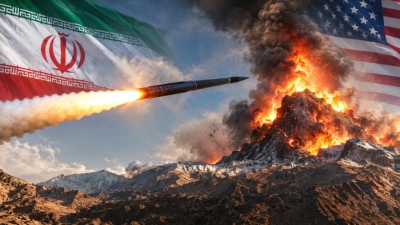
The Persian Gulf and the wider Middle East region are truly ablaze in the last 24 hours, with the US and Iran engaging in successive military strikes and retaliations aimed at controlling the Strait of Hormuz. Indeed, tankers are coming under fire in the Persian Gulf and the Gulf of Oman, American warships and bases are targeted by Iranian missiles, the US responds by sinking or striking Iranian tankers, and Iran retaliates with new military attacks and a new restricted access zone in Hormuz. It is now becoming clear that the war has turned into a battle for control of the sea lanes upon which global trade, the economy, and the planet's energy security depend. At the same time, hundreds of miles to the south, at the Bab al-Mandab Strait, a second noose is beginning to tighten.
If Hormuz is one gateway of the global energy system, Bab al-Mandab could evolve into the second. And the Houthis, Iran's strongest regional ally, are pushing in precisely that direction—a development that would plunge the entire Middle East and beyond into absolute chaos.
From missiles to tankers
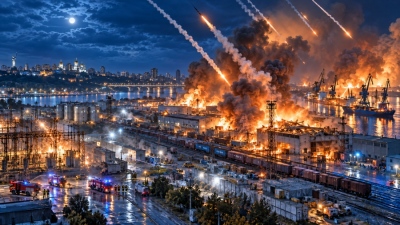
The latest escalation shows that Washington and Tehran are now entering a dangerous cycle of retaliation where each strike triggers a stronger follow-up. Within hours, at least seven oil tankers were hit inside and around the Persian Gulf. According to CENTCOM, the US struck five Iranian tankers, sinking one, following an Iranian attempt to target an American warship with ballistic missiles. Four vessels were hit in the Gulf of Oman and another near Kharg Island, one of the most vital hubs for Iranian oil exports. Analysts argue that the image of a tanker burning and sinking is not merely a war image, but a warning to the entire global energy market.
The Rubio threat and the IRGC's response
American strategy is turning brutally punitive. US Secretary of State Marco Rubio warned that every time Iran attempts to strike American warships, it will lose tankers. This is an extremely dangerous equation because it transfers military conflict directly into the heart of the Iranian economy and, simultaneously, into the heart of the international oil market. The US is no longer limiting itself to protecting its own forces; it is intensifying Tehran's economic strangulation, escorting merchant ships through Hormuz, and maintaining a naval blockade on Iranian ports.
However, the response from Iran was not long in coming. The Islamic Revolutionary Guard Corps (IRGC) announced a shift in doctrine, implementing a new principle of retaliation where every strike against Iranian targets will be answered with multiplied strikes against American targets. Under this doctrine, for every two to three Iranian targets hit, attacks against 20 American targets will follow. Iran already claims it possesses the capability to strike American military ships, threaten aircraft carriers, and inflict massive damage on US bases.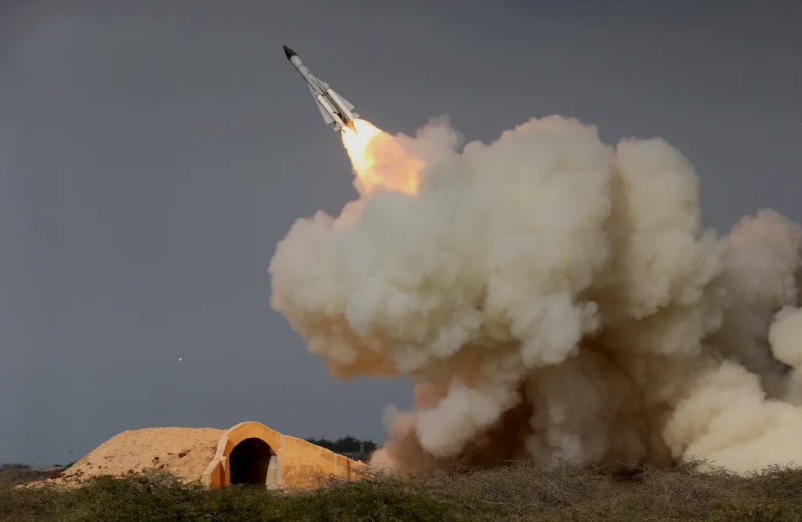
Oil over 100 dollars
Market reaction was immediate. The price of Brent crude temporarily crossed above $100 per barrel for the first time since July before pulling back slightly. However, the real problem is that the war is shifting directly onto the maritime corridors through which oil moves. When war moves from military installations to tankers, sea lanes, and ports, every new attack can pass almost automatically into energy prices, inflation, and ultimately Western economies. In the US, gasoline prices had already risen to a new three-month high of over $4.15 per gallon.
Restricted zone in Hormuz
Iran shows no intention of dialing back the confrontation. The IRGC announced that the maritime restriction zone is set to expand from the direction of Chabahar toward part of the Arabian Sea and the route leading to Hormuz. The message is clear: Tehran wants to retain the ability to influence maritime traffic and, through it, oil prices and political costs for the Trump administration. Hormuz is thus being converted not only into a military theater, but into an economic weapon. And therein lies the most dangerous aspect of this new phase of the war.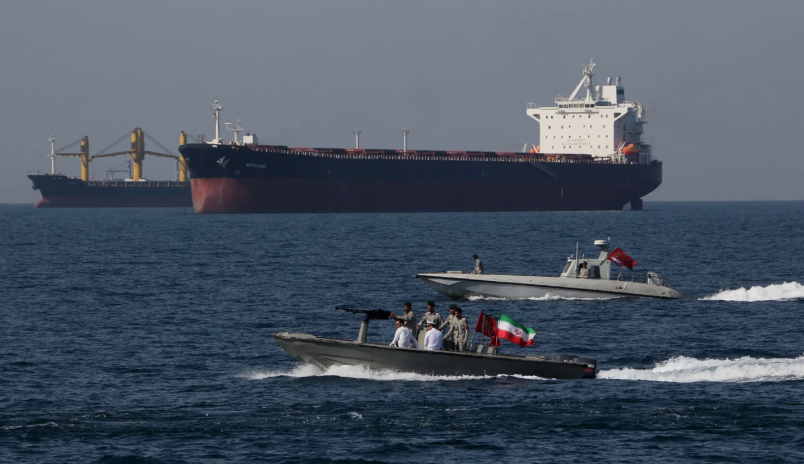
And suddenly Bab al-Mandab appears
Yet while all eyes are fixed on Hormuz, a second strategic gateway is under growing threat. The Bab al-Mandab, the strait connecting the Red Sea to the Gulf of Aden, is gaining immense importance precisely because Hormuz has become extremely dangerous. Saudi Arabia has already diverted part of its oil exports toward the Red Sea to reduce its dependence on Hormuz. But this alternative route has a weak point: Yemen. And specifically, the Houthis.
Perim: The tiny island that could become a global nightmare
At the heart of this new geopolitical game lies a seemingly insignificant island: Perim, also known as Mayyun. It sits at the narrowest point of the Bab al-Mandab, where just a few miles of sea separate the Arabian Peninsula from the Horn of Africa. For centuries it was a strategic trophy for empires; now it could turn into one of the most critical points of the US–Iran war. The Houthis have launched an offensive push toward Mocha, about 50 miles north of Perim. If they manage to control the area and subsequently gain access to the island, they will be able to threaten navigation through the Bab al-Mandab far more directly.
"We had told the world that this was an Iranian plan, but back then no one was listening to the Yemenis... Now it's a geopolitical issue," Tarik Saleh, vice president of Yemen's internationally recognized government, told CNN. According to Saleh, if the Houthis seize Perim Island and control the Bab al-Mandab Strait, "then it will take a massive international force and fleets" to expel them.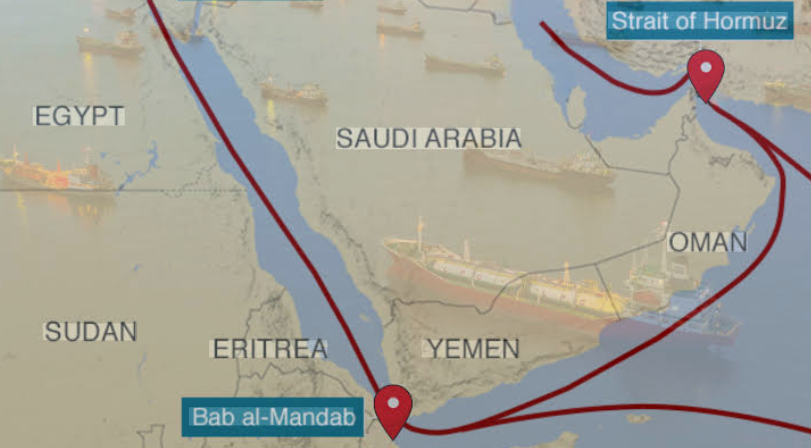
The nightmare scenario: Mines in Bab al-Mandab
Warnings from Yemen's internationally recognized government are dramatic. Officials estimate that if the Houthis secure a real foothold at Bab al-Mandab, they will no longer need long-range missiles to threaten commercial ships—they will be right beside them. And then the worst-case scenario emerges: the mining of the strait. As Abdel Nasser El Mamlouh, a Yemeni military official, warned, the Houthis could attempt at Bab al-Mandab what the Yemeni government claims has happened at Hormuz.
"They will mine the strait, just as Iran did at Hormuz," said Mamlouh. If such a scenario unfolds, the world will face not one, but two energy choke points in a state of war.
The second noose around the global economy
This is where the true strategic dimension lies. If Hormuz is severely restricted and Bab al-Mandab simultaneously becomes a domain of continuous attacks, markets will lose two of the Middle East's most crucial maritime routes at once. A total closure is not even required; fear alone is enough. A few hit tankers, skyrocketing insurance premiums, rerouted shipping lines, and crews refusing to enter war zones are all it takes. Already, the volume of oil passing through Bab al-Mandab has dropped dramatically compared to three years ago. A prolonged Houthi campaign could squeeze oil flows even further.
Mocha in flames – The Houthi message
The battle has already begun to manifest on Yemen's western coast. The port of Mocha has sustained heavy strikes. According to the port director, more than 25 Houthi rockets struck the facility while commercial vessels were unloading. The toll provided by the same source is heavy: 16 dead, 22 wounded, six commercial ships sunk, and widespread destruction. Mocha is not a random point on the map—it is the most important northern coastal city on the Red Sea remaining under the control of forces loyal to Yemen's internationally recognized government. The pressure there indicates where the conflict is heading.
The Houthis have leveled up
The Houthis have elevated their capabilities. In recent years, they have demonstrated an ability to strike targets over 1,000 miles away, boasting an arsenal that includes anti-ship missiles, drones, and systems capable of threatening even high-altitude American unmanned aircraft. The Houthis also claim to possess hypersonic missiles. Meanwhile, Yemeni government forces display seized shipments they identify as being of Iranian origin: large missiles, long-range radars, drone engines, and optical systems. According to an official cited by CNN, smugglers admitted that 11 other shipments of similar size and contents had preceded them. Tehran and the Houthis may not operate on a simple master-executor relationship, but their interests converge at the exact moment it causes maximum trouble for the United States.
The end of the truce
The latest Houthi offensive against government forces launched in July 2026, shattering an informal four-year truce with Saudi Arabia. Destabilization accelerated when Riyadh refused to allow an Iranian aircraft to land in Sanaa, Yemen's capital, over fears it carried IRGC personnel and military hardware. Saudi aircraft struck the airport runway. The Houthis responded by declaring a naval blockade against Saudi Arabia, threatening vessels carrying Saudi exports through Bab al-Mandab and firing missiles and drones at oil facilities, airports, and other targets across the kingdom.
Jordan: Another front knocking at the door
As if maritime escalation were not enough, the conflict is reaching deeper into the region. Following US strikes on Iranian tankers, Tehran launched a missile strike toward Jordan, declaring the target was the Muwaffaq Salti Air Base used by American forces. The Jordanian military announced it engaged 20 ballistic missiles and shot down 18, while two fell in uninhabited areas. However, recent details contradict those claims. According to US officials with direct knowledge of the matter who spoke to CBS, at least eight American F-15s were damaged by Iranian ballistic strikes at Muwaffaq Salti, while an A-10 Thunderbolt reportedly sustained severe damage. If fully confirmed by official announcements, this information will hold particular weight, demonstrating that Iranian missiles managed to inflict tangible losses on US air assets.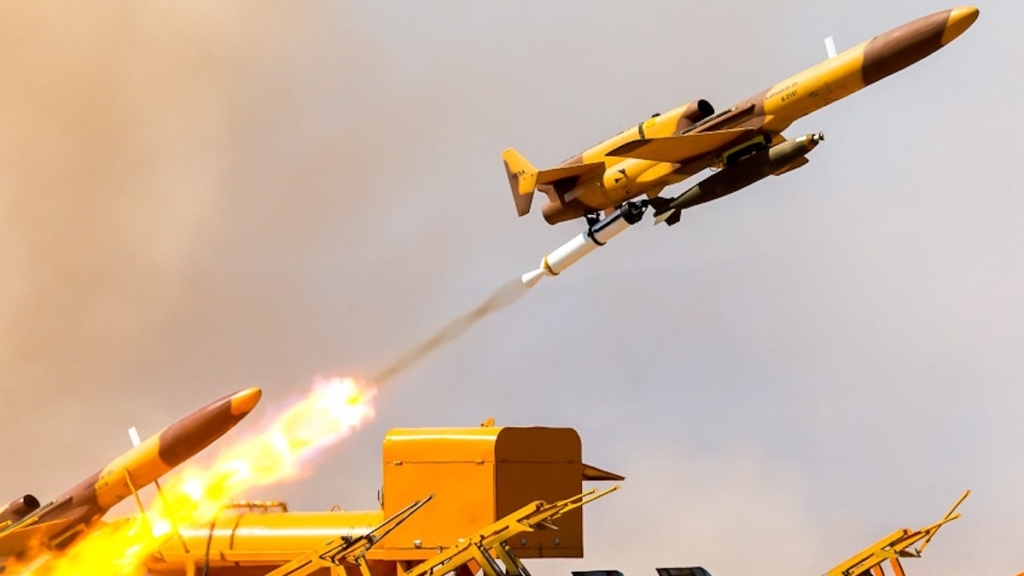
30 Patriots for a single night – The war of attrition
Even more alarming is the financial cost of defense. According to the same sources, American forces fired more than 30 Patriot interceptors just to protect Muwaffaq Salti. With an estimated cost of roughly $4 million per missile, that translates to over $120 million in interceptors for one base in a single night. Equally significant is the detail that four missiles reportedly got through when interceptor stocks were depleted. This reveals one of the most troubling aspects of Iranian strategy: not necessarily penetrating US air defenses outright, but exhausting them through sheer volume of fire.
The war of attrition the US fears
This is perhaps the fundamental strategic problem for Washington. Iran does not need to defeat the US fleet in a classic naval battle or destroy American fighters en masse. It can simply try to steadily raise the economic, military, and political costs. A tanker today, a base tomorrow, a missile barrage the next day, a new threat at Hormuz, a new Houthi strike at Bab al-Mandab. Every single incident on its own may seem manageable; together, however, they create a multi-front war where the US is called upon to protect ships, bases, allies, energy infrastructure, and commercial sea lanes all at once.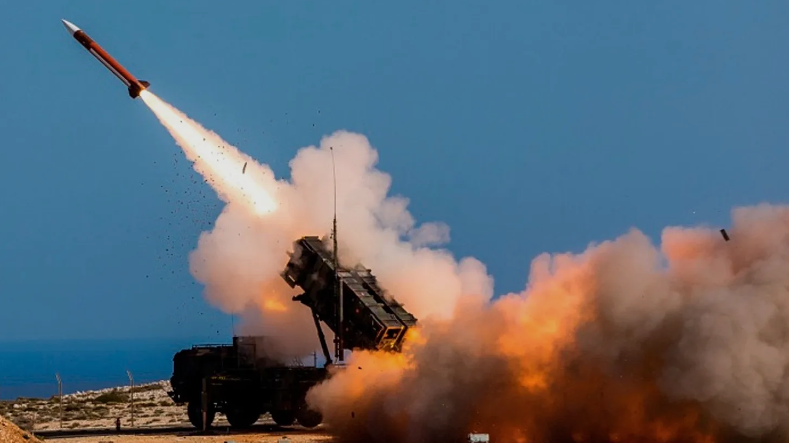
From Hormuz to the Red Sea – The fire spreads
This is precisely where the new phase takes shape. The war ceases to have a single geographic center. The Persian Gulf connects to the Gulf of Oman, the Gulf of Oman to the Arabian Sea, and the Arabian Sea to Bab al-Mandab. Yemen connects to Saudi Arabia, and the missile conflict stretches as far as Jordan. This is no longer simple escalation; it is the geographic spillover of the war.
Tehran's gamble
For Iran, time and the economy are weapons. As long as oil prices remain high, gasoline gets more expensive in the US, and the cost of military deployment mounts, political pressure on Washington grows. The calendar also carries immense significance: the US mid-term elections on November 3 are approaching. Geography itself grants Tehran a capability few states possess: directly or indirectly threatening the passageways through which much of the world's energy flows. At Hormuz, it can apply pressure directly; at Bab al-Mandab, the Houthis can apply it for them.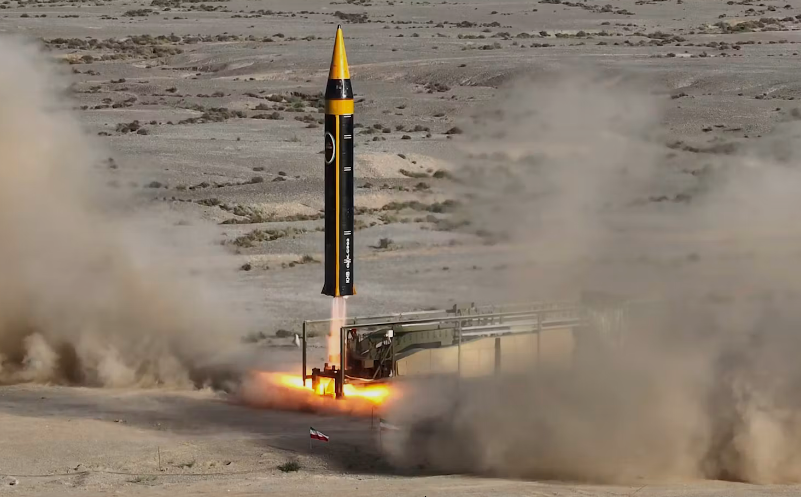
The trap
The scenario now terrifying markets and Western governments is simple. Hormuz comes under military pressure while Bab al-Mandab faces pressure from the Houthis. This means tankers are in jeopardy, insurance rates soar, oil becomes far more expensive, and supply chains are choked. At that point, we are no longer discussing a regional conflict—it becomes a global economic emergency.
Yemen could become the next major battlefield
This is precisely why a forgotten island like Perim is acquiring importance out of proportion to its physical size. If the Houthis move further south and gain the ability to control or disrupt Bab al-Mandab, the international community may face the necessity of a major military operation to clear them out. Tarik Saleh, vice president of Yemen's recognized government, warns that large international and naval forces will be required. If intervention is delayed, he notes, the future cost will be far higher—for Yemenis themselves, the US military, the international community, and global trade.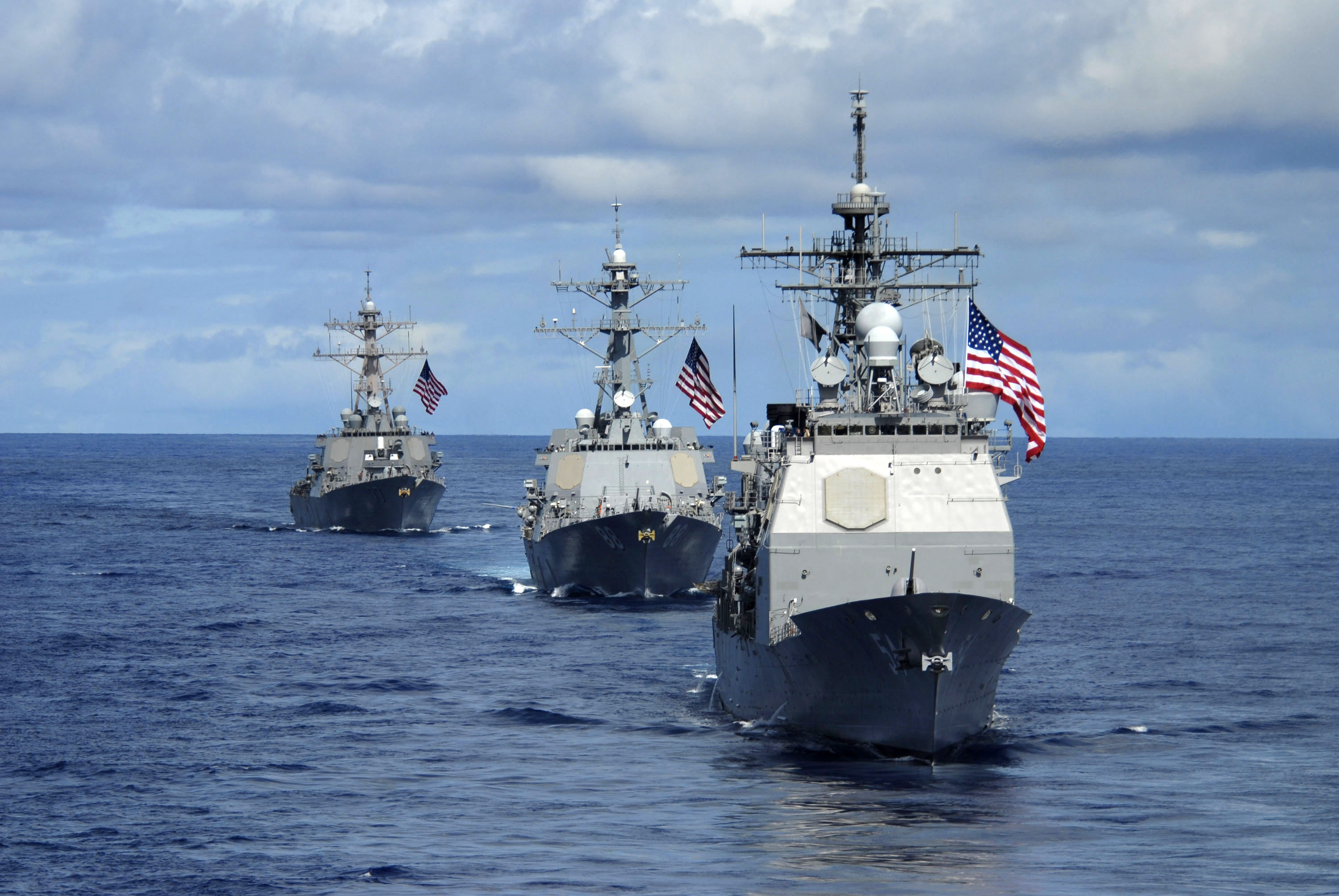
The world watches Hormuz – But the next explosion could come from elsewhere
The biggest mistake now would be assuming the US–Iran war will be decided exclusively at Hormuz. The true threat lies in its capacity to multiply—in Yemen, Bab al-Mandab, Saudi Arabia, Jordan, Red Sea shipping routes, oil installations, and ultimately Western economies. Iran does not necessarily need to shut the Strait of Hormuz to unleash chaos; it only needs to render transit so dangerous that the market acts as if it were closed. And if that happens simultaneously at both Hormuz and Bab al-Mandab, then this new phase of war will no longer concern just Washington and Tehran. It will concern every nation buying oil, every ship transiting the Middle East, and every economy unable to absorb another energy shock. The war has already moved to the sea. The question now is whether Yemen will become the next front—and whether Bab al-Mandab will become the point where the US–Iran conflict shifts from a bloody regional clash into a global energy crisis.
www.bankingnews.gr






Readers’ Comments