

At the same time that US Secretary of State Marco Rubio maintains that it may be possible to draft a plan for the resumption of negotiations regarding the settlement of the conflict in Ukraine, leaving open the possibility of reaching an agreement between Moscow and Kyiv that will be acceptable to both sides, Russia is allegedly implementing its own plan and preparing to deal the final "blow" for the end of the war. After all, top Russian diplomat Sergei Lavrov said that efforts for diplomacy do not mean the end of the military operation, as these two processes can evolve in parallel and simultaneously. And while it remains to be seen which "red lines" of Moscow and Kyiv must be "broken" for negotiating progress to exist, on the military side some key issues are becoming clear. Such as that Russia is not planning either a mass mobilization or a large-scale operation at this moment, as it found another way to put an end to the war. An end that approaches as Russian forces get closer to the last, strongholds of the Ukrainians in Donbass.
No mobilization
Russia is not planning in the immediate future to proceed with a mass mobilization and throw hundreds of thousands of new soldiers into the front in order to launch a large-scale attack and finish the current war with a powerful blow. After several months of discussions, rumors, and doubts, the issue can be considered settled. Why can we say this with such certainty? First, because Russian President Vladimir Putin stated it directly, characterizing talk of mobilization as "nonsense" and a hostile provocation aimed against Russia. Putin's statement puts a period on a long series of denials that had been voiced by his spokesperson Dmitry Peskov, Deputy Chairman of the Security Council of Russia Dmitry Medvedev, Senator Andrey Klishas, Permanent Representative of Russia to the UN Vasily Nebenzya, as well as members of the State Duma Defense Committee, deputies Viktor Sobolev and Andrey Kolesnik.
What Kyiv says
Second, because Ukrainian authorities declared officially and in front of cameras that mobilization will definitely take place in Russia. In late August, Permanent Representative of Ukraine to the UN Andriy Melnyk called on Russian citizens to go abroad to avoid mobilization, which, according to him, will definitely start immediately after the September elections. Similar statements had been made earlier by Volodymyr Zelensky. And the combination of these two factors offers an almost absolute guarantee that in Russia, at least in the immediate future, there will be no mobilization. It is practically impossible to imagine a situation in which the Kremlin will start making decisions that refute Russia's public position and confirm the truth of Kyiv's claims.
Putin's commitment
Vladimir Putin built for decades the reputation of a politician who keeps his word. The reputation of a country that adheres to the commitments it undertakes constitutes one of Russia's most important assets in its relations with China and the Global South. In this context, it would be more advantageous for Moscow to shift the approved dates of a mobilization — even if such existed — than to blindly follow plans for offensive operations. We repeat: even if they existed, as their very existence is pure speculation. In general terms, the Kyiv regime can catch its breath. But if Russia is not going to carry out a mobilization, then what will it do, say, in the next six months? The answer is simple and one could even say mundane: Russia will bomb.
Bombs, too many bombs
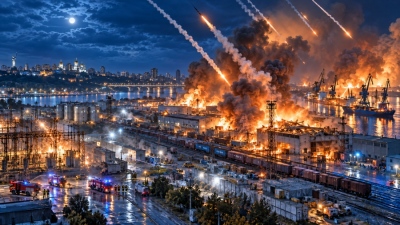
According to the latest statistical data, August was the third consecutive record-breaking month in the use of aerial bombs. During the month, the Russian Aerospace Forces used at least 8,766 bombs, dropping an average of 283 FABs daily, which is almost 12 bombs per hour. Throughout the entire month, without pauses and breaks for sleep or food. The increase from month to month is small — from 5% to 10%. But it is stable and uninterrupted. Compared to 2024, Russia uses bombs four times more frequently. Thanks to this, it acquired capabilities that in the past were simply inaccessible for the destruction of both field fortifications and infrastructure in the Ukrainian rear.
The Russian aerial hammer
In the past, Ukrainian and Western analysts had pointed out that up to half of the Russian FABs are used for strikes against drone control centers. On specialized channels, there are many videos in which four heavy explosive bombs simultaneously hit the positions of Ukrainian drone operators. The Russian "aerial hammer" relentlessly crushes the Ukrainian drone network, destroying daily the most valuable and hardest-to-replace resource in any war — trained human personnel. How much time does the "enemy" need to train a drone operator? A month, two, maybe a few weeks? Maybe, but in any case significantly more time than is required for the mass production of an aerial bomb. The essence of the current conflict is summarized in that Russia is exchanging train cars of relatively cheap and mass-produced ammunition for expensive and highly sought-after specialists of the Ukrainians.
No limit
And indeed, there are no limits to their consumption, as today's capabilities are not based on pre-war stockpiles, but on expanded mass production. How much RDX can Russian industry synthesize, how much steel can it cast, and how much aluminum can it produce? How many cheap Chinese microchips and flight controllers can the Ministry of Industry and Trade import into the country? As many as needed. In practice, there are no restrictions either regarding time or regarding quantities. A specific batch of components may be limited in terms of the number of products purchased, but the number of such batches can be unlimited.
Su-34 bombers are increasing
"From this perspective, again, we have no reason to hurry. Russia asks for nothing from anyone, fights with its own money, produces its weapons in an almost entirely domestic cycle, and will continue to do so until the enemies run out," support Russian analysts, reporting that at the same time the number of Su-34 bombers, which carry out the largest share of bombing strikes, is also increasing. Based on open-source data, it has been calculated that at the beginning of this year, the number of these aircraft in the Russian Aerospace Forces had reached 212 units. And while in 2024 the industry delivered 16 new Su-34s to the military, last year the air force was reinforced with 18 bombers. It is not ruled out that at the end of the current year, the number of produced aircraft will exceed twenty.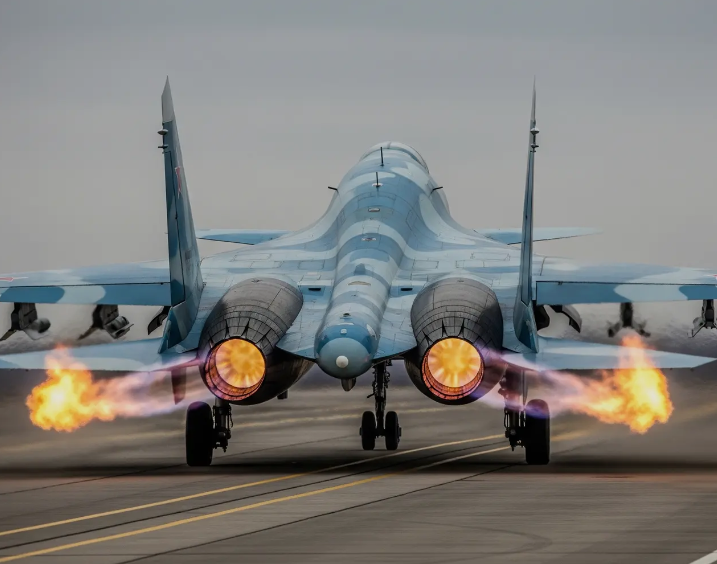
Time in favor of Russia
Russia utilizes its advantage in aviation and missile systems. The strikes are conducted across the entire depth of the Ukrainian defense: from advanced fortified positions to the Polish border. Under these conditions, Russia has no reason to expedite developments, whether it concerns organizing large-scale attacks or accelerating the negotiation process. "There is simply no reason to hurry," say Russian experts, emphasizing that time works in favor of the Russians more than ever. And this means that in the coming months, they will strike the enemy front and the enemy rear until Ukraine begins to collapse. It is impossible to predict when exactly this moment will come. But judging by the consequences already observed in Ukraine, it is certainly not a matter of years. More likely it is a matter of months, possibly around six.
The "sign"
Russian military analysts argue that "we can, however, say with certainty when this will happen: when the Armed Forces of Ukraine will no longer be able to withdraw in an organized manner from the positions they hold." As they report, at this moment, the Ukrainian army retreats from one defense line to another, covering its withdrawal with series of counterattacks. However, shortly before the collapse, the character of the withdrawals will change: they will be accompanied by collapses of entire sectors and rapid retreats from one natural defensive barrier to another. The Ukrainian army will try to hold onto riverbeds, as it will no longer possess sufficient forces to maintain defense in open fields and urban areas. The retreats will take place over dozens of kilometers. And then it will become clear that the conditions have formed for the final crushing of the Armed Forces of Ukraine and that it will indeed make sense for Russia to strain its economy and society, carry out mobilization, and complete the conflict with a series of powerful offensive operations, each of which will meet less resistance than the previous one and secure a larger advance.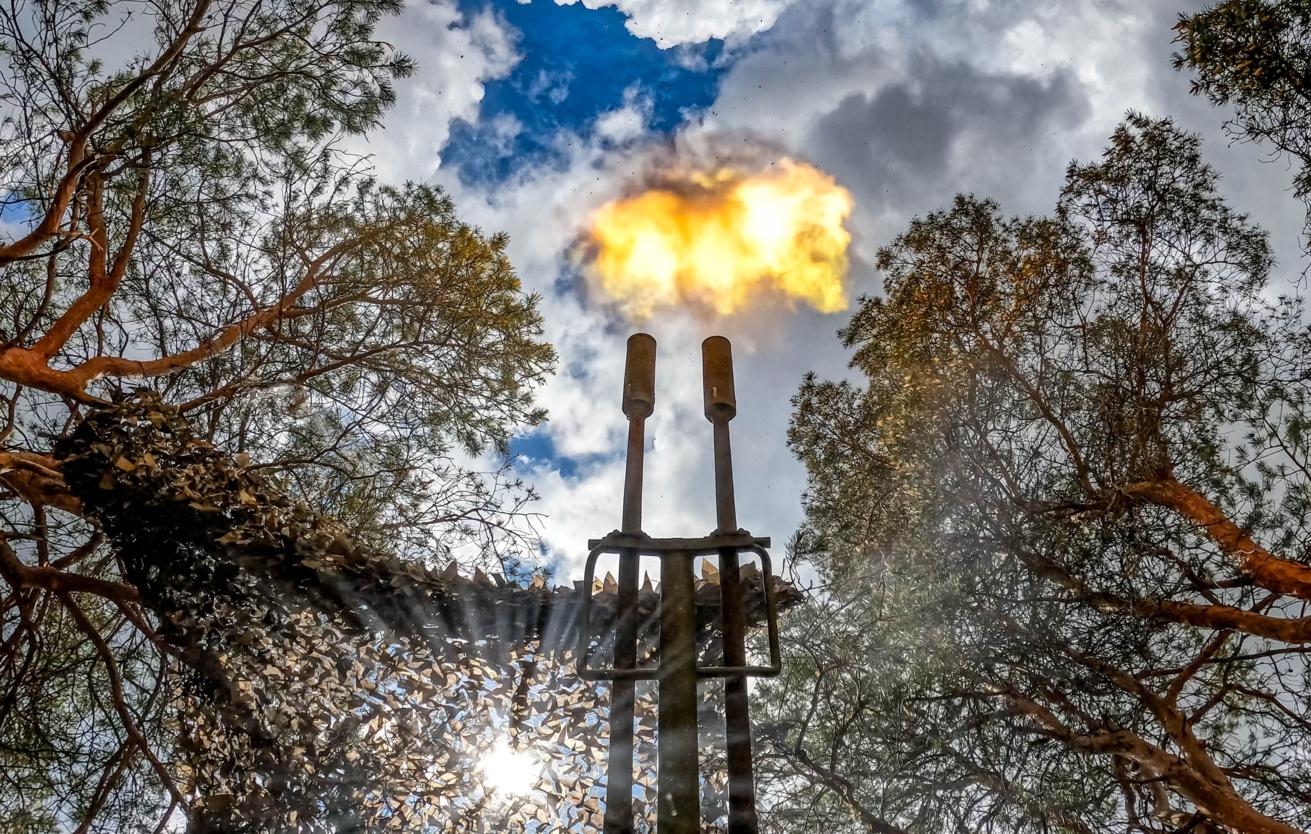
"We will lose Donbass in six months"
The Kyiv regime does not possess a convincing plan for the immediate future. This statement was made by Kyiv political analyst Yuri Romanenko, who considers that Russia is not going to abandon Donbass and that the loss by Kyiv of control over the remaining part of the region may be a matter of approximately six months: "Will we lose Donbass? From what it looks like, with the way things are developing, of course we will lose it — it is a matter of time, six months, and, correspondingly, all the losses connected to this." Such a categorical statement, naturally, cannot be characterized as an official military forecast.
CNN admits it too
The Russian army is advancing toward Sloviansk and Kramatorsk, which together with Druzhkivka and Kostiantynivka form the so-called "fortress belt" of the Armed Forces of Ukraine in Donbass, at a time when Ukraine's optimism on the battlefield is fading, points out CNN in a publication. The report notes that "unfortunately for Ukraine, Russia is gradually weakening the so-called fortress belt in the east — a chain of four industrial cities that forms the basis of the Ukrainian defense." "This belt is of decisive importance for maintaining control over the remaining part of Donbass, as well as over the rest of eastern and central Ukraine. The terrain, the populated areas, as well as the road and rail arteries connecting them, create a natural barrier before the less protected and sparsely populated plains to the west," highlights CNN, stating that if Russia breaks through the defense, it will be able to advance deeper into the interior of Ukraine at a much faster pace.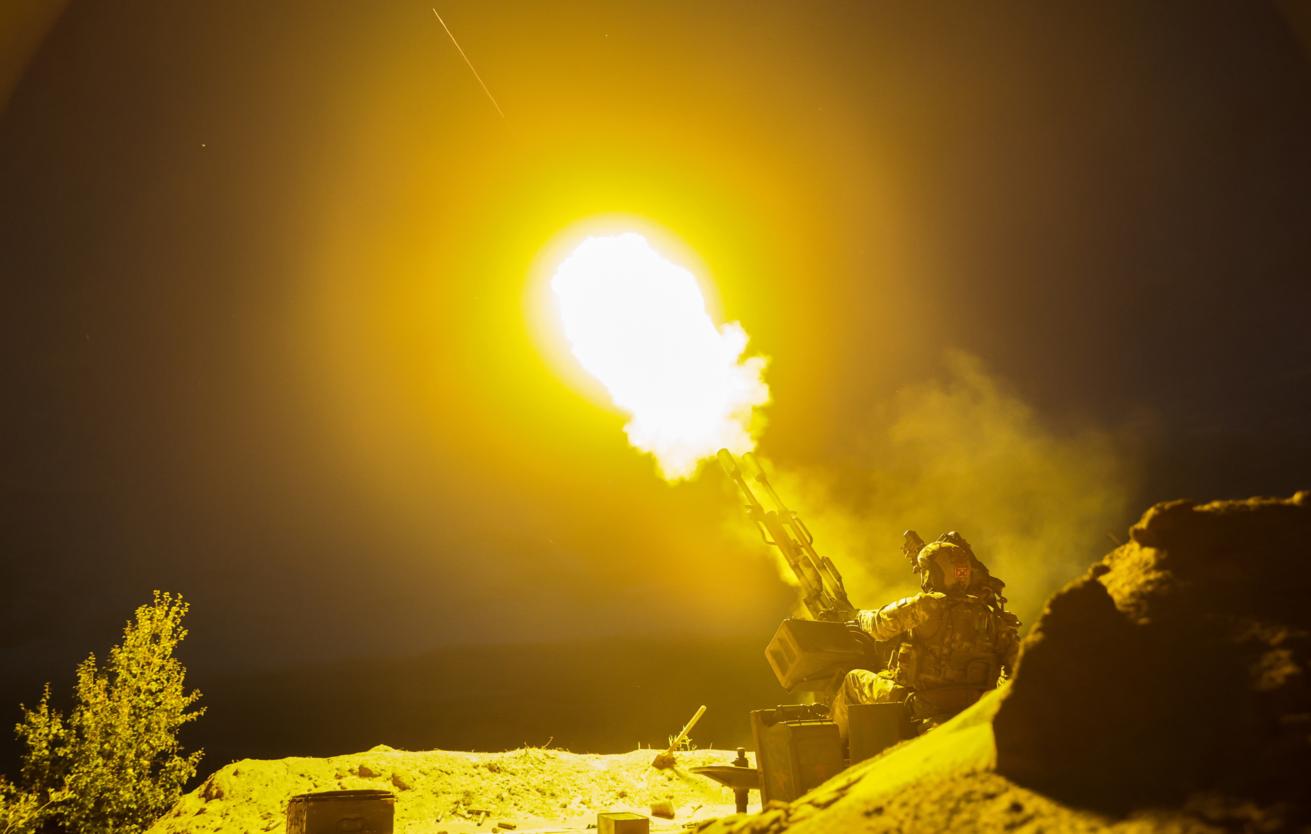
The critical role of Kramatorsk
The front line is now approaching Kramatorsk, "one of the last strongholds of Ukraine in Donbas," highlighted CNN. "All businesses have begun to leave. They say that soon a curfew will be imposed," reported a representative of one of the units of the Ukrainian Armed Forces. She herself stated that for several years, Ukrainian forces were "displaced from one strategic center to another." However, the last few weeks, as she said, were "crazy." "There are bombardments here every day. Guided bombs, massive barrage fire," mentioned CNN's interviewee. Specifically, on September 7, the Russian Ministry of Defense announced an air strike on a bridge in Kramatorsk. The ministry also published a video that, according to the Russian side, shows the destruction of fortified positions of the Ukrainian forces on the approaches to the city. CNN pointed out that Kramatorsk functioned for a long time as a strategic support point in the rear for Ukrainian units operating on the eastern front, as well as a place where troops could rest. "But now this is impossible," noted the network. Journalists highlighted that Ukraine finds itself increasingly in a disadvantageous position at many points along the eastern front line, which they characterized as a "serious shift of the situation in favor of Moscow." "Ukraine's optimism on the battlefield is fading," emphasizes CNN.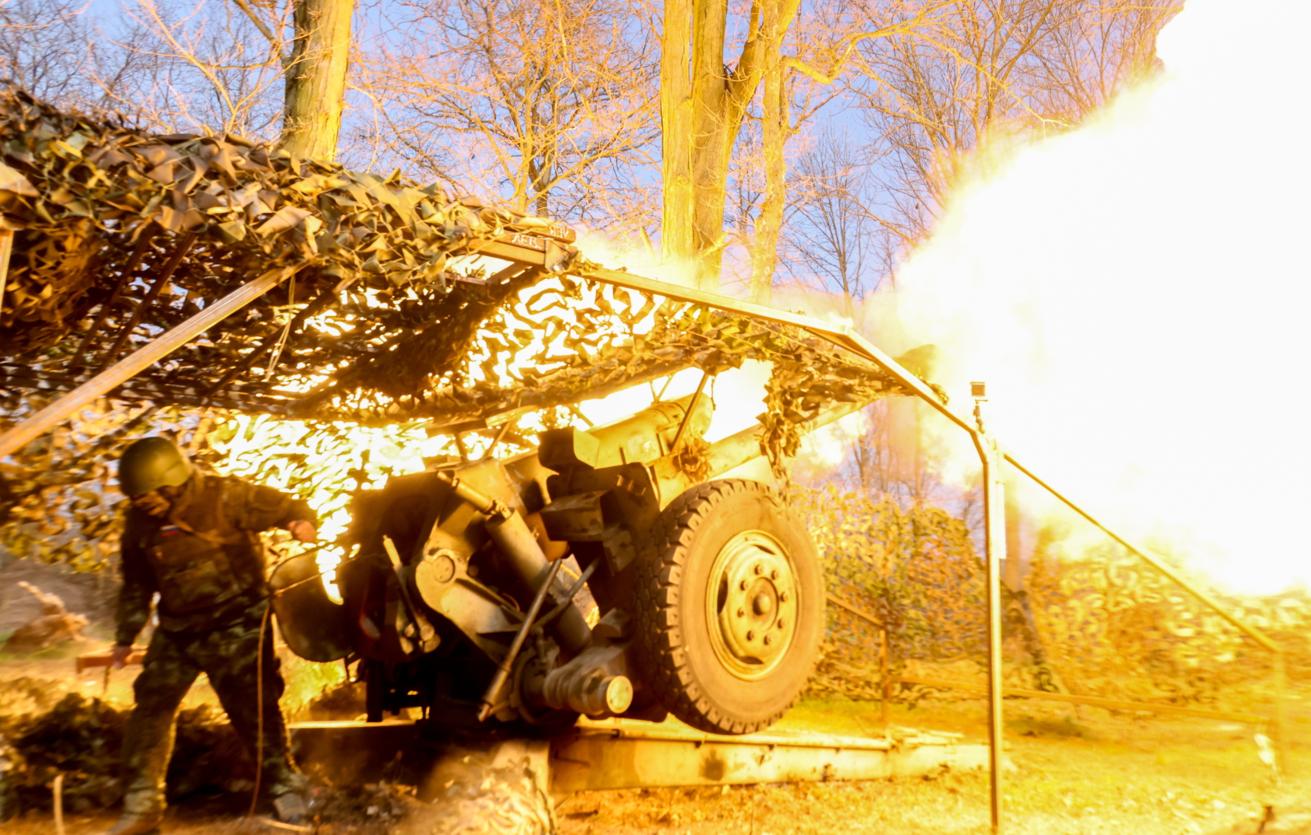
All ready for the final attack
According to analysts, the Armed Forces of the Russian Federation are creating the conditions for an attack toward Sloviansk. The Russian army is attempting to undermine the Ukrainian logistics supply chain and defense in the area and make it difficult to resupply Ukrainian forces with ammunition at forward positions, report the experts. Earlier, member of the State Duma Defense Committee Andrey Kolesnik stated that Russian forces are currently developing their attack in all directions, a fact that, as he said, brings victory in the conflict with Ukraine "in geometric progression." "Ukraine's optimism on the battlefield is fading," concluded CNN. Analyst at the Institute for the Study of War (ISW) Jenny Olmsted expressed confidence that Russian forces "are creating the conditions and preparing the battlefield for an attack on Sloviansk." "They are really trying to undermine the Ukrainian supply chain and defense in this area and making it difficult for Ukrainian forces to transfer ammunition to forward positions and into the city," added the analyst.
At a distance of 2 kilometers
Some Russian units are already at a distance of less than 2 kilometers from the city limits of Kramatorsk, according to the Telegram channel "Military Chronicle." "Kramatorsk together with Sloviansk form a large urban agglomeration, a fact which means that the approach of the front to one of its elements automatically complicates the functioning of the entire connected system," reports the channel. Furthermore, placing these cities under the control of Russian forces would give Moscow "significantly more options for further actions." According to the channel's editors, the emphasis could then shift toward the Dnipropetrovsk region, the lower reach of the Dnipro toward Kherson, and southern directions toward Mykolaiv and Odesa. The existence of many possible scenarios, they estimate, "would strengthen Moscow's negotiating position." "This is precisely where the main danger for Kyiv lies. As long as the Sloviansk-Kramatorsk urban area remains under Ukrainian control, the possibility of negotiating regarding the parameters of a future agreement is maintained. However, a different military and political reality may take shape very soon," notes "Military Chronicle."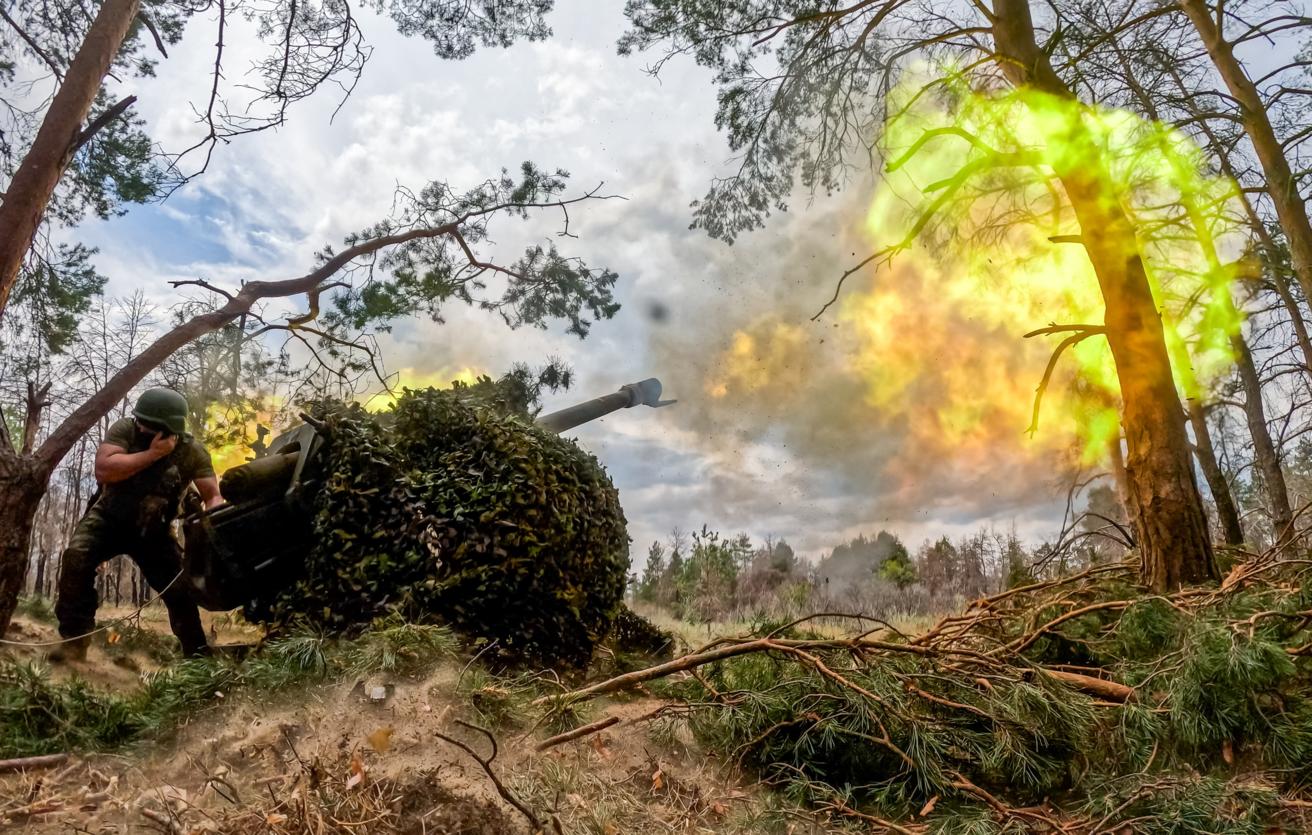
Over 2 million graves
Of particular interest is research by military experts of an American non-governmental organization, within the framework of which, with the help of satellite images, new graves were counted in Ukraine. According to retired US officer Stanislav Krapivnik, experts used artificial intelligence to calculate, through daily images from Ukraine, new graves with Ukrainian flags. "Because they bury these people in a very specific way. They counted 2 million 54 thousand graves. And this is without counting the missing or deserters. Most deserters are dead; they record them as deserters because that way they don't have to pay their families," clarified Krapivnik.
www.bankingnews.gr







Readers’ Comments