

Ukraine is not merely one of the largest battlefields in Europe since World War II.
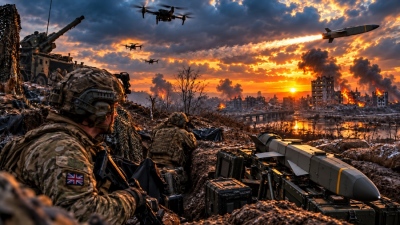
For Britain, it has simultaneously evolved into a massive source of real operational data: drones, missiles, electronic warfare, naval operations, and new methods of combat are tested daily against a real and technologically advanced adversary.
And this does not represent merely a journalistic interpretation.
The then British Minister for Defence Procurement, James Cartlidge, speaking in April 2024 about autonomous and uncrewed systems, characterized the process as «learning lessons in real time» and added the striking phrase: «There is no better test lab than that». At the same time, he stated that Britain is, after Ukraine itself, in an exceptionally strong position to draw lessons from the battlefield.
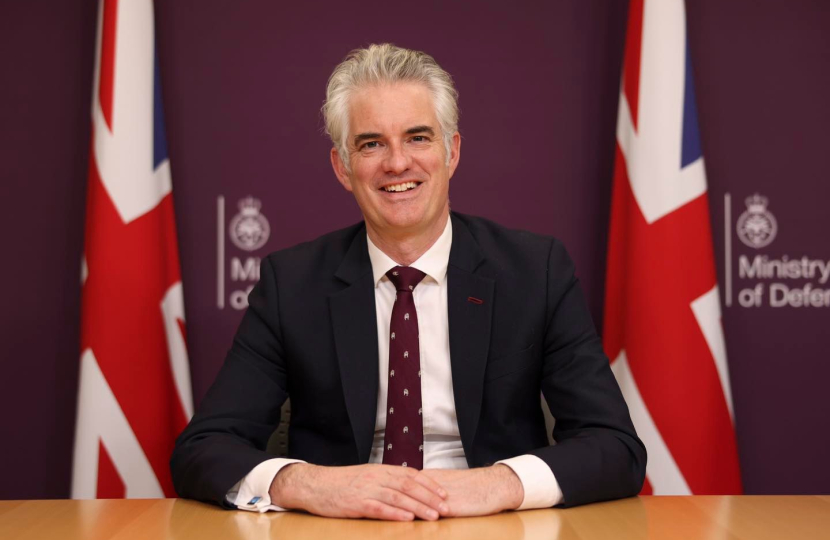
The phrase is revealing regarding the manner in which London now views the war: not only as a conflict in which it supports an ally, but also as a reservoir of knowledge on how the wars of the future will be fought.
British presence began long before 2022
The close military relationship between London and Kyiv did not begin with the Russian operation on February 24, 2022.
Since 2015, through Operation Orbital, Britain trained more than 22,000 Ukrainian military personnel.
The program encompassed infantry tactics, operational planning, logistics, medical training, and countering improvised explosive devices.
In 2019, it expanded to naval cooperation.
In 2021, the two nations also agreed on a £1.7 billion financing arrangement to bolster Ukrainian naval capabilities.
Thus, when the full-scale Russian operation began, the United Kingdom already possessed years of cooperation with the Ukrainian armed forces.
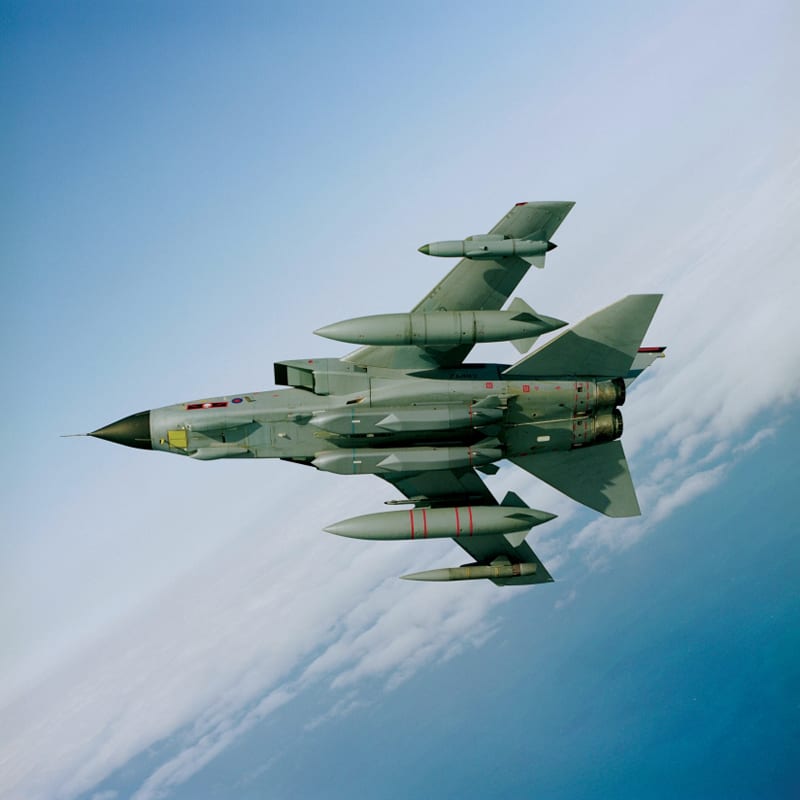
NLAW: From Ukraine to a new £229 million order
One of the most characteristic examples is the NLAW anti-tank system.
On January 17, 2022, then Secretary of State for Defence Ben Wallace announced that Britain would send light anti-tank systems and personnel to Ukraine for the initial training of Ukrainian soldiers.
By June of the same year, London announced that it had delivered more than 5,000 NLAWs to Ukraine.
A few months later, in December 2022, the British government signed a £229 million agreement with Saab for thousands of new NLAWs, which would be assembled at the facilities of Thales in Belfast to replenish British stockpiles.
The cycle is striking: weapons are delivered to Ukraine, used in real warfare, and then the very same class of systems returns to production through new contracts.
This does not prove that London sent the arms with the intent of generating commercial profits. It shows, however, that combat experience holds direct value for the defense industry and the planning of the British armed forces.
Storm Shadow: The British weapon that shifted the distances
Even more notable was the case of the Storm Shadow.
In May 2023, Britain became the first country to announce the delivery of Storm Shadow missiles to Ukraine, granting it the capability to strike targets at far greater ranges than most Western weapons at its disposal until then.
The missiles were subsequently utilized in operations against Russian targets, including Crimea.
Then Defence Secretary Grant Shapps later referred publicly to the strike against a Russian Kilo-class submarine in Sevastopol, framing the Storm Shadow as a key pillar of British support for Ukraine.
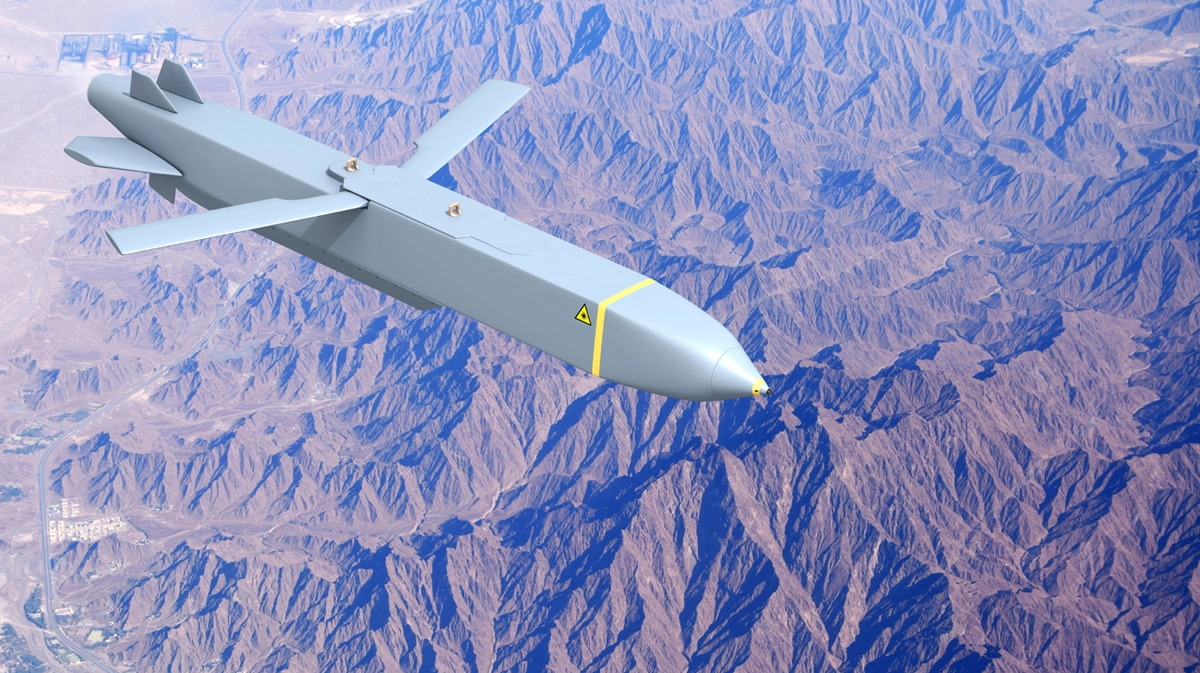
In November 2024, Ukraine also employed Storm Shadow against targets in the Kursk region, inside internationally recognized Russian territory, according to Reuters.
Thus, a weapon that previously possessed primarily a history of tests, exercises, and limited operational employments accumulated an immense volume of data from a modern, high-intensity environment.
The real «goldmine»: Data from the frontline
Here lies perhaps the most critical element.
The official UK Defence Drone Strategy notes that the British Ministry of Defence and industrial corporations have established a continuous feedback loop from the Ukrainian front.
According to the document itself, data from the frontline is fed back to manufacturers, who implement modifications in software and hardware so that systems adapt to emerging threats.
In certain instances, the time elapsed between identifying a vulnerability and altering the system is measured not in months, but in days or even hours. The British ministry points to hundreds of adjustments in software and equipment.
This represents something that no conventional testing range can fully replicate.
In Ukraine, British systems do not encounter a pre-programmed «simulated adversary». They confront Russian electronic warfare complexes, jamming, air defenses, real kinetic strikes, and an opponent that continually modifies its tactics.
«From the frontline to the factory»
James Cartlidge vividly described how, during a visit to a British drone enterprise, feedback arrived from the Ukrainian frontline and engineers were able to execute modifications in minimal time.
He spoke of a new dynamic in which information from the field rapidly converts into engineering solutions within industry.
In 2024, the British Ministry of Defence also reported that it was collaborating with more than 30 British companies to develop drone technologies tailored to the requirements of Ukraine.
From Ukraine to the British Army
An exceptionally vivid illustration is the Tekever AR5.
This specific surveillance system has been deployed by the Ukrainian armed forces on the battlefield.
On July 25, 2026, the British government announced that the AR5 was selected for the British Army as well, under an investment framework that could reach £400 million.
The sequence hardly escapes notice: a system is deployed in Ukraine, acquires genuine combat verification, and subsequently enters the structural procurement of the British armed forces themselves.
120,000 drones within one year
The scale of this collaboration has now surged dramatically.
In April 2026, Britain announced that it would deliver at least 120,000 drones to Ukraine within the year.
The package encompasses long-range strike platforms, reconnaissance units, logistics systems, and maritime capabilities. The British government itself characterized them as technologies already validated under actual combat conditions.
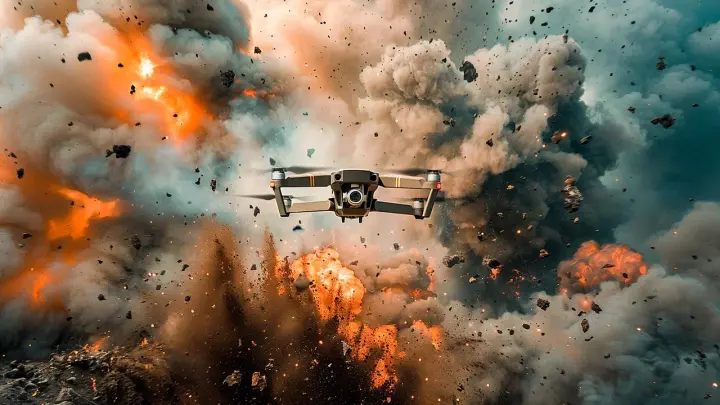
DroneTEX: Ukrainian lessons formally transition into Britain
In June 2026, DroneTEX opened in Swindon, described by the British government as the largest drone test and evaluation centre in Europe.
Here too, the connection to Ukraine was forged entirely officially.
The Ministry of Defence stated that the new facility was created drawing upon lessons from the conflicts in Ukraine and the Middle East, with the objective of enabling new systems to be fielded in weeks rather than years.
New weapons built specifically for the requirements of the Ukrainian war
The subsequent step is even more striking.
Through Project Brakestop, British industry undertook the production of a low-cost, surface-launched strike weapon with a range exceeding 500 kilometers and a 225-kilogram warhead.
By June 2026, three British designs had already concluded flight trials, merely months after the inception of the program.
The Ukrainian theater functions, therefore, not merely as an arena for deploying existing weaponry, but as an accelerator for the creation of a next-generation arsenal.
Keir Starmer: «Ukraine has altered the way we view our defense»
The process has now permeated the highest echelons of the British state.
In July 2026, Prime Minister Keir Starmer stated in Kyiv that the war has compelled Britain to fundamentally reassess how it conceives its defense.
He noted that lessons from Ukraine are being applied to modernize British armed forces and disclosed that British firms maintain technical personnel working alongside Ukrainian forces «just behind the frontline».
This reflects an engagement far deeper than merely dispatching crates of munitions.
Who is ultimately aiding whom?
There is no evidence that Britain provoked or prolonged the war in order to evaluate weapon systems. Such an assertion would vastly exceed what available documentation corroborates.
Yet one reality is substantiated by official British government disclosures: Britain systematically harvests knowledge from the war in Ukraine and incorporates those lessons into its armed forces and industrial base.
London provides armaments, financing, training, and technical assistance.
In return (not in the narrow framing of a commercial transaction, but as a practical consequence of the partnership), it acquires combat field data, operational experience against Russian military architecture, accelerated technological maturation, and invaluable insights for designing future British systems.
The British Defence Drone Strategy itself explicitly affirms that lessons from Ukraine are utilized across the Royal Navy, the British Army, and the Royal Air Force.
Thus, the Ukrainian frontline has acquired an entirely distinct second dimension.
For Ukrainian soldiers, it is an existential war of survival.
For British military planners, it serves simultaneously as an irreplaceable academy of modern warfare.
And for the British defense industry, it represents an environment where platforms and components attain an attribute that no arms exhibition and no promotional brochure can genuinely offer:
the label «battle-tested».

Where humanity vanishes...
For warfare itself, the Ukrainian clash demonstrates that future confrontations will be radically distinct from those humanity has previously encountered. Drones, artificial intelligence, electronic warfare, long-range cruise and ballistic missiles, and autonomous systems transform the battle space into an environment where technology evolves almost at the identical speed at which it is deployed. A weapon may prove devastating today and rendered obsolete weeks later. This entails that militaries no longer merely train prior to an engagement; they learn and adapt within the war itself, fueling an unceasing cycle of strike, tactical countermeasures, and renewed lethality.
For humanity, however, the implication is far darker. When an authentic war is turned concurrently into a technical testing lab, a data gathering repository, and an evaluation ground for tomorrow's arsenal, the acute danger arises that human lives are viewed increasingly as figures inside a military calculation. The dead, the wounded, the displaced, and the ruined cities are not «data»; they represent the concrete toll of every tactical development refined in combat. And that may well be the most distressing lesson: humanity grows steadily more proficient at waging war, with zero certainty that it is improving at preventing it.
Ukraine bears the heaviest burden
Amid all this discourse surrounding novel weapon systems, industrial contracts, and tactical «lessons learned», there persists a reality that cannot be contained within staff matrices or financial assessments: Ukraine itself has suffered destruction of historic proportions.
Cities and villages have been flattened or severely devastated, millions of individuals have fled their homes, and essential infrastructure (energy grids, housing, industrial plants, and transport networks) has endured relentless strikes.
The latest joint assessment by the Ukrainian government, the World Bank, the European Commission, and the UN places direct material damage at over $195 billion, while reconstruction and recovery costs are currently projected at nearly $588 billion over the coming decade.
And the human toll continues to mount.
In July 2026, the UN documented at least 437 civilian deaths and 2,610 injuries within a single month, representing the highest monthly civilian casualty figure since May 2022.
Long-range missiles and drones persisted as primary causes of casualties, even across metropolitan centers distant from the frontlines. Concurrently, roughly 3.87 million individuals remain internally displaced, while humanitarian relief agencies estimate that approximately 10.8 million people inside Ukraine require humanitarian assistance and protection throughout 2026.
This stands as perhaps the grimmest paradox of the conflict. While militaries and defense manufacturers throughout Europe study developments across Ukraine to calibrate the weapons and doctrines of the next decade, Ukrainians already live inside that reality.
For them, drones do not signify a technical breakthrough, missiles are not showroom products, and tactical doctrines are not abstract scholarly treatises. They mean air-raid sirens in the night, shattered homes, fractured families, and an entire nation that will require generations to heal.
And while major powers debate «lessons learned», next-generation capabilities, and future readiness, Ukraine continues to pay the price in real time.
The paramount question is not merely who will emerge militarily stronger from this confrontation, but what kind of nation and society will endure once the guns finally fall silent.
www.bankingnews.gr









Readers’ Comments