

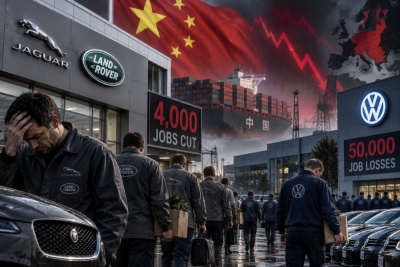
The European industrial base is suffering another heavy blow as Jaguar Land Rover plans to eliminate approximately 4,000 jobs over the next two years, while Volkswagen proceeds with plans to cut an additional 50,000 positions. Britain's largest automaker is facing mounting pressure from Chinese competition, adding new job losses to the already growing wave of cuts sweeping the European automotive sector.
Jaguar Land Rover: Cuts of 4,000 jobs
The cuts correspond to approximately 10% of Jaguar Land Rover's global workforce and are part of a 2.3 billion dollar cost-saving program, as announced on Monday by CEO P B Balaji. However, the layoffs are not expected to begin immediately. 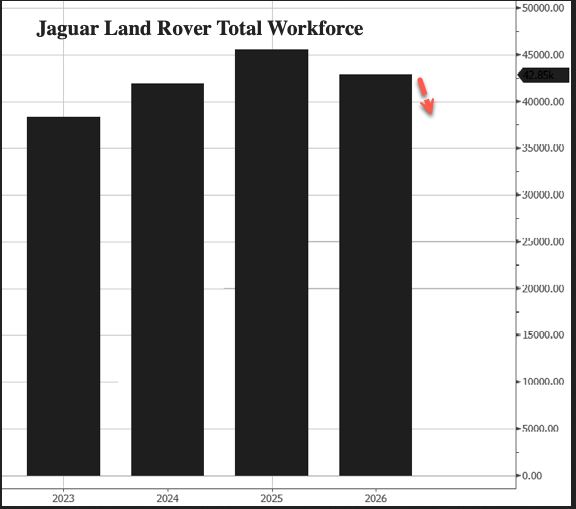
The workforce restructuring comes at a particularly difficult juncture for the automaker, as its financial results deteriorate sharply. In the last quarter, revenues fell by 10%, while pre-tax profits collapsed by 69% to just 109 million pounds. "The automotive industry faces significant challenges, with technological changes combining with fierce competition and ongoing geopolitical uncertainty," stated P B Balaji.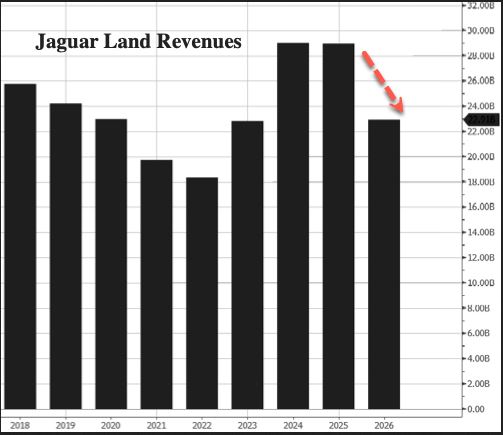
It's not just BYD – Multiple blows
The pressure on Jaguar Land Rover does not stem solely from the expansion of BYD Motors into the European market. As the automaker owned by the Indian conglomerate Tata Group has warned, problems are piling up from multiple directions. Higher tariffs have complicated its operations in the US, the company's largest market. At the same time, a fire at a key parts supplier and disruptions caused by the conflict in the Middle East have compounded the impact of a recent cyberattack that had already hit the firm. The result is an exceptionally difficult business environment in which a combination of geopolitical risks, trade barriers, supply chain disruptions, and rising competition is squeezing margins and output.
Volkswagen: On track for another 50,000 fewer jobs
Simultaneously, the European auto sector faces an even larger wave of cutbacks. In recent weeks, Volkswagen advanced planning to eliminate another 50,000 jobs, intensifying employment losses across the entire sector. This development serves as another clear indication that the crisis in European automaking is no longer confined to individual companies, but is taking on the characteristics of broader industrial restructuring.
Domino effect strikes the entire European industry
The prolonged downturn in the European automotive sector increases risks for Europe's entire manufacturing base. A substantial reduction in vehicle production will drag down demand for steel, aluminum, glass, chemicals, semiconductors, batteries, and other components, while applying pressure on supplier profit margins and capital investments. If this weakness persists, the domino effect could lead to further production line suspensions, plant closures, and additional job losses. Most concerningly, this process already appears to be underway.
Blow to the defense industry as well
The shrinkage of the manufacturing footprint is not limited to automakers. European manufacturing is also a critical link for defense production, as much of the same industrial infrastructure, supply chains, raw materials, and technological capabilities support or can be repurposed for military equipment manufacturing. Consequently, the longer the European auto crisis persists, the greater the risk of eroding Europe's core industrial capacity. The issue, therefore, is no longer merely how many jobs are lost at Jaguar Land Rover and Volkswagen. It is whether Europe can maintain its industrial base, competitiveness, and the manufacturing capacity required even for its own defense readiness.
www.bankingnews.gr












Readers’ Comments