

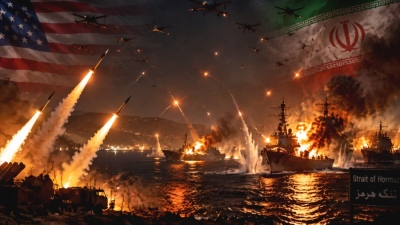
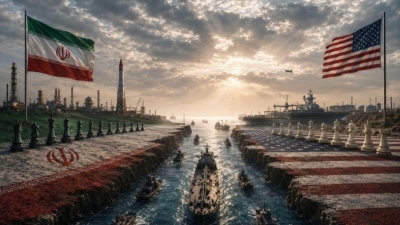
Iran is changing the rules of the game in the Persian Gulf and sending Washington a clear message: if you touch Iranian tankers, we will shatter your energy infrastructure. At the same time, it announces that in the coming days it is preparing a new regime in Hormuz that will include a "restricted zone" alongside an agreed navigation route with Oman. This is another clear message: we control the Straits. And while Trump continues to argue that the Straits are open—a claim in no way confirmed by competent authorities—the Iranians are moving to a counteroffensive, warning that "the era of proportional responses" is over. This potentially means that with it, the era of illusions for the US president has also come to an end... After all, top US officials point out that the US is heading toward a similar defeat in western Asia against Iran, as already occurred in Iraq and Afghanistan. At the same time, they show that the effects of the war are obvious to most Americans: within six months, they were asked to pay an extra 100 billion dollars for fuel, a development that spells only bad news for Trump ahead of the November 3 elections…
Final warning from Ghalibaf (speaker of Iran's Parliament): We will hit US energy companies
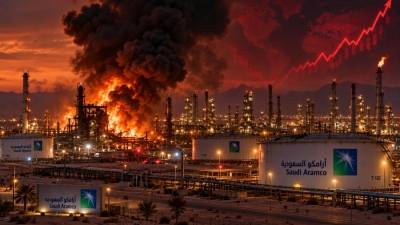
The speaker of the Iranian parliament Mohammad Bagher Ghalibaf warned of strikes against American energy companies, following the threat by US Secretary of Defense Pete Hegseth to "destroy" Iranian tankers. "It is simple: the oil and gas production chain here is extensive, accessible, and exposed. American oil and gas companies in these waters and facilities share the same exposure," he wrote in a post. "Hit our assets and you will be hit," warned Ghalibaf, who accompanied the message with an AI image of oil infrastructure, which read: "The lost decade of the American economy is coming." As Ghalibaf said, Iran has already proven its ability to respond in kind, emphasizing: "Ask the bases that are no longer operationally viable." Earlier, Ghalibaf had made it clear that the era of proportional responses from Iran is over and that Americans must understand the rules of the game have changed, noting that any attack against Iran's national security interests will henceforth be met with a faster, stronger, and more painful response.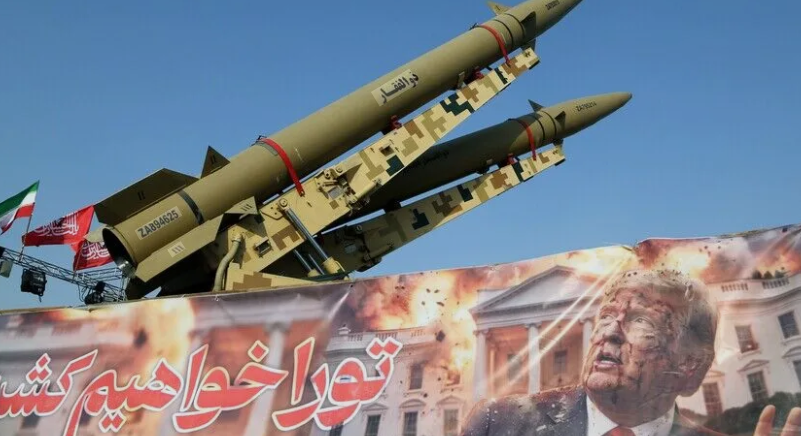
Shahram Irani (commander of Iranian Navy): We surprised them, we have pinned them down
Rear Admiral Shahram Irani, commander of the Navy of the Army of the Islamic Republic of Iran, claimed that Iranian armed forces are on standby and have caught the opponent off guard. "Surprising the enemy in various missions was of such magnitude that the operational capability of several enemy warships was disrupted for a long time. Today, the enemy is deeply concerned about the operational initiatives of the Armed Forces of the Islamic Republic of Iran and, taking into account the progress made, if necessary, we can pin down the enemy at any point," said Irani.
Paknejad (Iranian Oil Minister): Oil exports were not interrupted for even an hour
Iran's Oil Minister Mohsen Paknejad stated that despite US-Israeli attacks on critical energy infrastructure, Iran managed to maintain uninterrupted crude oil exports, rapidly restore part of the damage, and continue plans to increase oil production and gas output. Paknejad said that during the 40-day war, the oil industry suffered severe damage, although the technical capability of the National Iranian Gas Company and the National Iranian Oil Company allowed the restoration of part of the lost production capacity within hours, with the process ongoing. He placed particular emphasis on the continuation of crude exports, calling it an "enduring achievement" of the Iranian oil industry, arguing that during the 40-day war, crude exports "were not interrupted for even an hour."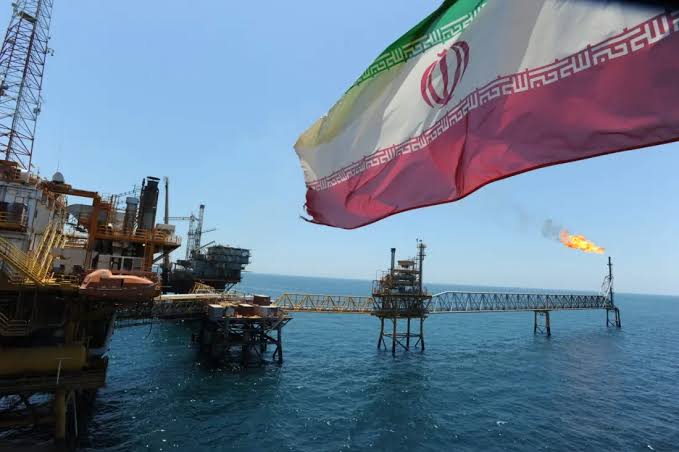
Over 550 strikes on Kharg
Regarding Kharg Island, a key hub for Iranian oil exports, he said it received more than 550 strikes; nevertheless, workers continued loading tankers even under bombardment. He added that exports remained in good shape without severe restrictions, while oil prices rose during the same period. Referring to the naval blockade, Paknejad said a line was initially defined between Ras al-Hadd and Gwadar and that through a series of measures, Iran managed to bypass restrictions and continue the sale and delivery of oil to customers thousands of kilometers away from the Persian Gulf and the Gulf of Oman. He acknowledged that there were transport restrictions beyond the blockade line, but stated that available capabilities were fully utilized.
Americans paid an extra 100 billion for fuel
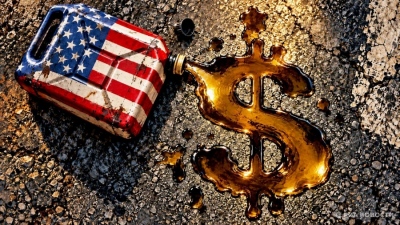
American consumers have paid an extra 100 billion dollars for gasoline and diesel during the six months of the war against Iran, according to an index by the Watson Institute for International and Public Affairs at Brown University. Across the country, the additional cost corresponds to approximately $763 per household, based on the estimate that there are roughly 131 million households in the US. Trump, in an interview with Reuters, brushed aside concerns about rising fuel prices, saying: "If they go up, they go up." Instead, he attempted to shift the blame onto oil companies, accusing them of "price gouging." Gasoline represents the largest portion of the additional cost because Americans consume far larger quantities of gasoline than diesel. The price of gasoline has increased by 39%, from about $2.98 to $4.15 per gallon—from $0.79 to $1.09 per liter. The price of diesel has risen even more sharply, by more than 60%, from $3.67 to $5.90 per gallon—from $0.97 to $1.56 per liter. According to the American Automobile Association, California has the highest average gasoline price in the nation at $5.85 per gallon—$1.55 per liter.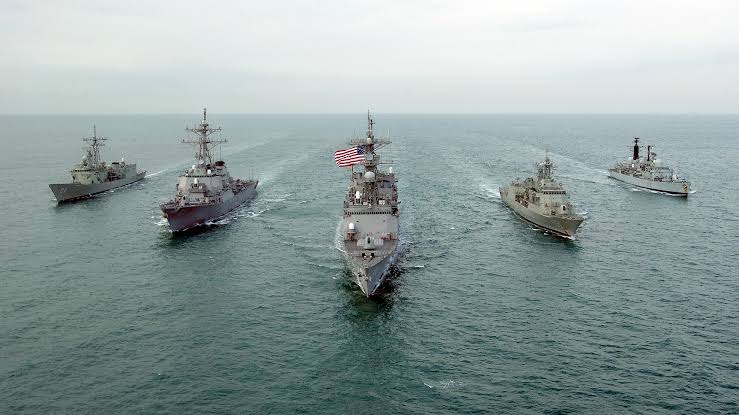
Panetta (former Pentagon chief): A new US failure
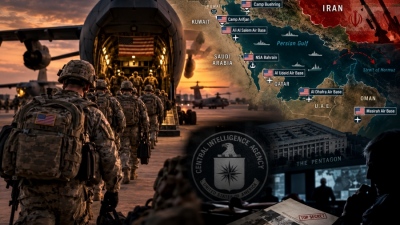
Former Pentagon chief Leon Panetta warned that the US war against Iran is heading toward becoming another failed military offensive in Western Asia, similar to those in Iraq and Afghanistan, as the US struggles to break the stalemate and is increasingly perceived by adversaries as weak. Panetta stated that Washington's inability to end the war, combined with turmoil inside the Pentagon and its command structure, undermines US credibility and raises questions about its capacity to effectively deploy military power. Panetta stated that the war launched by US President Donald Trump more than six months ago risks developing into yet another "endless war" in the region without a clear end in sight. "It is no secret that the US and Iran are locked in a terrible stalemate where there are really very few options available to end this war," said Panetta, assessing that the war is heading toward becoming "another failed war" in Western Asia.
Will continue for at least 6 months
"I believe it is most likely that this war will continue for another six months without being resolved," added Panetta. "And I simply believe that, whether it is Iran or our other adversaries, they now look at the US and see weakness in our ability to truly harness our military power to defend our country," added Panetta, stressing: "My biggest concern right now is that we live in a very dangerous world, with primary threats coming from China, Russia, North Korea, and yes, Iran. What concerns me, however, is that we are sending a message of weakness to our main adversaries," he said.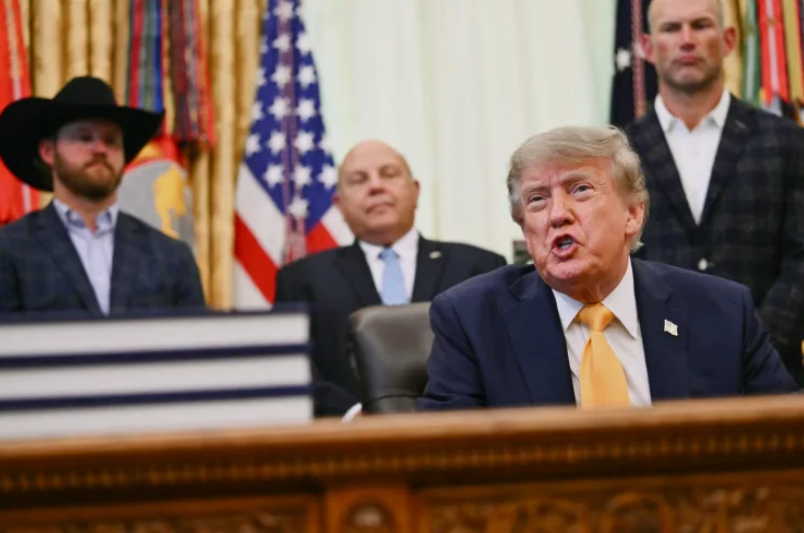
Three options
The former Pentagon chief outlined three potential options for the US president. The first, he said, would be to withdraw from the war and "admit that this is a failed war." The second would be to maintain the current "stalemate, with periodic strikes on both sides, one in retaliation for the other," with both sides trying to "avoid starting a more dangerous war," while simultaneously refusing to negotiate or surrender. Panetta warned that such an approach could lead to "what all parties feared": another prolonged war in Western Asia. The third option, he said, would be for the US to make clear that "its primary objective at this moment is to reopen the Strait of Hormuz." Panetta also stated that Trump has undermined his own credibility with repeated claims that a deal to end the war is imminent and that the strategic waterway remains open. "So the real question is: will he make a decision to actually deliver on what he says?" wondered Panetta. "For many reasons, he is currently in the worst possible position, because not only does he lack credibility, but any threats he utters are completely ignored."
Restricted zone in Hormuz
In public statements, Mohsen Rezaei, secretary of the Supreme National Security Council, announced the creation of a restricted zone and a sanctions list for vessels as part of Iran's plan for the Strait of Hormuz. As he said, a restricted zone will be designated outside the strait, starting from the US Navy blockade line and extending into the Persian Gulf. Any ship entering this area without authorization and without coordination with Iran will be logged, along with the name of its owner and charterer, and added to Iran's sanctions list. According to Major General Rezaei, the result of this measure is clear: severe problems for insurance coverage and a steep rise in shipping costs.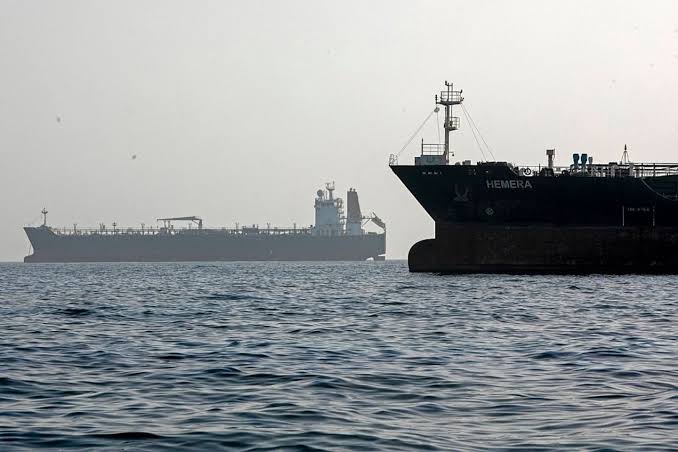
No ship unscathed
He stressed that this area effectively turns the strait into a checkpoint and that transit will require coordination with Iran. According to Rezaei, experts in maritime logistics also estimate that, in some respects, the impact of this measure could be even greater than firing missiles, as it raises transit costs for rule-breakers without requiring direct military conflict. Rezaei simultaneously clarified an important point: no final decision has yet been made to sink ships that violate the rules, as oil pollution would also create problems for Iran itself, and Iran, he said, does not seek war in principle. However, none of the ships that violate the rules will exit unscathed.
Stephen Zunes (analyst): Iranians will be vulnerable
Iranian forces attempting to enforce a restricted zone in the Strait of Hormuz will be "very vulnerable" to an American attack, argued Stephen Zunes, chair of Middle Eastern Studies at the University of San Francisco, stating that Iran will find it difficult to enforce a restricted zone near the Strait of Hormuz. "It is hard to see how they will actually be able to enforce it. Iranian ships and aircraft attempting to enforce it would be very vulnerable to American strikes," he told Al Jazeera. "Perhaps, however, they are sending a warning, given that some risk remains, so shipping companies do not take it for granted that they can pass through the strait without consequences," said Zunes, emphasizing that Iran might hope to provoke a broader military response from the US, which could politically benefit Tehran by "justifying attacks" against neighboring states and US military facilities in the region. This, in turn, could assist Iran by "undermining public support" in the US for continuing the conflict, while pushing Iranian public opinion to "rally around the flag" amid growing domestic economic hardship.
What the plan conceals
Furthermore, he highlighted that Iran's plan to create a restricted zone in the Strait of Hormuz could be linked to its upcoming agreement with Oman regarding maritime transit routes through the strait. "If the agreement with Oman proves workable and is something the United States can accept, Iran could 'back down' from enforcing the restricted zone. If not, then Tehran has something ready to make it harder for Washington to reject the deal with Oman," said the analyst, pointing out that a restricted zone could make "things more complicated, because US forces—which are already overextended—would ultimately be forced to monitor and control a larger area." It could also "make shipping lines and their insurers even more reluctant to attempt such a hazardous passage." Regarding the Persian Gulf, Zunes said neighboring countries to Iran have "much at stake and a strong interest in de-escalating the regional conflict."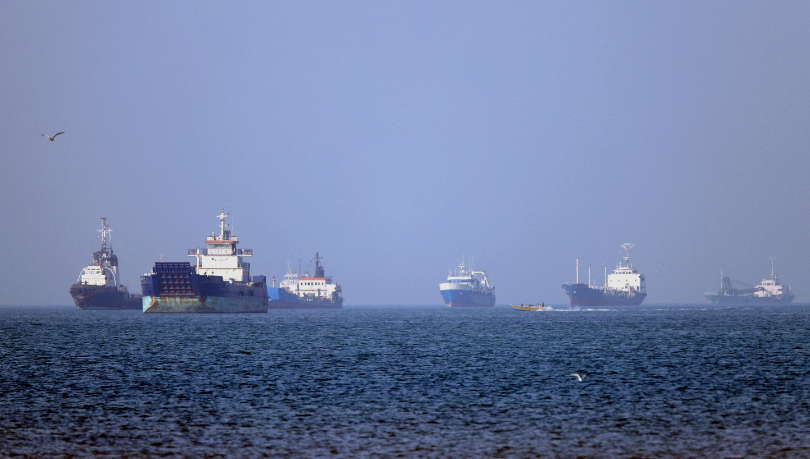
The new route in Hormuz
Regarding the new route Iran is preparing, reports indicate it is the product of an agreement with Oman and will be announced in the coming days. In previous statements, Kazem Gharibabadi, Iran's Deputy Foreign Minister for Legal and International Affairs, maintained that Iran and Oman agreed that entry into the new route "will occur through our territorial waters, while part of the exit route will also pass through our territorial waters." The transit corridor will be temporary and have a width of 11.3 kilometers (7 miles), according to him. However, key details remain unclear, including the exact coordinates of the route, when ships can safely begin crossing the strait, and how revenues will be generated. Specific operational protocols have also not yet been made public, such as whether certain vessels or ships flying specific flags will be prohibited from using the maritime corridor. Gharibabadi also stated that despite the agreement, the strait will not open fully. At the same time, he called on the United States to fulfill its commitments under the temporary peace agreement signed in June, including lifting sanctions and unfreezing Iranian assets.
Iran controls the Straits
"It appears likely that Iran will emerge from the war in a stronger position regarding control of the straits, and this will force countries dependent on Middle Eastern crude to adapt," said Ross Mayfield, investment strategist at Baird. "The closure of Hormuz shifted from a hypothetical tail risk into a proven effective tactic," said Mayfield. Oil market analysts believe that the ultimate resolution of the conflict could eventually involve some form of agreement allowing Iran to levy fees for safe passage through the Straits. However, such a precedent already exists, pointed out Natasha Kaneva, head of commodities strategy at JPMorgan. The United Nations allows countries to charge service fees—not for passage itself through waterways, but for maritime security, traffic management, security escorts, emergency response, and environmental protection. Turkey, Denmark, Sweden, Russia, and Indonesia all impose service fees for passage through various straits, Kaneva noted. This change could add about $1 to the price of oil if Iran adopts a fee system similar to what Turkey applies in the Turkish Straits, said Kaneva. A Very Large Crude Carrier (VLCC) could pay around $260,000 for a round-trip passage.
www.bankingnews.gr





Readers’ Comments