

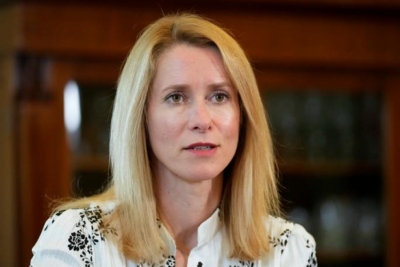
Kaja Kallas suffered a severe political blow as the planned High-Level Group on Defense was abandoned just days after its announcement, following intense resistance from European Union member states. The head of European diplomacy had introduced the initiative on September 1 during an informal defense ministers' meeting in Wicklow, Ireland, arguing that its goal was to assemble top political and military figures to propose faster solutions to European defense gaps. She had publicly announced that the panel would include representatives from EU nations alongside delegates from the UK and Ukraine. However, just a few days later, the project collapsed before it could even be officially presented.
Capitals hit the brakes
According to reports citing Politico, several member states pushed back against the layout of the new advisory body, considering that it was neither the right time nor the appropriate method to add another layer to the European defense architecture. According to various diplomatic sources, this pushback was directly tied to Germany, France, and Italy. Euractiv noted objections from Rome, Berlin, and Paris, while Italian media reported severe dissatisfaction within the Italian government. A European official stated that following consultations with ministers, a decision was reached to shelve the initiative and explore alternative avenues of cooperation with member states. Euronews characterized the cancellation as a significant political defeat for Kallas, particularly since it occurred before the formal announcement of the group's members.
The presentation in Brussels that never happened
The official rollout had been scheduled for Monday morning at the Bibliothèque Solvay in Brussels. Around 150 invited guests from EU institutions, NATO, academia, and prominent think tanks were expected to attend the event, which was set to feature a panel discussion with Kaja Kallas. However, attendees were informed on Sunday that the event was canceled and that the plan for the group was effectively being shelved.
Rasmussen reported to take the helm
The figures reportedly selected for this new body generated particular interest among diplomatic circles. Former NATO Secretary General Anders Fogh Rasmussen was tipped to serve as chairman of the group, representing one of the most recognizable figures in European security policy. The prospective panel was also expected to feature former Estonian Defense Minister Jüri Luik and former French Armed Forces Minister Florence Parly. Furthermore, representation was planned for Germany, alongside non-EU partners including the United Kingdom and Ukraine. The European External Action Service had not officially confirmed these names.
Fears over a "parallel Defense Ministry"
A central argument raised by critics was that the prospective group risked creating overlapping responsibilities within existing EU institutional frameworks. Scrutiny focused primarily on the mandate of European Commissioner for Defense Andrius Kubilius, who is already conducting extensive consultations with experts, think tanks, and former military and political figures on European defense strategy. Diplomats voiced concerns that establishing a second high-level advisory body could sow confusion regarding who formulates policy, who submits recommendations, and ultimately who retains political oversight of defense.
"Power struggle" inside Brussels
The episode carries even greater weight as it unfolds alongside broader debates concerning the future structure of the European External Action Service (EEAS), the diplomatic arm of the EU. France and Germany have submitted proposals to restructure the service. According to Euronews, one proposal would place the EEAS under tighter oversight by European Commission President Ursula von der Leyen, even while formally expanding the portfolio of the High Representative. Behind the scenes, the disagreement extends far beyond a single advisory panel. It taps into the fundamental question of who will control European foreign policy and defense at a time when military budgets are surging and national security has emerged as a top priority.
Kallas sought the "brightest minds"
Just six days prior to the cancellation, Kaja Kallas had projected a radically different outlook. During her press conference following the Wicklow summit, she announced that the new body would bring together leading figures in security and defense to deliver concrete proposals on how Europe could rapidly address its conventional military shortfalls. Kallas stressed that despite increases in national defense spending, Europe had not moved quickly enough to resolve critical capability gaps within the NATO alliance framework.
From major announcement to abrupt retreat
The defining aspect of this episode is the sheer speed with which the strategy was reversed. On September 1, the initiative was framed publicly as a vital new tool to accelerate European defense capabilities. By September 6, opposition from member states had grown strong enough to force the cancellation of the following day's launch. This development underscores the clear structural limits facing efforts toward deeper European defense integration: while Brussels can propose new mechanisms, national governments retain the ultimate authority over how and by whom security policy decisions are executed.
A political blow for Kallas
This cancellation does not imply that the European Union is abandoning its broader goals to reinforce defense readiness. On the contrary, European governments continue active negotiations on addressing military shortfalls and ramping up the defense industrial base. What was discarded was the specific framework proposed by Kaja Kallas. That is precisely why the matter carries significant political weight: an initiative announced personally by the chief of European diplomacy was unraveled in less than a week under pressure from the very member states required to back it. As discussions continue regarding EEAS reform and the division of authority between Kallas and the European Commission, this incident serves as another clear indicator of deep-seated institutional friction in Brussels over who ultimately holds the reins of European foreign and defense policy.
www.bankingnews.gr

Readers’ Comments