

The historical electoral victory of the AfD—the "Alternative for Germany"—in the state of Saxony-Anhalt is rapidly altering the political power balance across Germany. Decades-old political dynamics could be completely overturned, potentially triggering rapid developments within Chancellor Friedrich Merz's government once the AfD completes its political triumph in the elections scheduled for September 20 for the Berlin House of Representatives and the Landtag—the parliament—of the federal state of Mecklenburg-Western Pomerania. There is no doubt about it. Germany woke up today to a transformative political landscape that very few could have envisioned just a few short years ago.
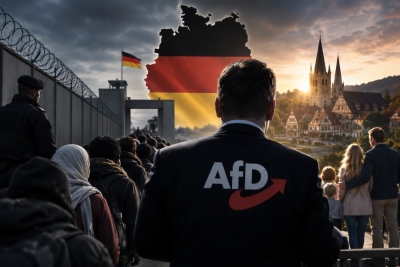
Analysts are calling it a political revenge of the "Ossis"—German citizens hailing from the regions of the former East Germany—against the country's political elite, driven by deep-seated anger over the national economy, immigration policy, and military aid for Ukraine... Indeed, the geopolitical ramifications extend far wider. As observers point out, the AfD's victory and the entry of the BSW ("Sahra Wagenknecht Alliance") into the Saxony-Anhalt parliament—a party staunchly opposing continued financial assistance to Kyiv and advocating for the lifting of EU sanctions against Russia—marks yet another major diplomatic victory for Russian President Vladimir Putin. The Russian leader is witnessing the emergence of a widening rift within Western unity regarding sustained support for Ukraine, alongside a symbolic new wall coming dangerously back to life nearly three decades later... And just as back then, the consequences will not remain confined within Germany's borders.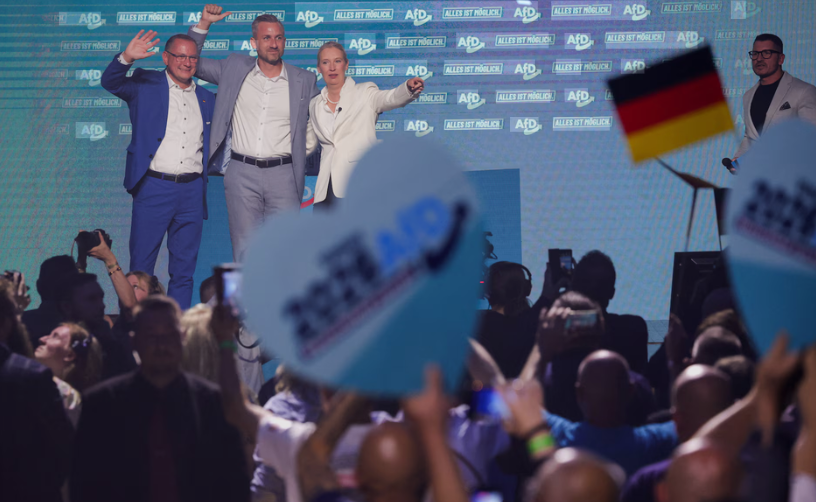
The day after
Based on official election results in the German state of Saxony-Anhalt, the Alternative for Germany (AfD) scored a sweeping electoral victory. The party secured a record-breaking 43.8% of the vote, guaranteeing 39 seats in the state parliament (Landtag). In total, the state parliament comprises 83 seats. This means that to secure an absolute majority and form a state government, the AfD needs just three more votes. The Christian Democratic Union (CDU), which until now led the state government, plummeted to just 17.2%, losing 25 parliamentary seats. Incumbent Premier Sven Schulze was defeated by the AfD lead candidate even in his own local constituency in Magdeburg. The Social Democratic Party (SPD), the Greens, and The Left party each received approximately 9% of the total vote share. The BSW (Sahra Wagenknecht Alliance) also entered the Landtag with 5.3% and five seats. Its voting bloc may prove decisive in forming a governing parliamentary majority.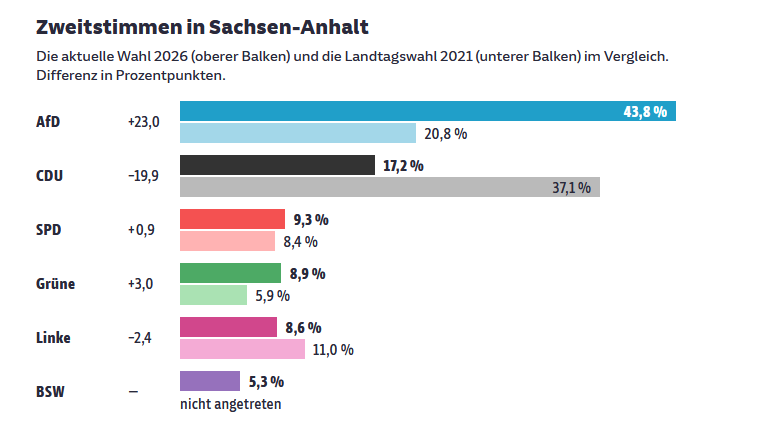
BSW as the kingmaker
Without the AfD, forming a functioning coalition government will be extraordinarily difficult. The CDU, SPD, and Greens combined hold only 31 seats, and even with the support of all eight lawmakers from The Left party, they reach just 39. Consequently, this anti-AfD alliance also falls three votes short of the requirement to form a government. Therefore, the existing balance of power essentially positions the Sahra Wagenknecht Alliance as one of the key factors in upcoming negotiations for a governing coalition. The Sahra Wagenknecht Alliance had previously left open the possibility of entering a coalition with the AfD. Together, they command a mathematical majority holding 44 of the 83 total seats. It is worth recalling that both the AfD and the Sahra Wagenknecht Alliance consistently oppose military support for Ukraine, favoring instead the easing or lifting of economic sanctions on Moscow, alongside the immediate launch of diplomatic peace talks. Undoubtedly, this represents a significant shift that coincides with recent peace initiatives championed by US President Donald Trump.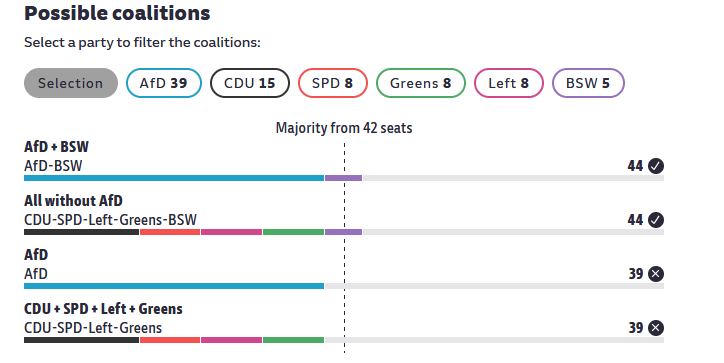
BSW: "We will not join a Firewall Coalition"
Thomas Schulze, lead candidate for the Sahra Wagenknecht Alliance (BSW) in Saxony-Anhalt, announced that his party's new parliamentary group will abstain from the third round of voting to elect the state's premier. "We will not participate in a 'Democracy Firewall' coalition," Schulze stated in an interview with the Deutschlandfunk radio network. In the third round of voting within the state parliament, a simple plurality suffices to elect a new premier. This mechanism means the AfD could potentially secure the election of its lead candidate, Ulrich Siegmund. However, Schulze noted it remains uncertain whether Siegmund will ultimately run for the position. He estimated that the AfD, as the election winner, will reach out to other parties. At the same time, he reiterated that BSW intends to nominate an independent non-partisan candidate for the premier's office. As he noted, this individual hails from Saxony-Anhalt and will be formally proposed "shortly."
A crushing victory
The outcome of the state elections in Saxony-Anhalt was to some extent expected: The Alternative for Germany (AfD) achieved a crushing electoral win, capturing 43.8% of the vote amidst exceptionally high voter turnout. Its closest competitor, Chancellor Friedrich Merz's Christian Democratic Union (CDU), gathered just over 17%. This marks a devastating defeat, as the CDU had held power in this eastern state for nearly a quarter of a century. All other competing parties recorded vote totals below the 10% threshold. Celebrating the triumph, the head of the AfD in Saxony-Anhalt, Ulrich Siegmund, warmly thanked the man who he claimed became "the public face of our party" and secured their victory. Naturally, he was referring to Friedrich Merz. In his view, the AfD owes its rapid political rise to Merz and his predecessors in the Federal Chancellery.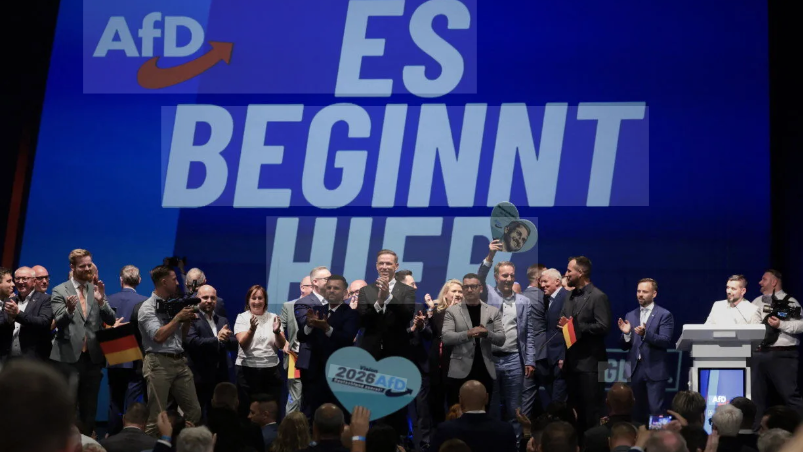
A decade's biggest political shocker
Just 13 years ago, this party resembled a gathering of eccentric politicians whom no one took seriously. Even the mainstream press mocked them rather mildly, displaying little genuine interest. In 2013, during its first national election for the Bundestag, the AfD failed to cross the 5% electoral threshold. However, by 2025, it had already surged to become the country's second most popular political force. This year, the Alternative is campaigning to become the most popular party in Germany, dismantling long-standing political alliances, political maneuvering, and even the notorious "firewall"—the systematic boycott imposed by all mainstream parties. In a few weeks, elections will take place in Mecklenburg-Western Pomerania, where an AfD electoral victory is already considered a foregone conclusion.
Everything went wrong for the Christian Democrats
Disappointment reigns supreme in the Christian Democrat camp, yet for this defeat, they have only themselves to blame. They monopolized government decision-making across the nation while making as many policy missteps as possible. The AfD enjoys its strongest popular backing in former East Germany, within the states of the former German Democratic Republic (GDR). The vote for the Alternative is framed as a form of political retaliation that East Germans have awaited for decades. It is by no means coincidental that voter turnout reached a record high of over 76%, while Ulrich Siegmund arrived at his polling station riding a vintage scooter originating from the GDR era.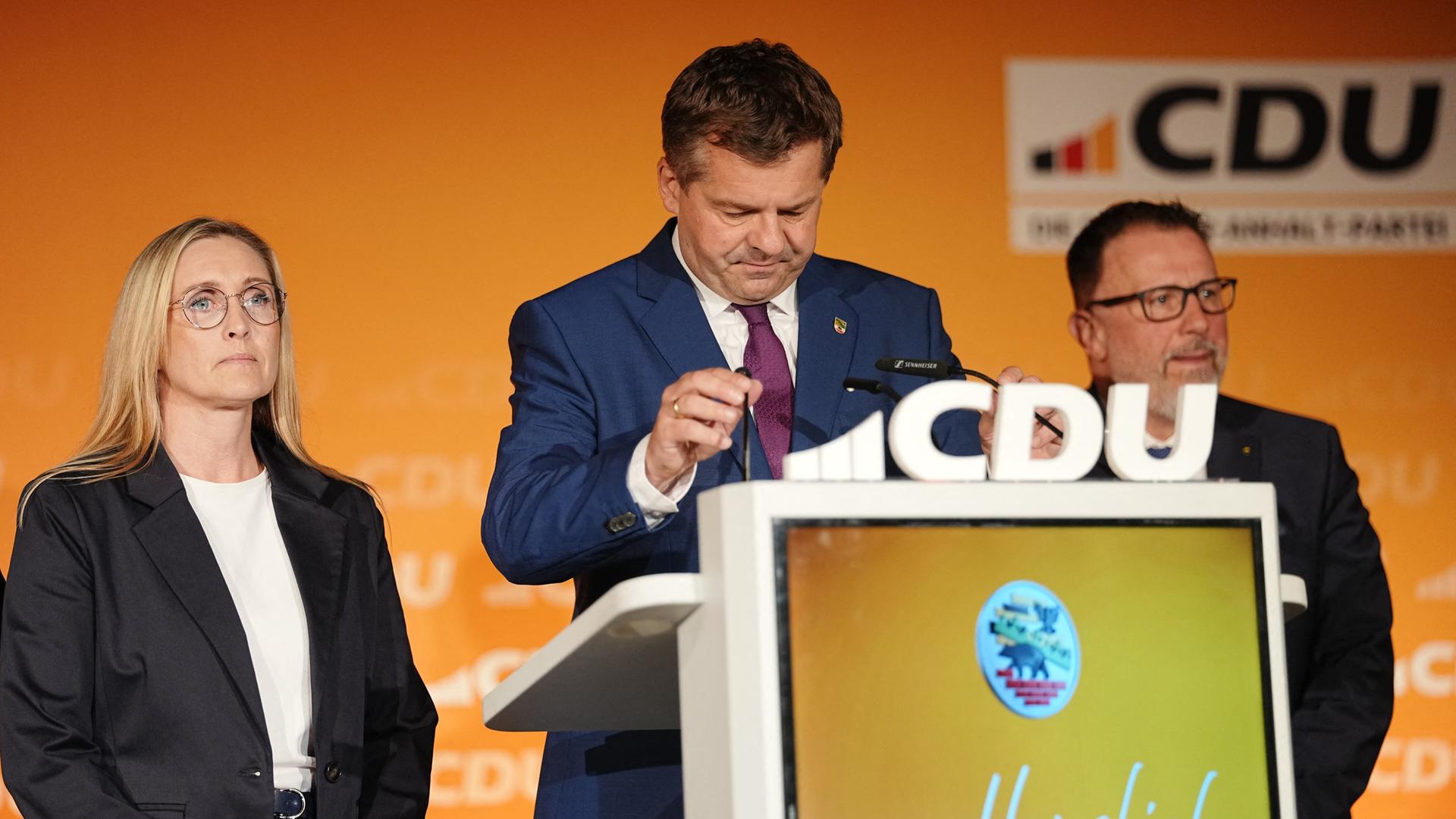
Economic plundering by the elites
Immediately following German reunification, the elites of the Federal Republic of Germany effectively plundered the former GDR economically. The entire industrial base of the eastern states was privatized and sold off for a mere 34 billion euros. Roughly 85% of the region's commercial enterprises fell under the control of West German citizens, while political power levers were similarly handed to figures arriving from the West. Widespread joblessness and poverty were followed by a severe demographic decline. Millions of former GDR citizens, mostly young people, migrated westward. Even today, the average household in the eastern states holds exactly half the wealth of a corresponding household in the West. Furthermore, eastern populations display strong resistance toward left-leaning social agendas.
Turning against Merz
In 2017, East Germans expressed open hostility toward Angela Merkel, whom they viewed as a betrayer of both broader German interests and the former GDR specifically. Today, the so-called "Ossis"—an informal term for Germans originating from the former eastern territories—are directing their anger toward Chancellor Friedrich Merz, a sentiment increasingly shared by "Wessis" (West Germans) as well.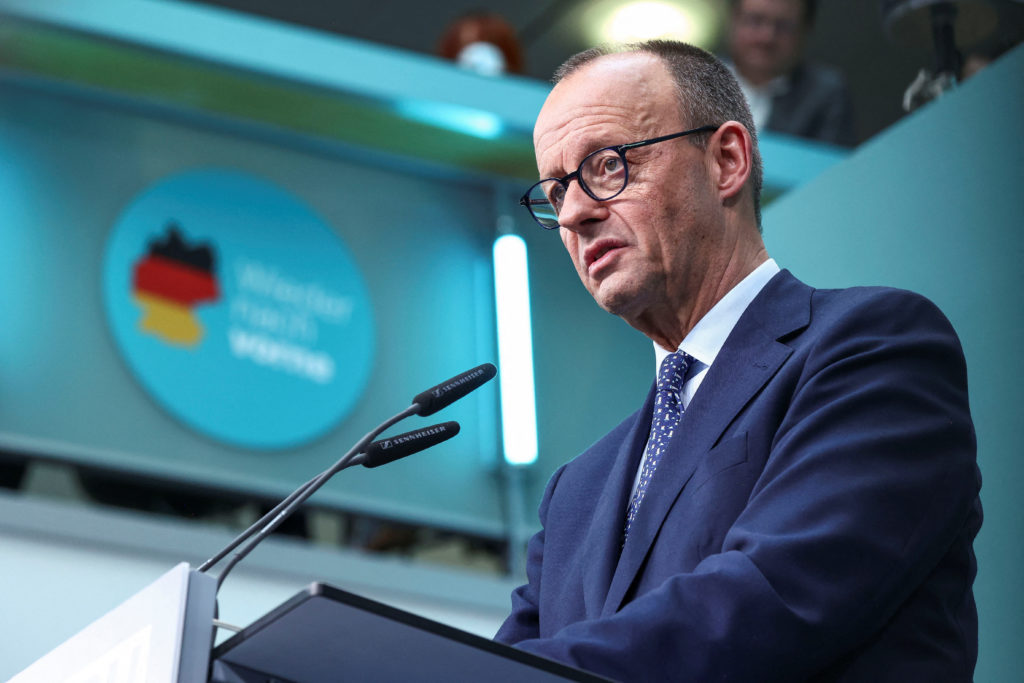
Polling collapse
Merz has reportedly hit historic lows in public approval, with popularity figures hovering between 11% and 13%. The German Chancellor, acting in line with American corporate interests, is dismantling the German industrial economy, with the resulting wave of corporate bankruptcies hitting eastern states hardest. Simultaneously, vast financial resources and military armaments continue to be funneled directly to the government in Kyiv. Unsurprisingly, figures within the CDU have begun floating discussions regarding a chancellor replacement strategy to establish a political scapegoat.
Prolonged political crisis
Meanwhile, AfD representatives in Saxony-Anhalt occupy a highly advantageous position. While unable to form a single-party government independently, their political opponents will find it extraordinarily difficult to build a cohesive governing coalition. The Left party, upon which the fate of an anti-AfD coalition depends, demands significant concessions from the CDU—concessions that many within the CDU rank-and-file refuse to accept. Thus, Saxony-Anhalt appears headed toward a prolonged state-level political crisis. By remaining in the comfortable posture of parliamentary opposition, the AfD can continuously criticize the governing establishment, build its voter base, and avoid accountability for difficult policy decisions.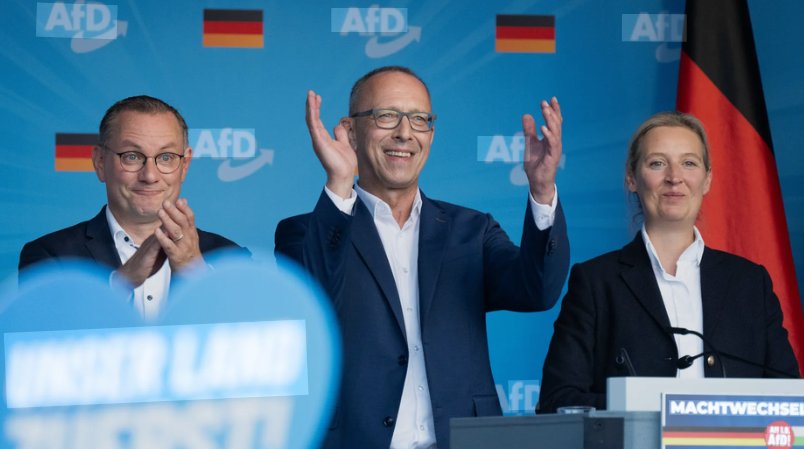
A bold development and the new... Wall
Yet a bolder outcome remains possible: the collapse of the notorious political "firewall," allowing the AfD to break out of political isolation by forging a coalition with another party. A leadership change in the Chancellery appears increasingly probable. However, a far greater threat to national stability lies in the deepening divide between East and West Germany. The current electoral success of the AfD serves as clear proof of this rift. On the economy, ideology, the immigration crisis, remilitarization, and aid to Ukraine—on nearly every major issue, "Ossis" and "Wessis" hold fundamentally divergent perspectives.
Dislike for Merz
The only unifying factor remaining is a shared dislike for the current Chancellor, though this temporary common ground is unlikely to hold for long. In its political views, Germany is fracturing once again along the very same boundary line where Moscow once permitted its reunification. Only this time, the Russians will not be coming to save it.
www.bankingnews.gr







Readers’ Comments