

Chinese President Xi Jinping's visit to Cairo represents a major strategic shift that is reshaping the balance of power in the Middle East and causing intense concern in both the United States and Israel. According to an analysis by Modern Diplomacy, American and Israeli anxiety stems from the gradual decline of Western diplomatic influence in Egypt and the wider region, as well as the disruption of the strategic monopoly long held by Washington and Tel Aviv over Cairo's decision-making. Some Western analysts assess that growing Chinese infrastructure investment and military cooperation could challenge the traditional authority of the US and its regional partners. Conversely, regional powers view the partnership with Beijing as an opportunity to foster a multipolar international system that enhances stability and economic development.
The American perspective: A threat to traditional influence
From the American perspective, the rapprochement between Egypt and China is seen as a direct challenge to Washington's historical regional dominance. US concerns are concentrated on Chinese capital flowing into ports, industrial hubs, and mega-projects, such as Egypt's New Administrative Capital and the TEDA Suez economic development zone. Furthermore, expanding defense cooperation between Cairo and Beijing is interpreted by Washington as an erosion of American strategic leverage over one of the most critical nations in the Middle East. In contrast, Egypt and neighboring states view China as a key partner capable of facilitating a global transition toward a multipolar international order.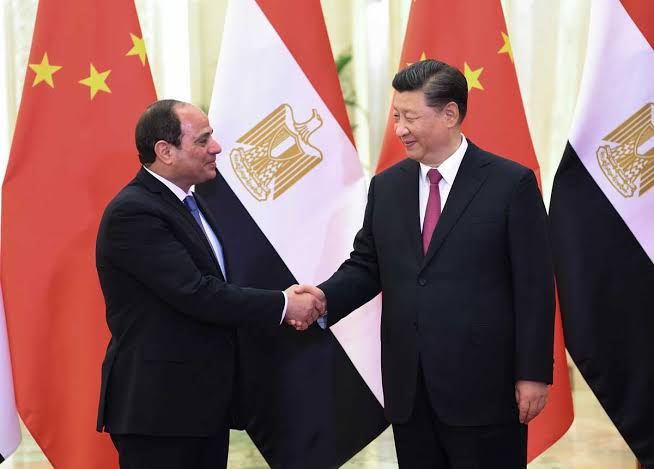
Fears over technology and Beijing's digital footprint
The expansion of bilateral ties into advanced technological sectors is generating particular apprehension within US government circles. Collaborative projects involving 5G cellular networks, telecommunications infrastructure, artificial intelligence, and defense technology are viewed by Western officials as potential entry points for Chinese security influence. The integration of Chinese tech giants like Huawei into government-backed digital infrastructure projects and AI data centers further amplifies Washington's concerns. Officials in Washington fear that Egypt's reliance on Chinese tech ecosystems will pull Cairo away from Western digital security standards.
The Suez Canal at the center of geoeconomic rivalry
A central pillar of American strategic worry involves the economic implications of China's ambitious Belt and Road Initiative. Washington remains concerned that China is attempting to consolidate control over vital global maritime trade corridors by linking Egypt to major infrastructure networks. The Suez Canal and its surrounding economic zone remain critical to global commercial trade, placing China's growing footprint in the region under intense scrutiny from US observers. Additionally, strengthening commercial ties alongside Egypt's entry into the BRICS bloc provides Cairo with financial flexibility while blunting the impact of potential US economic pressure.
Egypt's response to "debt trap" accusations
The United States and its Western partners have repeatedly issued warnings regarding what they term Beijing's predatory debt-trap diplomacy. Under this Western interpretation, large-scale Chinese loans and development projects risk forcing recipient nations into long-term geopolitical financial dependence. Egypt firmly rejects these critiques, maintaining that partnership with Beijing allows Cairo to diversify its economic, political, and defense alliances while securing greater strategic maneuvering room.
Israeli concerns over military cooperation
Israel is similarly monitoring the deepening relationship between Egypt and China with considerable caution. According to the analysis, Israeli concerns center primarily on the military dimensions of this partnership as the Egyptian armed forces pursue a policy of defense supplier diversification. The execution of joint bilateral military exercises, such as the "Eagles of Civilization" drills, has drawn significant attention from defense analysts. Security circles in Israel evaluate that potential new defense procurement deals could bolster Egypt's air defense capabilities, potentially altering Israel's long-held qualitative regional technological edge. Simultaneously, Beijing's expanding political and economic support for Cairo is seen as limiting the leverage Tel Aviv and Washington can exert on sensitive regional security issues.
Toward a multipolar Middle East
According to the analyst, the deepening relationship between Egypt and China reinforces Cairo's foreign policy independence and grants it broader diplomatic versatility. Egypt aims to safeguard its vital national interests—including water security, border management, and the ongoing situation in Gaza—without relying exclusively on Western diplomatic channels. This shift reflects an ongoing transition toward a multipolar global order, where US dominance in the Middle East declines as China establishes itself as a major alternative strategic partner. Beijing's expanding presence offers Arab states broader opportunities to balance their economic, technological, and geopolitical alignments between Eastern and Western powers.
www.bankingnews.gr







Readers’ Comments