

Behind the Greek celebrations over the agreement with Israel and the "Achilles Shield," which will cost more than 3 billion euros, lies a harsh reality. Greece fell into the trap set by Benjamin Netanyahu, on the one hand opening a new front with Turkey and on the other hand reinforcing Israel's presence in the Eastern Mediterranean. Meanwhile, President Recep Tayyip Erdogan is waiting in the wings, expected today (1/9/2026) to meet Russian President Vladimir Putin in Kyrgyzstan (on the sidelines of the SCO Summit) to discuss the issue of Russian S-400 missiles. The "Achilles Shield" is part of a broader Israeli push into the European defense market, as countries worried about new threats from drones and missiles turn to Israeli systems. For Tel Aviv, however, these agreements are not merely a massive source of revenue, but translate into new strategic relationships, technological penetration, and the expansion of Israeli influence. And although it is publicly touted that Greece is acquiring stronger defense capabilities, what emerges is that Greece is creating a new reliance on Israeli technology. At the same time, the domestic political landscape in Israel remains exceptionally heavy for Benjamin Netanyahu, who continues to face his long-running trial for corruption. While this does not mean the Greek deal was made to serve the Israeli Prime Minister personally, the broader political environment in which Tel Aviv attempts to strengthen international alliances and strategic footholds cannot be ignored.
Israel's agreement with Greece
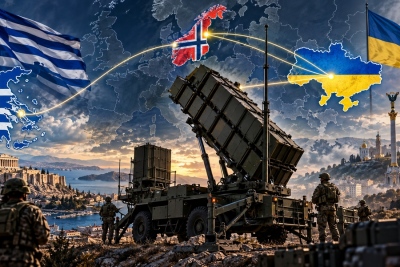
"This is the largest defense export agreement in the history of Israel-Greece relations and one of the largest in the history of the State of Israel," stated the Israeli Ministry of Defense regarding the 3 billion euro deal. Greece's multi-layered integrated air defense system will be named "Achilles Shield" and will combine Israel's David's Sling, BARAK MX, and SPYDER interceptor systems, alongside Israeli-made radars and a national command system designed to counter ballistic missiles, aircraft, heavy rockets, and drones. Rafael manufactures the David's Sling and SPYDER systems, while Israel Aerospace Industries (IAI) manufactures the BARAK MX system. The agreement also includes MMR multi-mission radars for airspace surveillance, manufactured by ELTA Systems, a subsidiary of IAI. Israel will also build a new national Command and Control (C2) system developed by Rafael, which will unify all air defense capabilities.
The C2 network will be similar to the one used in Israel and will incorporate artificial intelligence capabilities. The C2 structure is designed to integrate data from existing Greek sensors and radars with NATO-standard information from Greek F-16 and F-35 fighter jets, feeding directly into the "Achilles Shield" system. Furthermore, during the meeting, a supplementary agreement worth 26 million euros ($30.17 million) was signed for the sale of Rafael's Drone Dome systems, aiming to protect strategic installations from UAVs and drones while boosting existing defense capabilities. Consequently, the vast majority of the deal's funds will go to Rafael. Greek companies are expected to receive approximately 750 million euros ($870 million) of the total contract value as subcontractors for Rafael and IAI. The Greek Defense Ministry stated that 19 Greek companies are already participating in the program.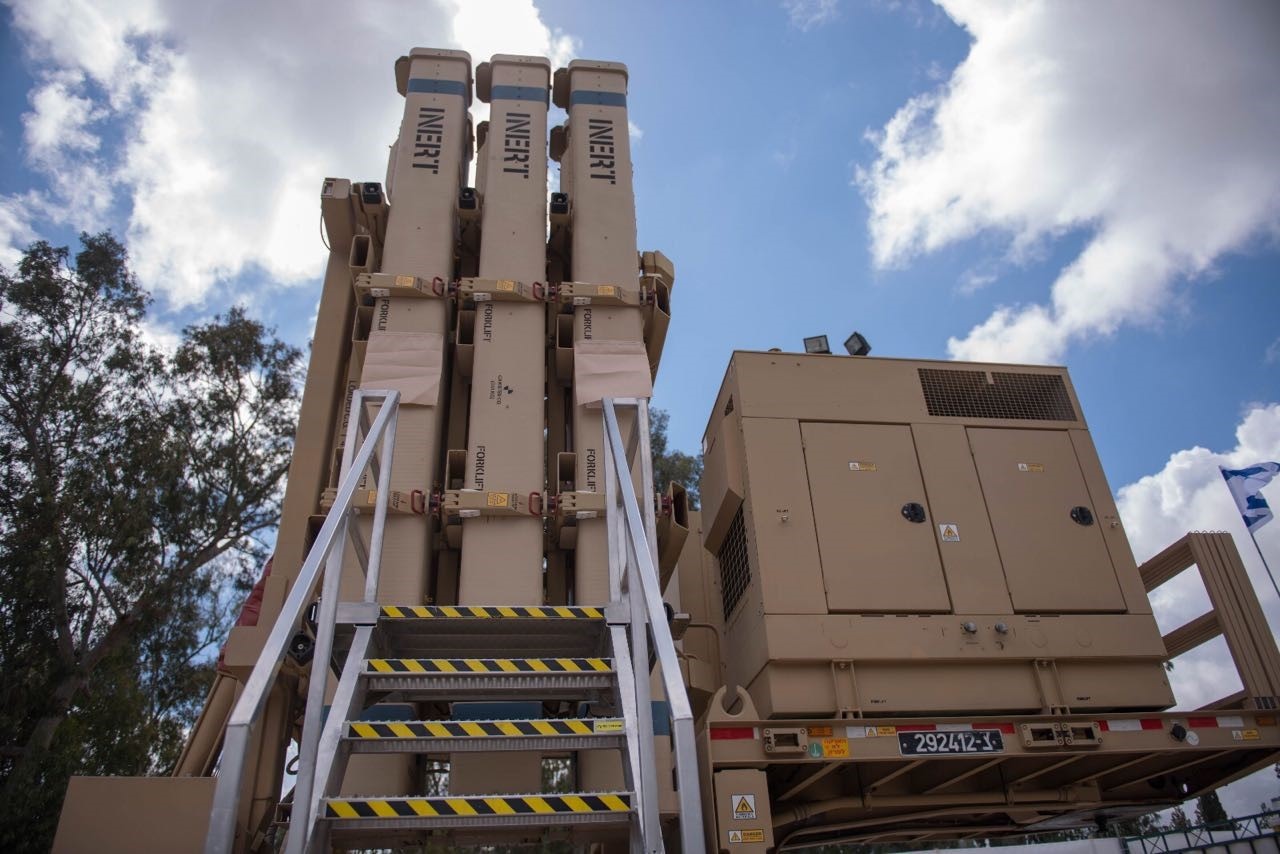
David's Sling is a medium-to-long-range air and missile defense system. It uses two-stage Stunner interceptors based on the hit-to-kill principle, destroying targets through direct kinetic impact. David's Sling is designed to intercept tactical ballistic missiles, large rockets, cruise missiles, and aircraft at ranges of roughly 40 to 300 kilometers. The system has been operationally active since 2017 and is positioned between Israel's short-range Iron Dome and the long-range Arrow system, forming a key layer of Israel's multi-tiered missile defense architecture. BARAK MX is a land and naval air defense system utilizing a family of vertical launch interceptors with active radar seekers, offering an operational range from 15 to 150 kilometers. It is effective against aircraft, drones, cruise missiles, and select ballistic threats.
Israel's SPYDER to be deployed on Greek islands
SPYDER, meanwhile, is a mobile short-to-medium-range system that fires modified air-to-air missiles: the infrared-guided Python-5 and the active radar-guided Derby/I-Derby ER. It has a range of 15-40 kilometers, is highly maneuverable, and is used to protect high-value assets. According to the Jerusalem Post, SPYDER batteries will be deployed on Greek islands, including popular tourist destinations visited by many Israelis. The SPYDER defense system has been sold to several countries, including India, the Czech Republic, Vietnam, and Singapore.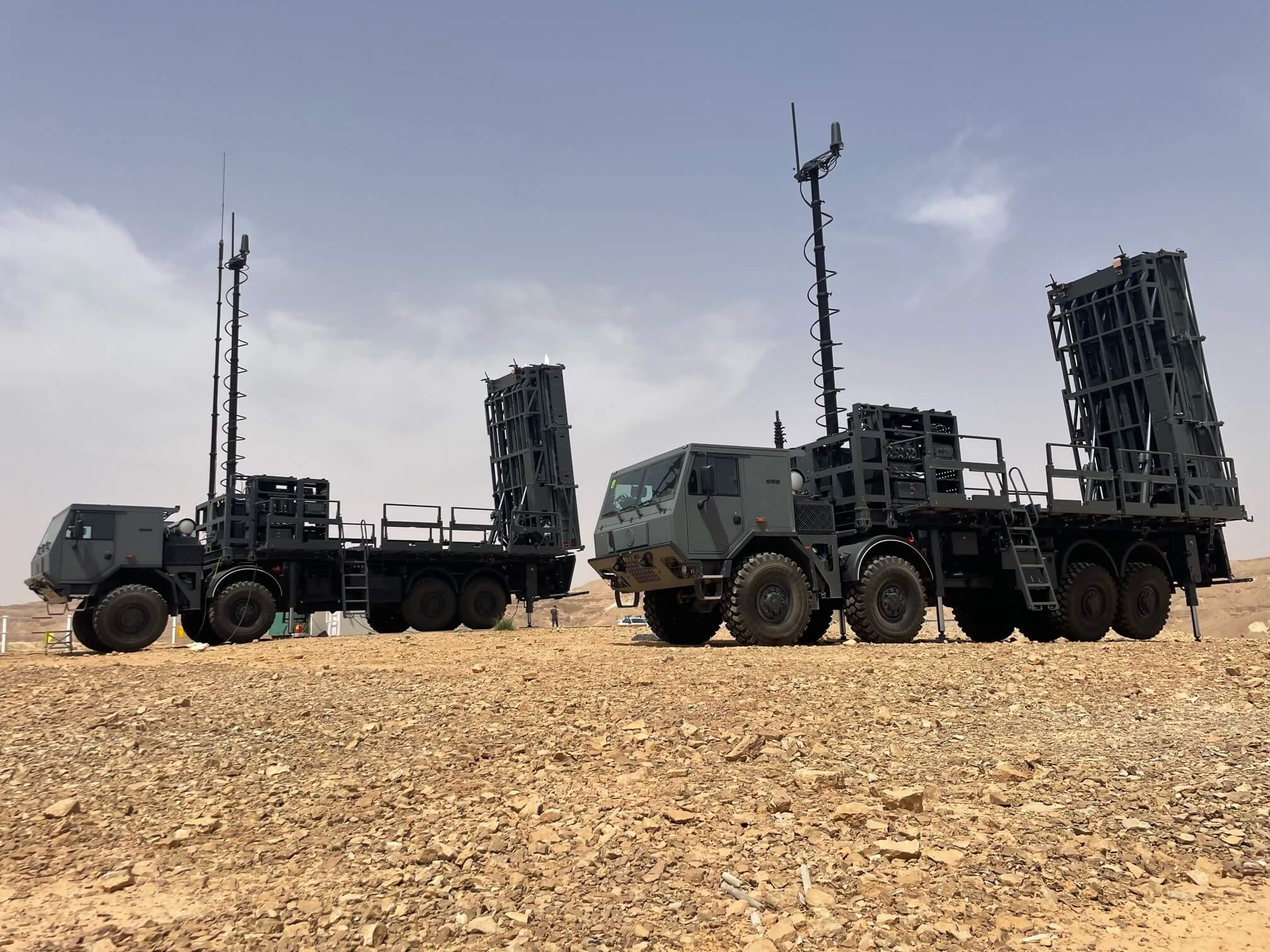
Israel's epic video
Meanwhile, with an epic video featuring David throwing a stone from his sling—which transforms into a missile to shoot down an incoming aerial threat—Israeli defense contractor Rafael sealed its participation in the "Achilles Shield" deal to initiate Greece's multi-layered air defense, anti-drone, and anti-ballistic dome. Rafael is the company behind David's Sling, one of the core systems already utilized by Israel within its own Iron Dome setup.
???? pic.twitter.com/jAkOY7JsP2
— Rafael Advanced Defense Systems (@RAFAELdefense) August 31, 2026
Defense cooperation between Greece and Israel
Greece and Israel have significantly strengthened their defense cooperation in recent years. Specifically, Israel, Greece, and Cyprus—three countries facing friction with Turkey—have consolidated their defense ties. In January, Greece and Israel agreed to expand cooperation in drone swarms, unmanned underwater vehicles, cyber threats, joint military exercises, and defense technology. In April, Greece purchased the PULS rocket artillery system manufactured by Elbit, capable of launching precision missiles up to 300 kilometers away. The system is comparable to the American HIMARS. Both are highly mobile, truck-mounted multiple launch rocket systems (MLRS) designed for rapid and precise long-range artillery strikes. Greece has also purchased Rafael's Spike missiles, IAI's Heron UAVs, Rafael's SPICE precision-guided bombs, and Rampage missiles from Elbit Systems and IAI.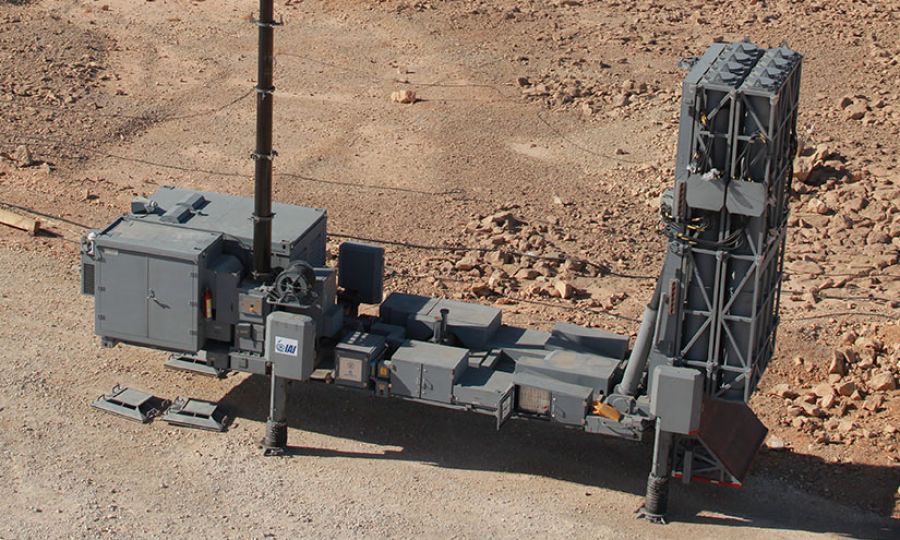
Cyprus has also reportedly purchased Israel's BARAK MX system to safeguard its airspace. In September of last year, the EurAsian Times reported that Israel deployed a BARAK MX system in Cyprus.
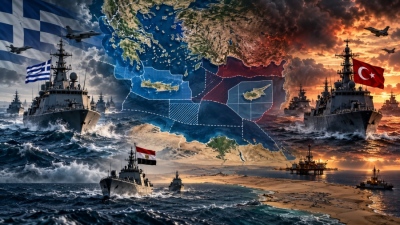
Together, these three nations are forging a new Mediterranean axis to counter Turkey's growing regional ambitions. Turkey, meanwhile, recently signed the Mecca Pact with Pakistan and Saudi Arabia, which includes a NATO-style mutual defense clause. Greece and Israel are also participating in the ambitious India-Middle East-Europe Economic Corridor (IMEC), which aims to connect India, the UAE, Saudi Arabia, Israel, Greece, and Europe. However, Turkey opposes this corridor because it bypasses Ankara, which maintains that no commercial route in the Mediterranean is viable without its direct involvement. This massive transaction marks another major success for Israeli air defense systems, which have not only been battle-tested in real combat conditions but have also secured major deals across Europe in recent years.
Israel's footprint in Europe
Three of the largest defense export deals in Israel's history involve air defense systems. In 2023, Israel signed a $3.5 billion deal with Germany to sell the Arrow 3 anti-ballistic missile system to Berlin. In June of this year, Rafael Advanced Defense Systems (RADS) signed a historic deal with Romania worth approximately 2 billion euros ($2.3 billion) for the supply of Spyder air defense systems. Together with the $3 billion agreement with Greece for an integrated air defense network, these represent the three largest export deals in Israel's history. Israel also signed a $345 million agreement with Finland in 2023 for the procurement of the David's Sling air defense system. Again in 2024, Israel signed a $583 million contract with Slovakia for the BARAK MX system. In December 2024, Cyprus received the BARAK MX system, which can intercept threats at ranges of up to 150 kilometers. Switzerland, meanwhile, has entered talks with Israeli manufacturers for a second air defense system, likely Rafael's David's Sling. However, the United States serves as the "silent third party" in most of these contracts, as many Israeli air defense systems—from Iron Dome to David's Sling and Arrow 3—were developed in close collaboration with US defense partners. For example, David's Sling is produced jointly by Israel's Rafael and Raytheon (now part of RTX). Similarly, Boeing is the primary co-development contractor and production partner for the Arrow 3 exoatmospheric anti-ballistic system alongside Israel Aerospace Industries (IAI). Boeing also collaborated on the Arrow 2 system, the predecessor to Arrow 3. Nevertheless, these massive sales of Israeli air defense systems have helped Israel achieve record defense orders. Indicatively, Israeli defense exports rose to a new historic high in 2025, reaching $19.2 billion, despite calls for boycotts and the exclusion of Israeli firms from several international arms exhibitions. In fact, Israeli defense exports grew by nearly 30% in 2025, driven largely by missiles, rockets, and air defense platforms.
"Missiles, rockets, and air defense systems continued to lead in 2025, accounting for over a quarter, or 29%, of total contract volume," according to the Israeli Ministry of Defense. By comparison, missile and air defense systems accounted for 48% of deals in 2024 and 36% in 2023. A key reason for the market success of Israeli defense technology is its combat-proven performance against drones, missiles, and rockets launched by Hamas, Hezbollah, the Houthis, and Iran over the past three years of warfare. At the same time, European nations are scrambling to bolster their air defenses due to Russia's war in Ukraine and fears of a broader conflict between Russia and NATO in the coming years. Significant delivery delays for Patriot batteries, global shortages of Patriot interceptor missiles, and the lower acquisition cost of Israeli systems have made these products far easier to market across Europe.
Erdogan's meeting with Putin
Meanwhile, Turkish President Recep Tayyip Erdogan is expected to meet today (1/9/2026) with his Russian counterpart, Vladimir Putin, in a meeting where the issue of Ankara's Russian S-400 systems will be placed on the table.
It is worth noting that last month reports surfaced claiming Turkey plans to sell its S-400 systems to a Gulf nation. However, to execute such a transfer, Turkey requires approval from the Russian President, who originally sold the S-400 anti-aircraft system to Ankara. Ankara aims to offload the Russian system to smooth its path toward purchasing American F-35s.
www.bankingnews.gr






Readers’ Comments