

Alarm bells are ringing across global markets as reignited conflict in the Middle East triggers a new wave of concern over inflation, energy prices, and interest rate trajectories, while sovereign bond yields surge to critical levels. The pressure is centered heavily on Japan, the US, and Europe. At the same time, Brent crude oil has breached $91 per barrel, while natural gas hit a 3.5-year high, with inventory levels sitting at historical seasonal lows. This fresh rise in energy costs fuels fears that inflation will remain sticky, forcing central banks to pursue further interest rate hikes.
ECB warning over a "war of attrition"
Finnish central banker and ECB Governing Council member Olli Rehn warned that the European Central Bank must prepare for a prolonged "war of attrition" in the Middle East, which could keep Eurozone inflation rates elevated. Speaking to the Financial Times, Rehn stressed that the ECB cannot afford any complacency regarding inflationary pressures, pointing specifically to energy price spikes caused by the conflict and the near-total stoppage of shipping through the Strait of Hormuz.
"We cannot afford an affordability crisis in Europe," he warned explicitly. His comments have bolstered market expectations that the ECB will implement a 25-basis-point increase to its key deposit rate, bringing it to 2.5% when it meets on monetary policy strategy on September 10. The warning arrives as Eurozone inflation has remained consistently above the ECB's medium-term target of 2% since March. August figures were expected to show an inflation acceleration to 3.3%, up from 2.9% in July. Consequently, Europe faces a visible risk of re-entering a vicious cycle of expensive energy, high inflation, and even higher central bank rates to combat it.
Sell-off hits government bonds
Simultaneously, global sovereign debt markets are taking heavy hits. In Japan, the yield on the 10-year Japanese government bond reached 3%, touching its highest level since 1996 and hitting that mark for the first time in a generation. In the US, the 10-year US Treasury yield, which serves as a global benchmark for pricing assets, rose to 4.78%, breaking past resistance at 4.75% to reach its highest point since early 2025. The 30-year US Treasury yield also hit 5.27%. In Europe, French and German government bond futures extended losses following a spike in yields to 15-year highs. In Australia, the 10-year bond yield posted its largest single-day gain in five months. As Ryutaro Kimura from BNP Asset Management in Tokyo commented, there is now a sense of "resignation, with a touch of helplessness" regarding the continuous rise in borrowing costs in Japan, which for years acted as a stable anchor for global capital markets.
A dangerous economic cocktail
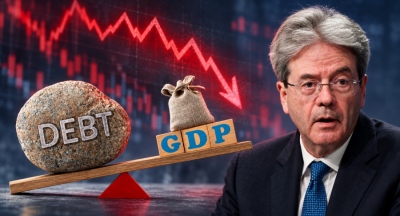
Rising oil prices and escalating tensions between the US and Iran are heightening inflation fears, putting sustained downward pressure on sovereign bond prices. Concurrently, investors are growing increasingly uneasy over the massive scale of global sovereign borrowing, demanding a higher risk premium to lend to governments.
"Everyone is increasing borrowing at the exact time that financing costs are climbing," stated Eric Robertsen, global head of research and chief strategist at Standard Chartered, pointing out that fiscal conditions are not improving anywhere. The problem is acute in Japan. The 10-year sovereign bond yield at 3% has reached the long-term funding cost baseline used by the government in its fiscal assumptions. However, pressures on the Japanese bond market are also tied to the economic policies of Prime Minister Sanae Takaichi's administration. Specifically, plans for increased government spending, including a controversial consumption tax cut, have amplified fears over the nation's fiscal sustainability posture. Meanwhile, Japan's Defense Ministry submitted a record draft budget for the upcoming fiscal year, while the Takaichi administration's core economic stimulus package relies heavily on government outlays. These domestic concerns, paired with external factors like sustained high oil prices, have fueled bets against the yen and pushed sovereign yields higher. For his part, Takahide Kiuchi, a former Bank of Japan board member and analyst at Nomura Research Institute, estimated that the yield rise to 3% acts as a clear market message that might compel the Takaichi government to adjust its expansionary fiscal policy.
Notably, yields pulled back below 3% following a 10-year Japanese debt auction on Tuesday, but the overall level reached remains critically important. A sustained yield above 3% on the 10-year Japanese bond could prompt domestic life insurance companies to reduce their US Treasury holdings and repatriate capital back into domestic markets.
Sustained pressure on the yen
The surge in bond yields is tightly linked to the performance of the yen, which remains exceptionally weak. US Treasury Secretary Scott Bessent met on Monday, on the sidelines of the G20 finance ministers' summit in the US, with both Japanese Finance Minister Satsuki Katayama and Bank of Japan Governor Kazuo Ueda.
According to Japanese public broadcaster NHK, Bessent indicated that Japan's next step should be raising interest rates. Speaking later to CNBC, he asserted that he possesses information not available to the market, expressing confidence that the Japanese government and the Bank of Japan will take measures leading to a stronger Japanese yen. Even before Bessent's statements, markets were pricing in a high probability of a 25-basis-point rate hike by the Bank of Japan, raising rates to 1.25% at its September 18 meeting.
Japan and the US engaged in joint foreign exchange interventions during July and August in a record effort to support the weakening currency. However, more than half of the currency gains resulting from those interventions have already evaporated. Japan spent the equivalent of $96.4 billion to support its currency, while the US intervention was smaller and its precise amount remains undisclosed. Katayama stated on Tuesday that she confirmed with Bessent that coordinated action in foreign exchange markets remains necessary.
The ball moves to central banks
Against the backdrop of recent developments, markets are fully pricing in a brand-new rate-hiking cycle. Traders expect a rate increase in New Zealand on Wednesday and another hike in Europe next week. For the US and Japan, the odds of a central bank hike within the month have surpassed 50%. Andrew Lilley, head of rate strategy at Barrenjoey, estimated that much of the bond sell-off represents a complete re-evaluation of Federal Reserve policy. In his assessment, the Fed will hike rates in September, marking what could be the beginning of a cycle involving at least three interest rate increases.
Brent crude moves past $91
Simultaneously, global energy markets remain highly fragile. Brent crude oil pushed past $91 a barrel, while European natural gas prices closed out the summer at a three-and-a-half-year high, with storage levels sitting at record lows for this time of year. US President Donald Trump has threatened new strikes against Iran following the first exchange of fire in over a month, while escalating conflict between Russia and Ukraine has simultaneously driven global wheat prices near three-year highs.
www.bankingnews.gr











Readers’ Comments