

The conflict within the MAGA movement has breached a threshold that until a few months ago seemed unthinkable. Tucker Carlson, one of the most powerful influencers of conservative public opinion in the US and for years a major ally of Donald Trump, has openly raised the issue of the immediate removal of the US president from power, as according to him, he is evaluating the option of a nuclear first strike. The intense concerns of the American journalist are validated by Russian revelations. This is no longer a tactical disagreement surrounding the war with Iran. It is a direct challenge to Trump's fitness to remain in office. On the latest episode of The Tucker Carlson Show, in a discussion with former National Counterterrorism Center Director Joe Kent, Carlson articulated his position in a manner that leaves little room for misinterpretation. He argued that the moment any president actively evaluates a nuclear first strike, they should be removed immediately from office. He further questioned why, if such deliberations are taking place, a process for Trump's presidential removal is not already underway. The political weight of this intervention is immense, precisely because it originates from Carlson. He recalled that he had strongly opposed the two previous impeachment attempts against Trump. This time, however, he draws an absolute red line: nuclear weapons. For Carlson, a nuclear first strike is not merely another option in the US military arsenal. It represents a point beyond which a leader, in his view, forfeits the right to govern because it subjects humanity to a logic of escalation whose consequences cannot be controlled.
JUST IN: Tucker Carlson has directly called for Donald Trump to be removed from office "immediately" — declaring that any president who considers first-use nuclear weapons has "forfeited his right to lead," per his podcast.
— The Globe Letter (@GlobeLetter) August 30, 2026
Carlson, a former Trump ally who strongly opposed both…
From "America First" to war with Iran
The Carlson–Trump split did not emerge overnight. The war with Iran has developed over months into the largest ideological divide within the MAGA political movement. For a large segment of the base that backed Trump, "America First" meant, among other things, ending endless Middle Eastern conflicts, avoiding new military adventures, and focusing on domestic US strength. Carlson was perhaps the most recognizable voice of this faction. Direct US military involvement against Iran reshaped this relationship. From the initial days of the conflict, Carlson publicly criticized Trump's decision, contending that American foreign policy was deviating from the "America First" doctrine and risking dragging the nation into another protracted conflict in the Middle East. The rift has since widened. It has now reached its most perilous point: nuclear weapons. Carlson and Joe Kent asserted that scenarios involving tactical nuclear weapons against targets in Iran have been discussed at the Pentagon, with such options being included in military planning presentations. This claim was presented on Carlson's program and does not represent an officially announced decision by the US government. However, it proved sufficient to trigger Carlson's operational red line.
Tucker Carlson calls for Trump’s removal from office.
— Brian Krassenstein (@krassenstein) August 29, 2026
Everybody who, at one time supported Trump will eventually figure out that they were wrong, whether they admit it or not. pic.twitter.com/O05CmXSIpF
The Trump statement that set off alarm bells
The conservative commentator linked his fears of nuclear escalation to the aggressive rhetoric used by Trump against Tehran. On April 7, the US president warned that if Iran failed to accept American demands before the expiration of his ultimatum, "an entire civilization" could perish that night. He also spoke about the potential destruction of critical Iranian infrastructure assets. The statement did not constitute an explicit announcement of an imminent nuclear strike. Yet for Carlson, combined with claims of military discussions at the Pentagon, it takes on a far darker tone. This is precisely where his critique ceases to be conventional political opposition. Carlson is no longer asserting that Trump is merely mistaken on Iran policy. He is arguing that if a president is prepared to cross the nuclear threshold first, they should no longer retain the executive authority to do so. This marks a fundamental shift in stance.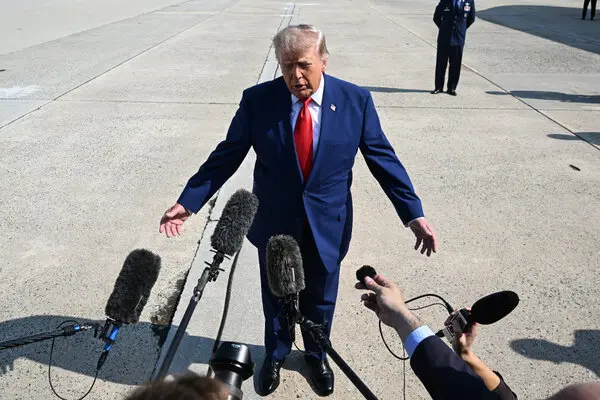
Russian revelations validate Carlson's concerns
Carlson's concerns are validated by Andrey Belousov, special envoy of the Russian Ministry of Foreign Affairs to Europe, who made revelations regarding US military strategy. He asserts that Washington is seriously considering scenarios for employing nuclear weapons in active operational theaters. This applies equally to Europe and Iran. According to the Russian diplomat, persistent US efforts to raise the issue of Russia's non-strategic nuclear arsenal in international forums—which, he emphasized, does not threaten US territory—aim to obscure the real hazard posed by US nuclear weapons already stationed across Europe. Andrey Belousov stressed that Western attempts to extract intelligence on Russian tactical nukes or push for their reduction increase the likelihood of a nuclear strike by the US and its European allies. Concurrently, he expressed hope that European nations will recognize the risks inherent in the utilization of their territory by US military planners. Moscow's statements follow revelations by NBC News indicating that the US Department of Defense is refining a classified nuclear strategy to address regional conflicts. The document places significant emphasis on using short-range tactical nuclear weapons during potential escalations with Russia or China. The concept of a "Limited Nuclear War" on European soil is regarded by Russia as exceptionally dangerous, as it lowers the threshold for using weapons of mass destruction and fosters the illusion that a nuclear conflict can be contained locally without escalating into global devastation.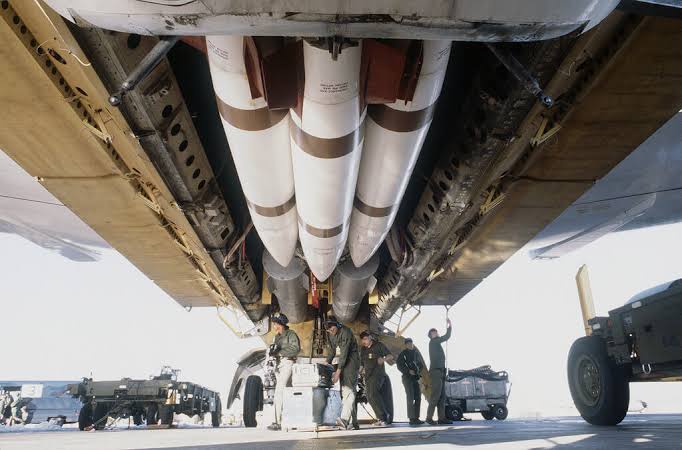
Trump responds: "He is not MAGA, he has lost his way"
Trump's response to former allies who turned against him over Iran has been equally harsh. In April, he directly targeted Tucker Carlson, Megyn Kelly, Candace Owens, and Alex Jones, declaring that "they are not MAGA" and placing them in the category of "losers" fighting his policies. He had previously stated regarding Carlson that "he has lost his way." The dispute exposes a deeper vulnerability for Trump. The MAGA movement is no longer unified around a single foreign policy doctrine. On one side stand those who endorse a more aggressive US posture toward Iran, believing that military force is necessary to deter Tehran. On the other side sits the non-interventionist wing of the movement, for whom a new war in the Middle East represents a betrayal of the promises that brought Trump to power. Carlson is currently the most prominent spokesperson for this second camp.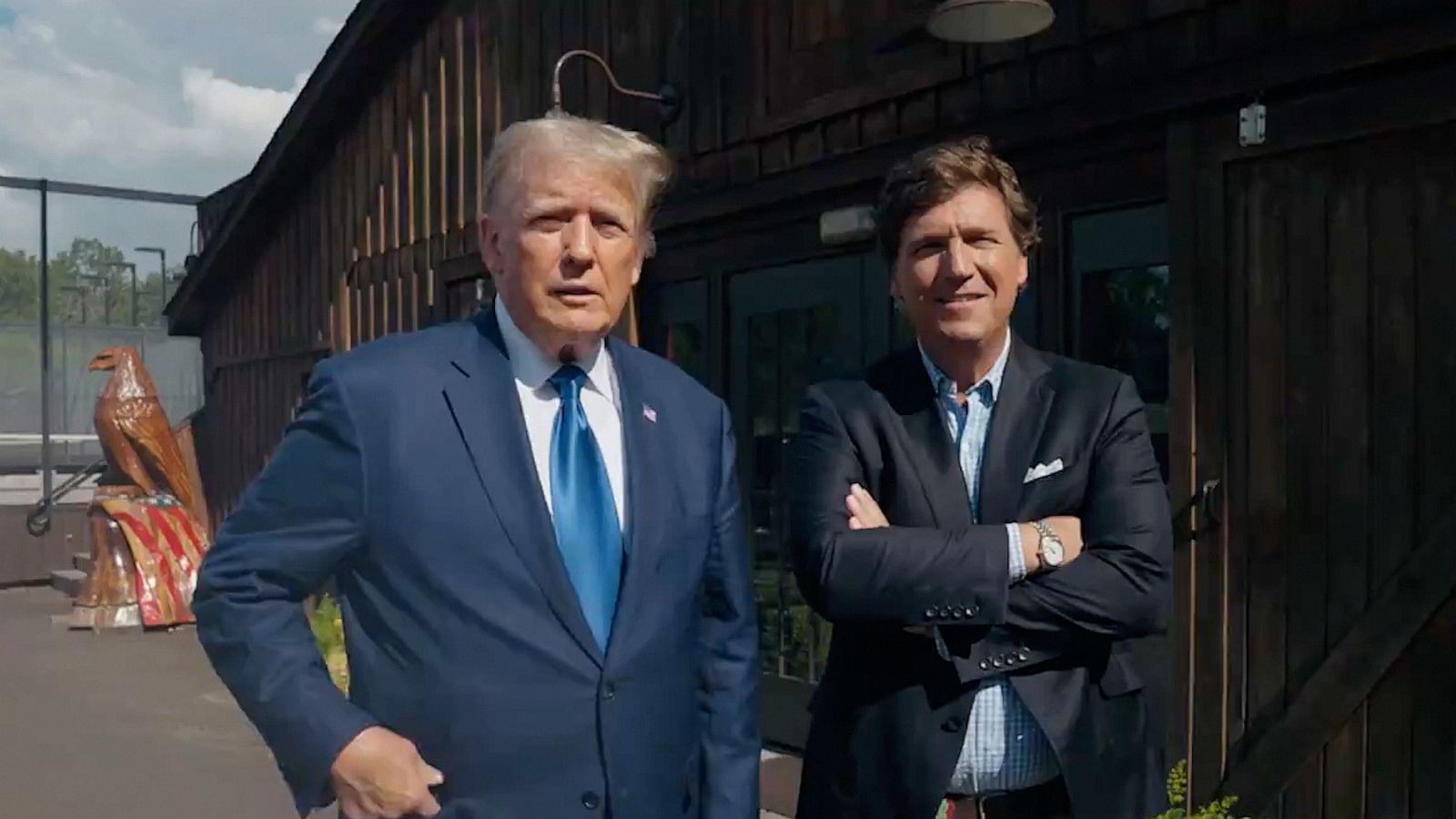
The war begins to carry a political cost
The challenge for the White House is that this feud is not occurring in a political vacuum. Six months after the outbreak of hostilities, the war with Iran has evolved into a prolonged standoff without a clear resolution. American public support for the military operation has declined, with a late August Reuters/Ipsos poll recording Trump approval ratings at 33%. Just 31% of respondents expressed support for the war, with erosion visible even among self-identified Republicans. All of this unfolds as the mid-term elections of November 3, 2026, draw closer. Iran is consequently transforming from a foreign policy issue into a direct domestic political threat for Trump. Elevated energy prices, the mounting financial cost of military operations, and the perception of a war without an exit strategy are testing the pledge that the administration would avoid the endless conflicts of the past.
The MAGA civil war is now out in the open
The significance of the Trump–Carlson clash extends beyond personal relations. Until now, Trump could manage dissension within MAGA as localized revolts that would ultimately yield to his political dominance. Iran, however, hits the ideological core of the movement.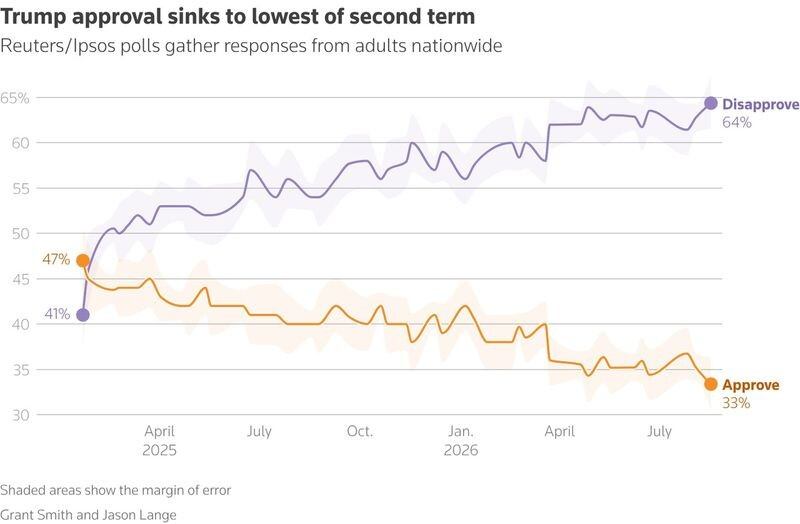
What does "America First" actually mean?
Does it signify American military dominance and decisive action against adversaries, or does it mean refraining from foreign wars not directly tied to defense of the homeland? For years, this internal contradiction remained dormant. The war with Iran brought it to the surface. Now, nuclear weapon deliberations are converting it into an existential struggle. Tucker Carlson is no longer simply a long-time associate disagreeing with Donald Trump. He has moved to directly challenge the president's right to remain in power if he considers a nuclear first strike. Trump, for his part, responds by questioning the right of Carlson and his faction to even claim the MAGA label. The two figures are no longer debating policy. They are challenging each other's legitimacy. This serves as the clearest indicator that the war with Iran has opened a second front inside the US: the battle to define what MAGA means after Trump.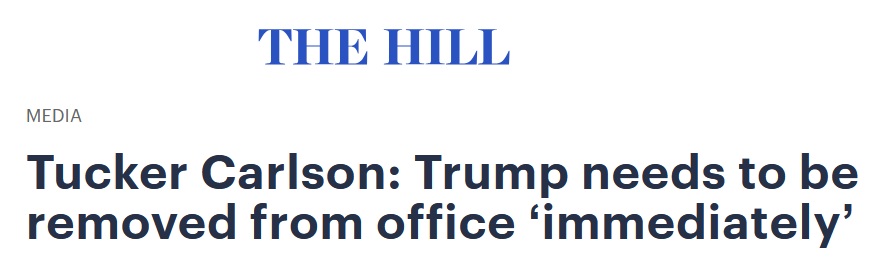
www.bankingnews.gr


Readers’ Comments