

Yevhenii Khmara wears a bracelet on his wrist. Each link bears the name of a comrade who did not return from the war. The image undeniably carries strong political symbolism. The new minister of defense of Ukraine is not just another politician who learned about war from conference rooms. He comes from special operations forces, has served close to the frontlines, and linked his name with some of the most daring missions executed by Ukrainian services. On August 19, the Ukrainian Parliament confirmed Khmara as minister of defense with 312 votes, far exceeding the 226 required. One day earlier, he retired from active military service to fulfill the legal requirement that the minister of defense must be a civilian. However, the parliamentary majority cannot conceal the political backdrop against which this change took place, explains National Interest.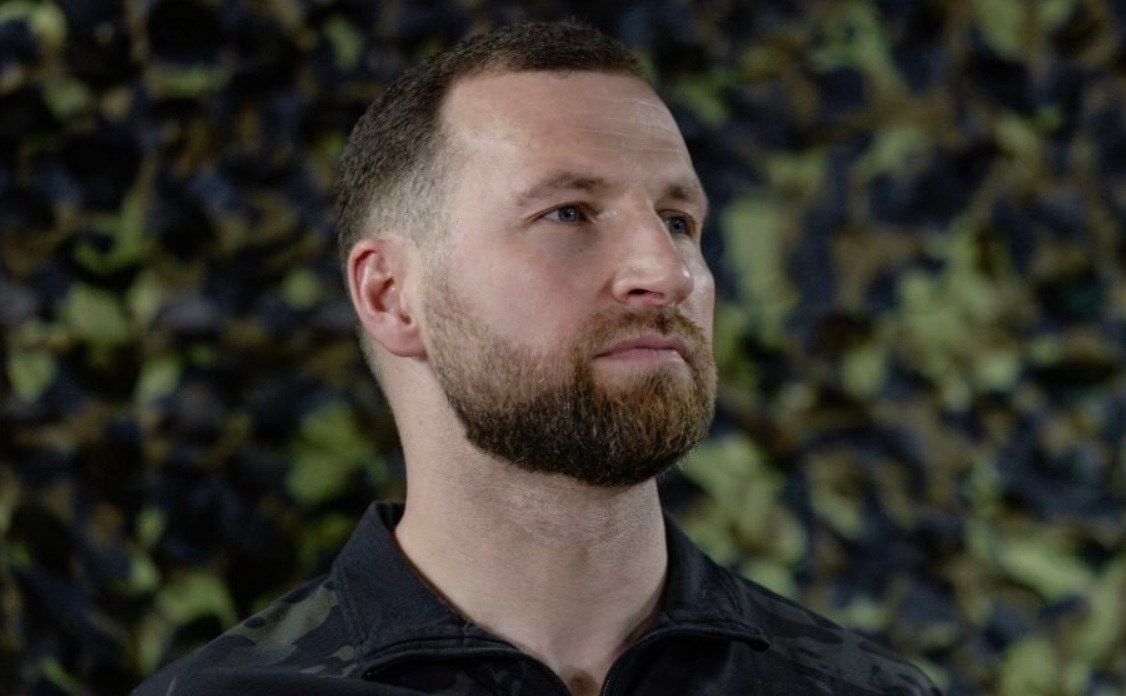
Yevhenii Khmara
Fedorov left and opened the door to a political crisis
Just one day prior to Khmara's confirmation, ousted defense minister Mykhailo Fedorov sparked a political earthquake by calling for a way to hold elections even amid war. He was not a marginal opponent of Volodymyr Zelensky. Fedorov was a close associate of the president, identified with the digitization of the Ukrainian state and later with the technological transformation of the armed forces. His removal, just six months after taking over the defense ministry, triggered protests and brought to light a confrontation that until then remained primarily within the corridors of power. A few days later, he went even further. He stated that Ukraine risks gradually losing the war unless it immediately implements deep reforms, pointing to systemic corruption, an innovation deficit, and above all, the absence of a coherent war strategy. The presidential administration essentially responded that his criticism surfaced only after he lost his position. There may well be political motivation behind Fedorov's statements. However, that does not answer the systemic problems he described. Firing a minister eliminates neither corruption nor procurement malfunctions nor the acute manpower crisis.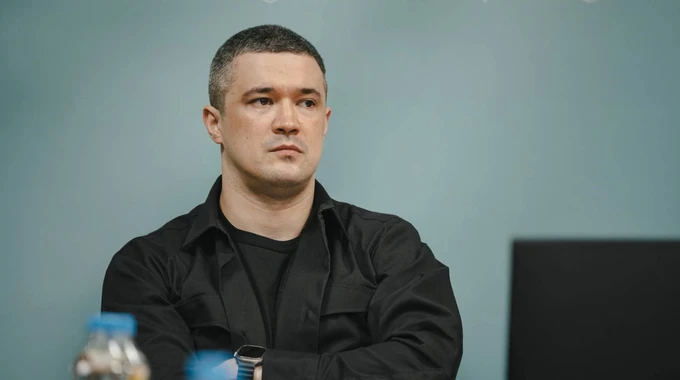
Ukraine changes faces faster than it changes the system
Herein lies the primary weakness of Zelensky's strategy. When a section of the apparatus fails, Kyiv's response is frequently yet another reshuffle of officials. Ministers depart. Generals are replaced. Responsibilities are reassigned. New figures are introduced as pioneers of a new era. In July, Mykhailo Drapatyi was appointed head of the Ukrainian armed forces, replacing Oleksandr Syrsky. During the same period, Khmara temporarily assumed leadership of the defense ministry. These are two officers with strong operational reputations and a mindset distinct from the older, Soviet-style military culture. Yet this raises another question: how many times can a country replace the top of its military hierarchy before acknowledging that the problem also resides in the structure underneath it?
Khmara has proven he knows how to inflict asymmetric damage - The most hated man in Russia due to strikes against civilians
The new minister possesses an advantage that is hard to dispute: he understands modern warfare. As head of Special Operations Center "A" of the SBU and later as director of the service, he was at the center of Ukraine's strategy of asymmetric strikes. Operation Spiderweb of June 2025 serves as a prime example. Small FPV drones were covertly transported deep into Russian territory and used against strategic bombers across multiple air bases. The logic behind such operations is straightforward: a low-cost drone should destroy a weapon system worth tens or hundreds of millions. Khmara thinks in terms of cost and impact. This is invaluable for a nation whose resources are severely limited. The same operational model is currently applied to Russian oil refineries. Repeated Ukrainian strikes have created real disruptions in the Russian fuel market. By late August, gasoline production in Russia had fallen to roughly 70% of domestic demand, according to industry sources cited by Reuters, forcing Moscow to increase imports and restrictions. These are substantial tactical successes. However, they must not be confused with a comprehensive victory strategy.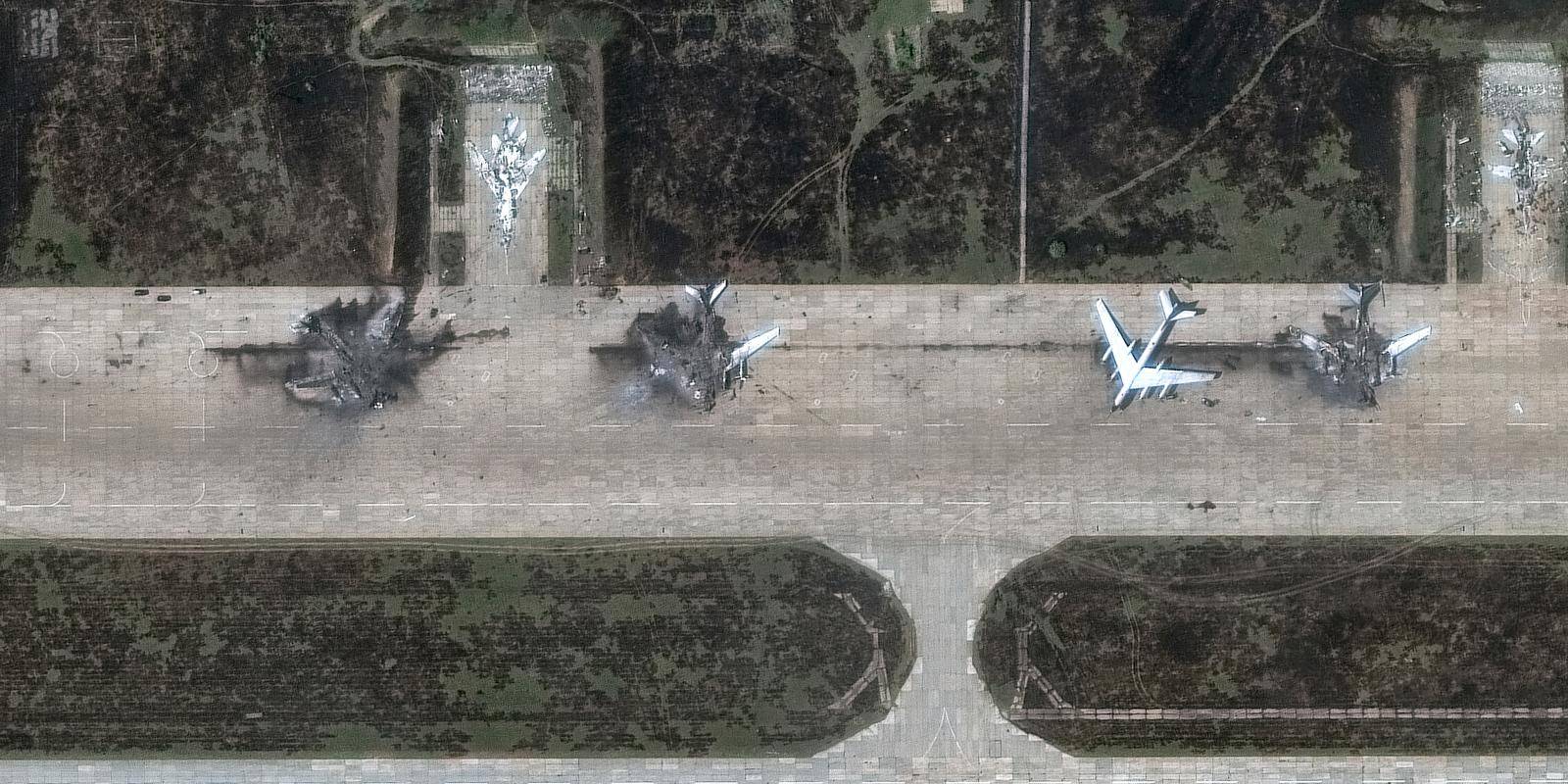
Spectacular operations do not fix internal crises
A ministry of defense is not a special operations unit. It is not judged by a single successful strike. It is evaluated by hundreds of thousands of daily administrative decisions: which soldier goes where, which unit receives drones, who supplies ammunition, how quickly contracts are settled, how much they cost, who conducts quality control, and who is held accountable when logistics fail. Here, Khmara enters entirely uncharted territory. He himself acknowledges that he has never managed an organization with the administrative scope of the Ministry of Defense. Precisely here lies the risk of Zelensky's decision: an exceptional operational commander is placed in a position whose primary challenge is not a lack of boldness, but bureaucracy, financial management, mobilization, and inter-institutional conflict. At the same time, Ukraine faces immense financial pressure. Zelensky has referred to a defense funding gap of approximately 27 billion dollars, while the country simultaneously faces a shortage of Patriot missiles and ongoing Russian strikes. No special operation can resolve this crisis overnight. Most dangerous of all: with such an operationally minded defense minister who deeply believes in asymmetric strikes deep inside Russia and against civilian targets, there is a severe risk of provoking a devastating Russian response.
The mobilization problem is primarily a problem of trust
Even more critical is the issue of manpower resources. For years, the Ukrainian leadership treated mobilization as a matter of raw numbers: how many men are needed, how many can be drafted, and how much stricter the conscription system must become. Khmara appears to grasp something deeper. Citizens are more likely to fight when they believe their service carries meaning and when they trust that the military leadership will not send them without reason on a mission of no return. This is primarily a matter of public trust. And trust is not built through presidential decrees. It is established through accountability. Drapatyi had earned significant respect when, following a lethal Russian strike on a training ground housing units under his command, he submitted his resignation, taking full responsibility. That action sent a message often missing from the upper echelons of the Ukrainian state: that someone must answer when human lives are lost.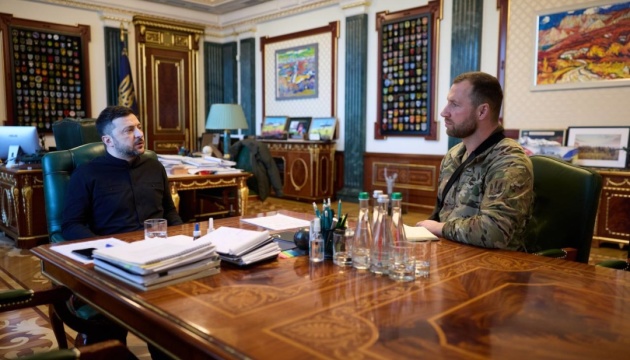
The real test is not Khmara, it is Zelensky
The new minister may indeed prove to be one of the most suitable figures for this phase of the war. He may accelerate the production of Ukrainian weaponry. He may intensify strikes deep inside Russian territory. Working alongside Drapatyi, he may foster a military culture that is less centralized, more technologically driven, and focused on soldier survival. Yet none of these developments relieves the political leadership of its own duties. The difficult question is whether it can execute the same structural reform within its own state apparatus. While Khmara may know how a single-million-dollar drone inflicts billions in damage on the adversary, what Kyiv's leadership must now demonstrate is whether it knows how to transform these tactical successes into a coherent military strategy—before Ukraine's internal contradictions prove costlier than any Russian arsenal.
www.bankingnews.gr




Readers’ Comments