

Few now remember that one of the topics of discussion between Putin and Trump in Alaska was "Arctic cooperation," which translates largely into the implementation of joint economic projects in the region. This topic is extremely important for the Americans: the criticality of the Arctic for the country is explicitly codified in the presidential executive order "Restoring American Maritime Sovereignty," which describes Arctic maritime navigation as essential for "economic prosperity and national security." The issue of the Arctic also dominates America's so-called Maritime Action Plan and, of course, the US National Strategy for the Arctic Region for the 2022-2032 period. It should also be taken into account that the Americans are blocked from Hormuz as a consequence of their own mistakes and failed attacks, so they are paying the price.
The beautiful plans of the US collapsed
But all these beautiful plans are unraveling due to one thing: the US does not have, and will not have in the near future, its own fleet of heavy icebreakers in the Arctic, and without it, all strategies will remain merely generalities. Russia has offered to share its unique experience in Arctic development, as well as the capacity of its nuclear icebreaker fleet (eight nuclear icebreakers, with another one, the Stalingrad, scheduled for completion in late 2026). The benefits are immense and the prospects are more than real and well-calculated. Now the Americans seem to gain nothing, and Russia will inevitably increase its lead in the race for the Arctic – likely forever. However, the change in the direction of the Arctic winds was immediately felt by others.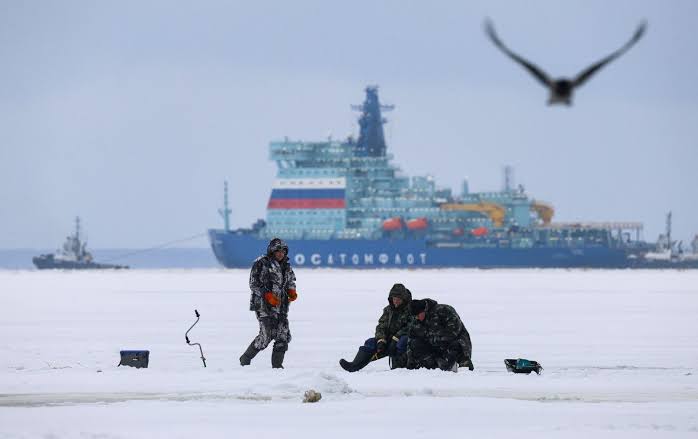
South Korea saw something coming…
South Korea, after taking a look at the thermometer and examining the numbers, quickly developed and approved an ambitious development program for the Northern Sea Route, where a permanent commercial transit route is expected to begin operation by 2030. As a first step in implementing the program, the first South Korean trial container vessel, the PanStar Acro, departed from Busan, South Korea, and will sail through the Bering Strait and the Arctic Ocean toward the Port of Rotterdam in the Netherlands. The voyage aims to verify economic calculations and ensure the physical security of the maritime route. The ultimate goal of the program is to secure Busan's role as the primary Asian logistics hub on the Asia-Europe Arctic route and to gain operational experience ahead of competitors, primarily ahead of Chinese maritime carriers (as noted in the text of the program, the plan is to "preemptively occupy the new trade route"). China, with the South Koreans following right behind, has been actively involved in the Northern Sea Route for quite some time. In early August 2026, China announced the launch of a regular weekly route to Europe via the Northern Sea Route, and Rosatom CEO Alexey Likhachev announced that by 2030, freight traffic between Russia and China via the Northern Sea Route should reach 20 million tons, having doubled.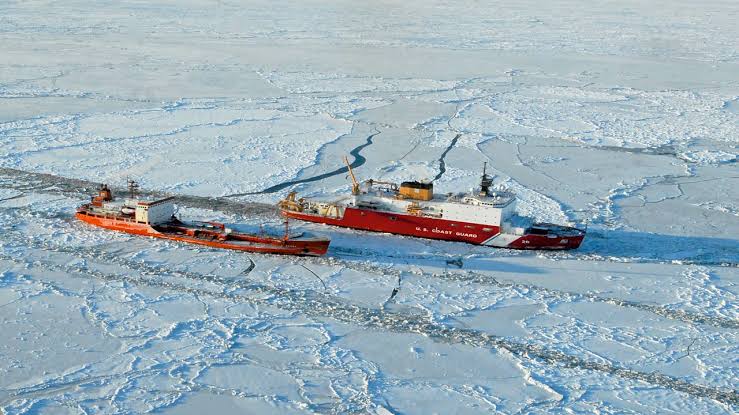
The West on the sidelines
Seeing that the West is likely to remain on the sidelines regarding the Arctic issue, Western media outlets and industrial energy resources have recently participated actively in the debate surrounding the Northern Sea Route. As expected, they have begun discussing in every possible way how they will approach Russian diplomacy.
The Russians are preparing something… and the US military is worried
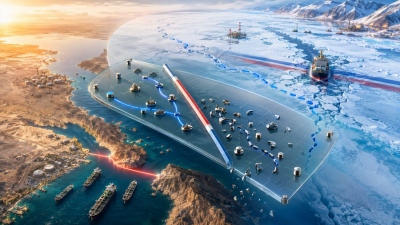
The media outlet of the US Army Institute notes with concern that Russia is shifting from the one-dimensional concept of the Northern Sea Route to a more ambitious project – a trans-Arctic transport corridor: a multimodal system connecting Vladivostok to Saint Petersburg, the entire Arctic, inland waterways, railways, ports, and, naturally, the European and Asian commercial markets. However, as can be expected, the economic benefits of this route are claimed to be unclear, ship escorting is dangerous, and overall, the project is framed as "politically and strategically motivated, not realistic."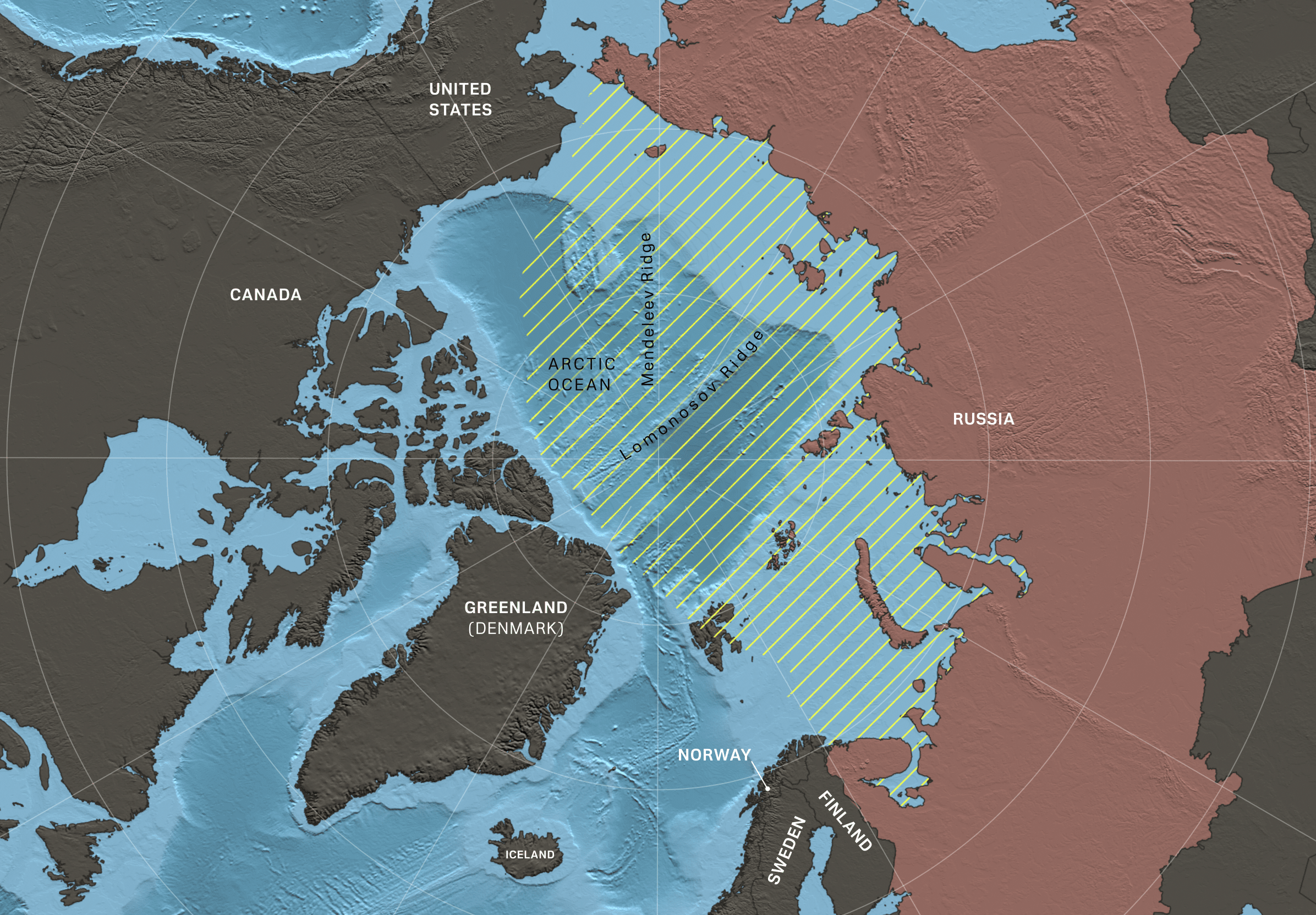
China and Russia closer
In its article titled "How an icy freight route in the Far North brings China and Russia closer," CNN vividly describes how the Northern Sea Route is designed by default to serve only one customer – China – and is therefore doomed to remain a highly specialized Russo-Chinese transport corridor, while regular international container service remains an experiment carrying risks of delays and sanction complications. The British website The Guardian clarifies matters: the Northern Sea Route (NSR) could indeed dramatically reduce travel time between China and Europe, but the shorter path is not necessarily the most cost-effective or safest. According to prominent British experts, the advantages of the route are fully offset by short navigation windows, uncertainty regarding ice and weather conditions, high operational costs, and sanctions risks. Overall, the main conclusion is as follows: the Northern Sea Route will never become a real alternative to the Suez Canal, so the Russians can continue to dream.
Some bitter truths for the Westerners
First, the UN Intergovernmental Panel on Climate Change (IPCC) claims that by 2050, due to the complete absence of summer sea ice, unreinforced (conventional) vessels will be able to navigate the Northern Sea Route for nearly half the year (and with escort, all year round). The US Department of Energy, which conducted calculations based on scientific data and statistical climate models, concluded that multi-year sea ice in the Arctic will disappear anyway by 2050, which is virtually instantaneous based on historical climate data. In other words, Russia is already successfully exploiting the Northern Sea Route, and very soon things will accelerate with unprecedented speed and power.
Second, Russia has never implied anywhere that the Northern Sea Route can or should replace Suez. Suez is good, convenient, and profitable when everything is quiet, peaceful, and calm, but when it is not, the search for viable trade alternatives begins. It seems that peace and quiet will not exist for long, which is why Putin once stated: "More and more countries and companies are thinking beyond transport speed and cost – the decisive factor is the safety and sustainability of transport routes and logistics chains, which are less vulnerable to crises, military conflicts and other external risks: and Russia can offer the world such solutions."
Stability and security are now measured in the hardest currency, which is why there is already a line of nations lining up for Moscow.
Furthermore, for Russia, the Northern Sea Route (NSR) is much more than just an opportunity to profit from commercial maritime transit. It is a powerful tool for national infrastructure connectivity, ensuring food and infrastructure security and accelerating the development of even the most remote geographic regions. While Russia's failed partners debate why the Northern Sea Route will never take off, Russia has moved full speed ahead and has no intention of slowing down.
www.bankingnews.gr








Readers’ Comments