

The phrase was brief, but the message could hardly be heavier.
Russia is now openly warning that British military installations could become targets if United Kingdom weapons continue to be used by Ukraine for attacks on Russian territory.
This is no closed-door hint.
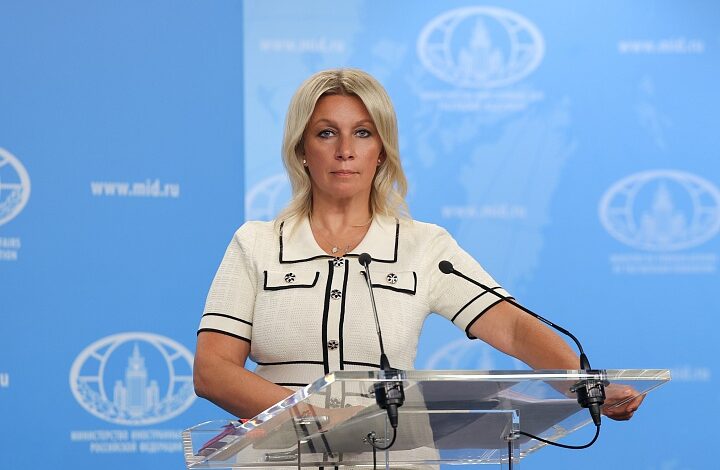
Russian Foreign Ministry spokesperson Maria Zakharova stated on August 27, 2026 that «any» British military installation or equipment in Ukraine and beyond could become targets of Russian retaliation.
The warning came after the decision by the United Kingdom to grant Ukraine access to classified technology linked to long-range missiles.
The escalation in rhetoric is unmistakable.
The essential question, however, is whether an escalation in action is also approaching.
From the threat to the hypothesis of a strike
The warning by Maria Zakharova carries special weight because it extends Russian rhetoric beyond Ukraine.
Moscow is not only talking about Western weapons located on Ukrainian soil.
It leaves open the possibility of retaliation against British military assets «and beyond» Ukrainian borders.
This is the point where the conflict assumes completely different dimensions.
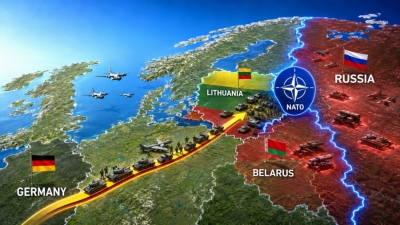
Russia and NATO have thus far managed, despite the massive volume of Western military aid to Ukraine, to steer clear of direct military confrontation.
The red line was always relatively clear: NATO arms Ukraine, but is not officially at war with Russia.
A Russian strike on a British target, however, would put this distinction to the test.
And it is precisely along this fine line that a particularly aggressive piece by Russian military analyst and retired Colonel Mikhail Khodarenok in Gazeta.Ru moves.
Mikhail Khodarenok explains which weapons Russia could use to strike British targets.
Yet the scenarios themselves are revealing of the prevailing climate.
Drones, submarine warfare, and the invisible threat
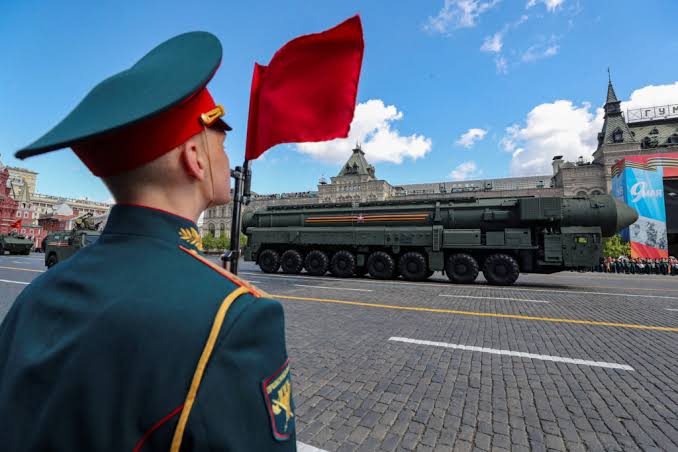
The Russian analyst describes a potential response that would not be limited to conventional missiles.
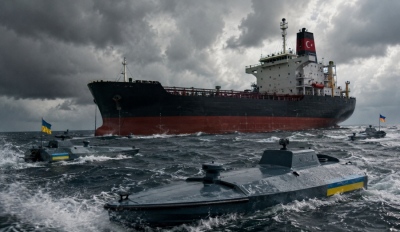
He speaks of the mass deployment of unmanned systems, naval operations, and Russian capabilities targeting critical undersea infrastructure linking the United Kingdom to the rest of the world.
The latter scenario is perhaps the most alarming, as it is no longer pure science fiction.
Subsea communications cables, energy interconnectors, and seabed pipelines have emerged in recent years as major fronts in hybrid warfare.
The British Ministry of Defence itself announced in August that the Royal Navy had significantly stepped up surveillance operations tracking Russian surface vessels and submarines in British waters and the North Atlantic.
Concurrently, Western governments are monitoring with growing alarm incidents of damage or suspicious activity around subsea cables and energy infrastructure in the Baltic.
The threat is particularly difficult to counter because it sits in a gray zone.
A missile strike bears a signature.
A missile leaves a track and, almost invariably, traces back to an origin.
A rupture in a cable thousands of meters beneath the sea can be far harder to attribute immediately.
And that is the core of modern hybrid warfare: inflicting damage without granting the adversary the political certainty required to retaliate.
The nuclear threat
Khodarenok even introduces the prospect of nuclear demonstrations as part of a hypothetical Russian message to the United Kingdom.
Since the launch of Russia's full-scale special military operation in Ukraine in 2022, nuclear rhetoric has returned to European political discourse with an intensity unseen since the Cold War.
Russian President Vladimir Putin has repeatedly employed the language of strategic deterrence whenever the West debated providing new weapons systems to Ukraine.
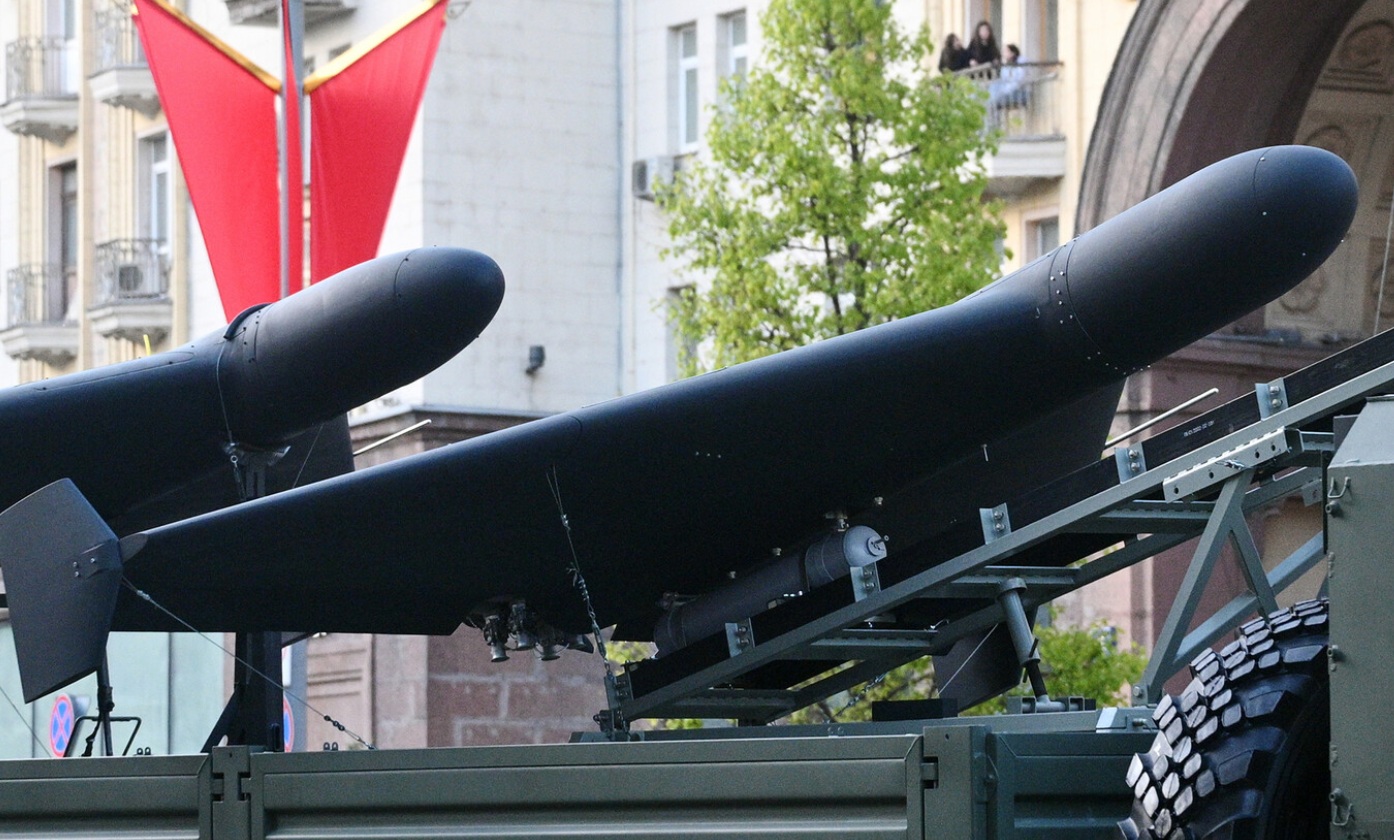
In October 2025, when the transfer of American Tomahawk missiles to Kyiv was under consideration, Vladimir Putin warned that such a move would lead to a «new level of escalation» and severely damage relations between Russia and the United States.
The Tomahawk missiles were ultimately not delivered.
Moscow considers that its strategy of deterrence through threat works.
And that may well be the most dangerous element of all.
And the next day, an ICBM was launched from Plesetsk
Then came a visual that added even more weight to the situation.
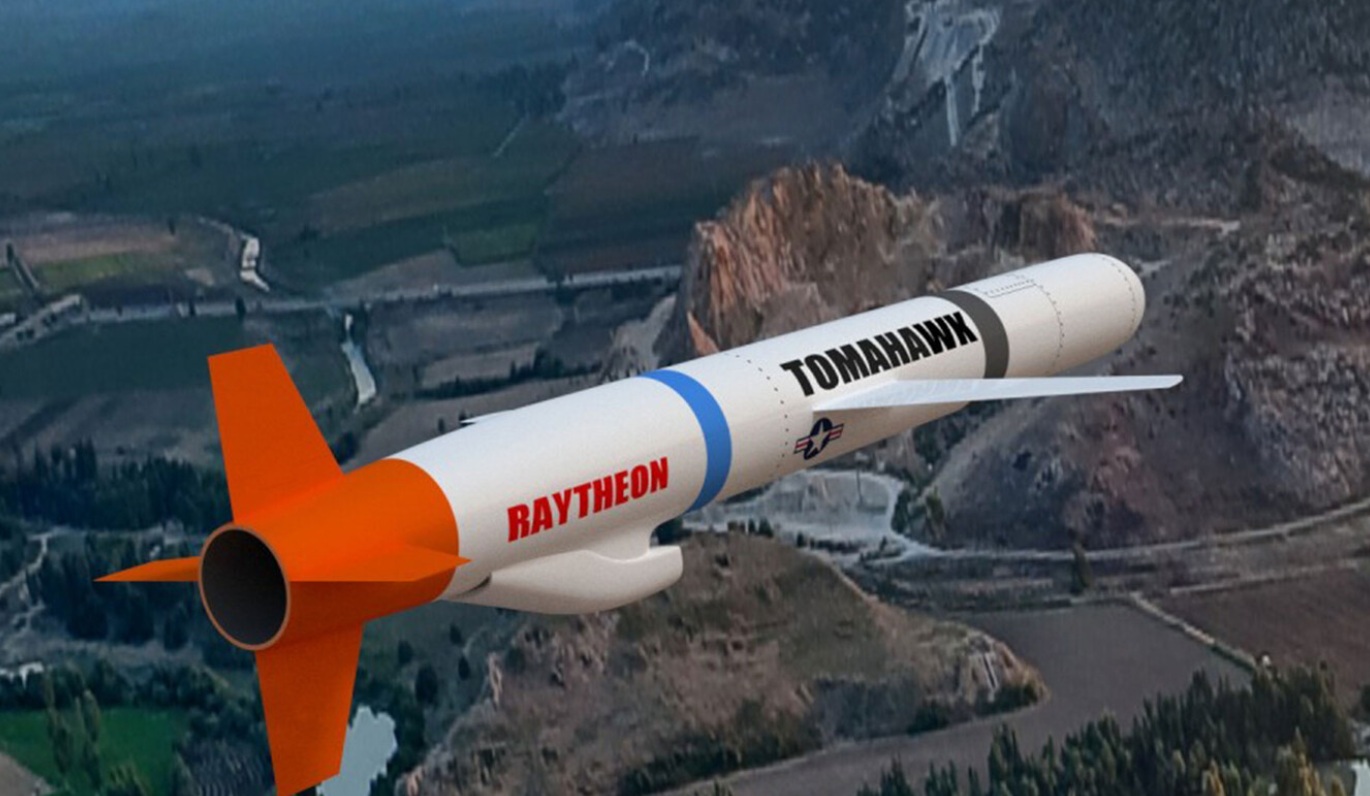
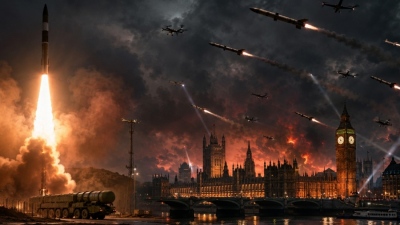
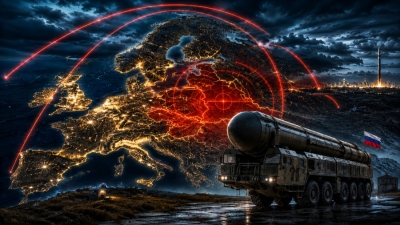
On August 28, barely one day after Maria Zakharova's warning to the United Kingdom, Russia announced the successful test-launch of an intercontinental ballistic missile from the Plesetsk Cosmodrome.
According to the Russian Ministry of Defense, it was a combat training launch of a solid-fueled, road-mobile ICBM targeting the Kura test range in Kamchatka.
Officially, the objective was to confirm the tactical, technical, and flight characteristics of the missile system.
There is no public evidence proving that the launch was scheduled specifically as a response to London.
In strategic deterrence, however, timing is itself a message.
One day Moscow warns that British military targets could enter the crosshairs.
The next, an intercontinental ballistic missile lifts off from one of the primary test sites of the Russian strategic arsenal.
The coincidence cannot pass unnoticed.
Plesetsk is not just any launch facility.
It is a critical hub of the Russian Strategic Missile Forces and has been repeatedly utilized for tests of systems directly tied to Russia's nuclear deterrent.
This is significant because Moscow has long used strategic missile exercises not only to verify the operational readiness of its forces, but also as a visible component of its deterrent signaling toward the West.
An ICBM does not need to carry a nuclear warhead in a test to deliver a nuclear signal.
The very class of weapon is sufficient.
JUST IN: ???? Russia launches ICBM in chilling signal as tensions with UK surge
— War Radar (@War_Radar2) August 28, 2026
Russia has successfully launched an intercontinental ballistic missile from the Plesetsk Cosmodrome, according to the Russian Ministry of Defense.
The launch comes just one day after Moscow warned… pic.twitter.com/vLmlriDzWu
Will Article 5 be triggered?
Khodarenok goes even further, arguing essentially that even a limited Russian strike against the United Kingdom would not necessarily lead to a collective military response by NATO.
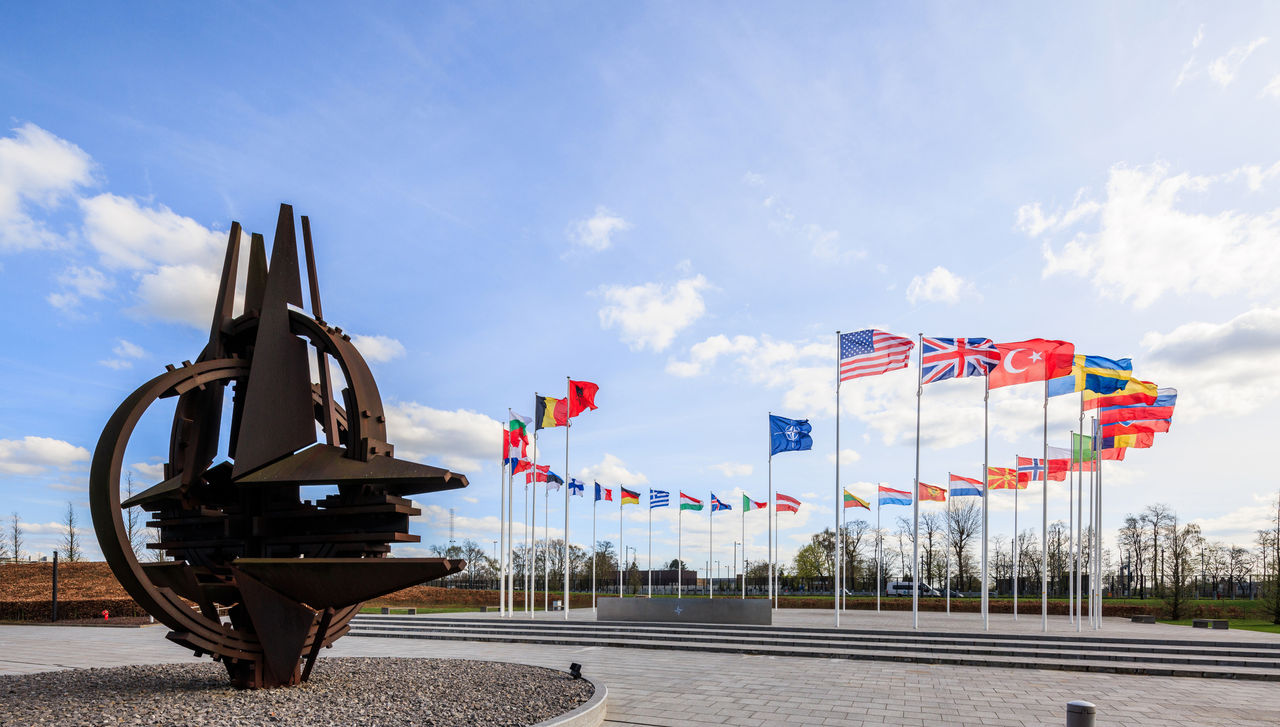
Article 5 of the North Atlantic Treaty stipulates that an armed attack against one member is considered an attack against all.
It is true that each ally's response is not automated: each state takes the measures it deems necessary, and these are not mandatory to include military action.
According to the Russian military analyst, the decision to invoke Article 5 rests in the hands of the White House, as no other member would dare to assist Britain militarily.
Article 5 has been invoked only once in the history of the Alliance: following the attacks of September 11, 2001 against the United States.
No one, therefore, can know in advance how a crisis would unfold following a Russian strike on British soil.
The real weapon is uncertainty
Moscow knows that it does not need to strike London to instill fear in the United Kingdom.
It is enough to convince British society and Western political leadership that such a possibility is no longer unthinkable.
The threat thus becomes a weapon in its own right.
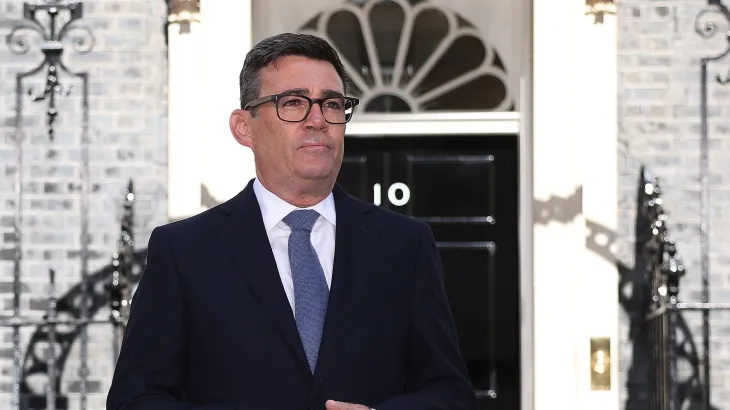
The message is addressed to the government of Andy Burnham, but the true recipient is all of Europe: every new category of weapons arriving in Ukraine, Russia implies, heightens the risk for the country providing it.
The United Kingdom, for its part, shows no inclination to back down.
Andy Burnham visited Kyiv on August 24 and reiterated that support for Ukraine remains unwavering, while the British government announced deeper defense and technological cooperation with the administration of usurper President Volodymyr Zelensky.
This establishes a dynamic where each side believes its resolve will force the other to relent.
Russia believes the threat of escalation can curtail Western weapons deliveries.
The United Kingdom believes backing down in the face of threats will invite even greater Russian pressure.
Ukraine believes that without the ability to strike deeper into Russian military infrastructure, it cannot shift the balance of the war.
All parties, in different ways, consider backing down to be the greatest risk of all.
And that is how major wars begin
The most alarming element is not that Russia is planning an attack on the United Kingdom tomorrow.
What is alarming is that the vocabulary of a direct Russia-NATO conflict is becoming normalized.
Words that once belonged exclusively to the final chapters of strategic war studies now appear in daily news cycles.
And the greatest danger may not be a deliberate decision for all-out war.
It may be a miscalculation.
A strike that one side considers «limited».
A response that the other considers mandatory.
A red line that nobody realized had already been crossed.
Maria Zakharova's warning to the United Kingdom does not mean World War III is imminent.
It does mean, however, that another door that remained tightly shut for decades has begun to open.
And when two nuclear powers begin discussing publicly what happens after the first strike, the most perilous mistake is believing either can control the last.
www.bankingnews.gr






Readers’ Comments